
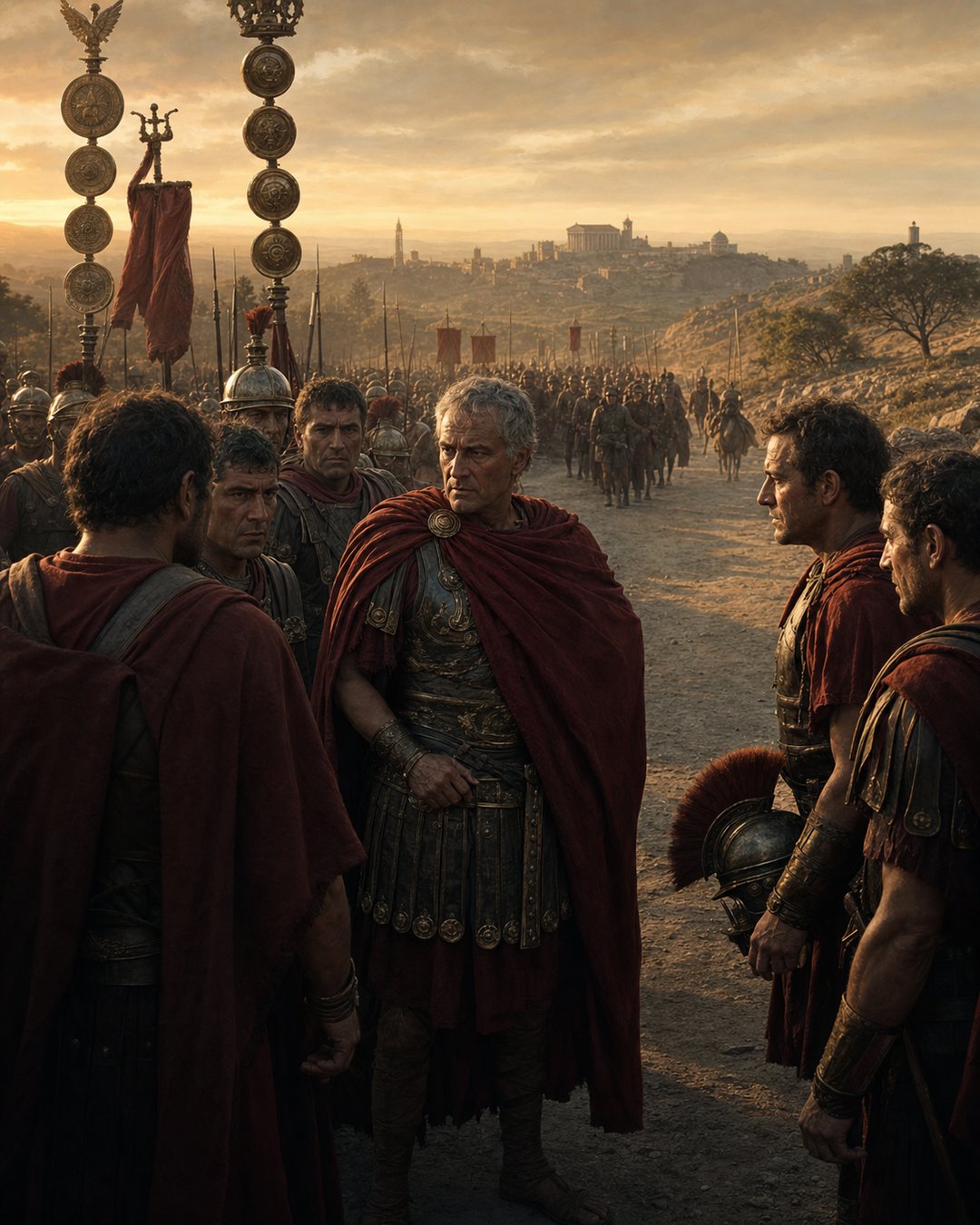
The most dangerous road in the late Republic was not outside Italy. It led back to Rome. In 88 BC, Lucius Cornelius Sulla did something Roman political culture had struggled to imagine: he marched his own army toward the city to settle a domestic command crisis. The shock was not simply violence. Rome knew violence. The shock was that a Roman commander could make his legions an argument inside Roman politics.
The dispute began with the command against Mithridates VI of Pontus. Sulla had been assigned the war, but political opponents worked to transfer the prize to Marius. Ancient accounts differ in emphasis, but the pattern is clear enough. A competition for command became a test of military loyalty, and Sulla discovered that his soldiers could be persuaded to follow him where Roman restraint said they should not go.
The Mithridatic command was too valuable to lose quietly
A foreign war offered glory, money, and political recovery. The command against Mithridates was not a routine posting. It was the kind of opportunity that could define a career. When that command was threatened, Sulla faced more than embarrassment. He faced the loss of the military stage on which his future depended.
That helps explain why the crisis escalated so sharply. Roman politics had many ways to humiliate a rival, but taking away a major command struck at a general’s relationship with his army. The soldiers expected plunder, pay, and leadership. The commander expected obedience and prestige. Once those expectations fused, the Senate and assemblies were no longer the only arena.
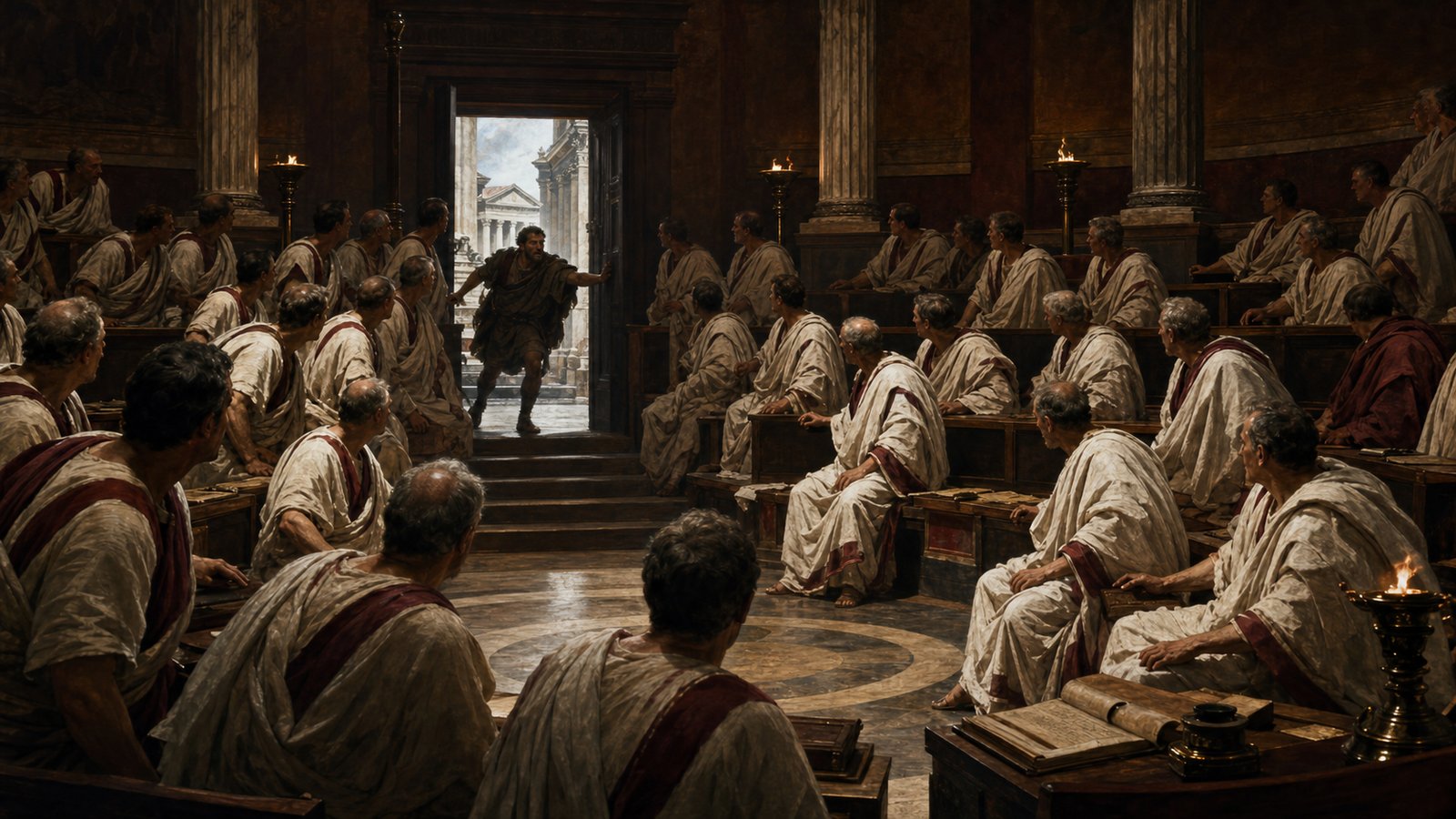
The soldiers followed a general, not an abstract constitution
Plutarch says some officers refused to join Sulla’s march, a detail that matters because it preserves the scandal. Romans understood the act as a breach. Yet enough soldiers stayed with him to make the breach real. Their loyalty was not to a theory of republican procedure. It was to the commander who had led them and to the campaign they believed was theirs.
This was the new kind of army Rome had made for itself. Long service, shared danger, hopes of reward, and personal reputation could bind soldiers to a leader with frightening strength. Sulla did not invent ambition, but he showed what happened when ambition had disciplined men behind it.
The city boundary could not stop military politics
Roman tradition separated civic space from normal military command. The pomerium and the habits around it expressed a deep fear: armies belonged outside the city. Citizens might argue, vote, riot, and prosecute, but legions were not supposed to become tools for deciding arguments in Rome itself.
Sulla’s march damaged that boundary in the imagination even before it damaged bodies in the streets. Once a commander proved that the road could be taken, later Romans had to live with the precedent. A taboo is strongest before the first successful violation. Afterward, every desperate politician knows the line has been crossed before.
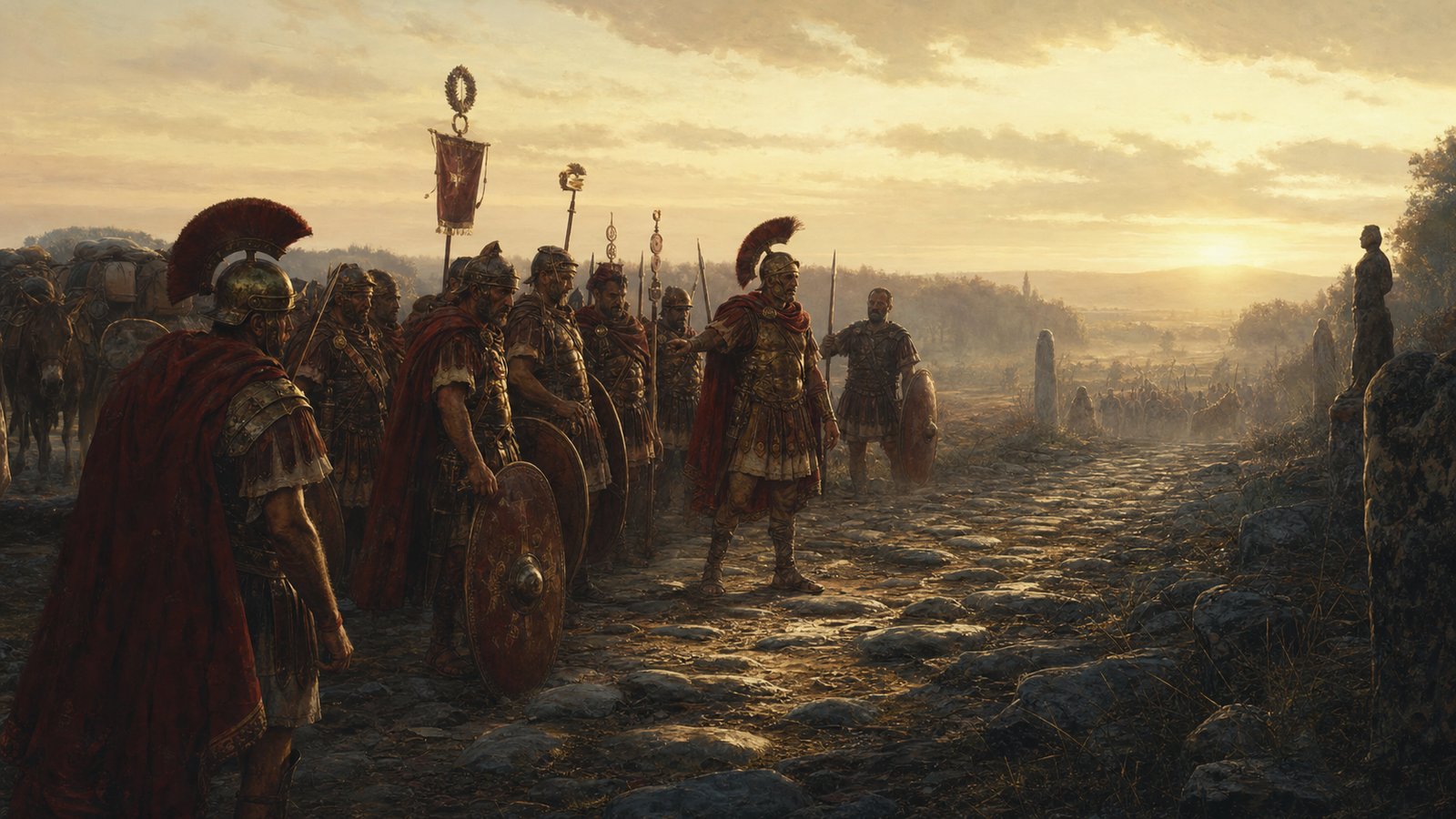
Ancient writers remembered the fear inside the precedent
Appian frames the crisis within the struggle over Sulpicius, Marius, and the command. Plutarch lingers on the soldiers and officers. Together they show why the episode could not be reduced to one man’s temper. The march frightened Romans because it connected several failures at once: competition for prestigious wars, popular legislation, senatorial weakness, and armies whose loyalty could be personal.
The violence that followed was not an accidental side effect. If an army entered political space, political enemies became military problems. Flight, punishment, and intimidation followed naturally from the method. Rome had gained a way to decide disputes quickly, but the price was that victory began to look like occupation.
Sulla left, but the lesson remained
After asserting himself in Rome, Sulla went east to fight Mithridates. That movement is important. The first march on Rome was tied to a foreign command, not simply to a desire to sit in the city. Sulla wanted the war, and the city was the obstacle he chose to force open.
Yet the memory did not leave with him. Later, Sulla returned, became dictator, and used proscriptions against enemies. Those later horrors can make the first march seem like a prelude whose meaning was obvious from the start. But for Romans in 88 BC, the first shock was more specific: a commander had shown that a Roman army could be turned inward.
The Republic survived the march, but not unchanged
Institutions can survive a violation and still be weakened by it. Rome did not collapse in 88 BC. Magistrates continued, elections continued, and wars continued. But political imagination had changed. Men now knew that soldiers could enter the argument if a commander was bold enough and his troops were attached enough.
That knowledge made later crises more dangerous. Caesar’s crossing of the Rubicon would become the more famous image of civil war, but Sulla had already taught Rome part of the lesson. The Republic’s laws depended on shared restraint. Once restraint looked optional, law had to compete with loyalty, fear, and the confidence of armed men.
Sulla’s march therefore matters less as an isolated outrage than as a discovery. Rome discovered what its own military success had created: armies that could win foreign wars and, under the wrong pressure, decide Roman politics too. The road to Rome had always existed. In 88 BC, Sulla showed how it could be used.
It also changed the psychology of ambition. Before the march, a defeated politician could still be imagined returning through elections, allies, lawsuits, or negotiated compromise. After Sulla, a commander with veterans had another mental option. He could ask whether his soldiers would carry his grievance farther than the law allowed.
That did not make every later general a Sulla, and it did not erase all republican habits overnight. The danger was subtler. Political rivals had to calculate military loyalty as part of domestic strategy. Once that calculation entered the system, even lawful debates took place under a darker shadow.
The first march on Rome was therefore a precedent made of movement: standards on an Italian road, officers hesitating, soldiers choosing the man who promised them a campaign, and senators discovering that procedure could be interrupted by marching feet. Rome’s empire had trained armies to obey commanders far from home. Sulla brought that obedience home.
That is why the episode belongs near the beginning of Rome’s civil-war century. It did not supply every later cause, and it did not make collapse inevitable by itself. It gave ambitious men a demonstrated method. Once a political defeat could be answered by a loyal army, every future crisis carried an extra question: not only who had the better law, but who had soldiers willing to move.
The precedent was frightening because it joined speed with intimidation. Lawsuits, debates, and elections took time; a marching army changed the clock. News of standards on the road could force decisions before opponents organized a reply. Sulla showed that military motion could compress politics into fear.
Sources & Further Reading
- Britannica, Sulla
- Plutarch, Sulla, 8-9
- Appian, Civil Wars, 1.55-57
- Britannica, Mithradates VI Eupator
- Encyclopaedia Britannica, pomerium
- Plutarch, Sulla, 9
- Appian, Civil Wars, 1.58-60