

The Roman Army Was a Career Before It Was a Legend
The Roman legion looks clean from a distance: eagle standards, red cloaks, iron discipline, straight roads, hard victories. From inside the ranks, it was less like a poster and more like a life contract. A soldier did not live inside the word glory. He lived inside paydays, blisters, inspections, punishments, friendships, fear, promotion, discharge hopes, and the state’s promise that years of obedience would eventually mean something.
That difference matters because Rome’s army was not only an instrument of conquest. It was one of the empire’s largest career systems. It took young men, trained their bodies, renamed their loyalties, moved them across landscapes, and sometimes returned them as veterans with money, citizenship, land, or grievances.
The legend begins with battle. The career began much earlier, with the slow work of turning a recruit into a man who could be used by the state for decades.
Service Began With the Body, Not the Legend
Vegetius, writing later but preserving Roman military ideals, says recruits had to be trained to march twenty Roman miles in five summer hours at the military step. That is not the language of marble heroism. It is the language of feet, heat, breath, dust, shoulders, and repeated correction. Before a man became part of a famous formation, he had to become reliable in the most physical sense.
Drill was the army’s first argument with individuality. The recruit learned how to carry equipment, keep pace, obey signals, dig, stand, and move with men he might not have known months earlier. The standard was not bravery in a single dramatic moment. It was repeatable obedience under pressure.
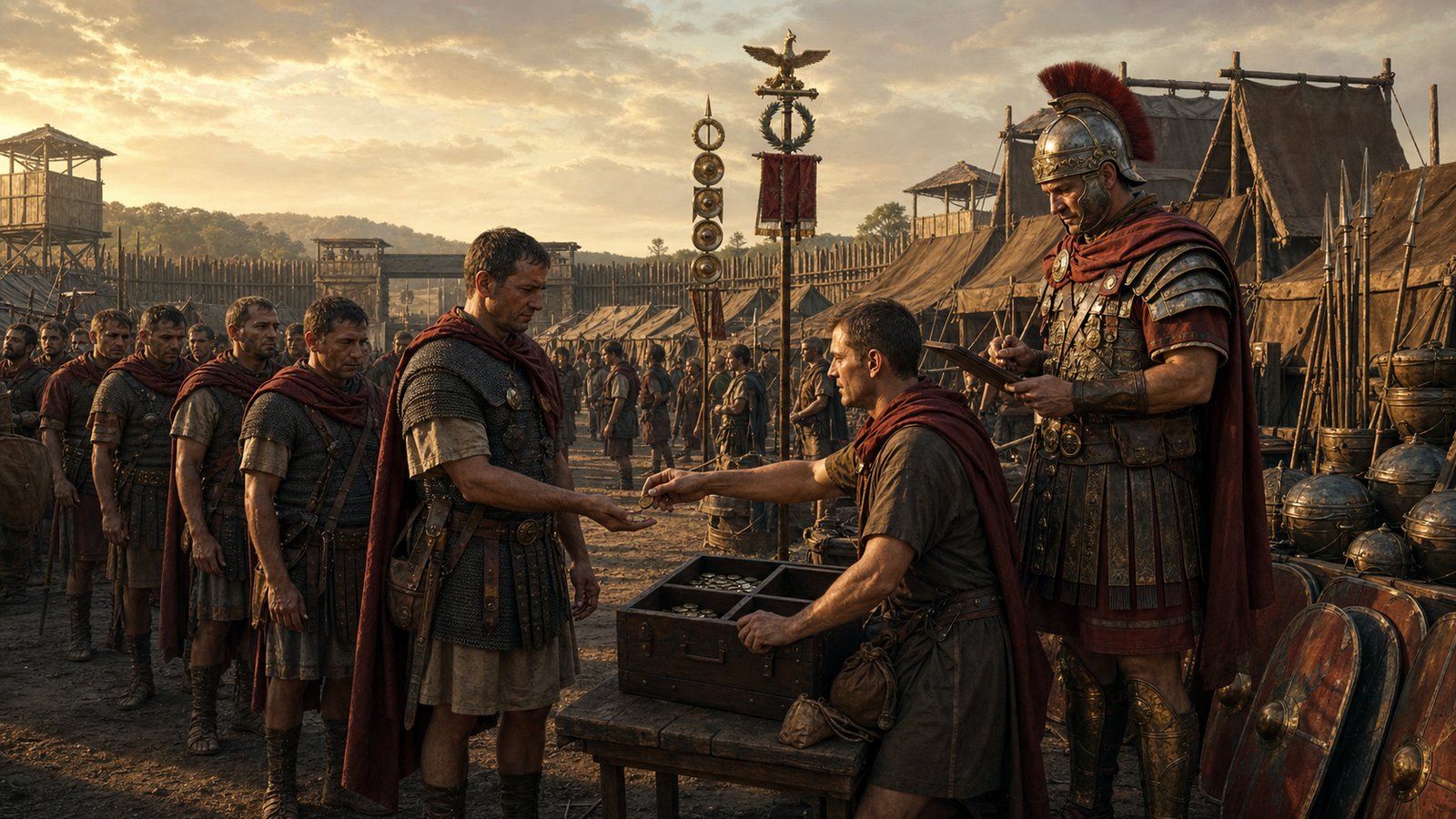
This made the army a career before it became a memory. The camp had routines. The unit had hierarchies. The centurion’s authority was not symbolic when he was standing in front of a tired line of men. A soldier’s body learned Rome before his imagination did.
Pay Made Loyalty Practical
Roman soldiers could be loyal for many reasons: pride, oath, fear, comradeship, ambition, hatred of an enemy, devotion to a commander. But pay made loyalty practical. An army that expects long service has to make service survivable. Wages, donatives, equipment, food supply, and the hope of eventual reward connected the ordinary soldier to the imperial system.
Augustus understood this connection. In the Res Gestae, he claimed to have settled about 300,000 veterans in colonies or sent them back to their towns with monetary rewards. He also boasted of paying enormous sums for veteran land: about 600 million sesterces in Italy and 260 million in the provinces. Those numbers are propaganda, but they reveal the scale of the problem. Rome’s soldiers could not be treated as temporary extras once the fighting stopped. They had to be paid off, placed, remembered, or feared.
The soldier’s career therefore linked the battlefield to the treasury. A general who could promise money and settlement was not only managing morale. He was building political power.
The Frontier Was Also an Office
The documents from Vindolanda are useful because they pull the army down from the triumphal arch and back into daily life. The tablets preserve reports, requests, lists, and letters from a fort community near the northern frontier. They show an army that wrote things down, asked for supplies, managed absences, sent invitations, and lived among relationships as well as weapons.
One famous tablet preserves Claudia Severa’s birthday invitation to Sulpicia Lepidina. It is not a battle order. It is a woman’s social note from a military world. That small survival is valuable because it reminds us that forts were not only places where soldiers waited to fight. They were communities with households, servants, traders, officers’ families, routines, and status games.
A Roman military career therefore had a social geography. Men served in named units, under known officers, at particular posts. They learned landscapes and local dangers. They became part of a frontier machine that depended on paperwork as much as sword strokes.
Discipline Created Identity
Discipline did more than prevent disorder. It gave soldiers a shared language of endurance. A man who survived training, punishment, marches, and camp labor had been marked by the institution. His identity became tied to the unit, the standard, the oath, and the men beside him.
That is why the loss of standards could hurt Rome so deeply in other stories. Standards were not decorative poles. They concentrated memory, honor, and collective identity. The soldier’s career was lived beneath them. Pay could be counted; honor had to be seen.
The career also carried risk in both directions. The state needed soldiers to obey. Soldiers learned that emperors needed armies to survive. When a military life lasts years, the army becomes a political audience. It can reward rulers with loyalty, but it can also learn its own leverage.
Veterans Were the Empire’s Memory in the Ground
Discharge did not erase the army. It spread it. Military diplomas record grants of citizenship and legal privilege to auxiliary veterans after service. Colonies and settlements placed former soldiers into provincial landscapes. A veteran might become a farmer, neighbor, local patron, or reminder that Roman power had passed through a man’s body before reaching a town’s fields.
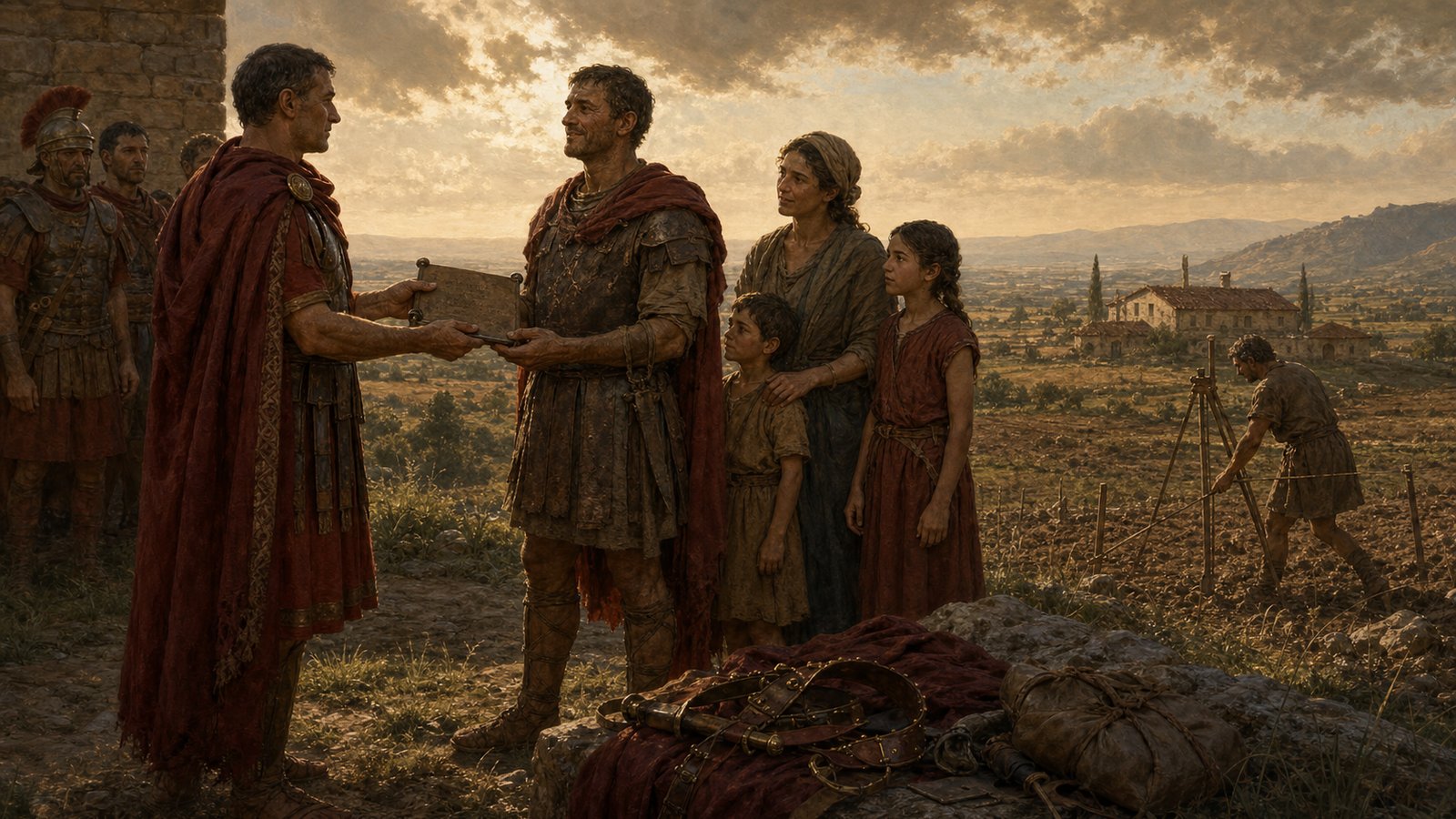
There was dignity in that bargain, but also tension. If a soldier gave his youth to the state, what exactly did the state owe him? Land could be a reward, but land had previous owners and local consequences. Cash could settle an account, but not always a life. Citizenship could transform a family’s future, especially for auxiliary veterans, but it came only after years of service and survival.
Seen this way, the Roman army’s legend is incomplete without the career beneath it. The legion was not only a machine for winning battles. It was a long system for converting human time into imperial reach.
The Legend Was Built From Ordinary Years
Rome remembered the army through victories, disasters, standards, emperors, and famous commanders. Soldiers lived it through ordinary years. A man’s career could include boredom, terror, pride, illness, friendship, injury, paperwork, pay, and the hope that discharge would not turn into another broken promise.
The army became legendary because it did this at scale. It turned discipline into identity and identity into state power. The eagle on the standard mattered, but so did the tired man standing below it, calculating how many years remained before Rome finally paid its debt.
The Career Outlasted the Campaign
This is why the army cannot be reduced to its most cinematic moments. A battle might last a day. A career consumed years. A soldier’s real bargain included the morning inspection, the route march, the pay record, the tent group, the officer’s temper, the winter camp, and the uncertain promise of discharge. Those ordinary pressures are less famous than Caesar or Trajan, but they are what made imperial reach repeatable.
The physical evidence keeps pulling us back to that scale. Diplomas, tablets, inscriptions, fort plans, and veteran settlements show an institution that reached into paperwork, family life, and local economies. Rome’s army was legendary because it was practical first. It could make men march, wait, write, build, obey, remember, and eventually carry the empire’s habits home.
Sources
- Vegetius, Epitoma Rei Militaris, 1.9–1.13
- Augustus, Res Gestae, 3, 15–16
- Vindolanda Tablets Online
- Vindolanda Tablet 291
- Roman Inscriptions of Britain, military diplomas
- Encyclopaedia Britannica, “The army and the frontier”