
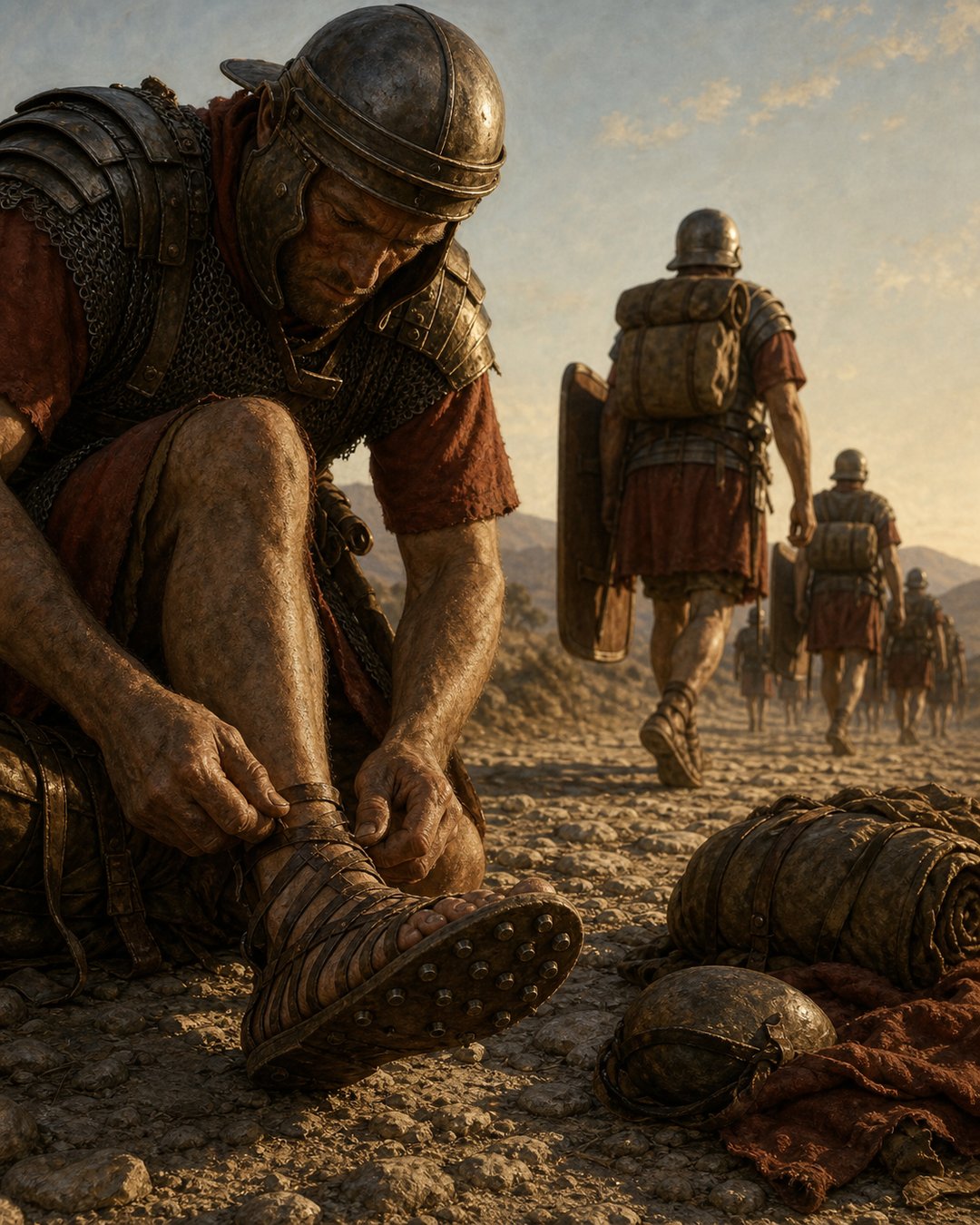
A legionary could carry shield, weapons, tools, food and part of a camp, yet the whole load met the road through two pieces of leather. Under each foot, iron hobnails struck paving, bit earth and slowly loosened. One torn strap or raised nail could turn disciplined movement into a bleeding problem measured at every step.
Caligae looked simpler than armor, but they belonged to the same military system. Cut uppers held the foot; layered soles absorbed wear; nails protected leather and altered grip. Their success depended on fit, repair and supply. Roman roads helped armies move, but no road marched for the soldier whose footwear failed.
One piece of leather became a fitted cage
The upper of a caliga was cut into straps and openings rather than sewn as a closed modern boot. When drawn around the foot and ankle, those sections formed a flexible cage. The design held the heel and instep while leaving much of the foot exposed to air, water, dust and the eye of the soldier checking it.
Cutting demanded judgment because leather stretches differently across a hide. A worker had to orient pieces, avoid weak damage and leave enough material for fastening without creating folds that rubbed. A pattern could be repeated, but human feet were not identical. Final comfort depended on adjustment after the general form left the bench.
Openwork reduced trapped heat and let water escape more readily than a closed shoe, useful features during long movement. Exposure carried costs. Dust entered, cold reached skin and grit could lodge where straps crossed. The design exchanged complete protection for ventilation, flexibility and the ability to inspect trouble quickly.
The result was recognizably military without being uniform in every surviving detail. Archaeological soles vary in outline and construction, reminding us that production crossed workshops, periods and regions. Caligae formed a family of practical solutions rather than one eternally fixed issue item stamped from a modern factory.
Layered soles carried the army’s weight
Beneath the upper, several pieces of leather could be assembled into a thick sole. Layers distributed pressure and delayed the moment when ground cut through to skin. Each additional thickness added protection but also weight and stiffness, so construction balanced durability against the need for a foot to bend through thousands of steps.
The sole received more than body weight. A marching soldier loaded it with armor, shield, weapons, food and tools. Downhill travel drove the foot forward; uneven stones twisted the ankle; repeated impact compressed the same heel and forefoot zones. Footwear was where military inventory became a bodily force.
Fit decided whether thickness helped. A sole extending badly beyond the foot could catch; one too narrow let the edge bear pressure. Straps that shifted allowed friction to repeat in one place until skin opened. The best materials could still fail if sizing translated a generic object poorly onto a particular body.
This makes the caliga a useful companion to the Roman army as a long career. Service was not only a sequence of battles. It was years of maintaining the ordinary equipment that allowed a soldier to stand watch, dig, train and arrive where fighting might occur.
Hobnails made iron meet every road
Iron hobnails were driven through the sole in patterns that spread wear and helped hold layers together. Their heads met the ground before much of the leather did. On firm earth they could bite; on rough paving they took abrasion; on smooth wet stone they could also slip. Traction changed with the surface.
Nail layout mattered because pressure followed it into the foot. A head standing proud inside the sole or a point working loose could become torture under a loaded march. Dense iron improved endurance only while each nail remained seated correctly. Inspection turned a cheap component into reliable equipment.
The sound was part of military presence. Many nailed soles striking stone produced a hard rhythm before a column filled the street. That noise was not the purpose of the footwear, but it made movement audible. Civilians could hear organized bodies approaching through the repeated contact of iron and road.
Roads were therefore active partners rather than neutral lines. Roman roads concentrated state movement, while hobnails negotiated each local surface. Paving protected a route from mud but punished iron differently; loose ground preserved nails while demanding more energy from the leg.
Marching exposed small defects without mercy
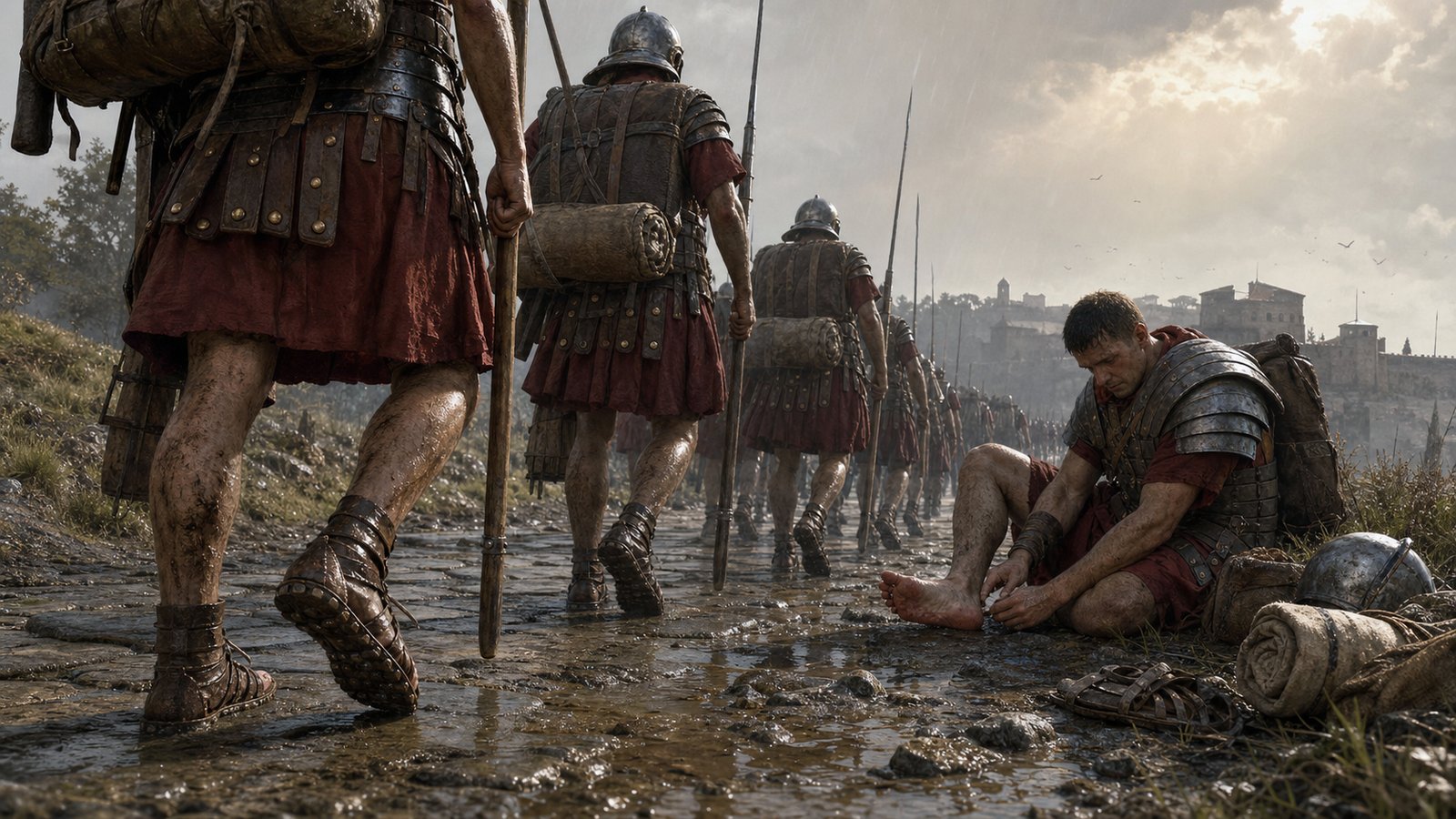
A short fitting could hide a problem that a full day revealed. Heat swelled feet, rain softened leather and grit accumulated under straps. A small pressure point repeated thousands of times became a blister; a blister changed gait; altered gait shifted weight to knee, hip and the other foot. Equipment failure traveled up the body.
The soldier could respond by tightening, loosening, padding or stopping to remove grit. Each correction consumed attention and time. In a unit, one person’s feet became a shared concern because a column’s pace depended on bodies remaining together. Discipline could demand endurance, but it could not order torn skin to become sound.
Terrain multiplied uncertainty. Sharp rock cut edges, mud pulled at soles and steep slopes changed where straps loaded the foot. A design effective on one surface might feel treacherous on another. Roman military mobility came from adaptable routines around equipment, not from possessing a magical sandal that ignored geography.
Accounts of armies emphasize distance and speed because those outcomes mattered strategically. Underneath them lay repeated private sensations: nail impact, damp leather, tightening cords and the first warning heat of friction. Caligae translated imperial scale into the intimate question of whether the next step remained tolerable.
Repair benches belonged to military logistics
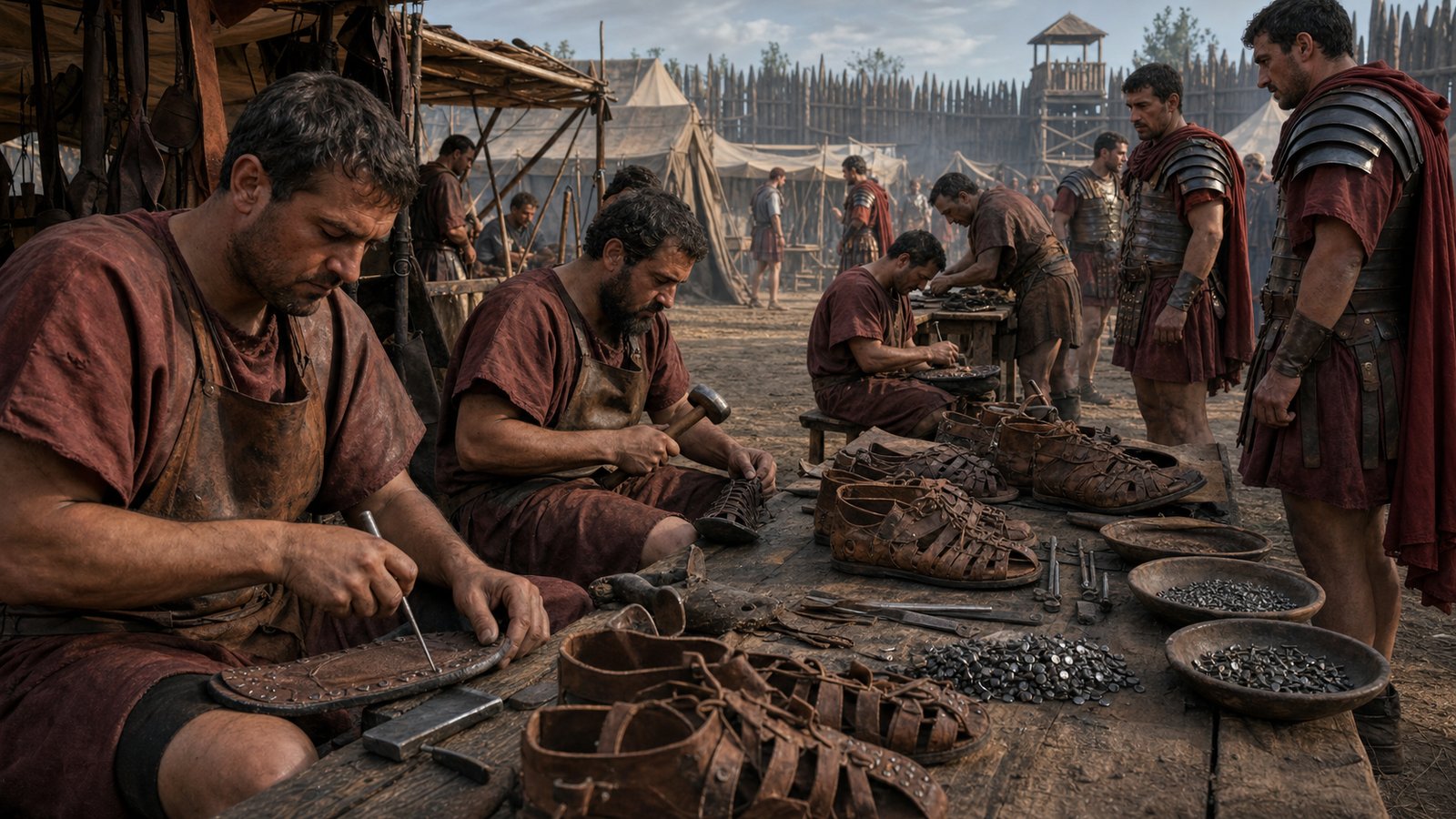
Worn footwear did not always need complete replacement. A worker could reset nails, add leather, replace a fastening or cut another upper. Such repairs required awls, knives, hammers, lasts or shaping knowledge, plus stores of hide and iron. Mobility depended on craft traveling with or remaining accessible to the force.
Repair also required timing. Waiting until a sole separated during a march turned maintenance into emergency. Inspecting footwear in camp allowed defects to be handled before departure, alongside sharpening, strap repair and food preparation. The quiet evening bench protected tomorrow’s schedule as surely as the route plan did.
Supply linked soldiers to animals, tanners, smiths and transport. Hides had to be processed; nails forged in quantity; finished or semi-finished pieces distributed. No heroic image of a self-contained legionary can erase this chain. His famous endurance rested on workers and materials beyond the battlefield.
The repair system resembled the repeatable labor of Roman marching camps. A camp converted open ground into temporary order; maintenance converted damaged equipment back into usable order. Both succeeded through routines performed before crisis made their absence obvious.
A child’s nickname preserved the sandal’s identity
The name Caligula is the diminutive of caliga, commonly explained through the small military footwear worn by the future emperor while he lived among soldiers as a child. The nickname outlasted the camp scene that produced it and became attached to one of Rome’s most notorious imperial reputations.
The anecdote shows how recognizable military footwear was. A child dressed in miniature soldier’s equipment could be identified through the little boots at his feet. Caligae signaled belonging before anyone tested their performance on a long march. Practical equipment also carried social meaning visible at a glance.
For adult soldiers, however, symbolism could not replace function. A sandal might mark military identity, but it still had to survive wet roads and loaded movement. The distance between costume and equipment lay in repeated use. Leather and nails earned their meaning through abrasion.
Roman caligae turned leather and iron into marching equipment by protecting soles, shaping traction and making repair possible. Their achievement was modest and relentless: they kept the road from reaching the foot too quickly. Every successful column rested on that bargain, renewed one inspected nail and one tolerable step at a time.
Sources & Further Reading
- Smith Dictionary, Caliga
- World History Encyclopedia, Roman Army
- Caligae