
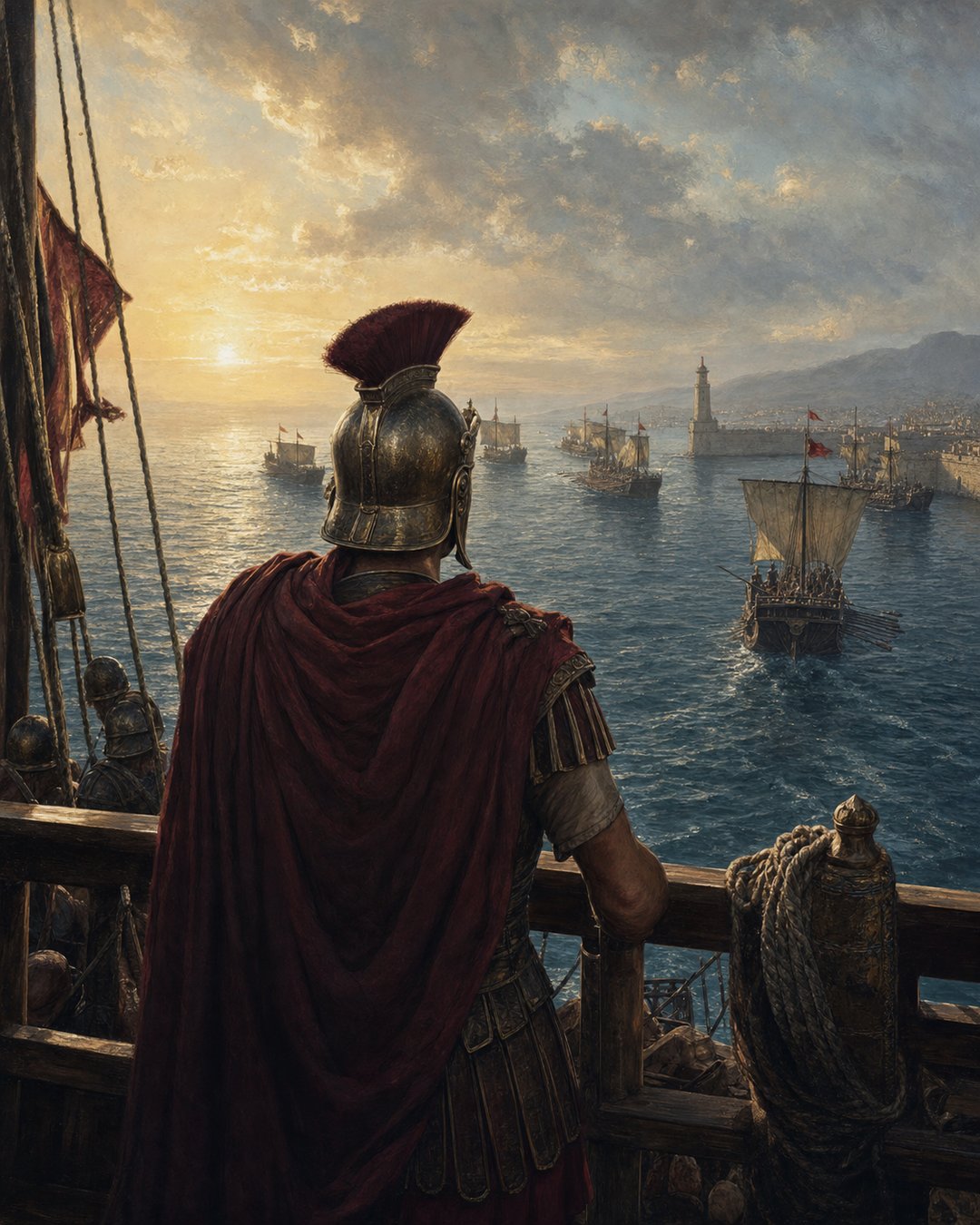
In 67 BCE, Romans confronted piracy as a problem that reached from a captured ship to the price of bread. Raiding had disrupted routes, embarrassed magistrates and made the Mediterranean look less like Rome’s road than an open field of danger. The proposed answer was extraordinary: give Gnaeus Pompeius Magnus command over the entire sea and its coasts.
The tribune Aulus Gabinius carried the law that bears his name. Ancient accounts describe authority extending through the Mediterranean and up to fifty miles inland, supported by large sums, ships, troops and subordinate commanders. Its political mechanism mattered as much as its military purpose. Separate provincial responses would be replaced by one coordinated command.
Pompey’s campaign was famously fast. Yet speed should not make the vote look inevitable. Senators resisted the concentration of power; crowds favored a solution to a crisis they could feel in markets and shipping. The Lex Gabinia marks the moment when an emergency argument made a near-imperial command appear compatible with saving the Republic.
Piracy Became a Food and Authority Crisis
Mediterranean piracy was not one fleet under one flag. Groups operated from numerous coastal bases, attacked ships and settlements, and profited from captives and cargo. Rome’s expansion had created traffic worth seizing while repeated wars and uneven provincial control left opportunities along long shorelines.
Ancient writers heighten the disorder, sometimes giving enormous numbers for pirate ships and captured places. Their rhetoric needs caution, but the political result is secure: by the late 60s BCE, Romans treated piracy as an emergency. Attacks no longer seemed distant when grain movement and Italy’s approaches were threatened.
Plutarch says the pirates’ power extended over the whole sea and left it unnavigable and closed to trade. The language is dramatic, yet it explains why an urban crowd cared. Rome depended on imported grain. Disruption did not need to starve every household before uncertainty lifted prices and turned insecurity into anger.
The fear resembled the vulnerability explored in Rome’s grain-ship politics. Control of supply routes was never only logistics. It tested whether magistrates, Senate and empire could deliver the basic stability their rule claimed to provide.
Aulus Gabinius Asked the Assembly to Break Normal Boundaries
Aulus Gabinius was tribune of the plebs in 67 BCE. He proposed entrusting the anti-pirate war to a commander of consular rank. Although the text did not have to name Pompey, supporters understood who possessed the prestige, recent victories and popular confidence to receive it.
Normal Roman commands were limited by province, purpose and time. Gabinius proposed a geographic field as large as the Mediterranean, with authority on the sea and for a stated distance inland. The shore clause mattered because ships depended on harbors, supply points and refuges; pursuit that stopped at the waterline would leave bases intact.
Plutarch gives the inland reach as fifty miles. Appian reports broad resources and extensive delegated command. Precise totals vary among sources, a warning against treating every ancient figure as an administrative ledger. The common structure is unmistakable: one commander could mobilize multiple forces across regions ordinarily divided among officials.
The assembly therefore voted on more than a naval operation. It voted on coordination through hierarchy. Gabinius made fragmentation itself part of the diagnosis, then offered concentrated imperium as the cure. The constitutional risk was embedded inside the promised efficiency.
Senatorial Resistance Met a Crowd Watching the Market
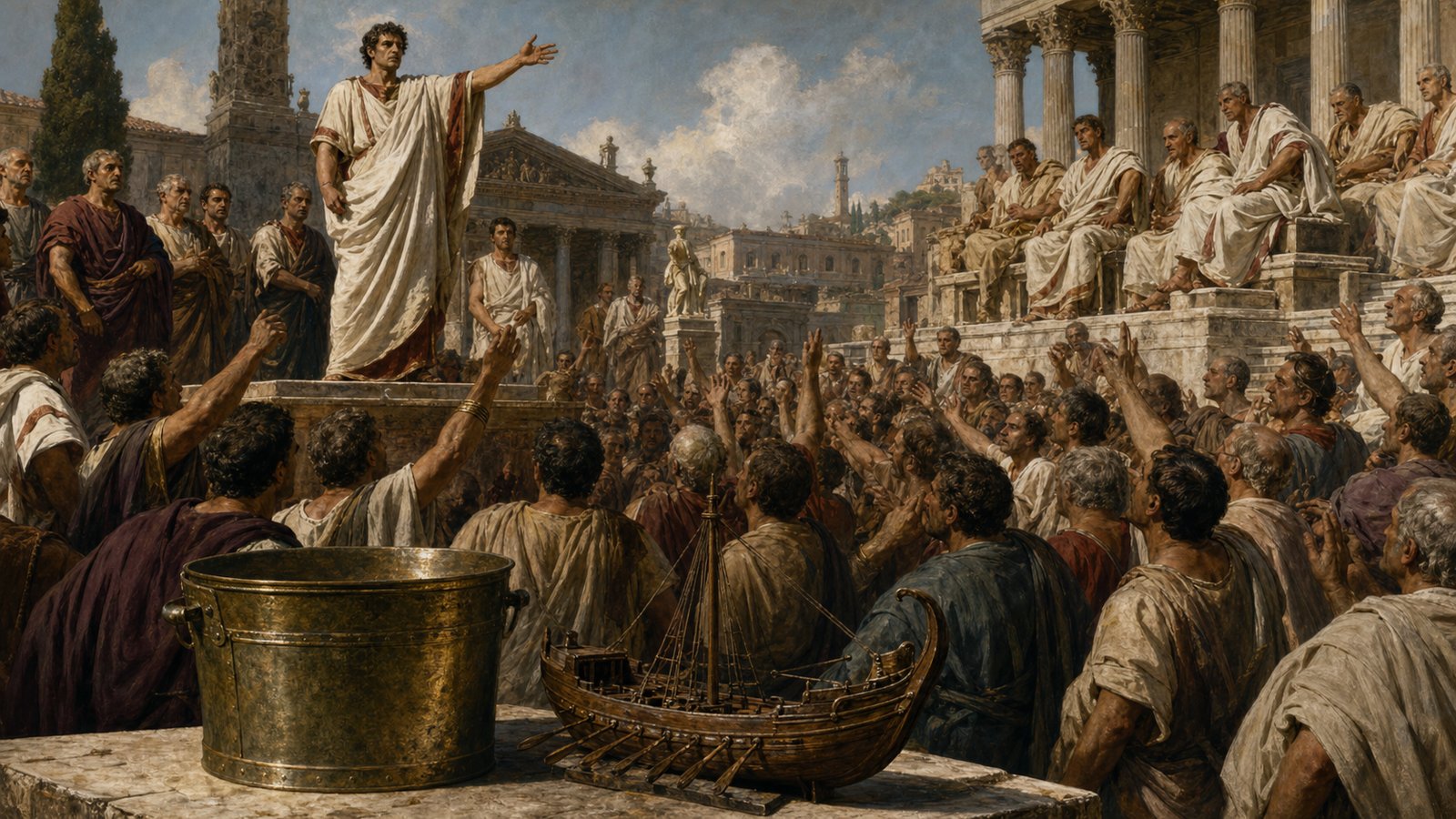
Many senators opposed the proposal. Their objections were not irrational nostalgia. A command covering the sea, coast, money, ships and legates could overshadow ordinary magistrates and provincial governors. The Republic’s competitive offices were designed to prevent one career from absorbing every theater at once.
Ancient narratives describe fierce public pressure and theatrical confrontations around the debate. Political crowds in these texts can be simplified into heroes and obstructionists, but Pompey’s popularity was real. He had already received unusual commands and returned from campaigns with a reputation for completing difficult assignments.
Cassius Dio connects the debate with an immediate movement in prices when the law passed, a detail that captures expectation even if the exact market response cannot be reconstructed. Voters did not need to inspect pirate coves. Belief that shipping would reopen could itself change confidence.
This helps explain why institutional caution lost. An abstract warning about precedent competed with a concrete promise of safer grain and seas. Like other Roman legal performances, the vote made authority visible by assigning a practical object—here the entire Mediterranean—to a named command.
Thirteen Sectors Turned One Sea into Manageable Operations
Plutarch describes Pompey dividing the Mediterranean into thirteen districts, assigning ships and subordinate commanders to each. The number matters because it reveals the campaign’s organizational answer. Concentration at the top did not mean one fleet sailing everywhere together. It meant coordinated delegation under one plan.
Sectoring reduced escape. Pressure in one district could drive pirate ships toward forces in another rather than into an unguarded sea. Patrols, intelligence, port control and rapid movement became parts of a system. Pompey retained the authority to reinforce, judge priorities and connect local actions.
Ancient accounts say the western sea was cleared in roughly forty days before effort shifted east. That celebrated timetable belongs to Pompey’s public legend, but the sequence is plausible as strategy: secure Italy’s supply approaches and western routes, then concentrate resources against stronger eastern bases.
The mechanism was administrative before it was heroic. A sailor in one patrol saw only a portion of water; a legate managed one district; Pompey’s command joined them. The same hierarchy that alarmed senators enabled operations to proceed without waiting for a new negotiation whenever pursuit crossed a provincial seam.
Cilicia Ended in Surrender as Well as Battle
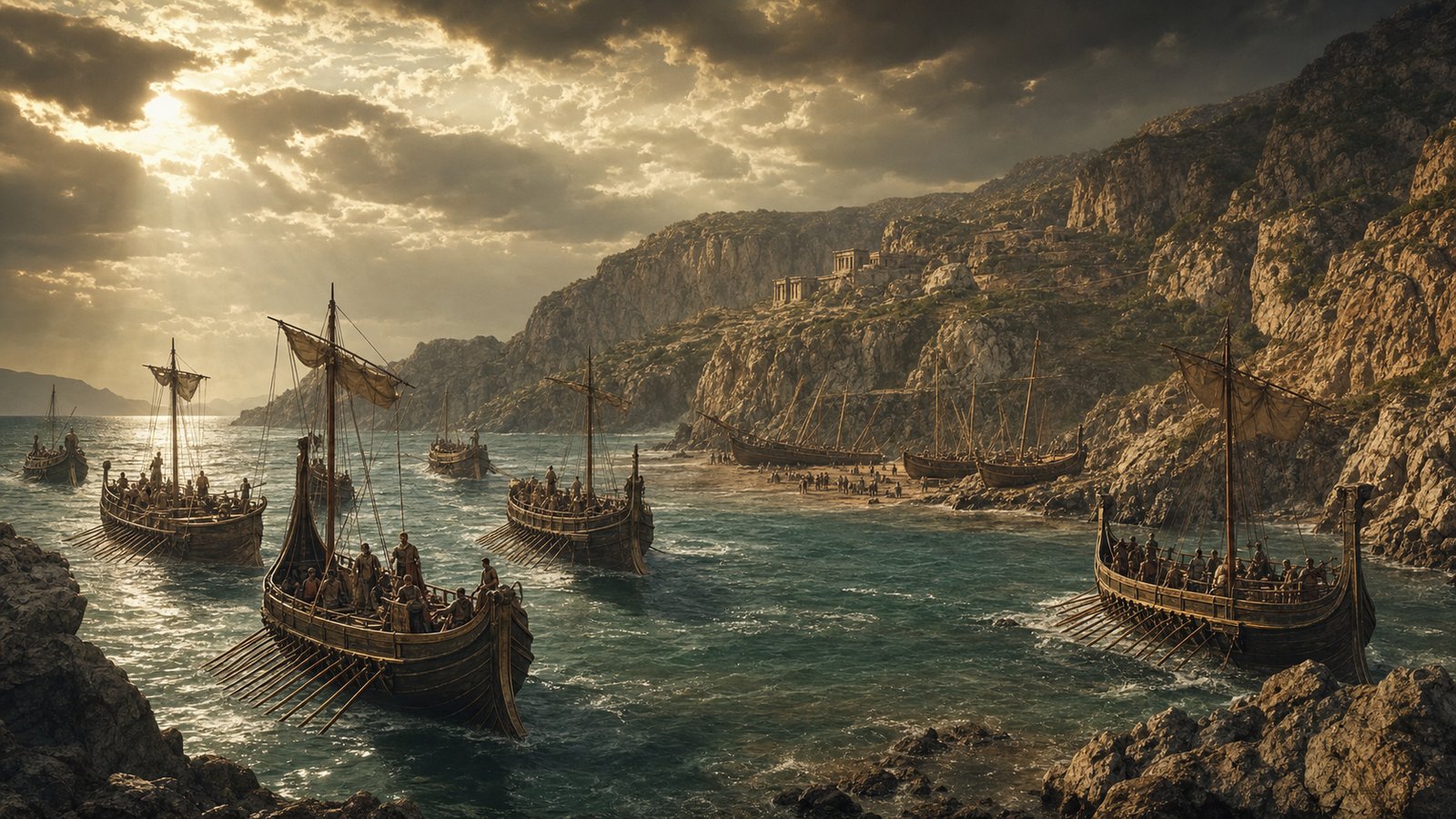
The campaign culminated against pirate strongholds associated with Cilicia. There was fighting, including a naval engagement near Coracesium, but ancient narratives emphasize surrender after Pompey demonstrated overwhelming reach. A successful blockade of choices could matter more than repeated ship-to-ship destruction.
Pompey did not execute every captive. Plutarch and Appian describe settlement policies that moved surrendered pirates away from vulnerable maritime habits into inland or established communities, including Soli, later called Pompeiopolis. The policy presented land, agriculture and civic life as tools of pacification.
These accounts also serve Pompey’s reputation for clemency. We should not mistake elite praise for the voice of every displaced person. Forced resettlement was coercive, and ancient totals are uncertain. Still, the policy distinguishes the campaign from a simple extermination story: command continued after surrender through decisions about where people could live.
The outcome was rapid enough that contemporaries connected Pompey personally with restored navigation. Success strengthened the argument that extraordinary scale had been necessary. It also made the next request for extraordinary authority easier, because demonstrated efficiency could be offered as its own constitutional defense.
Victory Against Pirates Opened the Door to Another Command
In the following year, the Lex Manilia transferred the war against Mithridates to Pompey and expanded his eastern responsibilities. Cicero’s surviving speech for that law praises Pompey’s abilities and treats the pirate victory as evidence. The Lex Gabinia had therefore become a precedent almost immediately.
Romans did not abolish the Republic in 67 BCE. Assemblies voted, tribunes proposed, opponents spoke, and a lawful mandate defined the office. Yet legality could concentrate power rather than limit it. An emergency measure passed through republican forms while changing what citizens considered an acceptable command.
Pompey’s later career exposes the bargain. Exceptional resources could solve a fragmented military problem, but they also built a political figure whose dignitas depended on commands equal to his reputation. The state repeatedly turned to the same man because previous success had made alternatives look smaller.
The Lex Gabinia mattered because it joined bread, fear, geography and law. Piracy made many boundaries look like excuses. Gabinius offered a single chain of command, and voters accepted the risk. Pompey cleared routes with remarkable speed; Rome also learned that an emergency could place almost the whole Mediterranean inside one citizen’s sphere.
Sources & Further Reading
- Plutarch, Life of Pompey, 24–28
- Appian, Mithridatic Wars, 92–96
- Cassius Dio, Roman History, 36.20–37
- Cicero, On the Command of Pompey