
In 1528, a vineyard worker on Lyon’s Croix-Rousse hill uncovered the lower part of a bronze inscription. Its columns did not preserve a law, an army list or a dedication to a god. They preserved an emperor speaking through interruptions, digressions and a blunt request that Rome stop treating provincial origin as a permanent barrier to its highest political order.
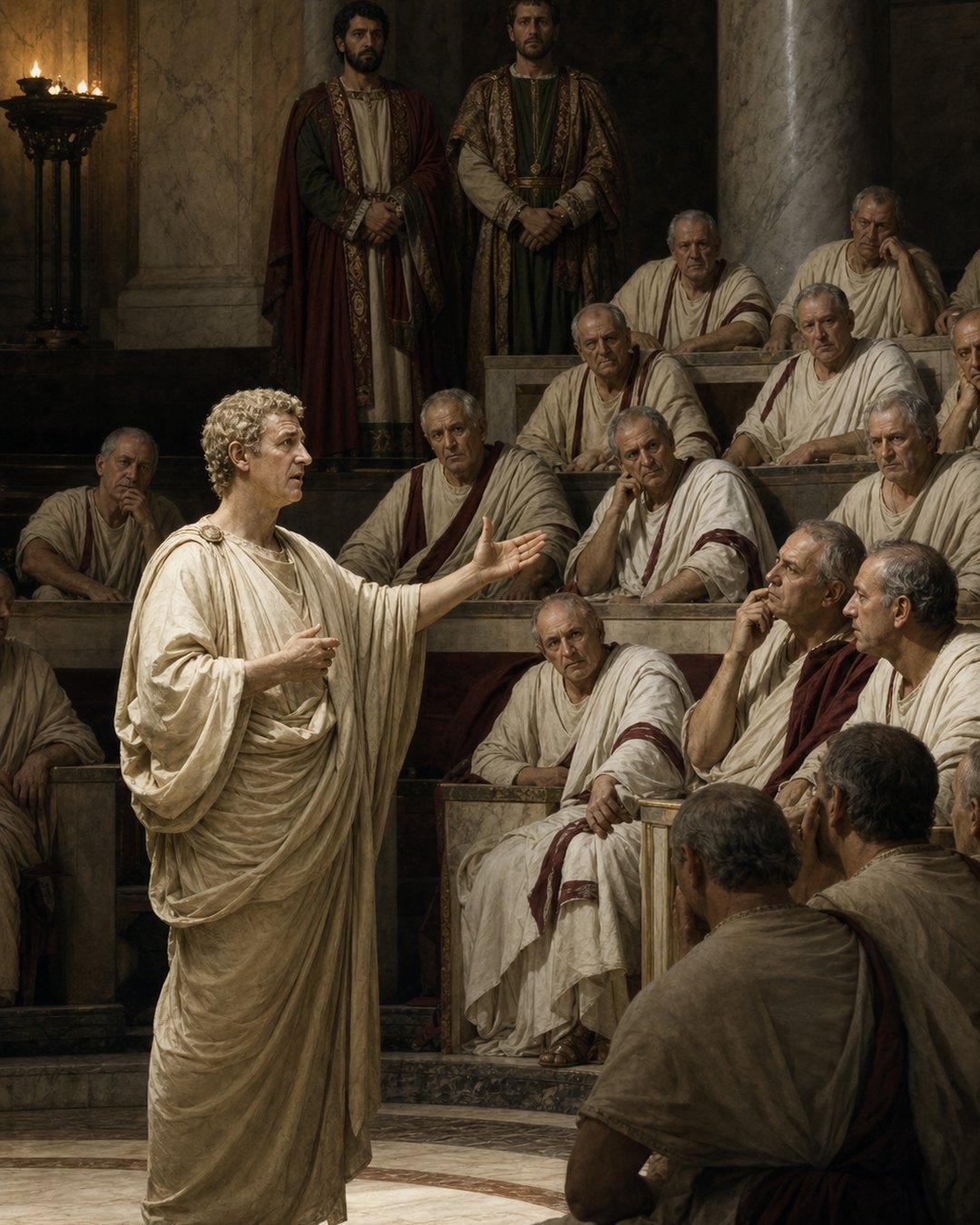
The speaker was Claudius, born at Lugdunum and addressing the Senate in AD 48. Leading men from the provinces of long-haired Gaul wanted access to senatorial office. Opponents saw old enemies and foreign manners. Claudius answered by retelling Roman history as a sequence of admissions: outsiders had repeatedly entered the community, held power and changed what “Roman” meant.
The bronze survives because people in Gaul decided that this argument mattered enough to display. Tacitus preserves another version in his Annals. Read together, text and object show three stages of political inclusion: a provincial petition, an imperial case before a reluctant Senate, and a local decision to turn the case itself into a monument.
The Petition Reached an Emperor Born at Lugdunum
Claudius had a personal connection to the place that preserved his words. He was born at Lugdunum in 10 BC, the first Roman emperor born outside Italy. The city also hosted the federal sanctuary where communities of the Three Gauls participated in the imperial cult. A request from Gallic notables therefore reached an emperor whose own biography complicated any simple division between Rome and province.
Tacitus places the debate in AD 48. Men from Gallia Comata—“long-haired Gaul,” the provinces beyond the older Romanized south—had already gained Roman citizenship and substantial wealth. Their immediate ambition was narrower and higher: the right to seek magistracies that could lead into the Senate. Citizenship did not automatically erase every rank barrier.
The distinction matters. The debate was not about admitting an entire population to equal office at once. It concerned wealthy provincial elites whose property and careers met the social threshold of the Roman governing class. Claudius was asking senators to accept that birthplace in recently conquered territory should not outweigh status, loyalty and service forever.
Rome had long used citizenship as a political instrument, a history explored in the evidence of military diplomas. The Gallic petition exposed the next boundary. A man could be a citizen and still encounter a closed door when he tried to enter the order that governed citizens.
Senators Turned Memory of Conquest into an Objection
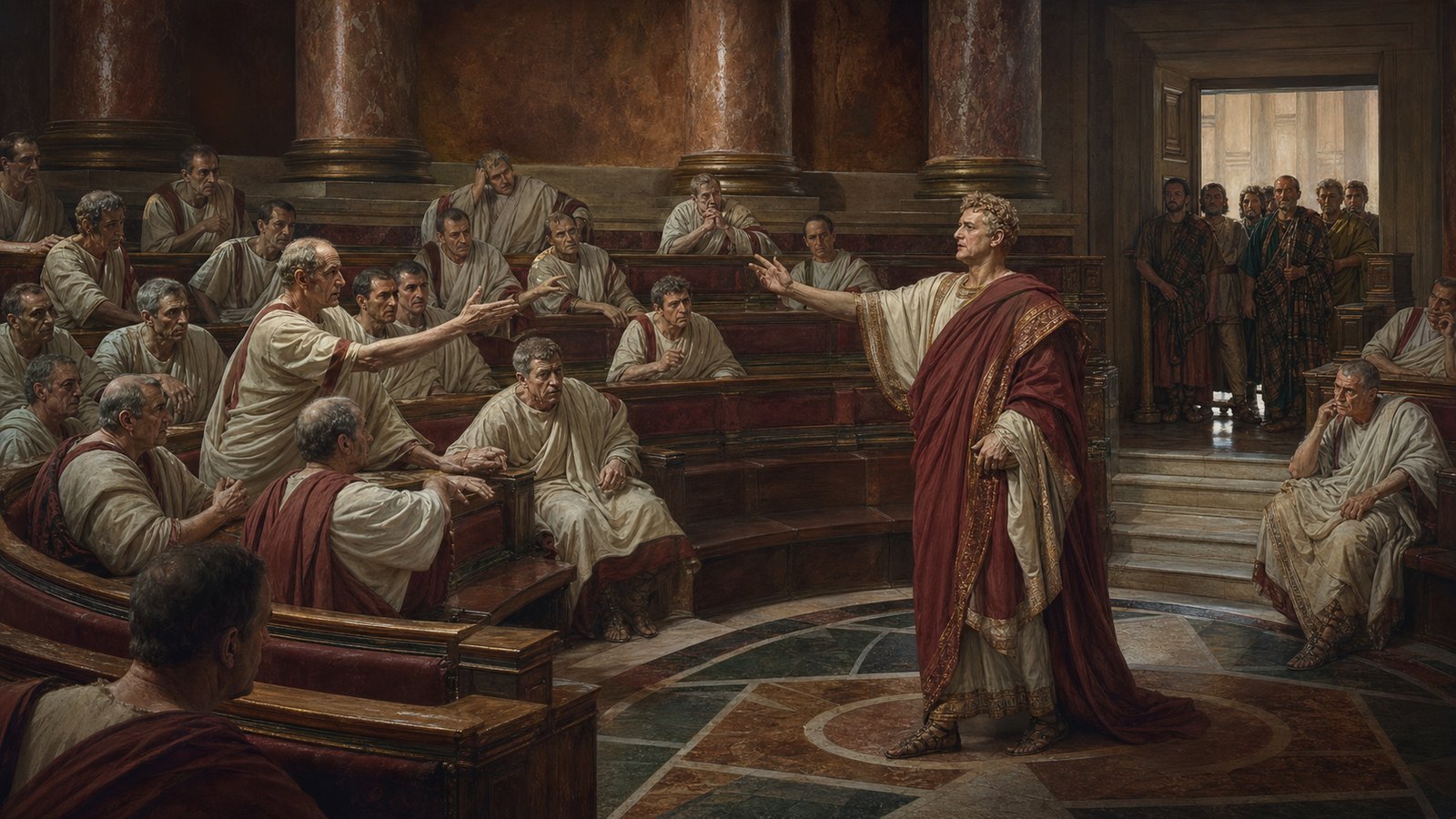
Tacitus gives the opposition a coherent case. Italy, the senators argued, was not so exhausted that it could not supply its own council. Their ancestors had faced danger without importing foreigners into the highest ranks. Provincial wealth would crowd out descendants of old Roman families, while the memory of Gallic war made admission feel like surrender after victory.
Those objections used time selectively. The conquest of Gaul by Julius Caesar lay roughly a century in the past, but hostility could be made politically present whenever exclusion needed a reason. Claudius’s bronze text acknowledges ten years of resistance to Caesar before answering it with a hundred years of subsequent loyalty.
The opponents also understood that a Senate was more than a room of individual officeholders. Membership created prestige for families and influence for cities. Admitting men from beyond Narbonese Gaul would move provincial networks into the centre of imperial decision-making. The fear was not imaginary; it was a struggle over who could convert wealth and citizenship into authority.
The form of the surviving tablet lets us hear that resistance indirectly. Claudius responds to an interruption and asks senators to let him move beyond the familiar provincial boundary. The polished monument did not erase the fact that his proposal met impatience in the chamber.
Claudius Rewrote Roman History as a History of Admission
Claudius did not claim that ancestry was irrelevant. He attacked the idea that Roman ancestry had ever been pure or politically fixed. Kings had arrived from elsewhere. Servius Tullius, in Claudius’s unusual account, was the Etruscan companion Mastarna before he ruled at Rome. Families from Sabine country had entered the citizen body, including the emperor’s own Claudian ancestors.
The argument moved by precedent rather than sentiment. If Rome had repeatedly absorbed capable outsiders, then excluding Gauls because their grandfathers had been enemies contradicted the mechanism that had enlarged Roman power. Claudius made change look conservative: admission was not a break with Roman practice but one of its oldest practices.
His historical detours could sound pedantic. The bronze records an emperor willing to pause over names, constitutional changes and competing accounts of early kings. Yet the detail served a practical purpose. Each example separated Roman identity from one birthplace and attached it instead to incorporation, office and loyalty.
This was political history used inside politics. The article on the Senate’s changing authority traces the institution’s larger transformation under emperors. Here an emperor still needed to persuade, answer objections and allow the senatorial order to shape how his initiative would begin.
The Aedui Became the First Test of the New Rule
Tacitus reports that Claudius’s speech shifted opinion, but the result was not unlimited admission. The Aedui received the first right to become senators. They could claim an unusually old formal bond with Rome and the honorific title “brothers of the Roman people,” which made them the safest test case.
That limited outcome reveals negotiation. Claudius pleaded broadly for long-haired Gaul, while the first practical opening went to one community with an established diplomatic pedigree. The barrier moved, but it did not disappear. Roman inclusion often advanced through ranked precedents rather than a single universal declaration.
The decision also created a route other communities could cite later. Once Gallic birth had ceased to be an absolute obstacle for Aeduan elites, arguments against the next qualified provincial became harder to present as timeless principle. A narrow exception could become a constitutional foothold.
This process resembles the municipal world preserved by the bronze law of Irni: imperial government worked through precise statuses, offices and local hierarchies. The Lyon debate concerned a higher rung, but it likewise translated broad belonging into specific eligibility.
Lugdunum Put the Argument, Not Just the Victory, in Bronze
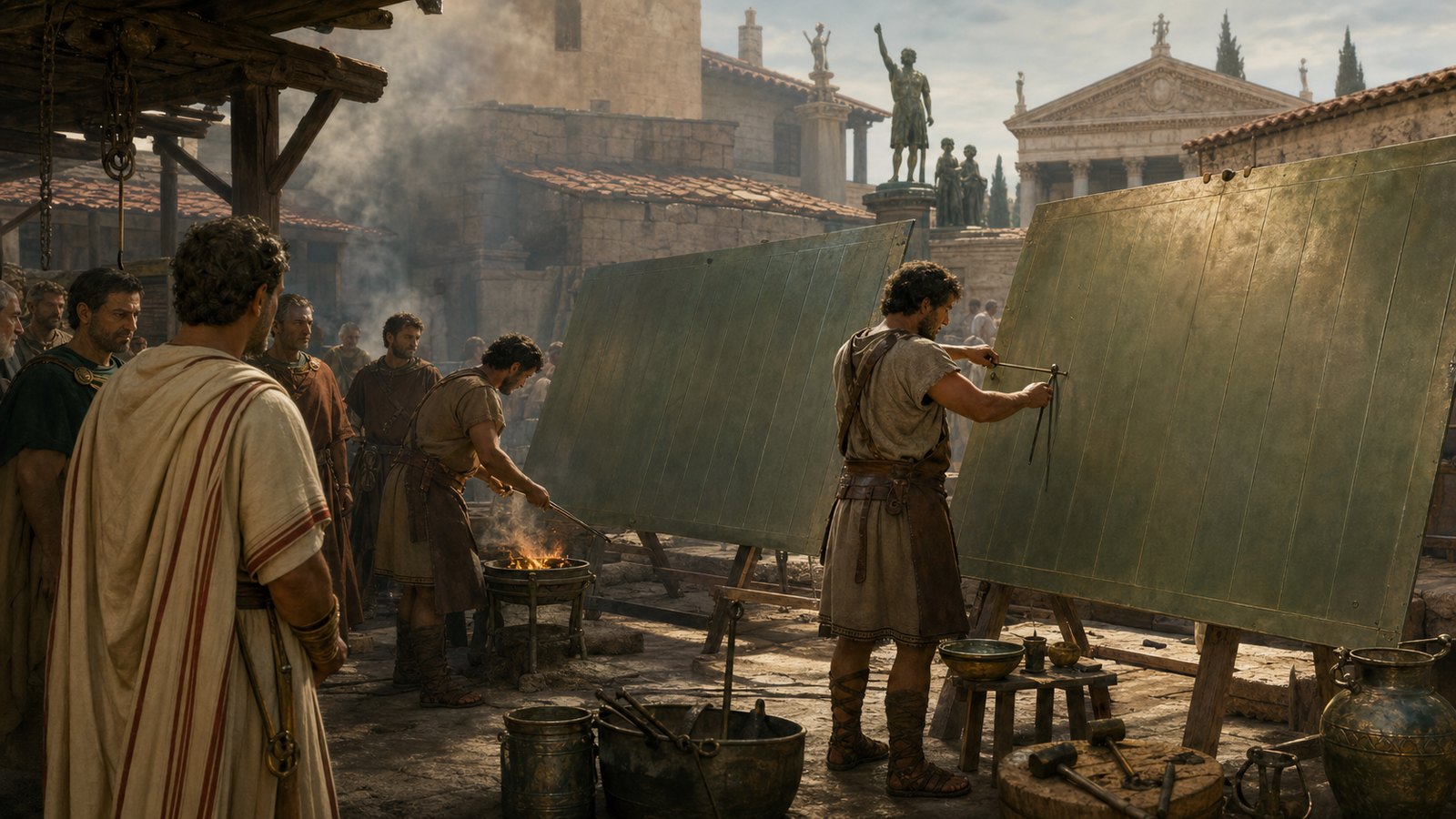
The surviving object is the lower portion of a much larger tablet, arranged in two columns. It was found near the Sanctuary of the Three Gauls and is now held at Lugdunum museum. The findspot makes provincial commemoration central to the story. People in Lyon chose to preserve the emperor’s reasoning where Gallic communities gathered.
The tablet is not identical to Tacitus’s account. Tacitus compresses, rearranges and literary-shapes the debate for readers of the Annals. The inscription wanders in recognizably Claudian ways and includes details absent from the historian. Neither should be treated as a modern recording; their differences show how a political speech could be transmitted for different audiences.
The material choice was itself an argument. Bronze gave the words weight, scale and durability. A provincial viewer did not merely learn that some Gauls had entered the Senate. The monument displayed why the emperor said they could belong: Rome had always grown by making former outsiders part of its ruling system.
Only part of that display survived, and chance recovery in a sixteenth-century vineyard returned it to view. Yet the fragment still catches policy in motion. Senators object, Claudius reaches into early Roman history, the Aedui gain the first concession, and Lugdunum fixes the argument on metal. The tablet preserves inclusion neither as inevitable progress nor imperial generosity, but as a claim that had to be made, resisted, narrowed and remembered.