
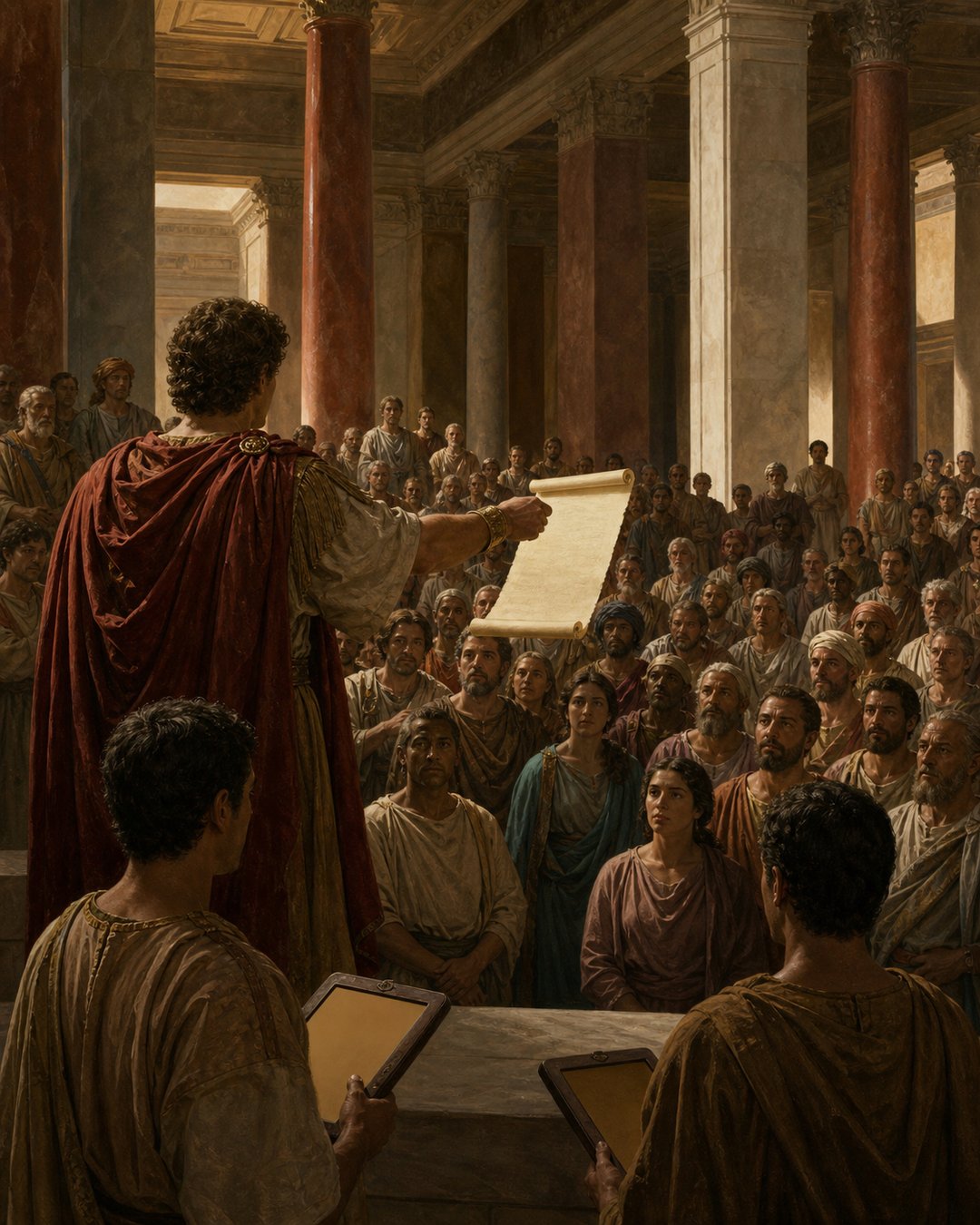
A damaged papyrus preserves the opening of an imperial decision that changed the legal identity of millions. In AD 212, Marcus Aurelius Antoninus—better known as Caracalla—extended Roman citizenship to almost every free inhabitant of the empire.
The decree did not flatten the empire into one uniform society. It did something narrower and still enormous: it moved the legal boundary that separated Roman citizens from most free provincials. Local cities, languages, taxes, ranks and customs remained, but citizenship ceased to be the scarce reward it had once been.
Rome had spent centuries distributing that status through conquest, negotiation, military service and individual grants. Caracalla converted a long expansion into a near-universal rule. The surviving evidence then forces a harder question: why did an emperor famous for violence choose inclusion on this scale?
The Empire Had Been Manufacturing Citizens for Centuries
Early Roman citizenship belonged to a city community. Expansion made that simple definition impossible. Rome ruled Italian allies, overseas provinces, chartered towns, colonies and communities whose inhabitants possessed different combinations of local and Roman rights.
The Social War transformed Italy. After conflict with Rome’s Italian allies, laws of the early first century BC extended citizenship through much of the peninsula. The citizen body could therefore grow dramatically without the old city disappearing.
Under the empire, the frontier of status kept moving. Emperors granted citizenship to individuals and communities. Enslaved people formally freed by Roman citizens could enter the citizen body under legal conditions. Auxiliary soldiers commonly received citizenship after completing long service, with bronze military diplomas recording grants to veterans and families.
These routes made citizenship valuable precisely because it was uneven. It affected marriage, inheritance, access to Roman legal forms and a person’s relationship to imperial authority. A provincial could participate in local civic life without being a Roman citizen, while a citizen might also retain a powerful hometown identity.
The archive’s look at a wooden password tablet moving through a Roman camp shows an army organized through repeated acts of recognition. Citizenship worked at a larger scale in a similar administrative world: status had to be claimed, witnessed and written down before it could shape legal consequences.
By Caracalla’s reign, grants had already made citizens common across the provinces. AD 212 was revolutionary not because citizenship had never traveled, but because the decree replaced many separate pathways with a presumption broad enough to cover almost every free imperial subject.
A Fragment in Giessen Preserves the Decree’s Voice
The measure is conventionally called the Constitutio Antoniniana, after Caracalla’s official name. No pristine marble copy survives. The most important documentary witness is a Greek papyrus now associated with Giessen, usually identified as Papyrus Gissensis 40.
Its surface is broken and its wording disputed. Enough survives for scholars to connect the text with a grant of Roman citizenship to inhabitants of the empire and with the emperor’s language of thanksgiving to the gods. The damage matters because modern summaries can sound more exact than the document permits.
The clearest ancient narrative statement comes from Cassius Dio. He says Caracalla made all people in the Roman world citizens, while presenting the act as an honor. Dio immediately supplies a hostile fiscal explanation: the emperor wanted more people liable to taxes imposed on Roman citizens, including levies connected with inheritances and manumissions.
Ulpian, the great jurist writing in the Severan age, gives the legal transformation in a compressed form: those in the Roman world were made Roman citizens by an imperial constitution. That juristic memory confirms the breadth of the change without preserving a complete administrative manual.
One exception in the papyrus has generated continuing argument: the dediticii. The term could refer to people or communities in a degraded surrendered status, while Roman manumission law also used it for a disfavored category of freed people. The fragment does not allow a casual modern writer to identify every excluded person with confidence.
The careful description is therefore “nearly every free inhabitant,” not literally every human being. Enslaved people did not become citizens through the decree, and the disputed exception remained. Even with those limits, the eligible population was vast.
Caracalla Framed Inclusion as Payment to the Gods
The surviving papyrus does not announce a modern doctrine of equal citizenship. Its religious language ties the grant to the emperor’s gratitude for divine protection. Caracalla presents himself gathering more people into the community of those who honor Rome’s gods.
That frame joined imperial survival, worship and law. A ruler could represent a legal enlargement as an offering: the gods had preserved him, so he increased the number of people sharing the civic name attached to Roman religious obligations.
The context was not peaceful idealism. Caracalla had ruled jointly with his brother Geta after Septimius Severus died in AD 211. Before the end of that year, Geta was murdered in the imperial palace. Caracalla then worked to erase his brother’s public memory and justify sole rule.
The decree followed in AD 212. Scholars have consequently asked whether its thanksgiving language alluded to deliverance from a supposed plot, to the consolidation of power after Geta’s death, or to a broader posture of divine favor. The broken text prevents certainty about every allusion.
What can be seen is the political usefulness of the scale. A suspect emperor could address nearly the whole free population as participants in one legal gift. The grant made Caracalla the personal source of a status earlier generations had pursued through service, patronage or municipal promotion.
An emperor’s object lesson could be brutally concise. In Vespasian’s defense of revenue from Roman laundries, a coin carried a fiscal argument. Caracalla’s decree operated through a different medium, but it too turned an imperial decision into a claim about what ruler and subjects owed one another.
Taxes Explain Part of the Decision, Not All of It
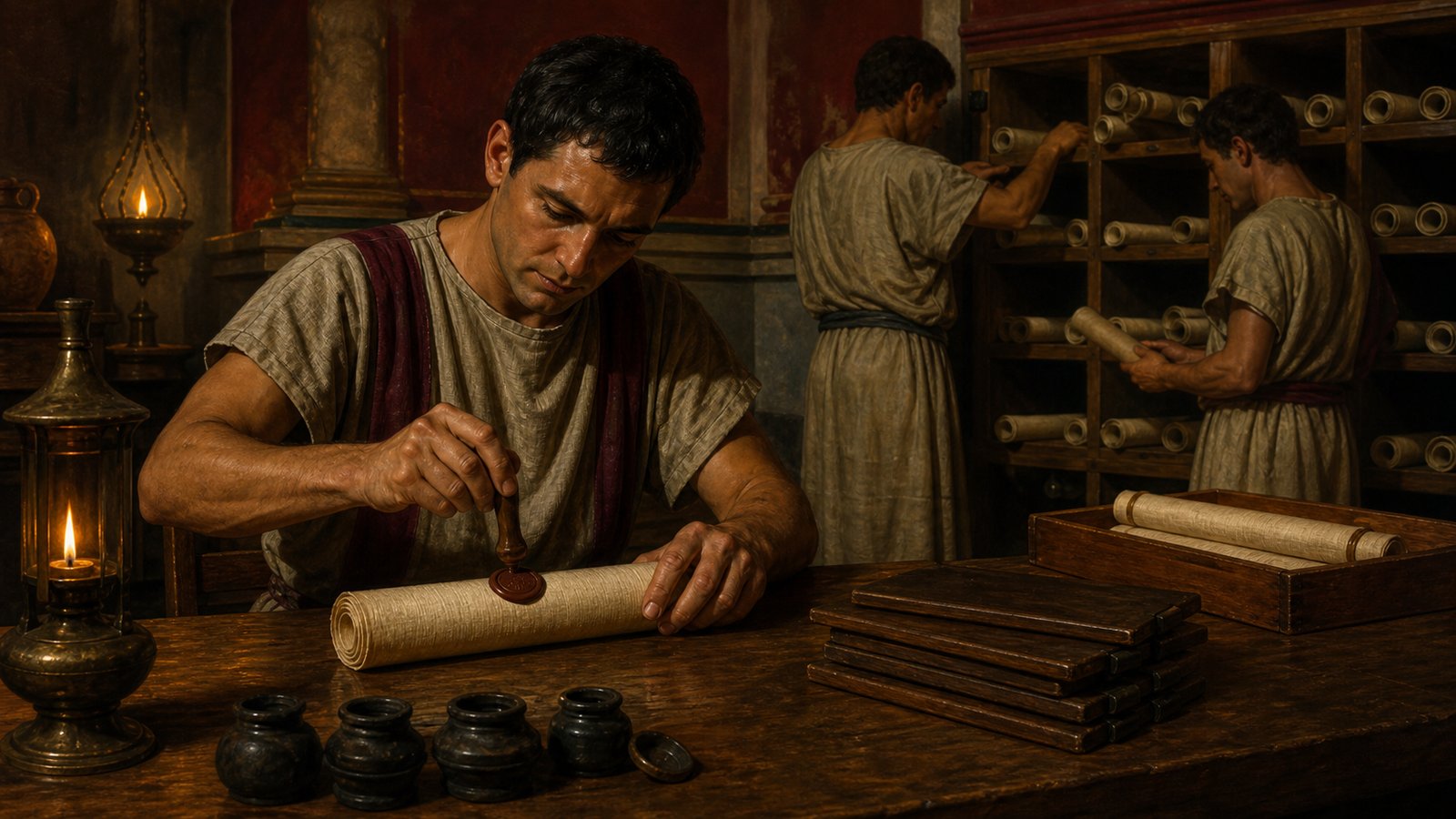
Dio’s accusation cannot be ignored. Roman citizens faced a five-percent inheritance tax established under Augustus, with close relatives generally exempt, and a tax associated with formal manumission. Caracalla increased the inheritance levy, and expanding the citizen pool could broaden exposure to citizen-specific charges.
Yet “it was only a tax trick” is too small an explanation. Citizenship also altered legal administration. Distinctions between citizen and noncitizen had accumulated across private law, courts and documentary practice. Making citizenship nearly universal could simplify some boundaries while creating new questions about how Roman law interacted with local custom.
The decree did not abolish all other taxes. Provincial land and poll-tax systems did not simply vanish when their payers became citizens. Egypt’s papyri show that fiscal categories, local status and occupational labels continued to matter after AD 212.
Nor did citizenship make people socially equal. Senators, equestrians, soldiers, decurions, freed people, peasants and urban laborers remained separated by wealth, office and legal privilege. During the third century, the distinction between socially elevated honestiores and humbler humiliores mattered greatly in punishment and procedure.
Universalizing one prestigious boundary could therefore expose the force of others. Once most free people were citizens, rank within the citizen population carried more of the work formerly done by the citizen–provincial divide.
The policy also fit a mobile empire. Soldiers, merchants, officials and families crossed provincial lines. A broad common status made it easier for imperial law to imagine those movements within one citizen framework, even though local institutions continued to govern daily life.
One Roman Name Spread Without Erasing Local Worlds
The change left marks in personal names. Many new citizens adopted the emperor’s nomen, Aurelius, or passed it to descendants. In third-century documents, an abundance of Aurelii can reflect the legal afterlife of Caracalla’s grant rather than a biological family connection to the dynasty.
A name was not a complete biography. A newly made citizen in Egypt could still speak Greek, belong to a village, pay regionally structured taxes and follow local religious practices. A resident of Syria or Africa did not stop inhabiting a city with its own council, festivals and public memory.
This layered identity is essential to understanding the decree. Romanization was not a machine that replaced every local habit with one model. Imperial government could add citizenship over existing affiliations and then use documents to decide which identity mattered in a particular transaction.
The grant also changed the meaning of military reward. Auxiliary service did not instantly lose all benefits, but citizenship could no longer function as the same exclusive prize for recruits who already possessed it. The army and administration adapted as the third century produced new recruitment patterns and pressures.
Legal professionals faced a comparable adjustment. Rules once triggered by the parties’ different civic statuses now applied across a much wider citizen body. At the same time, imperial rescripts and provincial practice kept negotiating between general law and local circumstances.
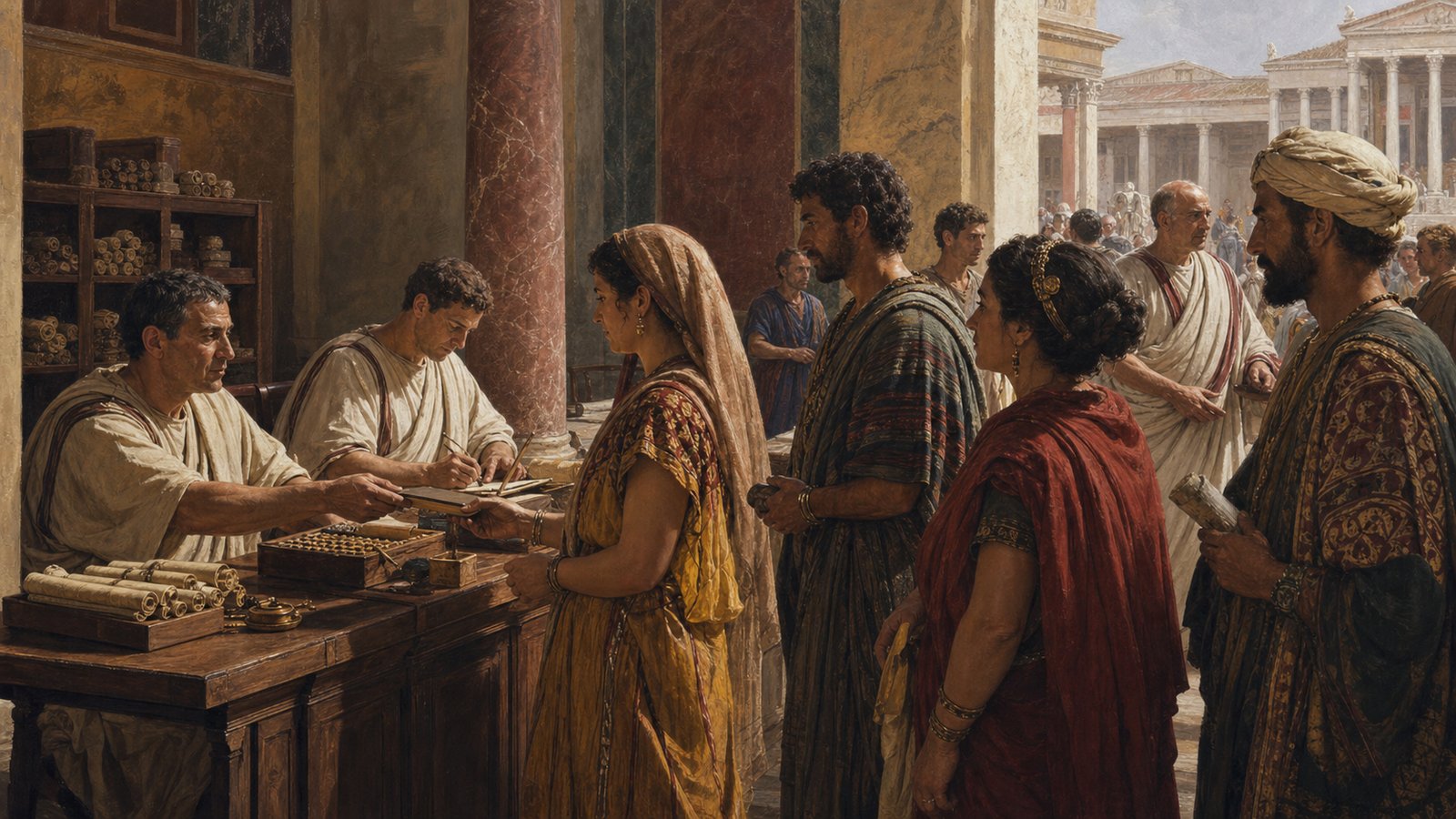
The result was not one law code handed to everyone overnight. It was a new starting point. Most free residents now approached the Roman state as citizens, while the lived content of that status still depended on gender, family position, wealth, occupation, location and access to officials.
The Gift Ended Citizenship’s Old Scarcity
Caracalla’s decree succeeded in a way many imperial reforms did not: its central change endured. Later emperors did not restore the old empire-wide division between citizens and the majority of free provincials.
Its success also made it less visible. When citizenship became normal, inscriptions and legal texts had less reason to celebrate each ordinary grant. A status once documented as an exceptional reward became part of the background of imperial life.
That shift carried a paradox. Rome reached the widest citizen body in its history under a ruler remembered for killing his brother, executing opponents and demanding money. Inclusion did not require a benevolent emperor, and legal generosity did not prevent coercive government.
Dio’s hostile account and Caracalla’s religious proclamation are not mutually exclusive. Revenue, administration, legitimacy and gratitude could all matter to one decision. Roman emperors rarely separated policy into the clean motives modern summaries prefer.
The papyrus fragment preserves the scale but not a single final explanation. Its torn lines suit the decree’s legacy: a universal claim reconstructed from incomplete evidence, followed through taxes, names, law and local records.
After AD 212, citizenship no longer marked the outer edge of Rome’s political community. Caracalla moved that edge across the empire. The difficult history begins with what the new citizens still did not share.
Sources
Cassius Dio, Roman History 78.9. Ulpian, Digest 1.5.17. Papyrus Gissensis 40. Clifford Ando, Imperial Ideology and Provincial Loyalty in the Roman Empire.