
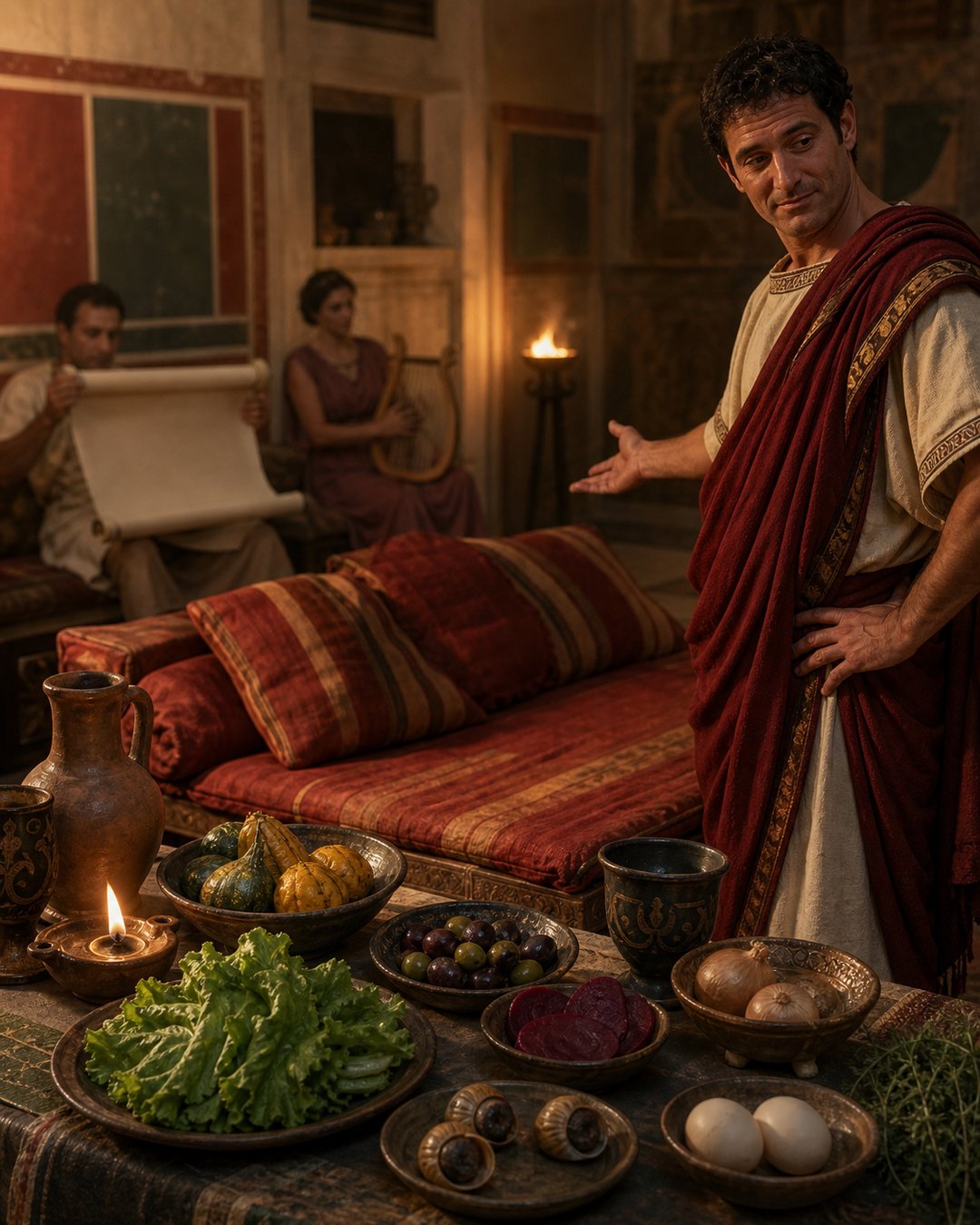
Pliny the Younger had counted the snails before his guest failed to appear. Septicius Clarus had accepted an invitation to dinner, but the couch reserved for him stayed empty. Pliny answered with a letter that reads like a bill written by a host who is too amused to send a real invoice and too irritated to let the evening disappear without comment.
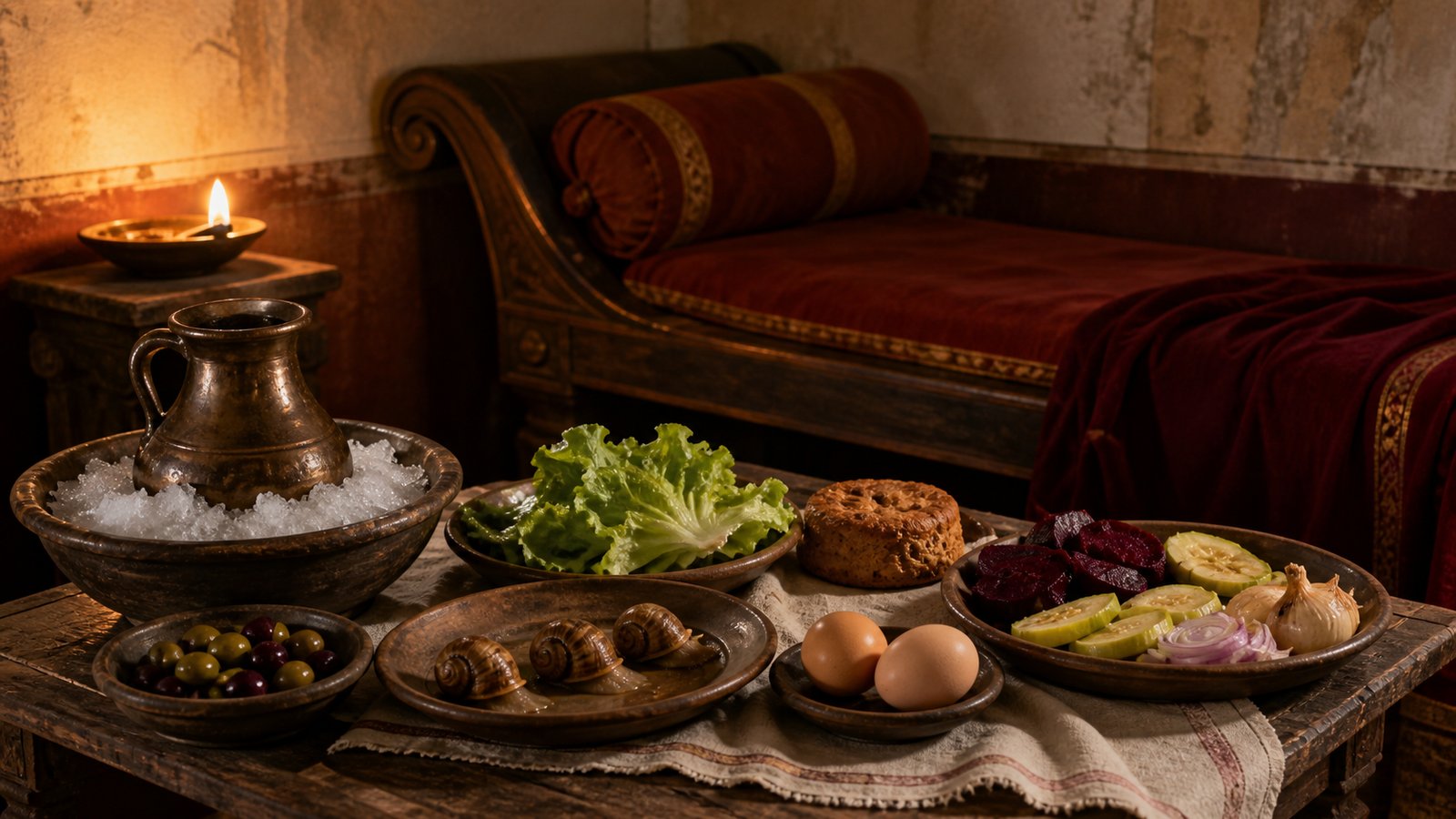
He lists what had been prepared for each diner: one lettuce, three snails and two eggs, followed by a spelt cake with honeyed wine cooled in snow. Olives, beets, gourds and onions completed the meal. Entertainment had also been arranged—a comic performer, a reader and a lyre player. Septicius, Pliny alleges, went elsewhere for oysters, sows’ wombs, sea urchins and Spanish dancing girls.
The contrast looks like modesty against extravagance, but the letter does more than compare menus. Pliny makes preparation visible. Portions were counted, wine was cooled and performers were waiting. By itemizing the evening, he turns an empty dining couch into evidence of a social obligation. The food could be valued. The jokes and conversation that never happened could not.
An Accepted Invitation Left More Than an Empty Place
Letter 1.15 is addressed directly to Septicius Clarus. Pliny does not begin with a general complaint about unreliable friends. He fixes responsibility on one man who, he says, promised to come and did not. That accepted invitation matters because it separates absence from mere unavailability. The host had planned on the strength of a yes.
Pliny jokingly threatens legal action for the expense, down to the last small coin. The threat is comic because the relationship remains intimate enough for teasing, and because the listed dinner hardly resembles a ruinous imperial spectacle. Yet the language of recovery gives shape to the offence. A broken social promise has created costs that can be named even if no lawsuit will follow.
The couch would not simply have been an extra chair. Roman elite dining placed guests in a room arranged for reclining, service and conversation. the dining room made position part of the evening, so a missing person altered both the company and the space. The gap could be seen by everyone who did attend.
Pliny never says how long the others waited, who carried the message of absence or whether the untouched portion was eaten later. Those details would create a vivid scene, but they are not in the letter. What survives is sharper: acceptance, nonappearance and an immediate literary response that refuses to treat the missing guest as invisible.
One Lettuce, Three Snails and Two Eggs Made the Rebuke Concrete
The menu begins with arithmetic. One lettuce belongs to each diner, as do three snails and two eggs. These are not vague references to vegetables and shellfish spread across a table. Pliny allocates portions, allowing Septicius to imagine the exact small meal prepared in his name.
A spelt cake with honeyed wine follows, and Pliny adds that the drink was cooled with snow. That detail complicates any simple claim that the host offered only rustic austerity. Snow required collection, storage or purchase, and cooling made the wine a deliberate pleasure. Modest ingredients could still receive care.
Olives, beets, gourds and onions extend the inventory. Pliny’s sequence is comic because it is so exact and so unthreatening. The threatened bill accumulates through garden produce, eggs and counted snails rather than through mountains of rare meat. Every added item makes the host sound both economical and increasingly determined to be heard.
Roman dinner laws measured expense and special occasions as lawmakers tried to place public limits around private display. Pliny’s list works at the scale of friendship instead. He is not proving compliance with a statute. He is proving that a real invitation required forethought, however restrained the table looked.
The letter cannot tell us that every Roman diner received this menu or that these quantities formed a standard meal. It records one host’s chosen description of one missed dinner. Pliny may shape the inventory for comic contrast. Its historical value lies precisely there: these foods, portions and cooling arrangements were intelligible material with which an elite Roman writer could construct modest hospitality.
Three Performers Turned Supper into a Planned Evening
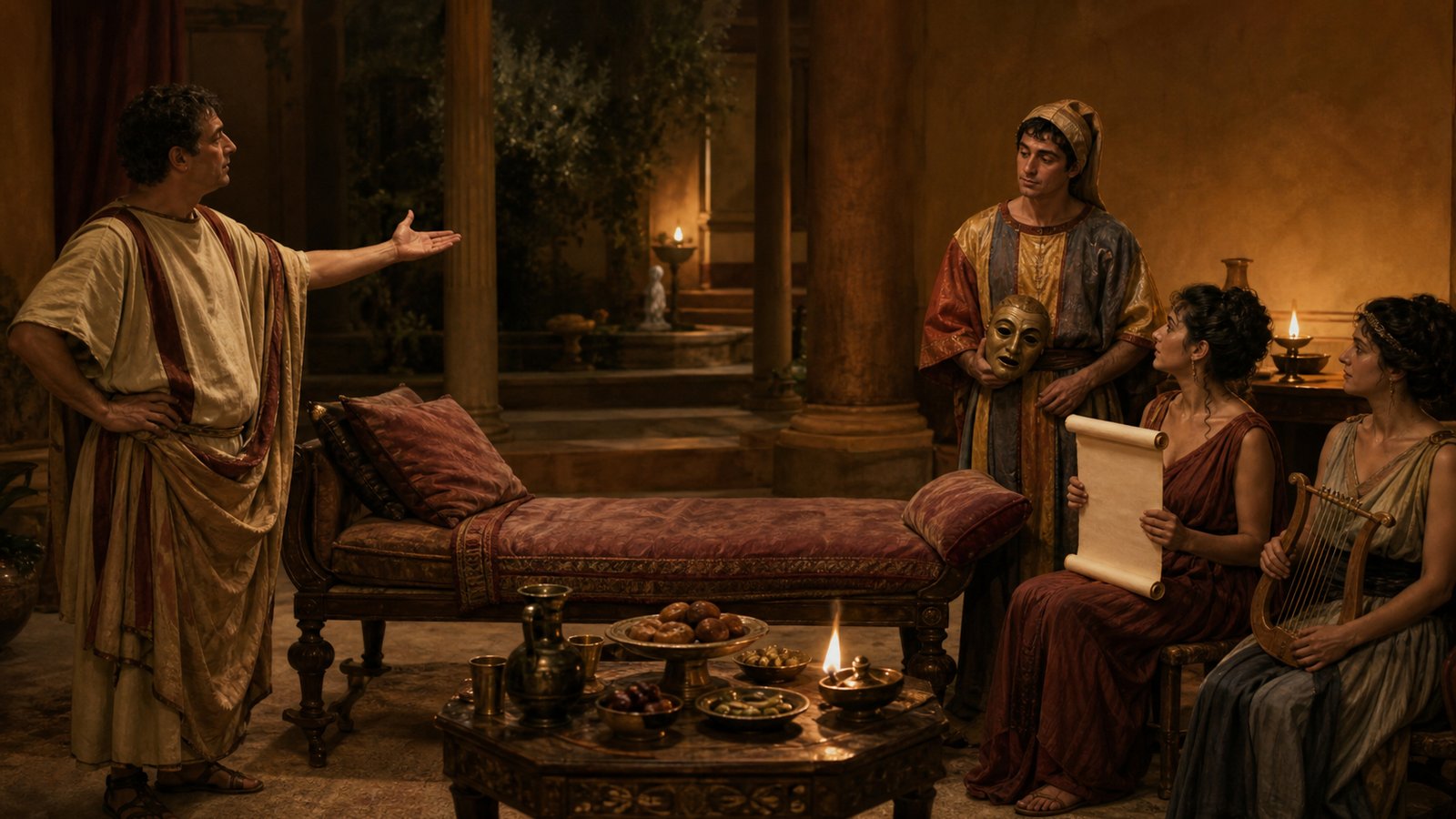
Food was only one part of the preparation. Pliny says he had arranged a comic performer, a reader and a lyre player. The three offered different kinds of attention: staged humour, spoken literature and music. Their presence means the invitation promised a sequence of experiences rather than merely access to a table.
A performer also had to be available at the proper time. Whether each was a household member or specially engaged is not stated in the letter, so their legal status and payment should not be invented. Pliny’s point does not depend on those missing facts. They were ready, and Septicius was not there to hear them.
The reader is especially characteristic of the world Pliny built in his letters. Literary culture was social and audible. A text could enter dinner through a voice, joining food and conversation. The lyre player changed the room again, while the comic performer promised laughter before the guests had to supply their own.
Pliny later names jokes, laughter and learned conversation among what Septicius missed. Those pleasures move beyond hired or household performance. They depended on the guests responding to one another. An absent friend therefore reduced more than the audience. He removed one participant from the exchange the host valued most.
The catalogue makes the empty couch feel expensive without giving it a monetary total. Lettuce can be counted, snow can be obtained and performers can be scheduled. Conversation cannot be stored for the next evening. Pliny’s comic accounting succeeds because its least measurable item is also the one he presents as most exclusive.
Oysters and Spanish Dancers Became the Rival Version of Luxury
Pliny supplies his own explanation for the desertion. Septicius, he says, preferred another table offering oysters, sows’ wombs and sea urchins. The rival menu shifts from vegetables, eggs and a few snails toward foods that could signal abundance, novelty and appetite. oysters from Lake Lucrinus could carry a producer’s reputation, making them useful shorthand for a more ambitious supper.
Spanish dancing girls complete the accusation. Pliny sets them against his comedian, reader and lyre player, just as oysters and sea urchins stand against lettuce and beets. The contrast is too neat to treat as an objective review of two events. It is a writer’s arrangement designed to make Septicius’s choice look gaudy and predictable.
We hear only the abandoned host. Septicius’s reason does not survive here, and Pliny does not quote an apology. Perhaps the rival invitation was more complicated than greed; perhaps Pliny’s allegations are playful exaggeration shared between friends. The evidence supports the contrast Pliny wrote, not every motive his joke encourages a reader to supply.
That one-sidedness is part of the document’s character. A private letter can preserve emotion and social pressure with unusual immediacy, but it is never a neutral transcript. Pliny controls the menu, the comparison and the final verdict. Septicius becomes the man who traded cultivated ease for expensive dishes because that role makes the rebuke memorable.
Pliny Made Friendship the One Item the Other Dinner Could Not Serve
The close of the letter changes the scale of value. Septicius may dine more magnificently elsewhere, Pliny concedes, but nowhere more freely, simply and cheerfully. The host does not try to beat oysters with costlier oysters. He declares that his table offers a kind of ease the rival display cannot purchase.
This is a competitive claim despite its language of simplicity. Pliny turns restraint into distinction. The modest menu becomes evidence of confidence, while laughter and learned talk become luxuries available only inside the right company. Even his forgiveness carries a warning: try another dinner if you wish, but understand what you are losing.
The rebuke works because it never breaks the friendship it disciplines. A formal demand might have ended conversation. A silent grievance might have left Septicius unaware. Pliny instead produces a miniature performance, with counted food, waiting entertainers, a villainous rival banquet and a final invitation disguised as a threat.
The letter leaves the next dinner unwritten. We do not know whether Septicius attended, answered with a joke or paid for a single snail. What survives is the host’s method for turning disappointment into renewed social pressure. He itemized everything that could be prepared, then saved the greatest weight for what could happen only if a guest kept his word: shared freedom, laughter and talk around a filled couch.
Sources
Pliny the Younger, Letters, 1.15.