
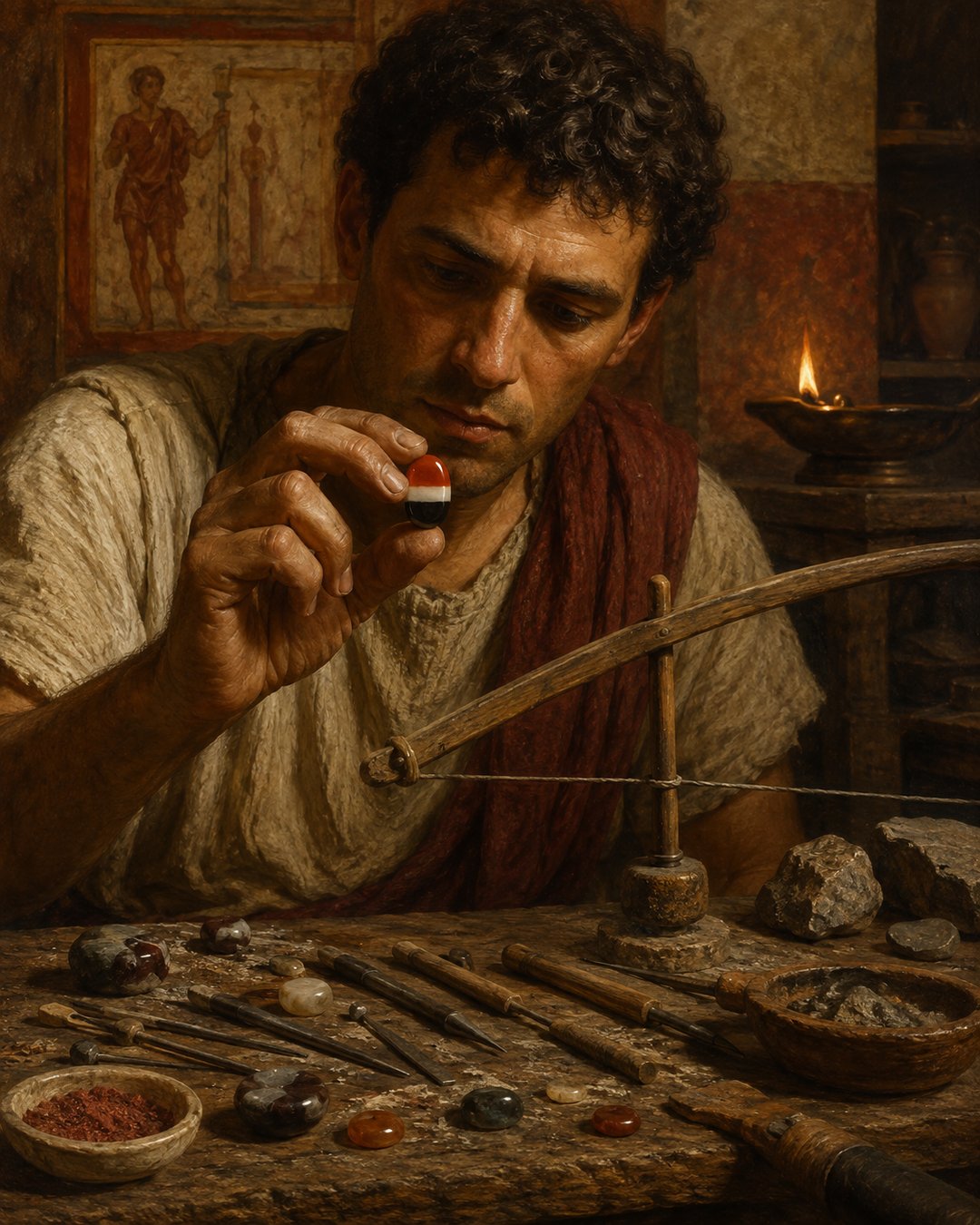
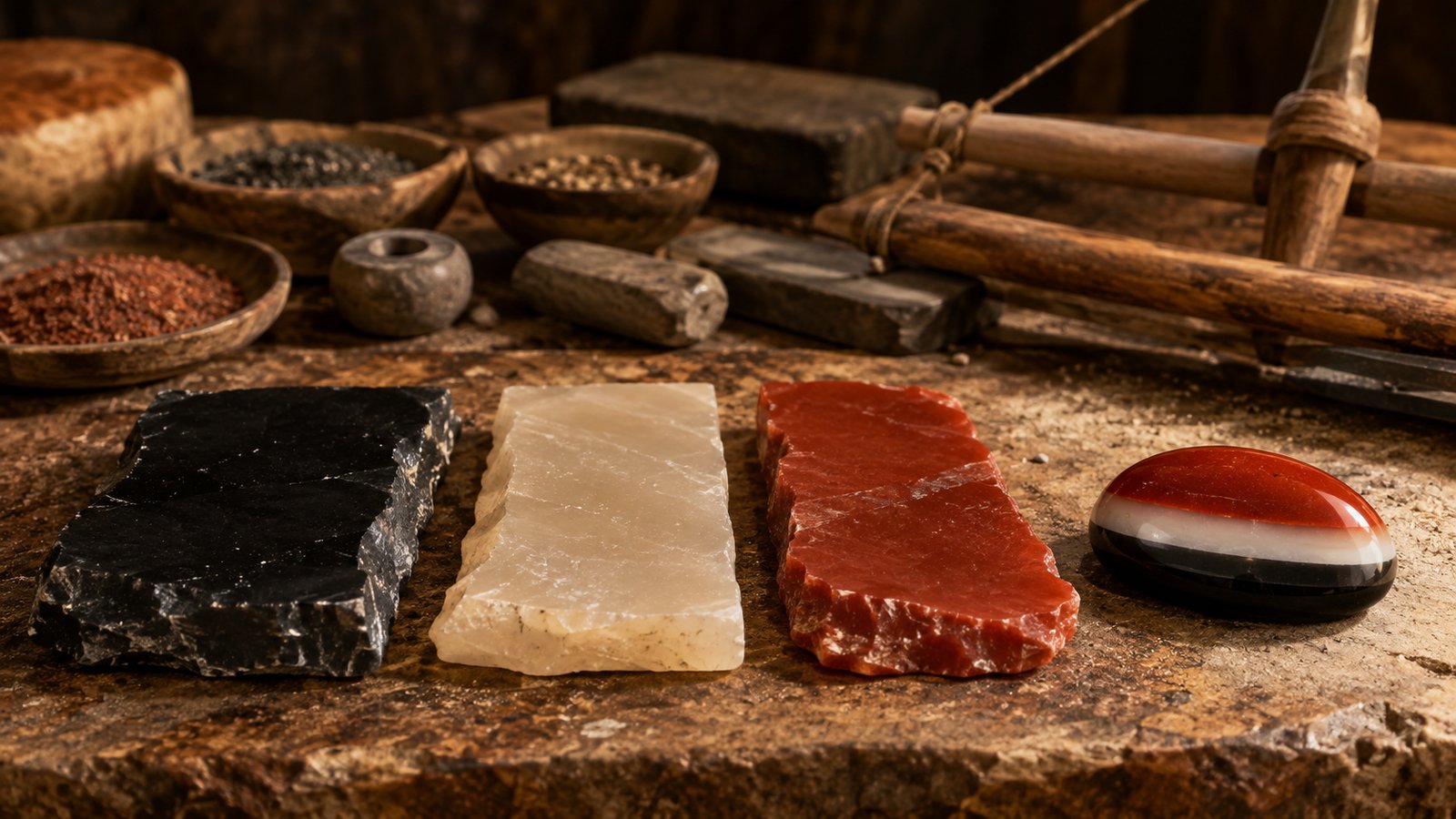
A black stone, a white stone and a third the color of vermilion reached a Roman workbench as separate pieces. Cut, aligned and cemented together, they left it as one sardonyx. Pliny says the join could be managed so well that skill itself failed to expose the fraud.
The trick did not replace a gem with painted clay. It transformed respected stones into a more desirable identity. The components remained precious, the polish remained real, and the handwork could be excellent. The lie sat in the name attached to the finished object.
Pliny places that composite beside recipes for staining crystal until it resembled smaragdus and other transparent gems. He knew books circulated with instructions, but refused to preserve their authors’ names. The secrecy is theatrical; the complaint reveals a practiced trade whose methods were teachable.
Roman gem fraud prospered in the narrow space between craft and classification. Cutting, coloring and combining could improve a stone or make it impersonate another. A buyer had to judge not only beauty, but whether beauty had been made to tell a false story about material.
Shape Prepared the Eye Before Color Made Its Claim
Before turning to deception, Pliny lists the forms generally admired in precious stones. A level face was preferred to one that curved inward or bulged outward. The oblong ranked first, followed by a lentil-like form, then a plane circle. Angular pieces stood lowest in his sequence.
These preferences mattered to a workshop. A rough piece had to lose material to gain a marketable outline. The cutter chose which patch of color would occupy the face, where a vein would cross it and how much thickness could be sacrificed for a level surface.
Shape also taught a customer what quality was supposed to look like. An oblong polished to the accepted proportions arrived already speaking the language of value. A composite maker did not need to invent desire. The maker fitted an imitation into a form buyers had learned to admire.
A flat face could assist the layered trick. Black, white and red bands presented across one controlled surface resemble the visual structure for which sardonyx was valued. The important point is not a reconstruction of one lost adhesive recipe. Pliny supplies no formula. He supplies the assembly: three stones, three colors, cemented into one persuasive object.
Once mounted in a ring or held between fingers, the piece offered little reason to advertise its edges. Polish drew attention toward color and pattern. The workshop controlled the view before the merchant supplied the name.
Three Genuine Stones Produced One False Identity
Pliny’s phrasing catches the central paradox. Genuine stones of one kind could become false stones of another. Authenticity therefore did not divide neatly between natural gem and worthless substitute.
The black component had its own standing. So did the white and vermilion pieces. Their value made the construction more dangerous, not less. A buyer who recognized that each band looked mineral could still reach the wrong conclusion about the whole.
The fraud depended on composition. A convincing seam, careful thickness and aligned surfaces turned separate colors into one apparent geological history. What nature had not grown together, the lapidary made the customer read together.
This differs from the conspicuous wealth in Lollia Paulina’s forty-million-sesterce jewel display. Her emeralds and pearls overwhelmed through quantity, documented cost and public arrangement. The false sardonyx worked at intimate scale. Its profit depended on one viewer accepting one compact object.
Pliny claims that no skill could detect the composite. His absolute language should be read as outrage, not a laboratory result. Ancient gem workers could examine edges, layers, hardness and polish. Yet his exaggeration makes sense only if joins could be good enough to trouble practiced eyes.
The customer’s vulnerability increased after mounting. Metal could conceal a side or back where layers were easier to see. Light falling through a stone in a shop could differ from lamplight at dinner. Verification had to happen under conditions the seller partly controlled.
Crystal Staining Turned Recipes into Market Leverage
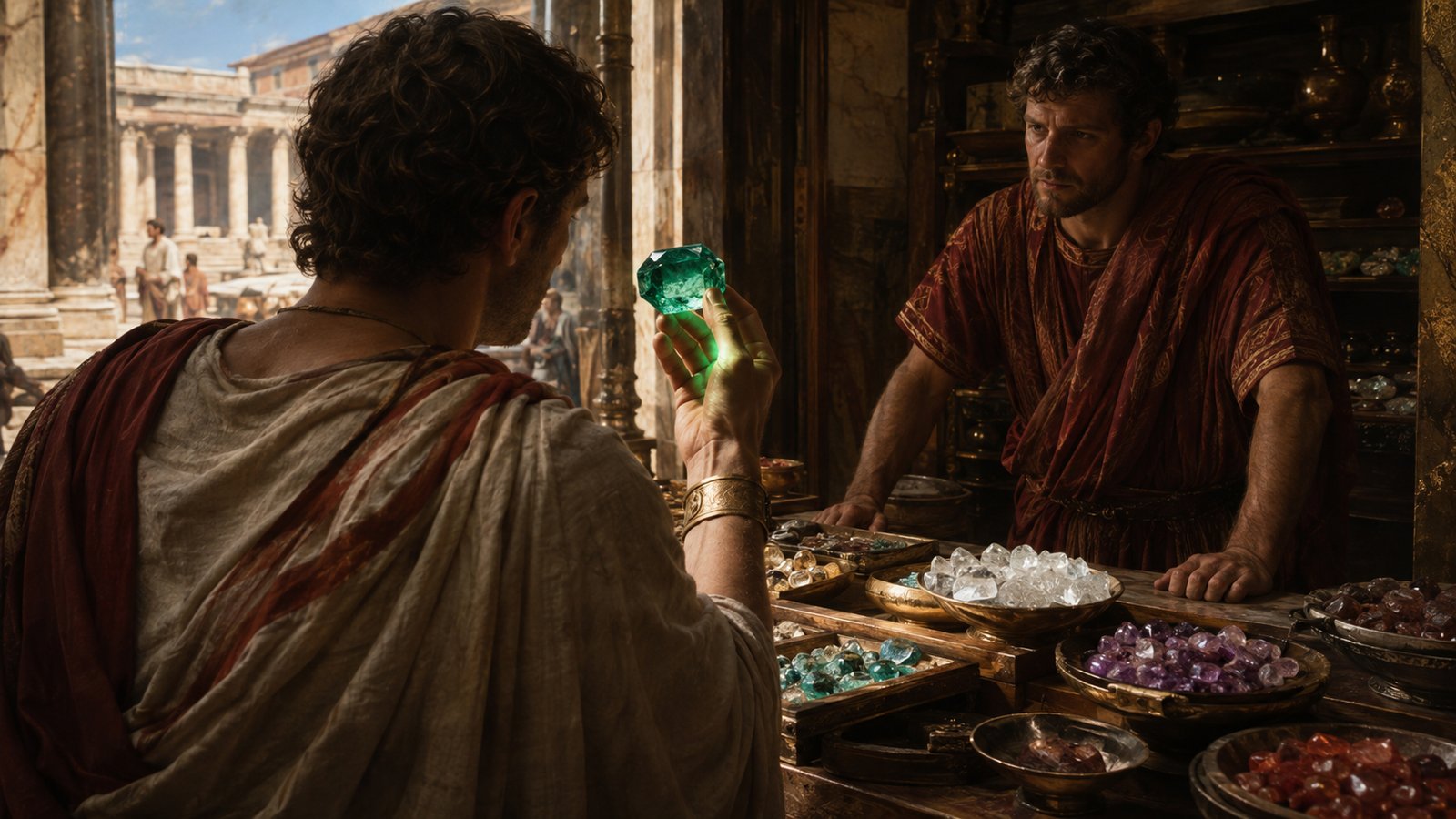
The three-layer sardonyx was only one route. Pliny also mentions written instructions for staining crystal so that it resembled smaragdus and other transparent stones. A clear material became the starting body for an imposed color.
He says the books also explained how to make sardonyx from sarda and how to produce similar changes in other gems. The plural matters. This was not one notorious trick tied to one shop. It was a transferable body of knowledge organized well enough to circulate in writing.
Pliny withholds the authors because naming them, he implies, would spread the deception. Refusal confirms that he believed technical prose could alter markets. A recipe separated the process from a single craftsman’s hands. Another reader could repeat it, adjust it and teach it again.
Stained crystal posed a different inspection problem from a layered composite. The buyer had to ask whether color belonged throughout the material, whether it concentrated near a surface, and whether treatment would remain stable. Pliny gives no reliable test here. He leaves the reader with the scale of the problem and the seller with an informational advantage.
The colored transparency can be set beside the crystal cups whose breakage enraged Vedius Pollio. Those vessels made clear material a spectacle of elite possession. Gem staining exploited the same attraction to light, clarity and rarity while altering what the material appeared to be.
Pliny ends with profit. He says no kind of fraud yielded more. Small size helped. A gemstone could concentrate a large price in something easy to carry, conceal, remount and resell. Expertise belonged to workshops and merchants, while many purchasers encountered only the finished face.
Enhancement and Fraud Shared the Same Bench
The preceding chapter makes Pliny’s boundary less comfortable. He describes material called cochlides being boiled in honey for seven uninterrupted days and nights. The treatment removed earthy and faulty matter. Artists then added varied veins and spots and cut the result into shapes that pleased buyers.
Pliny also says precious stones generally gained brilliance from honey, especially Corsican honey, while acrid substances damaged them. Treatment alone was not automatically deception. Cleaning, clarifying, cutting and arranging color belonged to legitimate craft as well as suspicious transformation.
He notes that artificially varied stones could receive the name physis, or “nature,” and complains about the endless names coined for them. More importantly, he says names changed repeatedly with the number of spots, inequalities, intersecting lines, tints and shades while the underlying material often remained the same.
That unstable vocabulary created room for trade. A new pattern could be sold under a new name; a treated surface could look like a newly discovered variety. Classification followed appearance closely enough that the workshop could influence what the market believed it was seeing.
The sardonyx fraud crossed the line because construction concealed origin and supported a false identity. Yet the same hands that cut a legitimate oblong could align the three layers. The same knowledge that cleaned a dull stone could stain crystal. The same eye that added attractive veins could design a misleading pattern.
This is why Pliny’s anger never becomes a simple ban on workmanship. Roman buyers wanted worked gems. They preferred selected shapes, polished faces, stronger brilliance and pleasing markings. Removing craft from the market would remove much of the value they sought.
The practical defense was expertise, provenance and access to the whole object, but Pliny offers no guarantee. His chapter closes with profit because information remained unequal. The maker knew which colors had entered the workshop separately. The buyer saw only the unity produced at the end.
Three stones passing as one reveal a mature luxury market rather than a crude confidence trick. Materials moved through specialized hands; recipes circulated; names multiplied; mounting changed what could be inspected. Beauty was genuine as an effect even when identity was false as a claim.
On the finished sardonyx, black, white and vermilion met in a polished order that nature had not supplied. The most effective deception was not ugliness disguised. It was skilled craft used to make real stone carry an invented past.
Sources
Pliny the Elder, Natural History 37.74–75.