
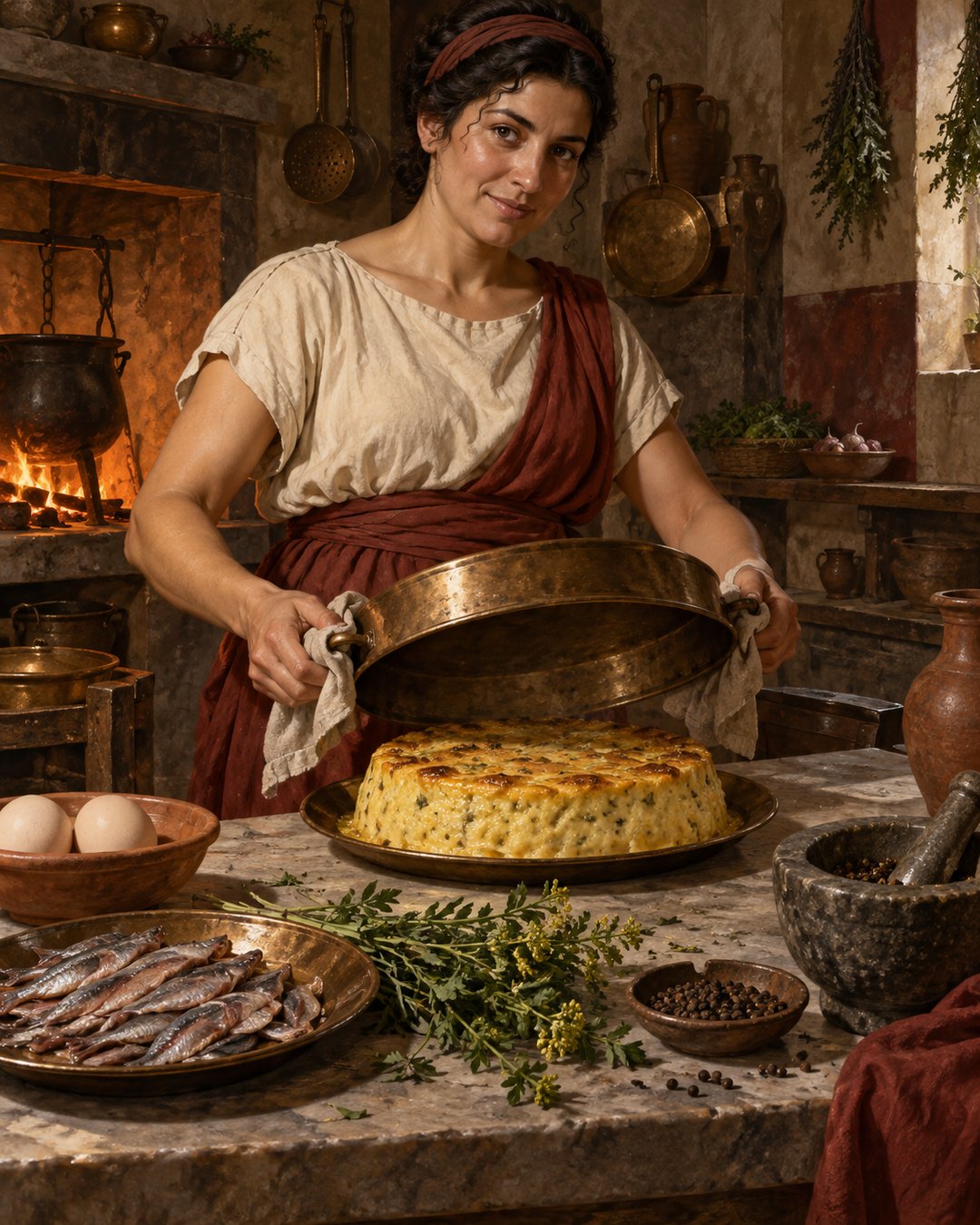
The fish arrived at the dining table without looking like fish. A Roman recipe ordered anchovies or other small fish cooked, boned and chopped very fine. Pepper, rue, broth and oil followed. Raw eggs turned the fragments into one solid mass, while steam set the dish without allowing it to boil.
Then came the boast. Once the patina had been sprinkled with pepper and carried into the dining room, nobody would be able to tell what they were eating.
The surprise did not depend on hiding one whole anchovy under a garnish. It began much earlier, when the cook dismantled the ingredient’s recognizable form and rebuilt it through egg, heat and a casserole. Recipe 139 in the collection attributed to Apicius makes deception a property of technique.
The Fish Lost Its Shape before the Eggs Arrived
The recipe permits anchovies or other small fish. They may be roasted, fried or boiled, but they must be boneless before being chopped very fine. Three cooking routes lead to the same physical requirement: the fish should become workable material rather than remain a row of identifiable bodies.
Fine chopping changes what the diner can see. Skin, head, tail and spine would announce a species or at least an obvious fish course. Once those structures are removed and the flesh is divided, flavor remains while visible identity weakens.
The casserole is to be filled generously with the chopped fish. This is not an egg dish carrying a token garnish. Fish forms the substance that the later binder must hold together. The recipe’s concealment works because abundance is reorganized, not because the main ingredient has vanished.
The archive’s story of Apicius sailing for praised prawns and immediately turning back follows appetite toward a supposedly superior raw ingredient. Recipe 139 moves in the opposite direction. It takes ordinary small fish and deliberately erases the signs by which a guest might identify them.
The source does not state who cleaned the fish, how long each cooking method took or what exact species counted as an acceptable substitute. It preserves choices at the level the cook needed: cooked fish, no bones, a fine chop and enough to fill the vessel.
Pepper, Rue, Broth and Oil Prepared a New Texture
Crushed pepper and a little rue season the chopped fish. Broth and oil are added in sufficient quantity and mixed through it. The list is brief, but its order moves the preparation from dry fragments toward a seasoned mixture capable of combining with eggs.
Each addition affects the eventual patina differently. Pepper and rue distribute aroma. Broth supplies seasoned liquid. Oil enriches the mass and helps keep it from behaving like plain compressed fish. The recipe does not provide measured ratios, so a modern cook cannot honestly claim one exact reconstruction from this text alone.
The work of crushing also matters. Pepper and rue are not thrown in as large pieces. A mortar could reduce them and spread their flavors across the chopped fish. The process resembles the grinding work explored in Roman mortaria that made preparation part of the vessel, although this recipe does not identify the mortar’s material.
At this stage, the dish still consists of pieces. Chopping has taken away the fish’s external outline, but nothing yet forces the fragments to hold one form. The ingredient that performs that structural change enters raw.
The absence of a fixed quantity for broth and oil is not permission to invent one. It shows the recipe assuming judgment in the kitchen. “Sufficient” means the cook had to read the mixture rather than follow a surviving numbered formula.
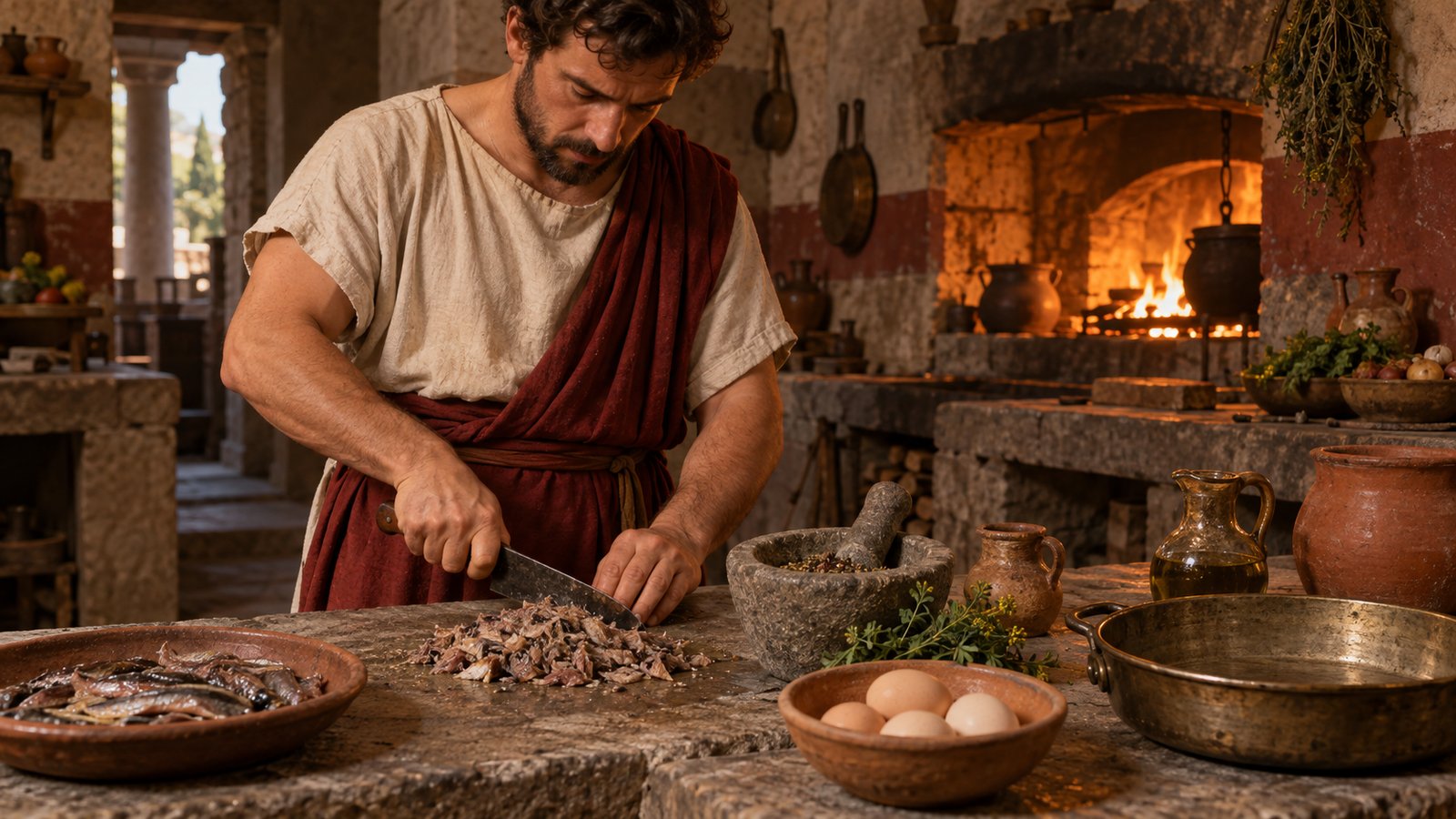
Raw Eggs Rebuilt the Pieces as One Mass
The instruction calls for enough raw eggs that the whole forms one solid mass. Eggs are not simply another flavor. As they set, they bind chopped fish and liquid into a shape that can be treated as one dish.
This is the moment when concealment becomes stable. Finely divided anchovy could still scatter into recognizable flakes. Bound inside coagulated egg, those flakes become the interior texture of a patina. The diner meets a slice or spoonful of a unified preparation rather than the anatomy of a fish.
The recipe does not say how many eggs to use. It defines success by outcome: solidity. The cook must assess the quantity of fish, the moisture from broth and oil, and the setting power needed to hold them. That is practical knowledge compressed into a few words.
The title transmitted by the cited translation calls the preparation a smelt pie or sprat custard. Such English labels help describe form, but they are not proof that a Roman diner used either modern category. The ancient term patina can point toward the prepared dish and its vessel without making it identical to a modern custard.
What the source makes certain is the transformation. The fish is cooked and chopped first. Eggs enter raw. Heat then changes those eggs so the separate ingredients congeal together.
Sea Nettles Had to Stay Outside the Egg Mixture
After the fish, seasoning and eggs have been combined, the recipe tells the cook to add sea nettles carefully. It immediately adds a restriction: do not mix them with the eggs.
That instruction creates a deliberate separation inside the dish. Most ingredients are dispersed through the mass, but the sea nettles retain a different position. The text does not explain whether they lay on top, between layers or in another arrangement, so an image or reconstruction should not pretend to know an exact pattern.
Carefulness is the important evidence. Mixing would undo the desired distinction. The cook has already used chopping to destroy one recognizable form; now the same recipe protects another component from disappearing into the binder.
This contrast prevents a simplistic reading in which everything is merely pulverized. The patina is controlled composition. Fish should lose its outline. Seasoning should spread. Eggs should bind. Sea nettles should be added without becoming part of the egg mixture. Different ingredients receive different treatment because they have different jobs.
The collection does not provide a surviving diner’s reaction to those sea nettles. We cannot know whether a guest recognized them while missing the anchovy. The closing sentence speaks only to the dish as a whole and its concealed identity.
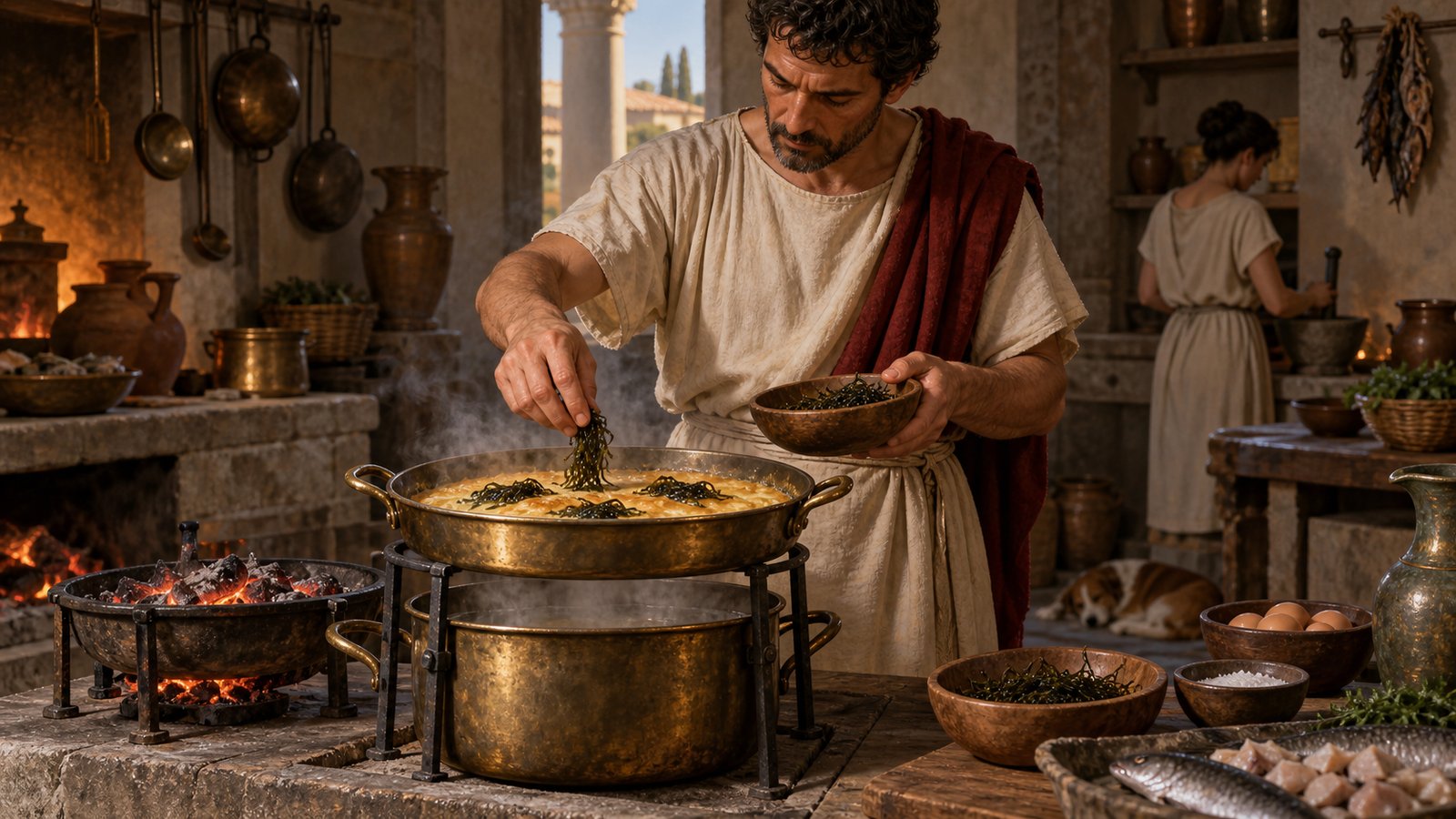
Steam Set the Trick without Boiling It Apart
The casserole goes into steam so that the contents can congeal. The cook is warned to avoid boiling. Heat is necessary, but violent heat would not be a sign of greater success.
Gentle steam gives the eggs time to set around the chopped fish. The instruction links the cooking environment to the desired solid mass. If the mixture boiled hard, its liquid and egg could separate or become rough before the structure stabilized. The ancient wording supplies the prohibition; the recipe’s sequence explains why controlled setting mattered.
When done, the patina receives ground pepper and is carried into the dining room. The final seasoning is visible at service, but the main fish no longer is. Preparation has placed recognition and flavor on different tracks.
Roman fishponds described in the article on keeping fresh fish as living wealth made possession visible before a meal. This recipe makes the ingredient difficult to identify after cooking. One system displayed fish alive; the other turned fish into an edible question.
The claim that nobody could tell what they were eating is a flourish, not a laboratory result. No guest list or tasting report survives with the recipe. Yet the boast accurately names its ambition: remove bones and outlines, distribute seasoning, bind the fragments, preserve a separate accent, and set everything gently enough that the finished form reveals little about its beginning.
The dish’s mystery was built at the worktable and finished over steam. By the time pepper fell across the surface, the anchovies had already disappeared in plain sight.
Sources
Apicius, Cookery and Dining in Imperial Rome 4.2.12, recipe 139.