
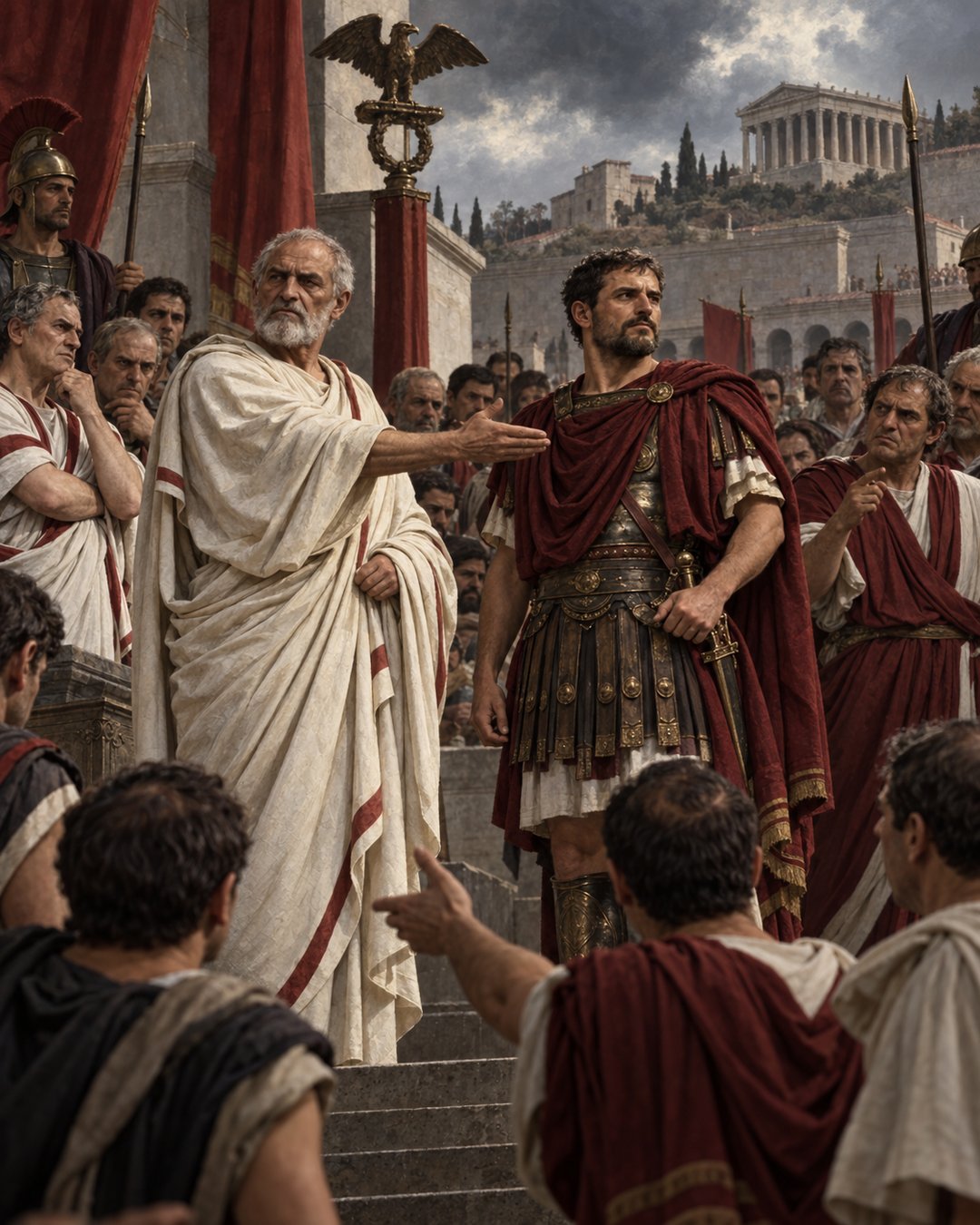
Fabricius did not trust Publius Cornelius Rufinus. He considered him greedy, thievish and personally hateful. Then a consular election arrived during a military crisis, and Fabricius worked to put Rufinus in command.
Years later, the same Fabricius expelled the same man from the Senate because Rufinus owned ten pounds of silver plate.
Aulus Gellius preserves both decisions together. Their force lies in the fact that Fabricius never needed to pretend Rufinus was virtuous.
A Bad Character Could Still Be the Best Commander
Gellius introduces Fabricius Luscinus as a man of great renown and achievement. Rufinus receives a divided assessment. He was energetic in action, a good warrior and a master of military tactics, but also thievish and keen for money.
The balance is essential. The story does not discover a hidden goodness in Rufinus, and it does not expose his military reputation as fraud. His vices and abilities occupy the same sentence.
Fabricius’s personal judgment was equally clear. He did not respect Rufinus, did not treat him as a friend and hated him because of his character. Nothing in the later election erased that hostility.
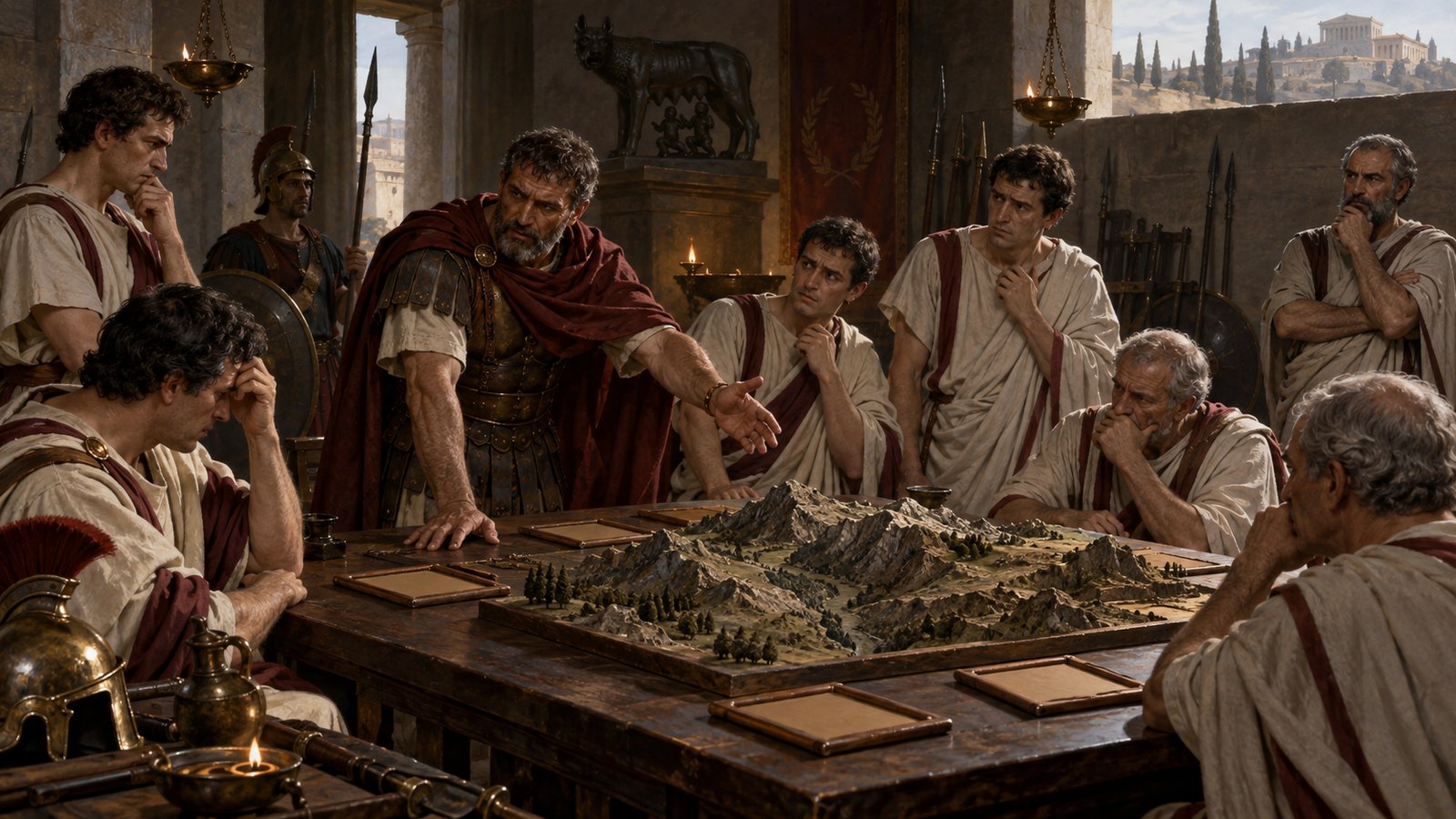
The public problem had a different shape. Consuls had to be chosen at what Gellius calls a highly critical period for the state. Rufinus’s rivals lacked military experience and could not be trusted. Fabricius therefore used every effort to secure the office for the man he disliked.
A note attached to the ancient text places the election in 290 BCE, at the beginning of the last Samnite war. The context made military competence more than one desirable quality among many. A poor appointment could expose citizens and armies to an experienced enemy.
Fabricius did not choose between virtue and vice in the abstract. He chose between available candidates for a specific office under pressure. Rufinus’s tactical skill answered the immediate danger better than the cleaner reputations of men unfit to command.
Gellius’s wording also makes Fabricius an active participant rather than a reluctant voter. He used every effort to secure the result. The distinction matters: accepting Rufinus after others chose him would have required endurance, but campaigning for him required Fabricius to spend his own standing on a man whose character he openly condemned.
One Bitter Sentence Explained the Election
Other Romans were surprised. Why should Fabricius advance an avaricious man toward whom he felt personal enmity?
Gellius gives the answer in a compact line: Fabricius would rather be robbed by a fellow citizen than sold by the enemy. The contrast is deliberately harsh. Rufinus might injure Roman property; an incompetent commander might deliver Romans themselves into an enemy’s power.
The remark does not excuse theft. It ranks dangers. A citizen’s greed remained punishable within the state, while defeat threatened the state’s capacity to punish anything at all.
The image of being sold points toward the human consequences of military failure. Captivity and enslavement were not rhetorical ornaments in ancient warfare. The sentence turns an election from a contest of personalities into a choice about who would keep Romans from becoming an enemy’s property.
Gellius also preserves uncertainty about the scene. He says most historians represented Fabricius speaking to the people who questioned him. Cicero, in On the Orator, instead had him deliver the line directly to Rufinus when Rufinus thanked him for helping the election.
The variant changes the temperature. Spoken to observers, the line defends a public choice. Spoken to Rufinus, it becomes a warning: Fabricius’s support did not purchase friendship or conceal what he thought of the beneficiary.
Either version keeps the central distinction intact. Political cooperation could be real, urgent and bounded without becoming moral approval.
The Consulship Did Not Cancel the Censor’s Judgment
Rufinus’s career continued. Gellius says he later became dictator and twice consul. The source therefore presents him as more than a temporary compromise who vanished after one emergency.
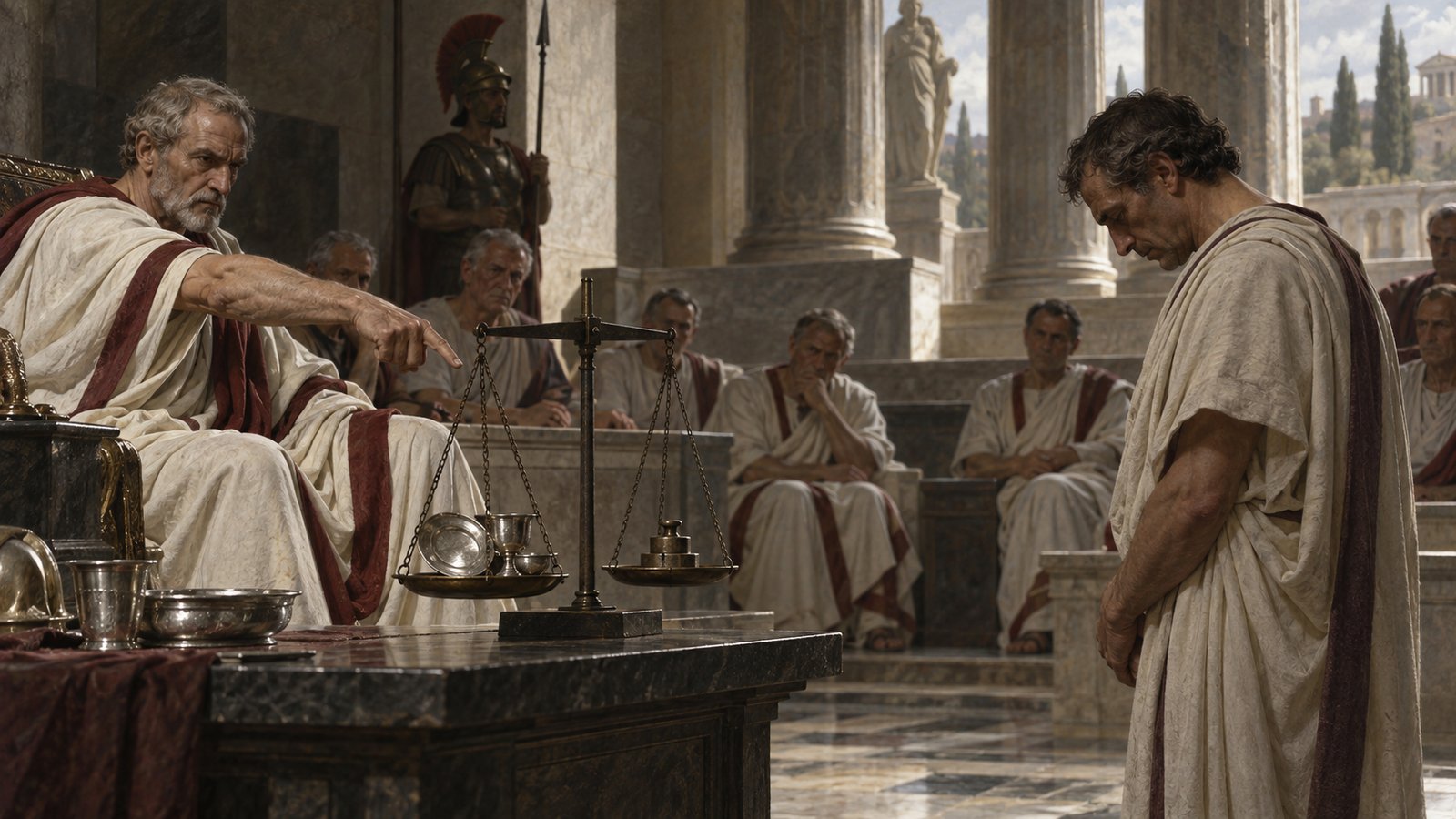
Fabricius also returned in a different constitutional role. As censor, he expelled Rufinus from the Senate on a charge of extravagance because Rufinus possessed ten pounds weight of silver plate.
The objects seem modest beside later imperial luxury, but Gellius’s story depends on the older standard associated with republican austerity. Silver tableware could serve as visible evidence in a judgment about whether a senator’s household matched the discipline expected of his rank.
The censor was not selecting a field commander. He was reviewing status, conduct and membership in the political order. Qualities that had outweighed greed in wartime did not make greed irrelevant forever.
This is where Fabricius’s two decisions become consistent. At the election, he asked who could keep Rome from enemy control. At the censorship, he asked whether Rufinus’s private display met a public moral standard. Different offices produced different tests.
The site’s account of censors lowering citizens for neglected fields and vineyards shows how land care could become evidence of civic character. Rufinus’s silver belonged to the same broad world of inspection, where material possessions made conduct visible.
Fabricius Used Institutions Instead of Personal Loyalty
The anecdote is often remembered as a celebration of Fabricius’s incorruptible simplicity. Its institutional logic is more interesting. He did not reward friends and punish enemies whenever opportunity allowed. He used the authority of each office for its stated problem.
Supporting Rufinus demanded that he separate personal disgust from military assessment. Expelling Rufinus demanded that earlier cooperation create no permanent debt. The first act would have been compromised if hatred had blinded Fabricius to skill; the second if gratitude or shared success had protected extravagance.
That separation is difficult precisely because Roman politics was intensely personal. Reputation, obligation and alliance shaped careers. Gellius presents Fabricius as capable of acting beside an enemy without converting the relationship into friendship.
Nor did the first judgment promise unlimited trust. Rufinus was considered fit to command in a crisis, not fit in every respect. Competence was specific rather than cleansing.
The later censorship also avoided rewriting the election. Fabricius did not claim that he had been deceived about Rufinus. Gellius tells us that he recognized the greed before he campaigned for him. The expulsion enforced a judgment already present but previously outweighed by danger.
Another Lost Eagles article follows the Senate walking with Cato after Caesar ordered his arrest during debate. That episode turns institutional resistance into collective movement. Fabricius’s story is quieter: one statesman changes his decision because the office and the risk have changed.
The Story Refuses a Simple Hero and Villain
Rufinus is not reduced to greed. His energy and mastery of tactics explain why Rome might need him. Fabricius is not reduced to purity. His virtue includes the willingness to place power in hands he considers morally dangerous.
The arrangement prevents an easy lesson about choosing only good men. Gellius’s Rome sometimes faced a harder question: what should happen when the candidate with the necessary skill is also the candidate whose character invites suspicion?
Fabricius answered provisionally. Give Rufinus the command when inexperienced alternatives risk defeat. Judge him again when senatorial standing and private conduct come under censorial review.
The ten pounds of silver make the second judgment tangible, just as the threatened sale to an enemy makes the first danger tangible. One scale weighed household luxury; the other weighed the consequences of failed command.
Gellius does not ask readers to admire Rufinus’s avarice or to believe that military success absolved it. He preserves a sequence in which no single decision settled the man’s entire public worth.
That sequence is the point. Roman austerity could be flexible in emergency without becoming meaningless afterward. Fabricius backed the commander he hated, then expelled the senator he had helped. Between those acts stood not a change of heart, but a change of duty.
Sources
Aulus Gellius, Attic Nights, book 4, chapter 8.