
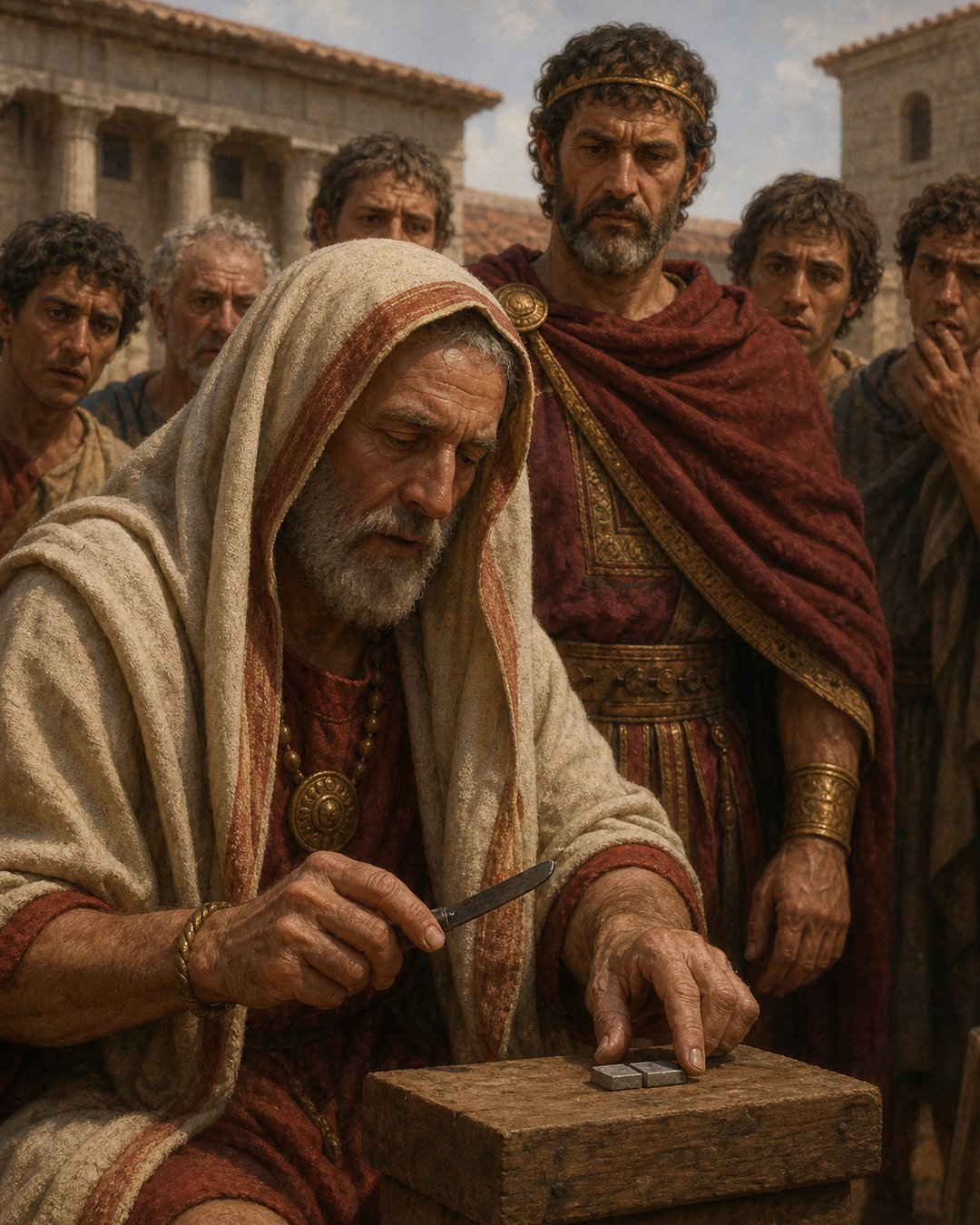
The king thought he had designed a question with no safe answer. Tarquinius Priscus asked the celebrated diviner Attus Navius whether the thing in his mind could be done. Attus consulted the signs and said it could. Only then did Tarquin reveal the trap: he had been thinking of cutting a whetstone in two with a razor.
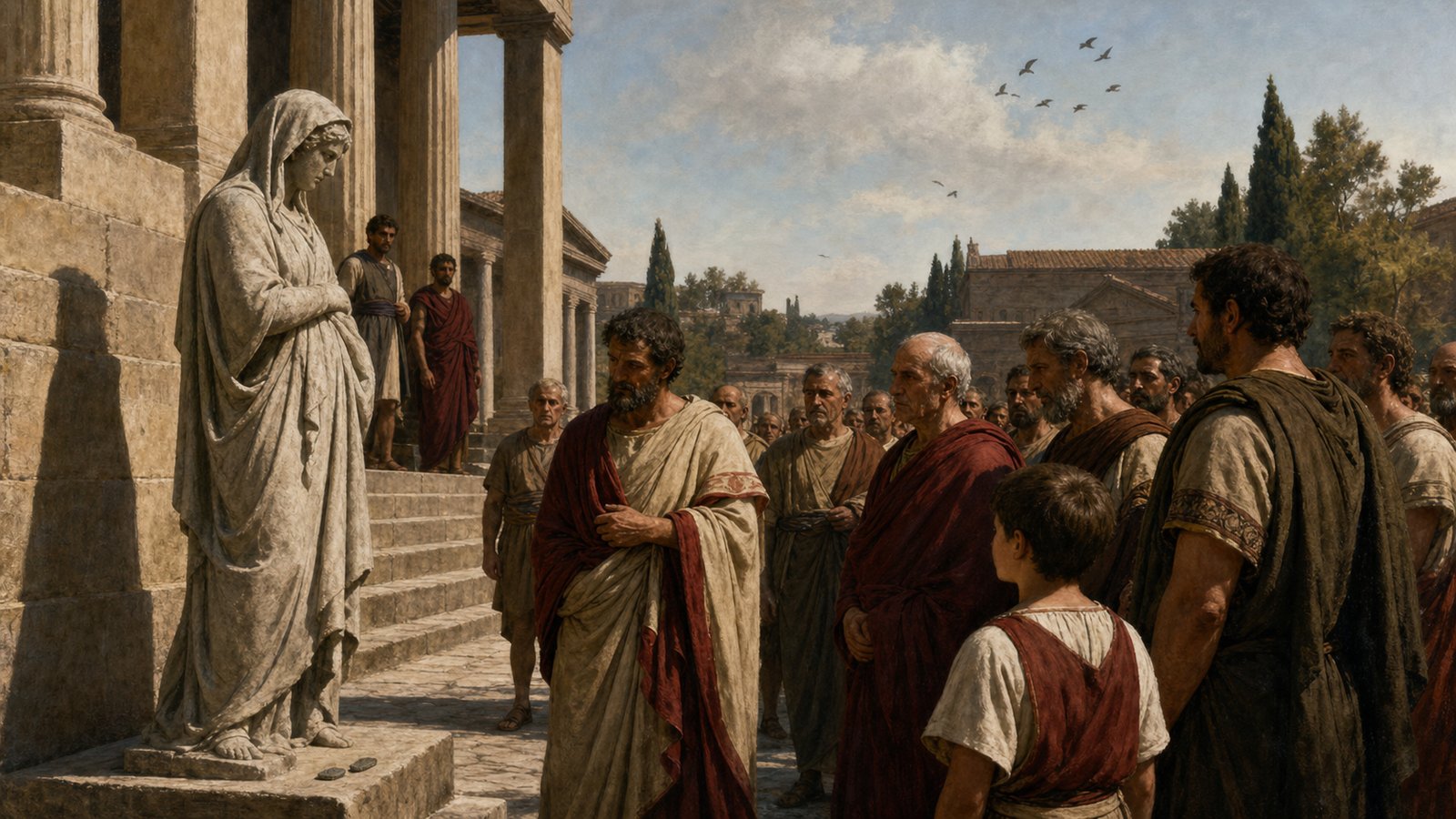
Livy says Attus took the razor and immediately split the stone. The challenge that was meant to ridicule augury instead humiliated the challenger. Rome later placed a veiled statue of Attus in the comitium, on the left steps of the senate house, and reportedly kept the whetstone there as a monument.
The scene is memorable because its objects are absurdly mismatched. A razor is made for a fine edge; a whetstone exists to wear such an edge down. Yet Livy’s political mechanism matters more than the legendary cut. A king tried to control a religious expert by hiding the real question, and the expert’s accepted procedure turned the king’s test against him.
A Cavalry Reform Created the Argument
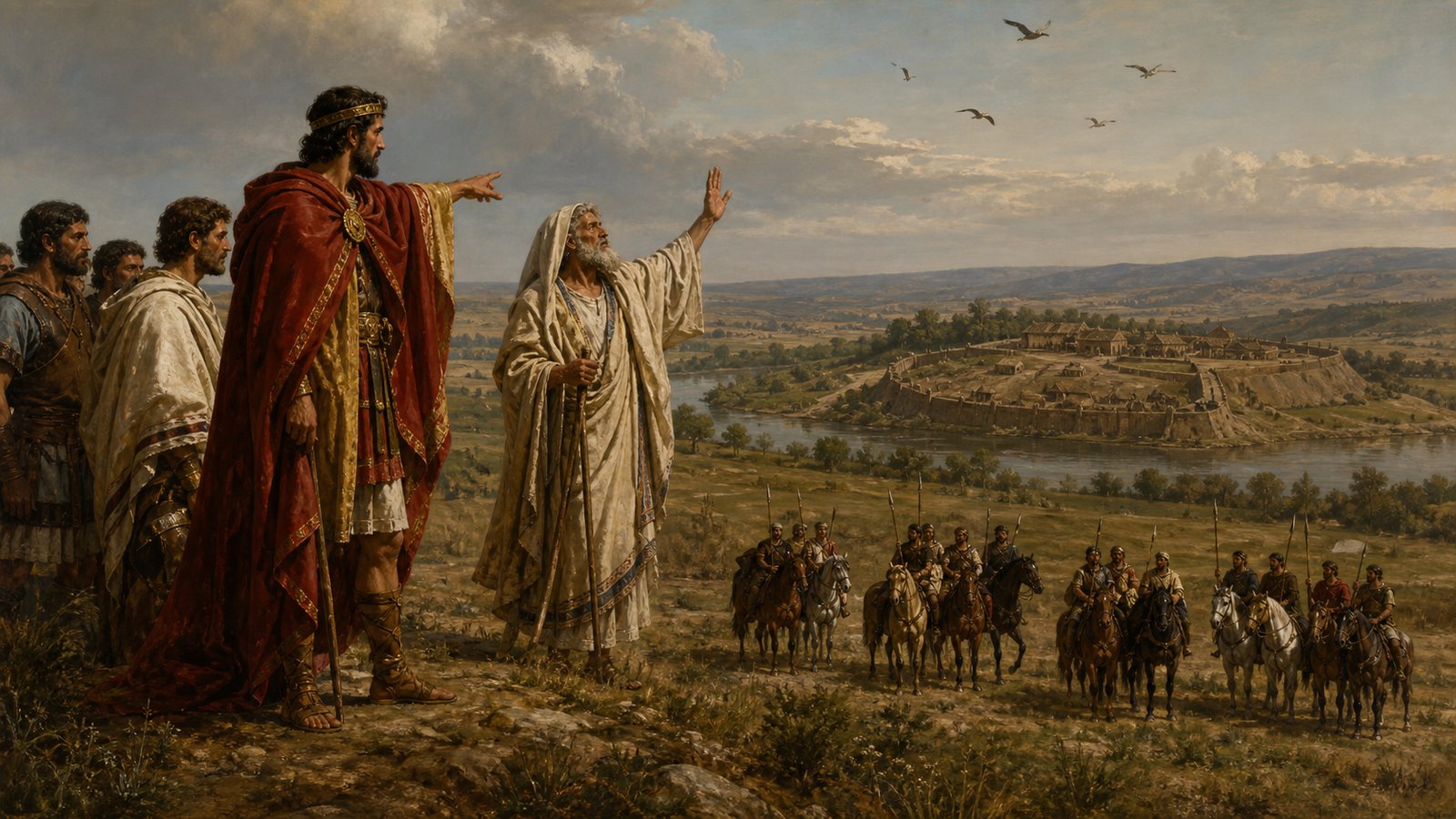
Livy did not begin with a magician, a razor or a stone. Tarquin had been preparing to enclose Rome with a stone wall when a sudden Sabine war interrupted the project. The enemy crossed the Anio before the Roman army could stop it, and the first fighting brought heavy losses without a clear decision.
When the Sabines withdrew to camp, Rome gained time for new levies. Tarquin concluded that his force was weak in cavalry. He wanted to add to the Ramnenses, Titienses and Luceres, the three mounted divisions that Roman tradition attributed to Romulus, and he intended the additions to be distinguished by his own name.
This was therefore not an abstract debate over whether birds could reveal the future. The proposed reform touched war, manpower and royal reputation. Tarquin saw an urgent military weakness and a chance to attach his identity to its solution. Attus saw units whose founding authority already belonged to augury.
Attus insisted that no alteration or new appointment of that kind could be made unless the birds approved. The objection did not necessarily deny that more horsemen were useful. It claimed jurisdiction over the manner in which an inherited institution could be changed. The king could command levies, but he could not simply erase the ritual conditions attached to Romulus’s arrangement.
The conflict resembles the procedural world behind Pompey needing a handbook to convene the Senate. Authority in Rome was not merely possession of force or office. A decision could fail because the right person, formula, place or sign had not made it valid.
Tarquin Hid the Test Until the Answer Was Fixed
Livy describes the king as angry and mocking the diviner’s art. Tarquin did not openly ask Attus to split stone. He first asked whether what he was thinking could be accomplished. That sequence was the trap. If Attus answered no, the king could choose an ordinary possible act. If he answered yes, the king could disclose something ridiculous.
Attus nevertheless performed the divination and affirmed that the concealed thought could be done. Tarquin produced the razor and whetstone. Livy marks the marvelous part with report language—“as they say”—rather than presenting the cut as something his own generation had witnessed. The story already belonged to inherited civic memory.
The razor and stone made an unusually effective pair for that memory. A whetstone preserves sharp tools by grinding their edges; it is not the material a razor should conquer. Anyone could understand the apparent impossibility without technical explanation. The objects compressed a dispute over institutional competence into one visible action.
Attus’s success also answered more than the literal challenge. Tarquin had claimed the freedom to define the test after hearing the result. Attus accepted that hostile structure and still prevailed. In Livy’s narrative, the birds had not merely guessed a hidden thought. Their answer survived a king who was actively trying to manufacture a contradiction.
The tale should not be treated as a laboratory record of an iron blade cutting geological material. Livy wrote centuries after Rome’s kings, and his wording acknowledges tradition. Its historical value lies in what Romans chose to explain with it: why augury deserved public deference and why political speed did not cancel ritual procedure.
Stone and Statue Made the Victory Public
A private wonder would have been easier to forget or dispute. Livy instead locates its afterlife at the civic center. A statue of Attus, his head veiled for ritual, stood in the comitium on the left side of the senate-house steps, at the place where the deed was said to have occurred.
The whetstone was also deposited there so that it might remain a monument for posterity. Statue and object did different work. The statue identified the expert and his religious posture. The split stone materialized the king’s failed challenge. Together they gave future political actors a scene they could encounter rather than only a tale they might hear.
Location sharpened the message. The senate house and comitium belonged to public deliberation, assemblies and office. Placing the augur’s memorial there did not isolate religion in a remote shrine. It inserted the story beside the spaces where Roman authority was exercised.
This civic use of an object differs from the coercive labor attached to the tunnel works attributed to another Tarquinius. The buried-laborer story made royal building power terrifying. Attus’s whetstone made royal power answerable to a specialist procedure the king had tried to mock.
The monuments also reversed Tarquin’s intended ownership of memory. He had hoped to mark enlarged cavalry units with his own name. The most durable name in Livy’s episode is instead Attus Navius. The king’s test supplied the stage on which the augur became memorable.
The Birds Could Make Rome Wait
Livy says the episode brought so much honor to augury and the college of augurs that nothing in peace or war was undertaken without the auspices. Assemblies of the people, the summoning of armies and affairs of the greatest importance were postponed when the birds would not permit them.
That claim turns delay into the practical outcome of the miracle. An unfavorable sign did not need to propose a better military reform. It could stop the current one. Religious authority operated as control over timing, and timing could determine whether political will became action.
Tarquin still changed the cavalry. Livy says he made no newly named centuries. Instead, he doubled the number of men in each existing division, producing eighteen hundred knights; the additions were called “the younger” under the old names. The ending is neither total royal defeat nor total ritual obstruction. Expansion occurred, but within the inherited framework Attus had defended.
Livy’s sequence therefore gives the razor a precise institutional consequence. The impossible cut did not prove every prediction true or remove disagreement from Roman public life. It explained why a ruler who wanted immediate change might still have to consult, wait and revise.
Tarquin tried to make expertise look foolish by reserving the right to reveal the question after the answer. The story denied him that advantage. Once the whetstone split, the objects, the statue and the placement beside the senate house converted a contest of personalities into a rule about state action. In Livy’s Rome, even a king’s hidden thought could not remain outside procedure once the birds had been asked.
Sources
Livy, History of Rome 1.36.