
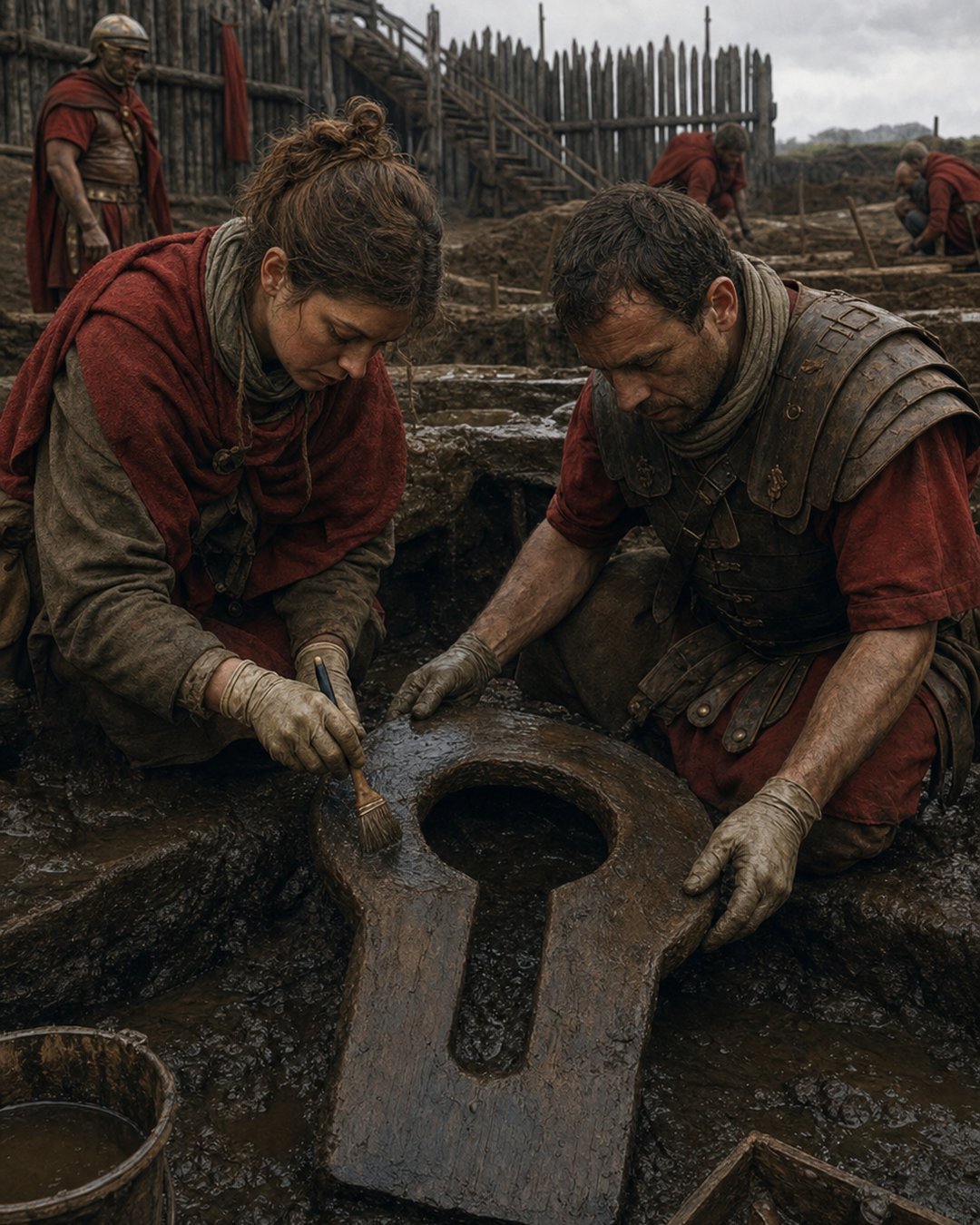
The object looked familiar before the excavators had finished uncovering it. A broad wooden ring surrounded a keyhole-shaped opening, smoothed into a form that could support a human body. It emerged in 2014 from the wet deposits of Vindolanda, the Roman fort and settlement south of Hadrian’s Wall. Stone latrine benches survive across the empire. This was wood.
The discovery was quickly called a two-thousand-year-old toilet seat and possibly the only surviving Roman example made from timber. Its rarity is genuine, but it can mislead. Romans did not necessarily sit on wood only once. Wood normally rots. The Vindolanda object reached us because its working life ended, someone found it useful again as a patch over a bad floor, and oxygen-poor burial protected what ordinary soil would consume.
That chain turns a comic headline into a serious archaeological lesson. The seat records how Roman craftspeople shaped comfort, how a northern community managed waste and cold, how valuable boards were reused, and how survival filters daily life. The object is exceptional because preservation is exceptional—not because Roman bodies were.
A Keyhole in Wood Was Recognizable Before It Was Explained
The seat was found in a muddy rubbish-filled trench at Vindolanda. Excavation director Andrew Birley recalled that there was no doubt about its identity as it appeared. Its worked outline and opening matched the functional logic known from Roman latrines, while the material made the find unprecedented.
The Vindolanda Trust now describes it as a very rare Roman wooden toilet seat and the only conserved example in Britain. The BBC report from August 2014 called it perfectly preserved and dated it broadly to the second century. Archaeology magazine emphasized the same contrast: stone and marble seats were familiar, but timber had almost vanished.
Recognition did not reveal the complete installation. The seat was no longer attached to a cesspit, drain or bench. Birley joked that the team now needed to find the toilet that went with it. That missing context matters. The object proves the shape of a seat, not the exact architecture of its first room.
The article on privacy and conversation in Roman communal latrines reconstructs the social room around fixed benches. Vindolanda gives the body’s point of contact. A familiar opening was translated into a separate, carefully finished piece of timber.
Wood Changed the Temperature of a Familiar Roman Routine
Most surviving Roman toilet benches are stone because stone endures. It also feels cold. Birley suggested that wood may have been especially welcome in Vindolanda’s chilly northern setting. The claim should remain a practical inference rather than a documented sales pitch, but the material difference is immediate to anyone who has touched both surfaces in winter.
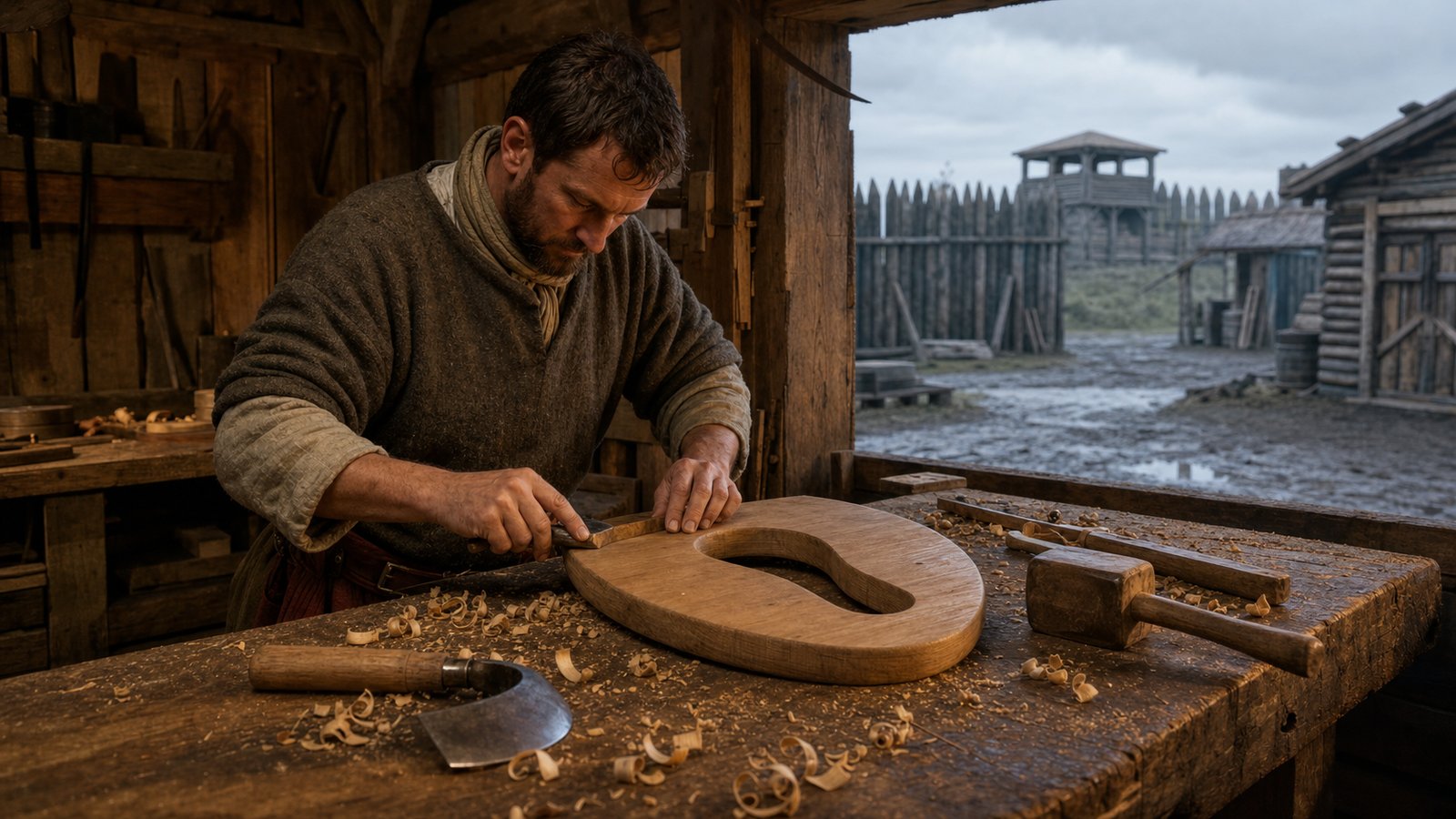
A wooden seat could be shaped and smoothed away from the latrine, then fitted over an opening. The surviving piece was described as well worked and comfortable-looking. Tool marks, thickness and species deserve specialist study, but its broad finish already shows more intention than a rough board placed across a pit.
Timber was abundant enough around frontier construction to support forts, floors, writing tablets and furniture, yet suitable boards still represented labour. A tree had to be felled, split or sawn, seasoned and shaped. Curves around an opening demanded controlled cutting. Comfort rested on a craft sequence invisible in a stone-only account of sanitation.
This does not make Vindolanda hygienic by modern standards. Material comfort and microbial safety are different questions. A warmer seat could stand above a dirty drain or cesspit. Roman sanitation moved waste, but it also concentrated people, parasites and smells in shared places.
The Seat’s Second Job Was to Cover a Bad Floor
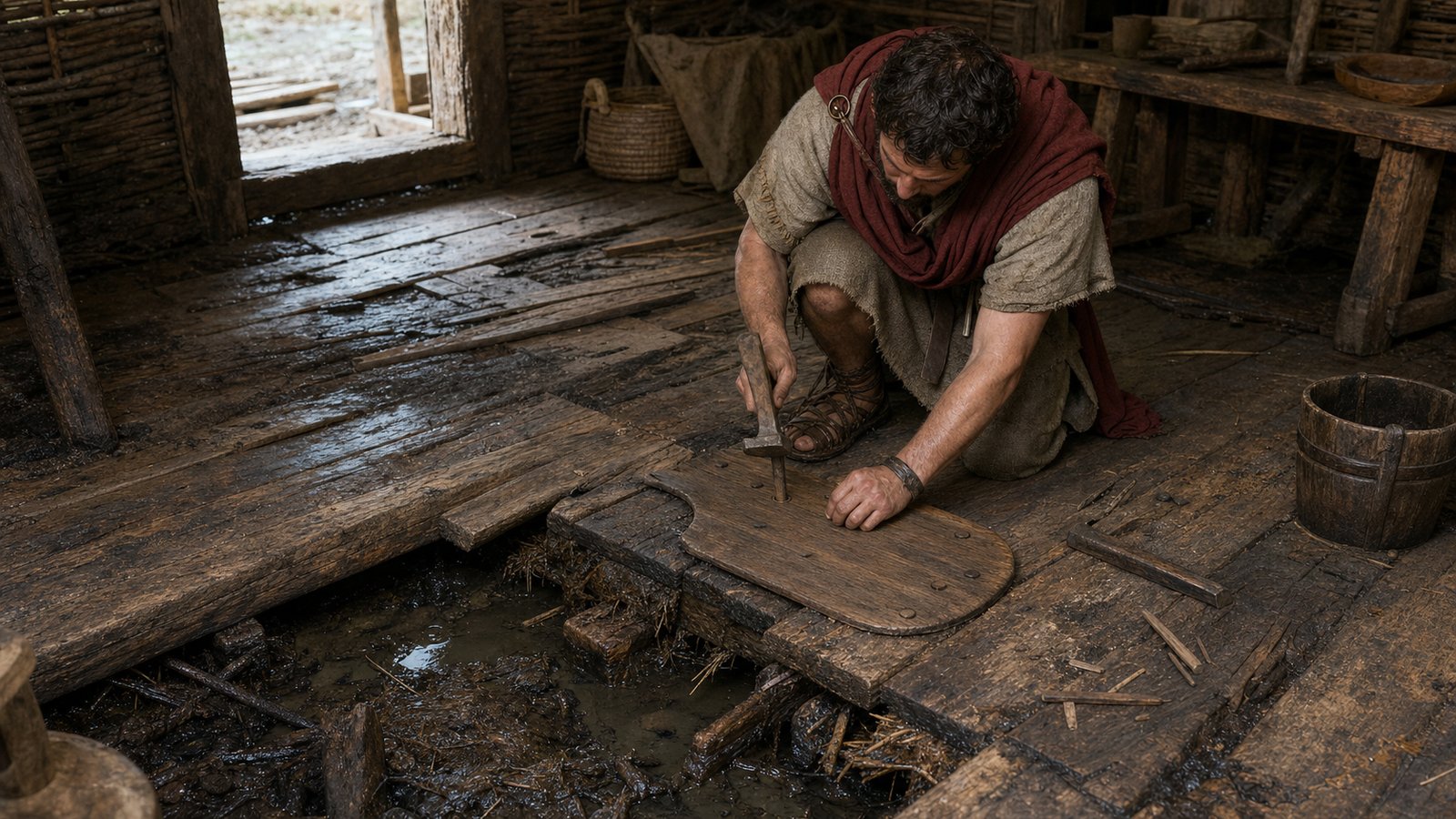
The Trust’s current catalogue supplies the most revealing detail: the seat had been reused to cover a damaged patch in a floor. By the time it entered the deposit that preserved it, the object was no longer being valued for its opening or bodily fit. It had become a conveniently broad piece of wood.
Reuse explains survival and economy at once. Frontier households and military communities did not discard every shaped board at the moment its first purpose ended. Timber could be patched into walls, thresholds, floors or containers. The seat’s recognizable form survived precisely because nobody cut it down beyond recognition.
The new function also warns against reading findspot as original use. Archaeologists encountered floor repair, not a latrine in operation. Without the keyhole shape, the board might have been catalogued simply as architectural timber. Object biography is the movement between functions, not a single label attached forever.
The account of Vindolanda’s thin wooden writing tablets shows frontier timber carrying ink and private voices. The toilet seat belongs to the same preservation miracle but a different economy of wood: thicker, load-bearing, intimate and eventually mundane enough to become a patch.
Waterlogged Rubbish Saved What Dry Ground Would Erase
Vindolanda is famous for organic materials because wet, oxygen-poor layers slowed the organisms that normally break down wood, leather and textiles. The conditions do not freeze time automatically. Excavation exposes fragile material to air, so conservation becomes a continuation of archaeology rather than an optional museum polish.
The seat’s uniqueness is therefore a statistical trap. Thousands of stone latrine surfaces can survive where equivalent wooden fittings disappear. If archaeologists counted only extant objects, they might conclude that Roman users almost always sat on stone. Vindolanda proves at minimum that the repertoire was wider.
The object followed a narrow route: primary use, removal, floor repair, abandonment, waterlogging, excavation and conservation. A different decision at any stage could have destroyed its form. Recutting the board would erase the seat; dry burial would invite rot; careless drying after excavation could warp or split it.
This is why rubbish deposits are valuable. Elite collections selected beautiful objects. Refuse preserved things after status and usefulness had changed. A repaired floor can reveal comfort and sanitation more directly than an inscription praising a building benefactor.
One Seat Reopens the Whole Frontier Latrine
The Trust’s interpretation describes Vindolanda’s sixteen-seat latrine in the southeast corner of the stone fort. Communal facilities lacked modern cubicles. Water associated with bathhouses could help carry waste, while users relied on cleaning materials very different from paper. The exact wooden seat, however, need not have belonged to that surviving stone arrangement.
Ancient toilet drains often preserve lost objects and biological evidence because people were reluctant to retrieve anything dropped into them. Seeds, parasites, pottery and personal items can turn sanitation into evidence for diet, disease and behaviour. The seat adds an architectural component normally removed by decay.
It also restores the carpenter to the latrine. Drainage histories tend to celebrate channels, sewers and hydraulic scale. Someone still had to think about the user’s weight, the width of an opening, splinters, edges and cold. Infrastructure reached the body through a shaped surface.
No ancient owner recorded whether the seat felt luxurious, ordinary or embarrassing. Its reuse suggests the timber remained useful after the fixture did not. Its conservation suggests modern archaeology values precisely the material an ancient repairer treated as spare board.
The Vindolanda seat outlasted its room, drain and floor because it moved through all three stories. First it offered a warmer place to sit. Then it covered damage underfoot. Finally, mud turned it into evidence. The most ordinary Roman object survived by ceasing to be what it was made for.