
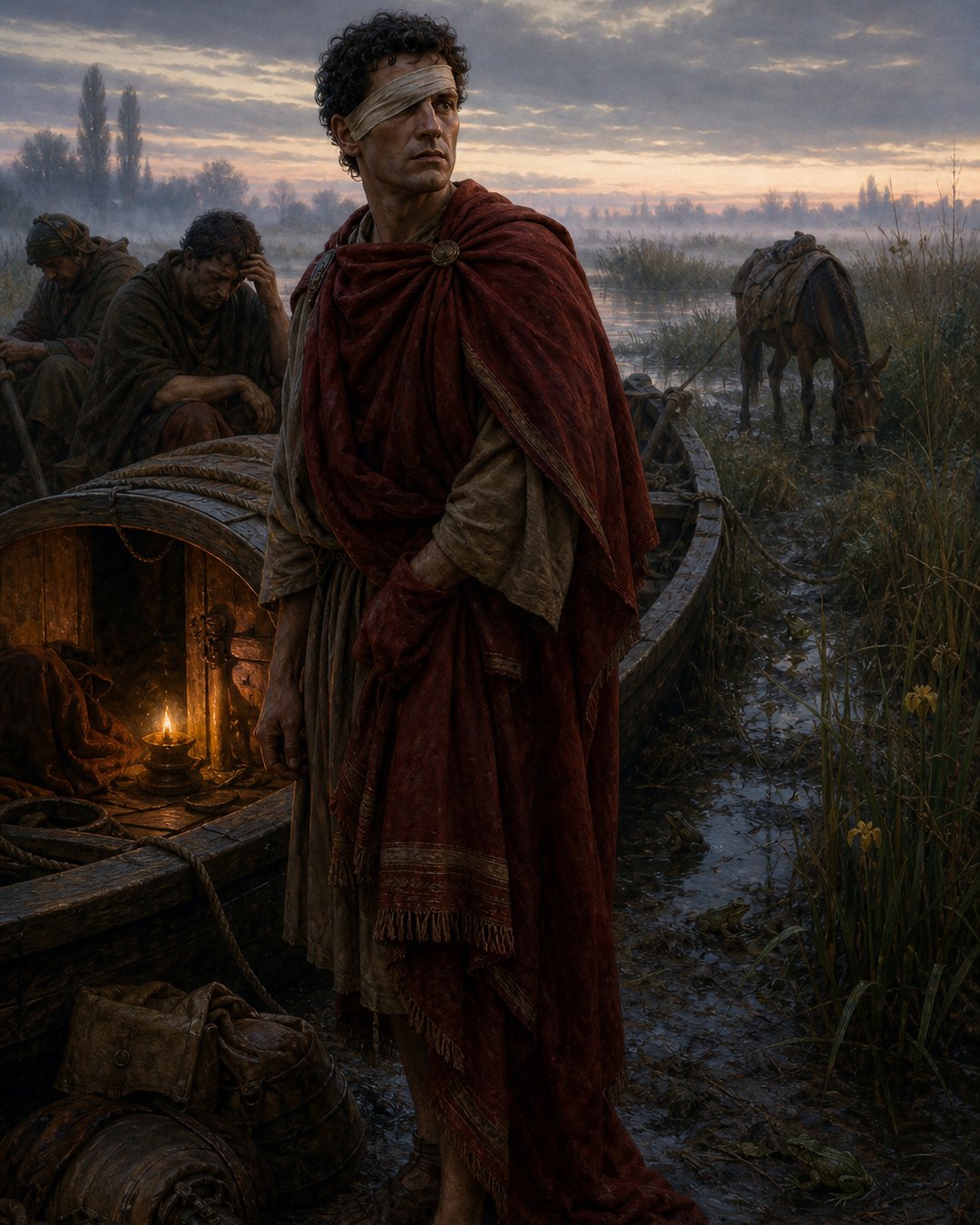
The mule stopped pulling the boat and wandered off to graze. Passengers had already endured frogs, midges and competing songs in the dark. At another stop, bad water made Horace skip supper. Farther south, an innkeeper nearly burned down his own kitchen while roasting lean thrushes. Rome’s road network may have connected the peninsula, but Horace chose to remember the moments when connection became irritation.
The journey appears in the fifth satire of Horace’s first book. It carries the poet from Rome toward Brundisium in the company of people tied to Maecenas, Octavian’s powerful ally. Political business sits in the background: Horace says Maecenas and Cocceius were accustomed to reconciling friends. Yet the poem never becomes a diplomatic bulletin. Its foreground belongs to luggage, eyes, stomachs, beds, meals, ferries and conversation.
That makes the satire an unusually intimate route map and a dangerous one to read too literally. Horace selects scenes for comic rhythm. He exaggerates characters, withholds official detail and turns discomfort into performance. The road is real, many stops are named, and the companions belong to his social world. The shape of the trip, however, is the shape of a poem—not an expense account.
A Short First Stage Led to a Long Night
Horace begins without ceremony. He left Rome in the company of Heliodorus, whom he calls the most learned of Greek rhetoricians. Their first stage ended at Aricia, where they took modest lodging. The poem immediately lowers the register: the great road south is introduced through a night’s accommodation rather than a gate, milestone or marching column.
They continued to Forum Appii, a place Horace crowds with boatmen and stingy innkeepers. Here road travel shifted onto the canal through the Pomptine marshes. The travellers loaded their luggage, ate, and prepared to move by boat through the night. Horace avoided the local water because it was bad and watched his companions dine instead.
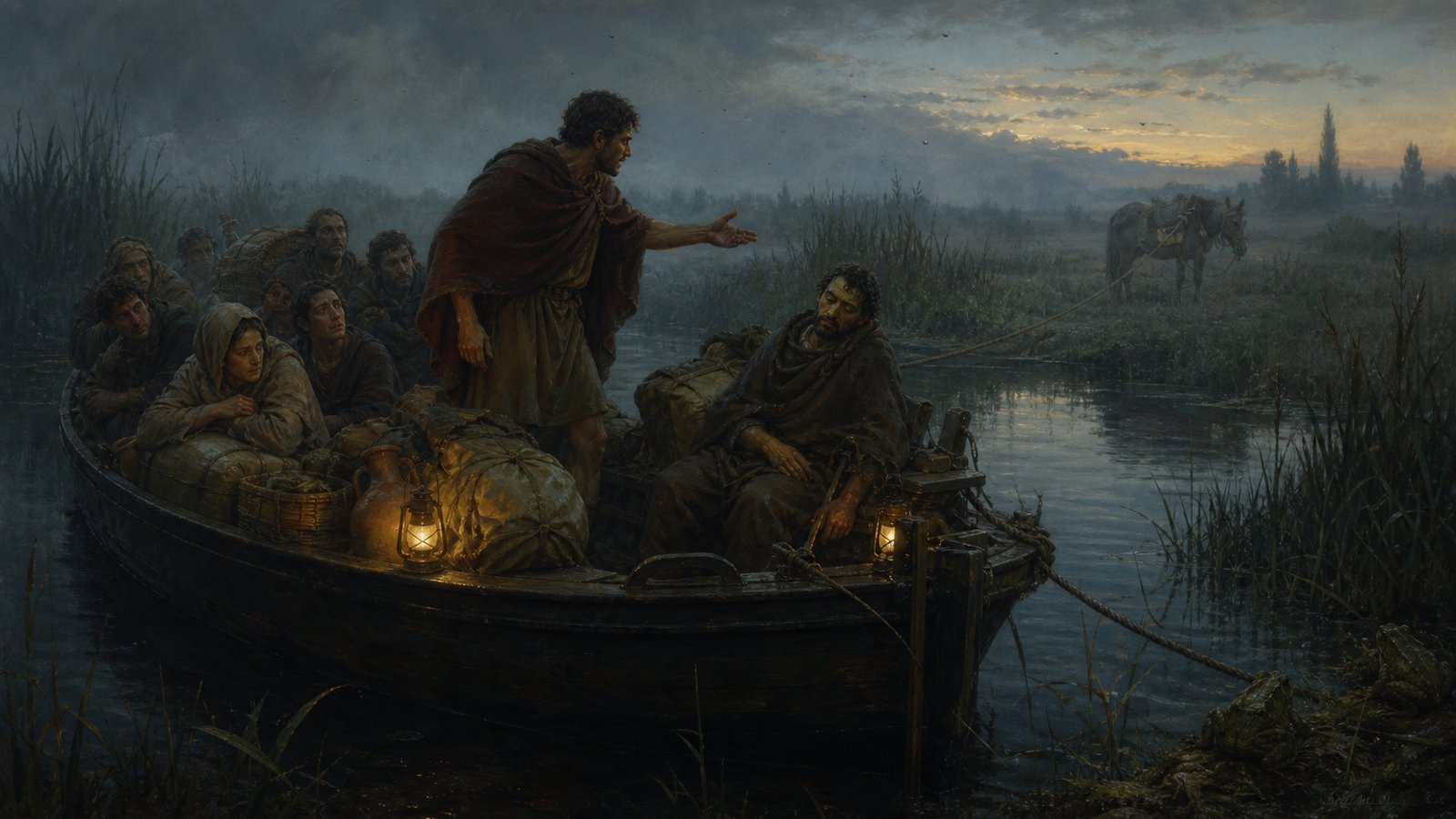
The boat did not glide silently into dawn. Frogs and midges filled the marsh with noise. A drunken passenger and the boatman traded songs about absent girlfriends until sleep finally overcame them. Then the mule towing the vessel was released to graze. Horace says a traveller eventually noticed that the boat was not moving and struck both mule and boatman with a willow branch before the group reached Feronia late.
This is the same landscape that strategic histories compress into the Appian Way’s durable line across Italy. Horace makes the line wobble. Water quality changes a meal, insects erase sleep, entertainment becomes nuisance, and one animal’s appetite interrupts everyone’s timetable. Infrastructure exists, but movement still depends on human attention and animal labour.
Friends Changed the Meaning of the Route
After washing at Feronia’s spring, the travellers climbed toward Anxur, the hill town now Terracina, where white rock caught the eye from a distance. Horace expected Maecenas and Cocceius there, along with Fonteius Capito. The poem describes Cocceius and Maecenas as men experienced in reconciling estranged friends, a brief signal that this was not an aimless holiday.
The political purpose remains deliberately blurred. Horace does not record a conference agenda or reproduce negotiations. Instead, he reports an eye inflammation and the ointment used on it. The body keeps pushing official business away from the centre. A reader sees the entourage from the poet’s sore-eyed edge rather than from Maecenas’s private conversations.
At Sinuessa the social map brightens. Plotius, Varius and Virgil joined the party. Horace pauses to praise these friends with unusual warmth, calling them souls better than any the earth had borne and saying that no one was more closely attached to them. Greetings and embraces receive more emotional space than the mission itself.
That reunion changes the scale of travel. A route is not only a chain of stations; it is a sequence in which the company can expand. The person beside you at supper today was absent yesterday. Horace’s Italy becomes connected through friendships as much as paving. The itinerary measures who appears, who hosts, and who understands the joke.
The Body Kept Its Own Travel Record
At Formiae the group lodged at the house of Lucius Licinius Murena, while Fonteius Capito hosted the meal. At a villa near the border of Campania, Horace’s stomach turned against him. He waited for food that did not suit his condition and went without supper. His companions ate while he watched the night spread across the landscape.
The next morning brought more practical details. A bridge near Campania supplied the travellers with firewood and salt. At Capua, mules put down their packs. Maecenas went to play ball, while Horace and Virgil slept: Horace blamed his inflamed eyes, Virgil his stomach. Different bodies imposed different schedules inside the same official party.
These are small details, but their accumulation resists the polished picture of effortless Roman circulation. A working road did not standardize water, food, health or rest. Pack animals needed unloading. Travellers had to find fuel. A meal might be unsuitable. Even elite connections did not prevent fatigue from deciding whether someone played or slept.
The stops also complicate the orderly image of Roman travel stations. Horace moves through inns, private houses, a villa and improvised hospitality rather than a uniform hotel system. Reliability came from overlapping resources: roads and canals, hosts and servants, food, animals, local knowledge and the flexibility to lose time.
A Dinner Contest Replaced Diplomatic News
At the villa of Cocceius, the poem devotes a long scene to a verbal contest between Sarmentus and Messius Cicirrus. Sarmentus compares Messius to a wild horse and jokes about the scar on his forehead; Messius fires back at Sarmentus’s condition and appearance. The exchange grows through mimicry, insults and challenges until the guests laugh through dinner.
Horace gives this comic duel far more colour than the reconciliation supposedly entrusted to Maecenas and Cocceius. That is a literary choice, not evidence that the official work was unimportant. Satire rewards the grotesque comparison, the quick response and the social risk of a joke delivered in front of patrons.
The scene also reveals the unevenness of the travelling company. Maecenas, poets, hosts and entertainers share a room, but not the same status. Sarmentus’s position and Messius’s local identity become material for humour. Fellowship on the road could be warm, as with Virgil and Varius, or competitive and exposing, as at Cocceius’s table.
A neutral itinerary would mark a night’s lodging and move on. Horace turns the lodging into a miniature theatre. The trip’s memory attaches itself to voices and faces. What survives is not the number of miles completed that day but the comparison that made the table laugh.
Smoke, Rain and Skepticism Closed the Poem
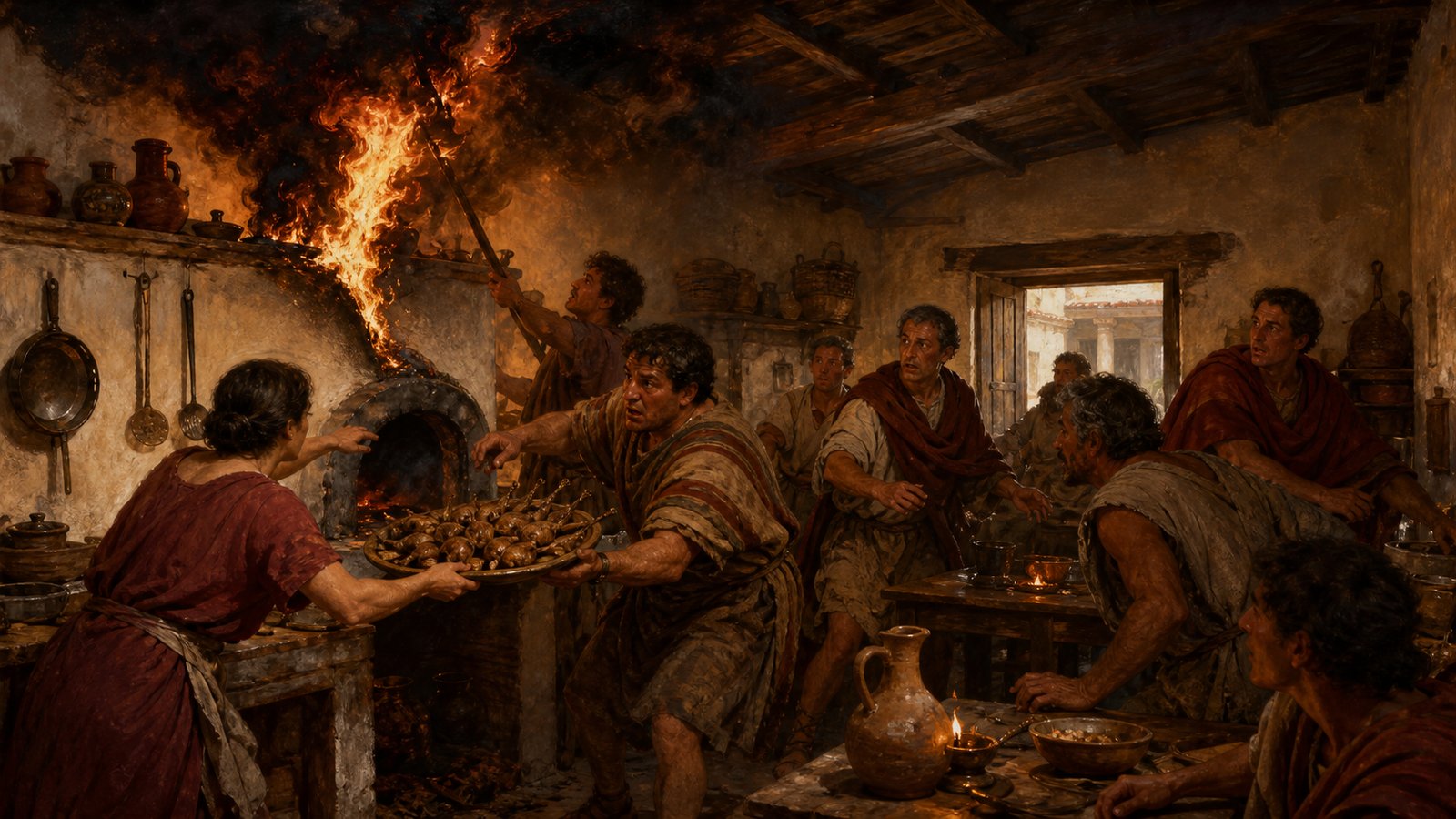
At Beneventum, a diligent host nearly set his kitchen alight while roasting lean thrushes. Flames ran through the old structure, and hungry guests and frightened servants rushed to save the meal. The scene reduces hospitality to a frantic rescue: food, roof and reputation are all briefly at risk because a stove misbehaved.
The journey then entered Apulia. Horace links the region to his childhood and notes the difficulty of water. At Rubi the company arrived tired after a long stage, with bad weather adding to the road’s difficulty. At Barium he singles out the fish. Each place is remembered by a bodily or sensory tag rather than a civic description.
Egnatia supplies the poem’s final intellectual joke. Local people, Horace says, tried to persuade the travellers that incense melted on a temple threshold without fire. He refuses the wonder and invokes a philosophical view that the gods live without anxious involvement in such marvels. The traveller reaches the end not with revelation but with skepticism.
Brundisium finishes both route and satire. There is no grand arrival ceremony. The poem has already spent its energy on a stalled boat, friends’ embraces, inflamed eyes, a bad stomach, table insults, smoke and rain. Those details do not disprove Roman connectivity; they show what connectivity felt like before distance became a clean line on a map. Horace’s road works, but it works through inconvenience, companionship and the poet’s ruthless choice of what was funniest to remember.