
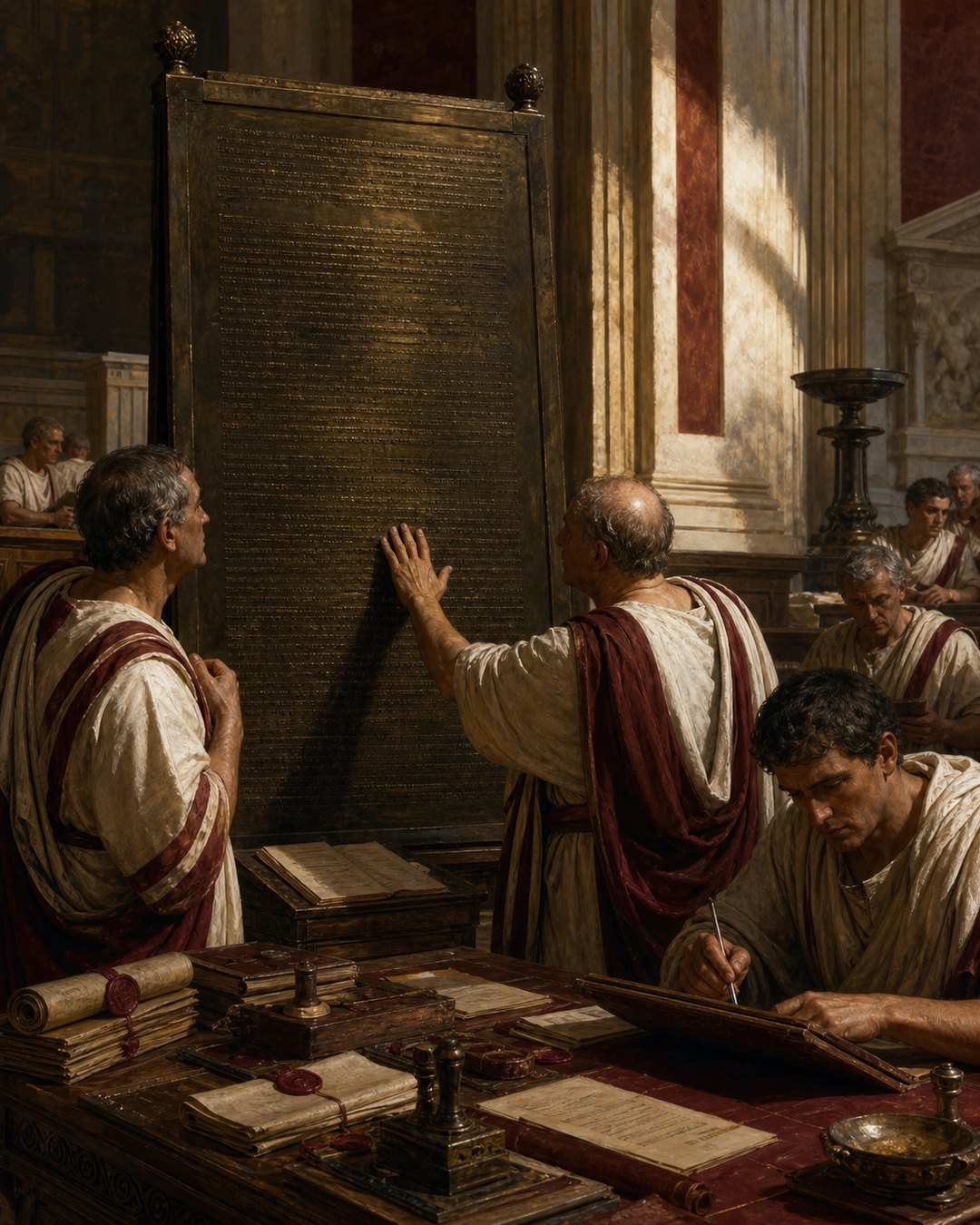
Vespasian had already acted before Rome finished defining the legal basis on which he could act. The surviving bronze text associated with his imperial powers confronts that sequence directly. Near its end, it declares that measures undertaken, ordered or decreed by him before the law was proposed were to be valid as if the Roman people or plebs had ordered them.
This was more than a ceremonial welcome for a new ruler. The civil wars of AD 69 had made power move faster than ordinary constitutional form. Armies, governors, senators and officials had responded to commands while the settlement was still being assembled. Retrospective validation turned that dangerous interval from a chain of questionable acts into recognised public business.
The famous Lex de imperio Vespasiani also grants treaty, senate, electoral and boundary powers. Many clauses invoke what had been lawful for Augustus, Tiberius or Claudius. The text therefore looks backward in two ways: precedent explains what Vespasian may do next, while the retrospective clause repairs what he had already done.
A Surviving Bronze Begins After the Beginning
The document belongs to AD 69–70, but its surviving portion is incomplete. The initial provisions are missing, leaving scholars to debate whether they included tribunician power, proconsular imperium or other foundations of the principate. Any reconstruction must begin by acknowledging that the bronze does not preserve the law’s full opening architecture.
Its formal identity is also debated. The clauses resemble a senatorial resolution, yet the attached sanction calls the measure haec lex, ‘this law’. One influential reconstruction treats it as a decree framed after the previous emperor’s death on 20 December 69 and then carried into a popular enactment, perhaps early in January 70.
That sequence is a scholarly interpretation, not a date written as a modern heading on the bronze. The uncertainty is productive. It reveals institutions trying to give durable form to a transfer whose military and political reality had already advanced. Senate, magistrate and people could all matter to the legal presentation even when legions had determined the outcome.
The surviving text is therefore not a neat constitutional birth certificate. It is the middle and end of a negotiated instrument. Its broken beginning prevents simple claims that one clause created the entire emperorship, while its detailed remainder shows which practical powers and legal repairs deserved explicit formulation.
Earlier Emperors Supplied a Menu of Powers
Several clauses grant Vespasian capacities by comparing him with selected predecessors. He may make a treaty with whomever he wishes as Augustus, Tiberius and Claudius could. He may convene the senate, report business and secure decrees through motions and divisions according to the same precedents.
The names are selective. They do not present every emperor as equally useful constitutional authority. Augustus, Tiberius and Claudius function as a usable lineage of lawful capacity. Vespasian’s regime could claim continuity with established practices without pretending the violence of AD 69 had been an ordinary succession.
Precedent here does active legal work. It defines powers through examples already absorbed into Roman government. Instead of inventing an entirely new office with one abstract description, the law gathers permissions that earlier rulers had exercised and transfers them to the new princeps in clause after clause.
This layered method belongs beside Augustus’s careful refusal of a royal title. The principate accumulated authority through republican words, offices and precedents. Vespasian’s law exposes that accumulation because it must state so many permissions separately.
The Senate Remained Inside the Machinery
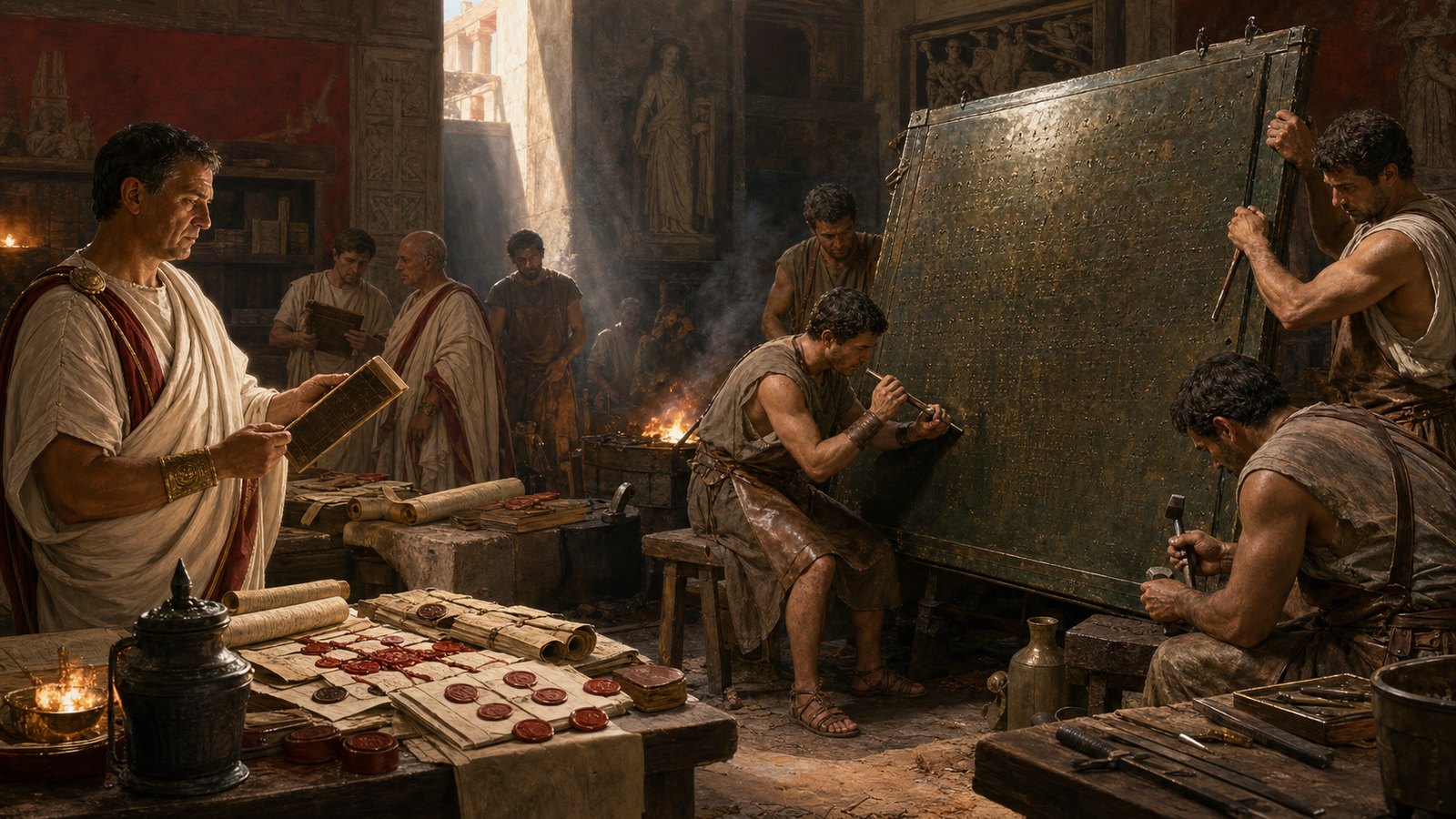
One group of clauses concerns the senate in operational detail. Vespasian may summon it, place business before it, transmit matters and produce decrees through report and division. A related clause validates sessions held by his wish, authority, order, mandate or presence as though they had been summoned according to statute.
These provisions do not make the senate irrelevant. They make its procedures governable by the emperor’s initiative. Formal debate, motions and voting remain part of the state’s legal output, but the ruler receives explicit control over when business enters that machinery and how a meeting gains recognised standing.
Another clause addresses elections. Candidates for magistracy, power, imperium or administrative charge whom Vespasian recommends, or to whom he promises support, are to receive special consideration. Recommendation turns imperial preference into an acknowledged factor inside institutions that still preserve electoral language and offices.
The arrangement sharpens the long transformation of senatorial power. The text does not describe a chamber simply abolished by monarchy. It preserves a senate whose acts matter while writing imperial presence and command into the conditions under which those acts become valid.
The Law Reached Boundaries and Exemptions
Vespasian receives authority to advance the pomerium, Rome’s sacred boundary, whenever he judges expansion to serve the public interest, as Claudius had been permitted to do. This is a concrete urban power with religious and political weight. Imperial precedent could alter the legal geography of Rome itself.
A broader clause authorises whatever Vespasian considers advantageous to the state and consistent with the dignity of divine and human, public and private matters, again following Augustus, Tiberius and Claudius. Its breadth has encouraged sweeping readings, but it sits among more specific grants rather than erasing them from the text.
The law also releases Vespasian from statutes and plebiscites that had not bound those predecessors and permits him to do whatever they could lawfully do under statutes or proposals. Exemption is therefore expressed as inherited parity, not as a naked statement that no law can touch the emperor.
These clauses make precedent flexible. Claudius supplies the model for the boundary; three predecessors anchor treaty, senate and general capacities; previous exemptions become Vespasian’s exemptions. The law constructs power by selecting old permissions, then placing the new ruler within their combined reach.
Retrospection Closed the Dangerous Gap
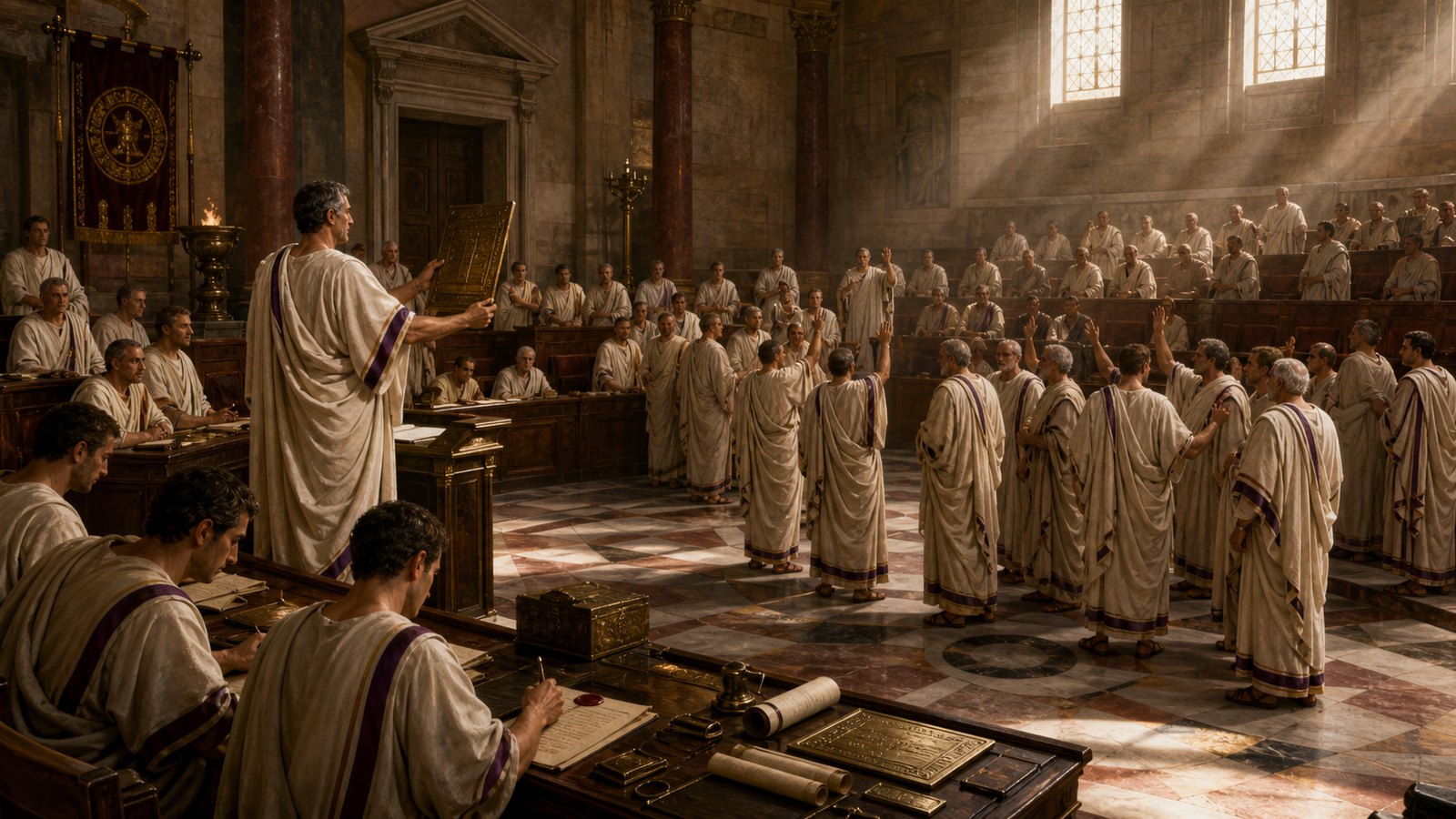
The most urgent clause looks to acts before the law’s proposal. Whatever Vespasian had undertaken, carried out, decreed or ordered—and whatever others had done by his order or mandate—was to be lawful and binding as though performed by command of the people or plebs. The wording reaches both ruler and agents.
That reach matters after civil war. An order moves through officials, soldiers, financial administrators and local authorities. If the source of authority remains legally uncertain, every dependent act can inherit the problem. Retrospective validation prevents the transition from leaving a trail of transactions vulnerable simply because action preceded formal settlement. It also distinguishes legal repair from historical denial: the clause openly marks the acts as earlier than the proposal, then supplies the authority they lacked at that moment. Sequence is acknowledged before validity is conferred.
The sanction then protects people who act under this law. Conduct that would otherwise conflict with statutes, proposals, plebiscites or senatorial decrees is not to create liability when done because of the new enactment. It bars payment claims, actions and judgments arising from that conflict. Permission acquires procedural protection.
The bronze does not hide that legitimacy arrived after command. It manages the fact. Precedents tell Rome why Vespasian may exercise powers; the retrospective clause tells institutions how to treat commands already obeyed. The sanction then gives that settlement practical teeth in later disputes, where permission without procedural protection could still collapse. A regime born from the Year of Four Emperors was not made lawful by forgetting the gap, but by writing across it.