
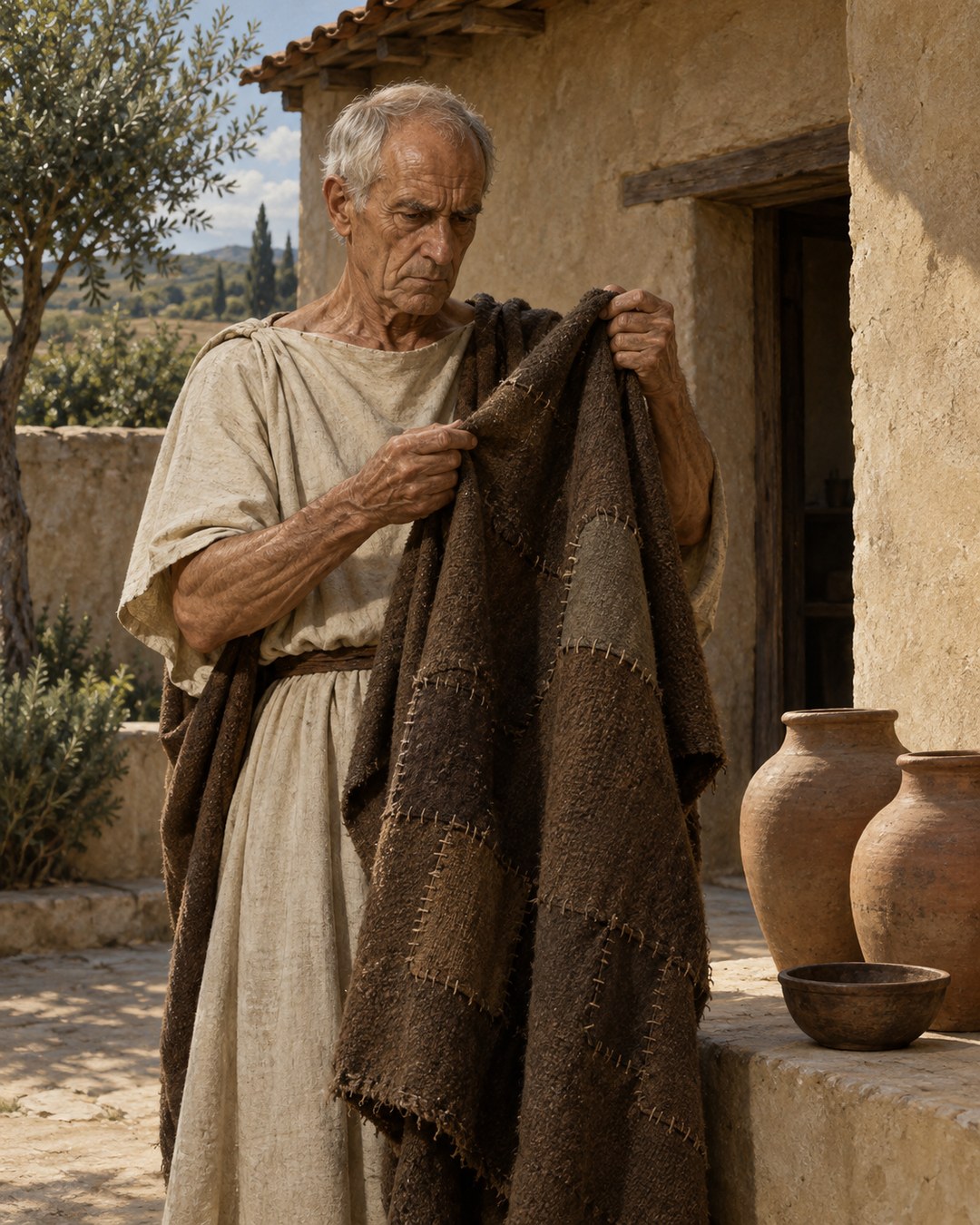
By his seventieth year, Marcus Cato’s country houses still had no whitewash.
The walls were not ruins. They belonged to an ex-consul and ex-censor who had lived through Rome’s expanding wealth. Cato pointed to their plain surfaces because a finish had become affordable enough to seem normal, and normal enough to become a test of respectability.
His defense did not pretend that he lacked nothing. He said the opposite.
Others blamed him because many things were absent. He blamed them because they could no longer do without those things.
The Unwhitewashed Wall Made Restraint Visible
Aulus Gellius introduces Cato’s statement against a background of abundance. The State and private people, Cato said, were rich while his country seats remained plain and unadorned. The contrast prevents us from mistaking his household for one that simply had no access to display.
Whitewash was a modest choice compared with imported marble, elaborate painting or costly furniture. That is precisely why it mattered. A person could reject spectacular luxury while continuing to accept every smaller improvement that wealth made customary. Cato selected a surface almost any prosperous owner might have upgraded.
The age marker gives the wall duration. Up to seventy, after high offices and decades of public reputation, he had not converted seniority into a more polished domestic stage. Visitors saw rough walls where they expected achievement to become finish.
This was not a claim that farms should be badly maintained. Roman agricultural writing is relentless about repair, storage and useful expenditure. Cato’s own practical world appears in the contract that brought fifty workers into an olive harvest under oath. Plainness and neglect were different categories.
The unwhitewashed house worked. It simply refused to make decoration part of the owner’s necessary equipment.
Cato Listed Purchases Rather Than Praising Poverty
Cato’s inventory moved from the building to the objects and people inside it. He claimed no building, utensil or garment bought at a great price. He also said he possessed no costly enslaved man or maidservant.
Each noun belonged to ordinary household operation. Buildings sheltered work and family. Utensils stored, cooked, measured and served. Garments made status visible in public. Enslaved labor was embedded in elite domestic and agricultural life. Expense could attach prestige to every one of them.
The list therefore did not place austerity in an empty philosophical landscape. It located purchasing decisions at the points where a Roman aristocrat repeatedly encountered comparison: a more impressive property, finer vessel, newer cloth or highly priced specialist.
Its grammar matters too. Cato grouped categories that varied enormously in price, from a single utensil to an entire building. The common feature was not the object’s size but the great price attached to it. He could therefore present thrift as a repeated method of selection rather than one dramatic refusal remembered after the fact.
We should not turn the reference to enslaved people into an innocent preference for inexpensive help. Cato accepted the institution and discussed human beings through market value. His restraint operated inside a violent slave society; it did not challenge that society’s ownership of people.
That limit makes the passage historically sharper. A person could condemn extravagance while leaving the deepest structure of elite wealth untouched. Roman thrift was not automatically equality.
Use Determined Whether an Object Counted
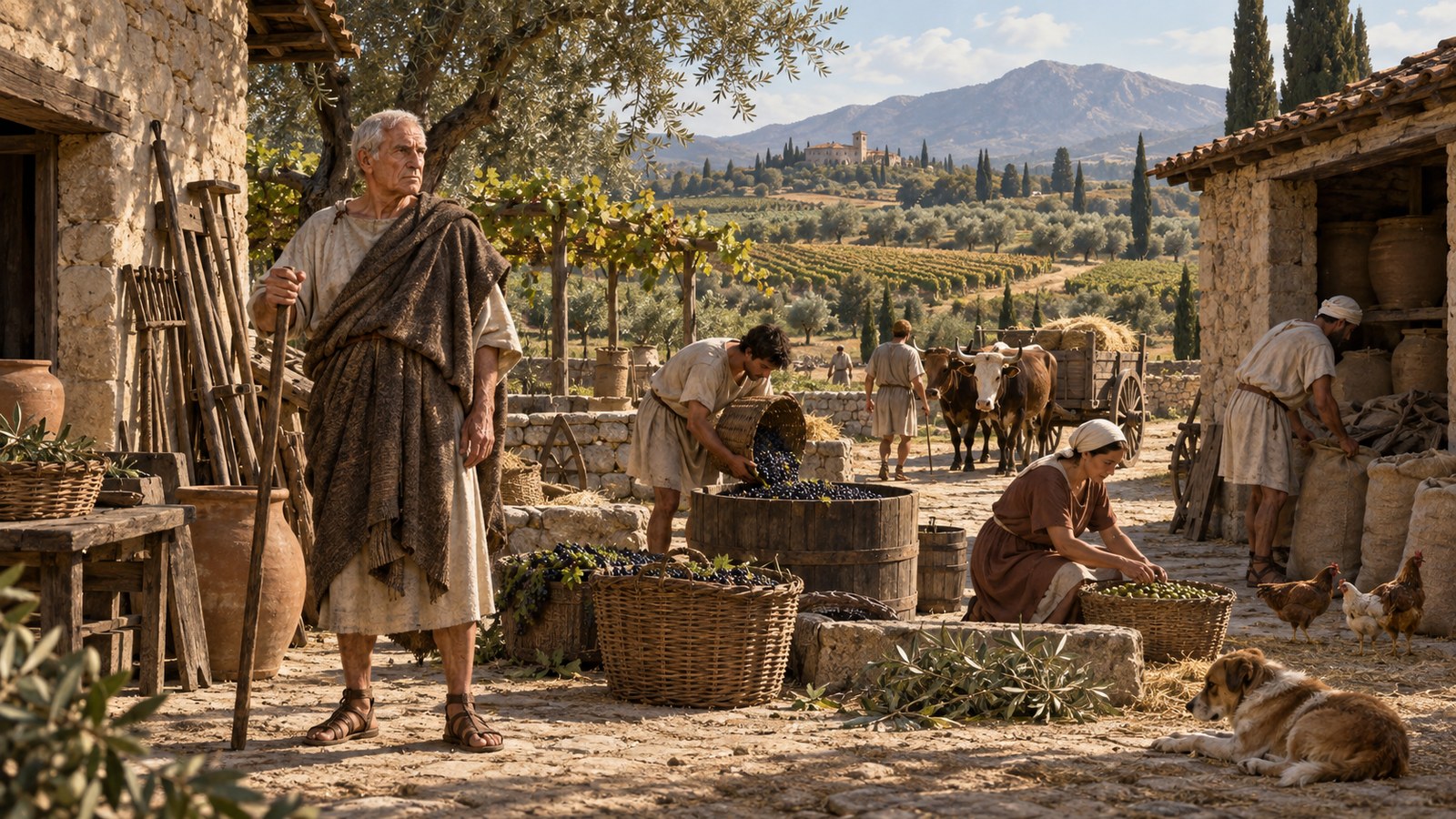
Cato then supplied the rule governing his inventory. If he had something available to use, he used it. If he did not, he did without it.
The sentence is less absolute than a vow of poverty. He did not promise never to own a vessel or replace a garment. He separated function from compulsion. An existing object justified itself by service; an absent one did not automatically create an emergency.
That principle made repair and adaptation more important than novelty. A plain cloak could continue clothing its wearer. A sound jar could continue holding grain or oil. A rough wall could continue enclosing a house. Replacement needed an argument stronger than fashion.
Cato also said everyone else might use and enjoy whatever they had. The wording declined to confiscate luxury from neighbors or make his household the legal measure for Rome. His rebuke targeted dependence: the inability to imagine life without the expensive layer once it had become familiar.
The distinction also separates his voice from the performance of someone who loudly renounces possessions while relying on other people’s wealth. Gellius admired Cato because the evidence stood in buildings, clothes and purchases over many years.
Public Austerity Needed a Private Test
Cato’s political career made domestic claims useful but risky. A censor could police expenditure and conduct in others; an ex-censor who lived lavishly would turn every lecture into hypocrisy. The country house offered a private test for a public persona.
That persona was not gentle. Cato’s speeches could be aggressive, and his agricultural management was demanding. The archive’s wider portrait, including Rome’s long memory of Cato and Carthage, belongs to political conflict rather than quiet simplicity.
The domestic statement also let Cato turn inspection back upon the inspector. Critics began by measuring his house against what a man of his standing ought to own. His reply measured their capacity to tolerate absence. The rough wall stayed where it was, but the alleged defect moved from the property to the appetite judging it.
Gellius nevertheless chose a small household statement instead of a famous senatorial confrontation. An unpainted surface could support a reputation in a way that another maxim could not. Anyone admitted to the property could compare the words with the wall.
There was also no need for Cato to claim perfect deprivation. His authority came from choosing a lower level of finish than his means and rank allowed. The gap between ability and purchase created the moral evidence.
For elite Romans, country villas increasingly offered room for architecture, gardens, art and dining designed to impress. Cato’s plain seat stood against that direction as an argument made in plaster not applied.
Gellius Preferred the Inventory to a Paradox
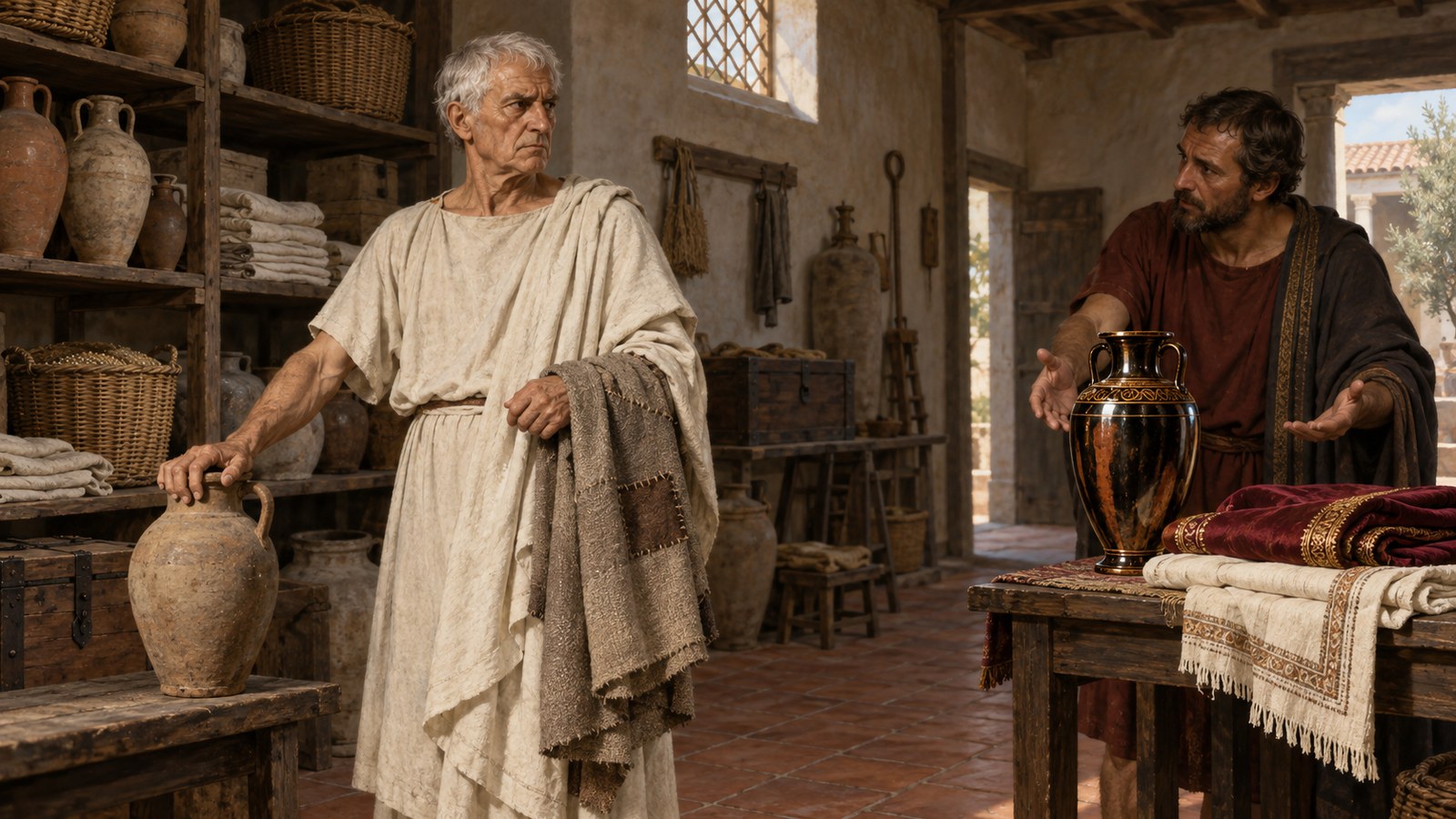
Gellius ends by comparing Cato with Greek philosophers who claimed to possess nothing, lack nothing and desire nothing. He found Cato’s simple frankness more effective for encouraging thrift and contentment.
The criticism is aimed at verbal perfection. A philosopher could arrange “having,” “lacking” and “desiring” into a clever paradox while remaining inwardly consumed by all three. The polished sentence might conceal appetite rather than master it.
Cato admitted lack. That admission removed the need for a trick. The expensive building was absent. The fine garment was absent. The costly utensil was absent. Contentment appeared not when language made absence disappear but when absence failed to issue an order.
This is why the wall matters more than a slogan about simplicity. It accumulated time. Each year offered another chance to whitewash it, and each year extended the evidence that the owner could continue without doing so.
The argument should not be romanticized into universal wisdom. A laborer without adequate shelter and an ex-consul declining decoration did not experience “doing without” in the same way. Cato spoke from security, property and command. Voluntary restraint gains meaning from the alternatives available to the person choosing it.
Within that privileged frame, however, Gellius preserved a precise diagnosis of consumption. Wealth changes not only what people own but what they experience as intolerable absence. Cato’s critics saw missing finish, objects and display. He saw a household still capable of functioning.
His answer never required the rich world around him to vanish. Other people could enjoy what they had. The test was whether possession remained use or became dependence.
At seventy, rough walls held the line. Cato lacked the whitewash. He did not yet lack a house, a working household or the freedom to leave the surface plain.
Sources
Aulus Gellius, Attic Nights 13.24, quoting Marcus Porcius Cato.