
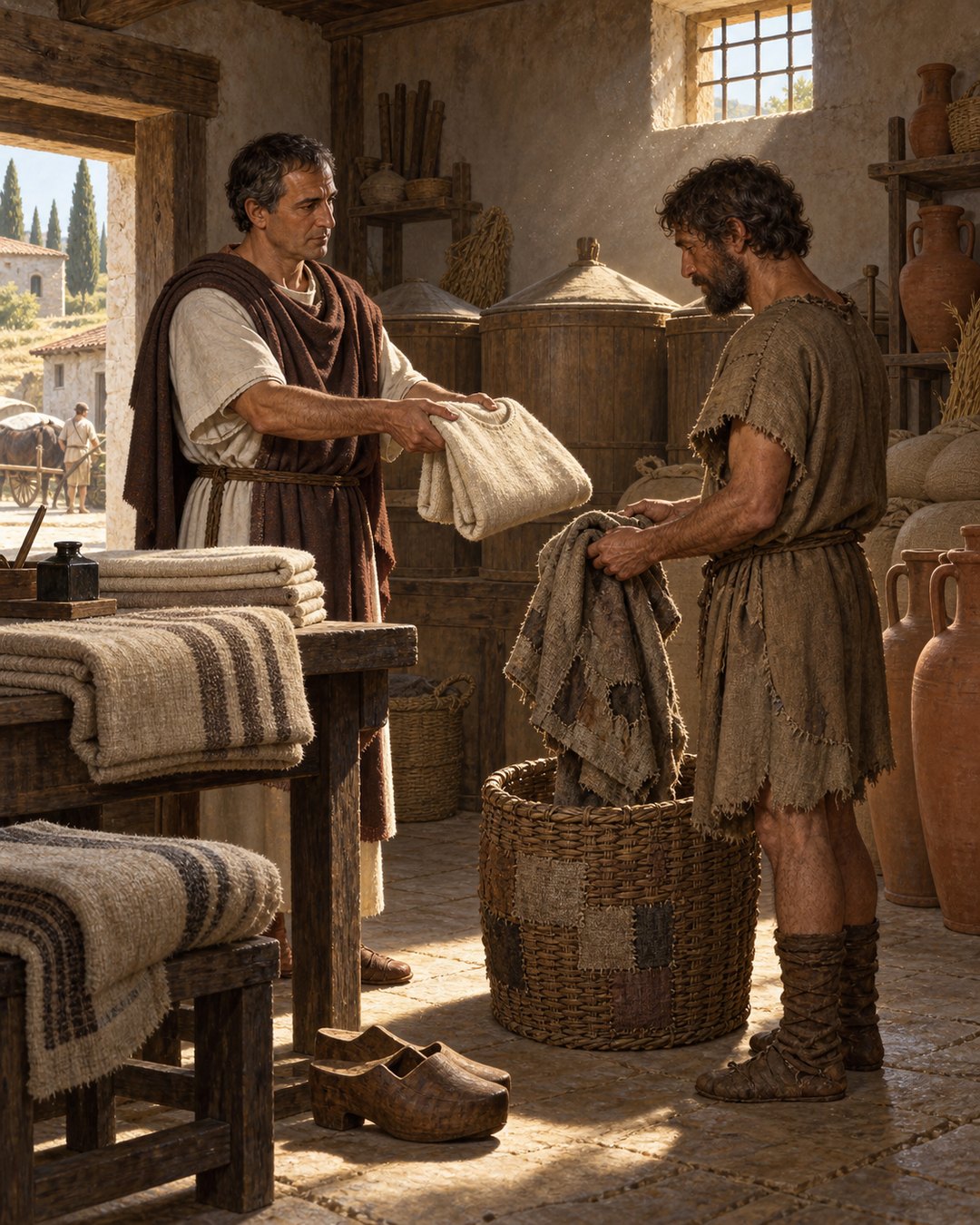
A new tunic did not leave the Roman farm storeroom by itself. Cato’s instructions required the old garment to come back first. The worn cloth was then made into patchwork, while a replacement entered another cycle of use.
The rule appears beside precise allowances for wheat, bread, wine, olives, oil, salt and wooden shoes. Together they show an estate household managed through timed issues, seasonal adjustments and recovery of materials.
Three and a half feet of tunic becomes more than a clothing detail. It exposes a system that counted laborers’ needs while keeping every reusable scrap under the owner’s control.
Food Rations Moved with Season and Work
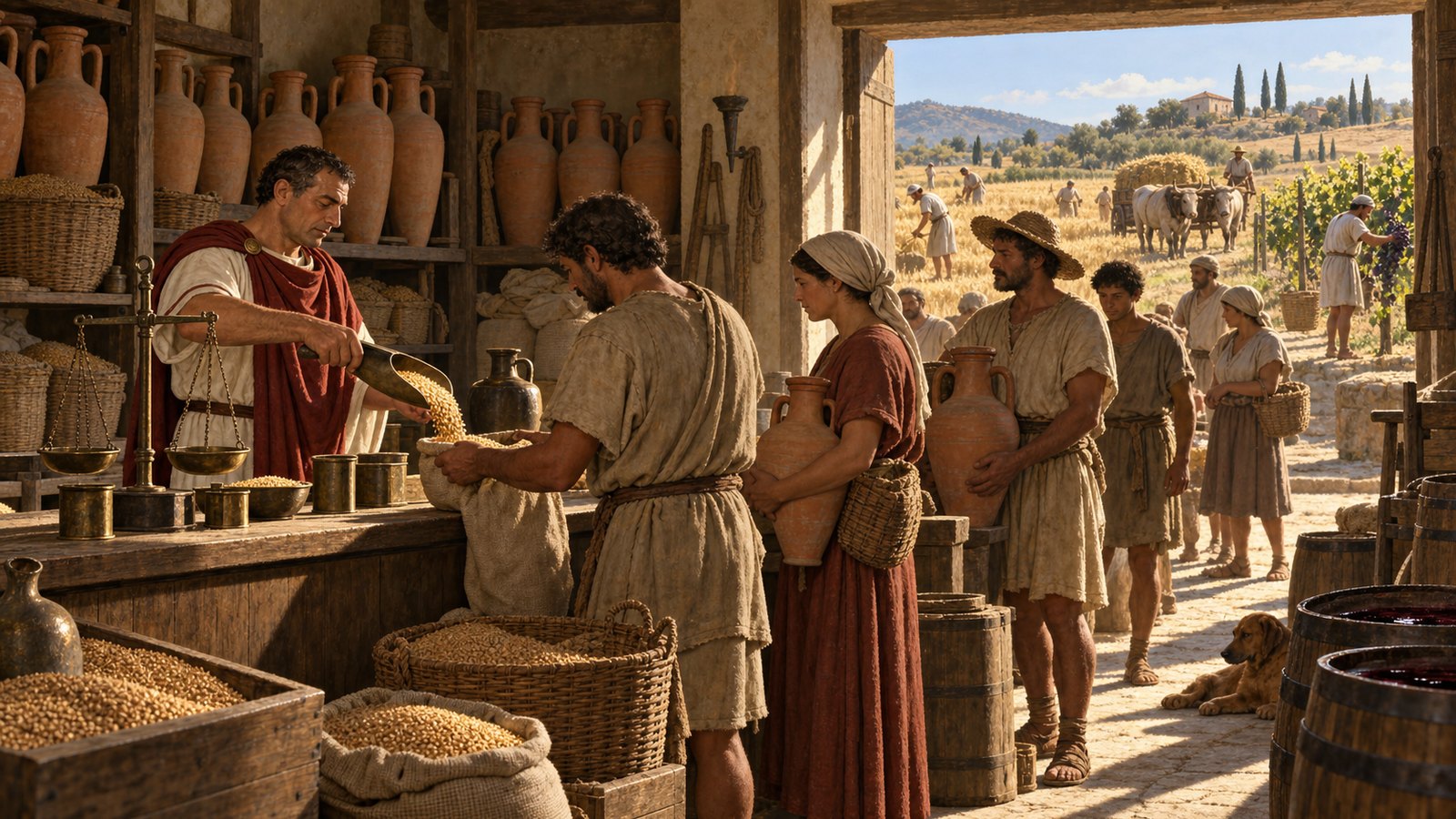
Cato begins this small cluster of instructions with wheat. Field hands receive four modii in winter and four and a half in summer. The increase links subsistence to the working year rather than treating one quantity as sufficient in every month.
Other members of the estate household are grouped differently. The overseer, housekeeper, foreman and shepherd receive three modii. The list identifies roles through their ration category. A person’s place in the work organization becomes visible in the amount and form of grain assigned.
The chain gang is counted in pounds of bread rather than modii of wheat. Its winter ration is four pounds; when vine work begins, the amount rises to five; when figs ripen, it falls to four again. The calendar is not named through abstract dates. Vines and figs tell the storekeeper when bodies are expected to consume more or less.
These figures should not be mistaken for a complete picture of health, preference or actual meals. Cato writes prescriptions for management. The text tells an owner or overseer what to issue, not whether every worker received it reliably or found it adequate.
That managerial viewpoint also shapes Cato’s contract for fifty olive-harvest workers. There, numbers, oaths and responsibility define a temporary job. In the ration chapters, recurring quantities organize the people who remain inside the estate’s daily machinery.
The seasonal rise matters because it makes food part of production planning. Harder or longer work brings a larger issue; a crop’s progress signals when the allowance changes. Grain is both nourishment and an input scheduled against labor.
Wine and Relish Had Their Own Calendars
Wine follows a more elaborate progression. For three months after the vintage, Cato instructs that workers drink after-wine. Later months receive stated daily or monthly quantities, and Saturnalia and Compitalia bring an additional allowance.
The schedule recognizes both agricultural time and festival time. Vintage creates one kind of supply; named celebrations create exceptions within the annual total. Cato calculates seven quadrantals for each person and observes that ten quadrantals is not excessive, while allowing the chain gang an additional amount proportioned to work.
Relish is managed through depletion. Windfall olives should be stored, followed by mature olives expected to yield little oil. They are to be issued sparingly and made to last. Only when that stock is exhausted do fish pickle and vinegar replace it.
Oil and salt appear as fixed personal allowances: a pint of oil each month and a modius of salt each year. The contrast is instructive. Some foods vary with season or remaining stock; others are attached to a repeating unit of time and person.
Cato’s earlier instructions for counting wine from grape skins through Saturnalia, discussed in the estate’s wine-accounting cycle, show the same appetite for turning perishable production into a sequence of controlled moments. Consumption is not left outside the account. It is one of the processes the account exists to direct.
Nothing here resembles a modern menu promising variety. The concern is endurance, availability and measured release. Windfalls are not discarded because they are imperfect; low-oil olives become food. After-wine occupies the months when it is available. The store changes what it issues before it changes the logic of control.
The Old Garment Was the Price of the New One
Against that background, Cato’s clothing rule looks less isolated. The allowance is a tunic three and a half feet long and a blanket every other year. A stout pair of wooden shoes follows the same two-year rhythm.
But time alone does not authorize the replacement. When a tunic or blanket is issued, the old one must first be taken up. Only then is it converted into patchwork. The returning object closes one inventory loop before a new object opens another.
The rule says nothing about sentimental ownership or personal choice. Garments appear as estate resources assigned to working bodies. Even after wear has damaged their first form, the remaining fibers still belong to the system that issued them.
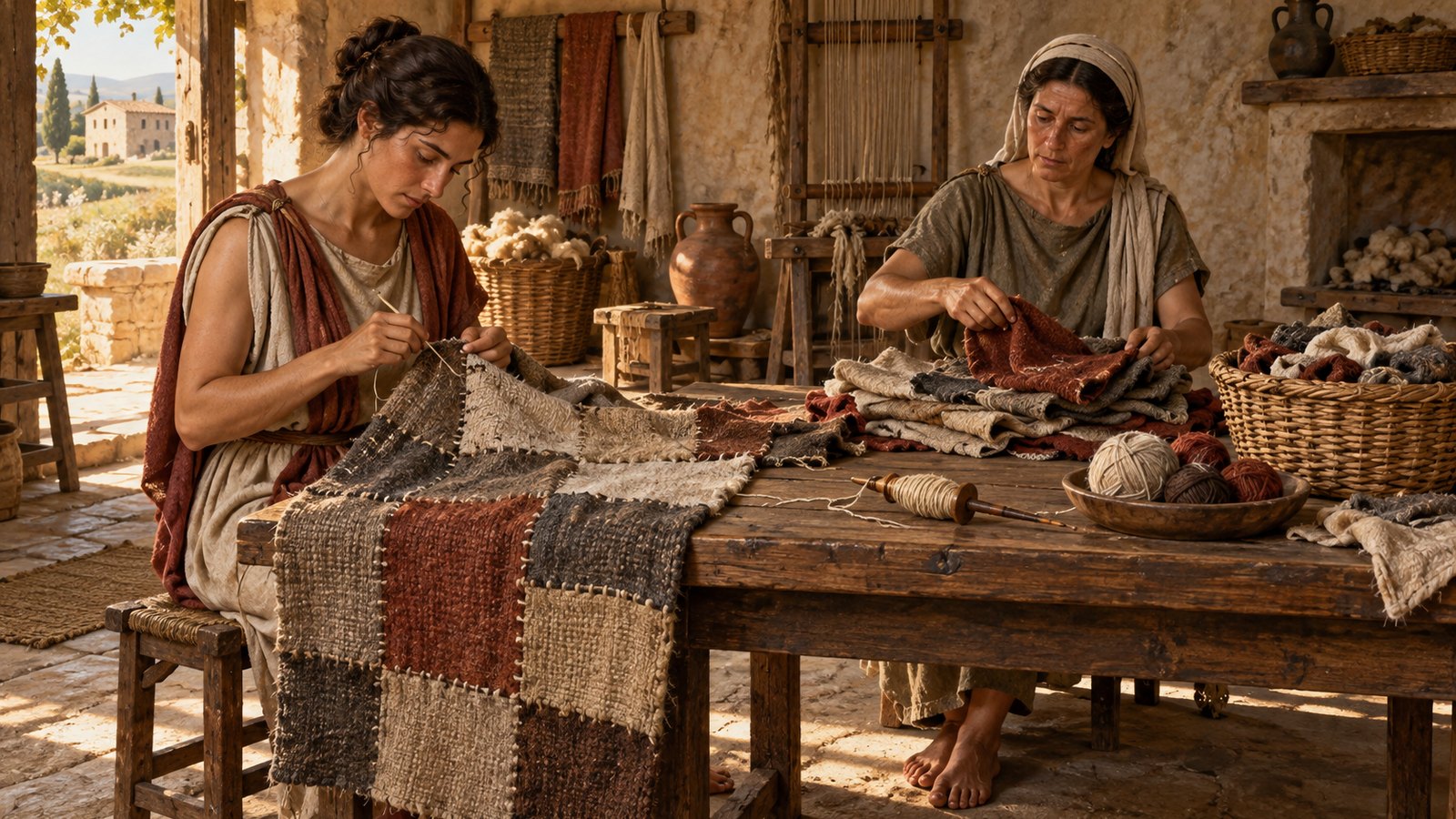
Patchwork is the mechanism that preserves that value. Sound sections can be cut away from torn edges, layered, joined or used where appearance matters less than warmth and durability. Cato does not supply a sewing diagram, so the exact products should not be invented. His instruction establishes only the essential transformation: old clothing is collected and made useful again.
The three-and-a-half-foot tunic gives the issue a physical boundary. Cloth had to be spun, woven, cut and stitched before it reached the storeroom. A specified length limited the amount committed to each garment, while the recovery rule reclaimed what survived at the other end.
The blanket and wooden shoes lengthen the cycle beyond one season. Summer heat, winter damp, field dust and repeated walking could all act on them before the next scheduled issue. The two-year interval made durability an economic requirement, not merely a desirable quality.
The result is not evidence of cheerful thrift shared equally by everyone on the farm. It is an owner’s economy imposed on laborers whose clothing, food and footwear were rationed. Reuse lowered waste, but it also tightened control over the material conditions of work.
A Storehouse Connected Bodies to the Estate Calendar
Read together, chapters 56 through 59 form a compact operating schedule. Winter and summer alter wheat. Vine work and fig ripening alter bread. Months after vintage alter wine. Festivals add measured exceptions. Depleted olives trigger substitutes. Two years trigger clothing and shoe issues, provided old cloth returns.
The storehouse sits at the center of these transitions even when Cato does not describe its room. Someone must know the season, distinguish roles, measure grain and liquid, watch the olive stock, remember the biennial issue and collect worn garments. Rules on a page imply repeated acts of counting.
They also imply friction. A tunic may wear out before the cycle ends. Workloads may not match the scheduled ration. Olives may spoil or supplies run short. Cato’s concise commands reveal the intended system, not every failure that occurred within it.
That distinction matters because agricultural manuals often sound smoother than lived labor. Their confidence belongs to the planner. The people receiving four pounds of bread or surrendering a blanket experienced the system from the opposite side of the counter.
Yet the details preserve objects that grander histories overlook: windfall olives, after-wine, a pint of oil, wooden shoes, worn wool waiting for a needle. These materials make estate power tangible. Authority was exercised not only through ownership of land but through decisions about when another person ate, drank, dressed and replaced a sole.
The patch basket is therefore the article’s smallest archive of control. Each scrap had already passed through spinning, weaving, issue and labor. Returned to storage, it began another use without leaving the estate’s account. A new tunic marked renewal; the old one proved that nothing valuable had escaped unnoticed.
Sources
Cato, De Agricultura 56–59.