Why Lictors Made Roman Power Walk Through the Street

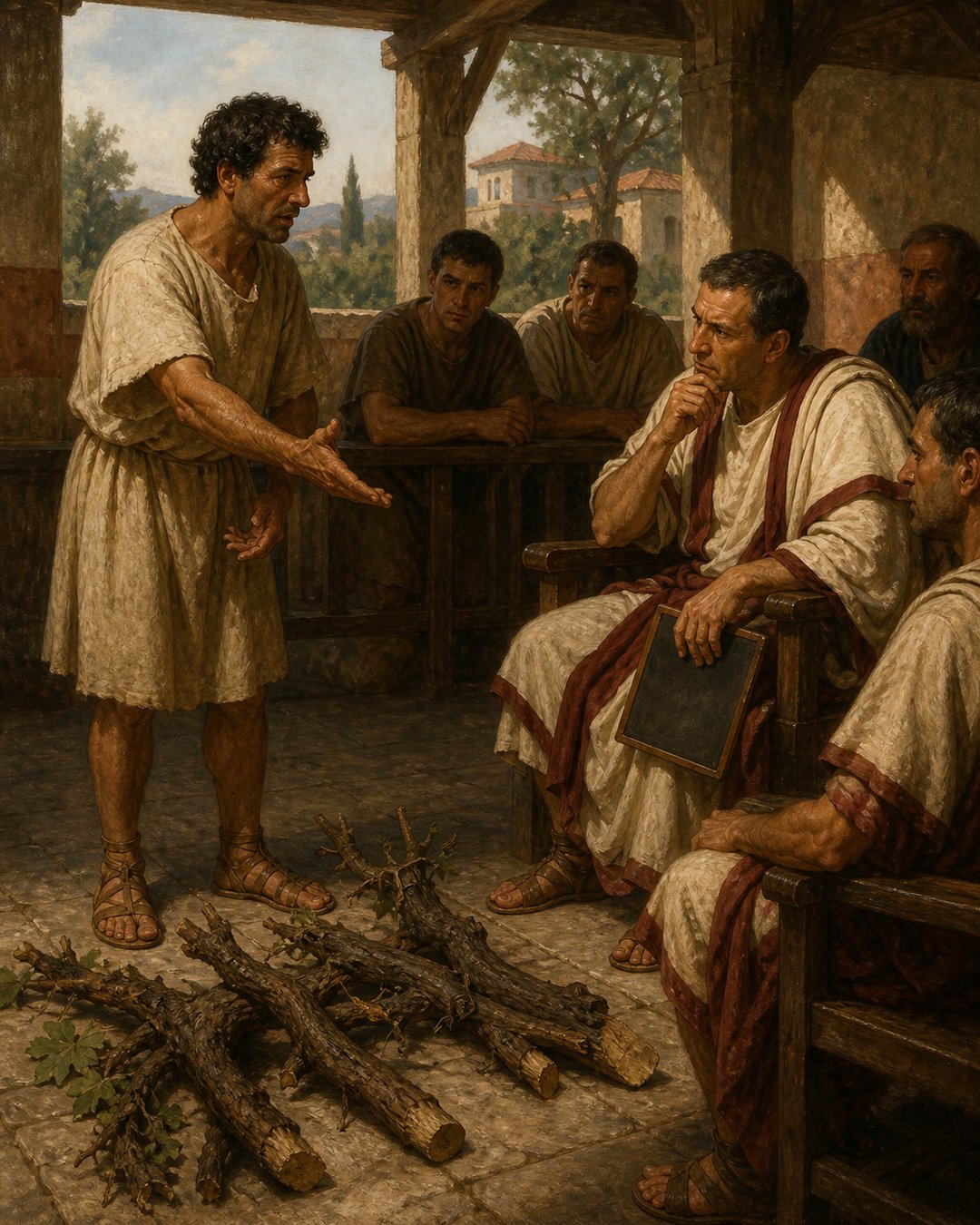
A Roman magistrate did not need to shout to announce authority. The street could see him coming. Lictors walked before him with the fasces, pushing a public message through the crowd: this person carried a kind of power ordinary citizens had to notice. That is why lictors matter. They made Roman authority mobile, visible, and … Read more

Why Ostia’s Warehouses Made Rome’s Hunger Manageable

A grain ship reaching the coast did not automatically feed Rome. The cargo still had to be unloaded, measured, stored, guarded, recorded, moved upriver, and released into a city whose appetite never paused. Ostia’s warehouses mattered because they turned arrival into supply. Rome’s hunger was not only a problem of ships. It was a problem … Read more

Why Roman Military Diplomas Made Citizenship Visible

A Roman military diploma made citizenship something a veteran could hold. Two bronze tablets, sealed and witnessed, carried the memory of years spent far from home and turned imperial reward into portable proof. For an auxiliary soldier who had not been born a Roman citizen, the object could change more than his own name. The … Read more

Why Diocletian’s Price Edict Made Anxiety Visible

Diocletian’s price edict was not a calm spreadsheet from a confident empire. It was a public confession that ordinary exchange had become frightening. In AD 301, the state tried to name maximum prices for food, wages, transport, textiles, animals, and services, then backed those numbers with terrifying penalties. The edict matters because it made anxiety … Read more

Why the Cloaca Maxima Made Rome Less Fragile

Rome’s grand center depended on a dirty solution. Before marble monuments, law courts, temples, speeches, and processions could feel permanent, water and waste had to go somewhere. The Cloaca Maxima mattered because it made urban life less fragile. Drainage is easy to underestimate because it works best when it disappears. A crowd notices a triumphal … Read more

Why Roman Couriers Made Imperial Orders Move

An imperial order still needed hooves. However grand the emperor looked on coins, his commands had to cross mud, mountains, rivers, bad weather, tired animals, and local suspicion before they became action in a province. The cursus publicus made that movement more dependable. Roman couriers mattered because they turned distance into an administrative routine. The … Read more

What Roman Curse Tablets Reveal About Private Fear

A Roman curse tablet could be small enough to hide in one hand. A name was scratched into lead, the sheet was folded or pierced, and the object was placed where ordinary sight would not follow: a spring, a grave, a sanctuary, a drain, or some other charged edge between human anger and divine attention. … Read more

Why Roman Ancestor Masks Made Memory Political

A Roman noble funeral could make the dead appear to walk again. Masks came out of storage, actors put on the faces and clothing of ancestors, and a family’s past moved through the city as if it still had business with the living. Memory did not stay private. It entered the street. This is why … Read more

Why Roman Forts Made Frontiers Feel Permanent

A Roman frontier was not made permanent by drawing a line on a map. It became convincing when soldiers dug ditches, raised gates, stored grain, repaired barracks, wrote rosters, and woke up to the same guarded landscape day after day. The fort was the frontier’s daily proof. That is why Roman forts made frontiers feel … Read more

Why Vestal Virgins Made Rome Feel Protected

The Vestal Virgins made Roman protection visible through something deliberately small: a fire that had to keep burning. Armies could march, magistrates could speak, and emperors could boast, but the hearth of Vesta suggested a deeper security. If the flame still lived, Rome could imagine itself still ordered. That is why the Vestals mattered far … Read more