Why Roman Street Fountains Made Water Public

A Roman aqueduct could look like a monument from a distance, but its real test came at street level. Water had to arrive where people could use it: at basins, fountains, baths, workshops, and neighborhoods whose daily routines depended on a reliable flow. Street fountains mattered because they made water public. They turned distant engineering … Read more

Why Roman Funerals Made Family Ambition Public

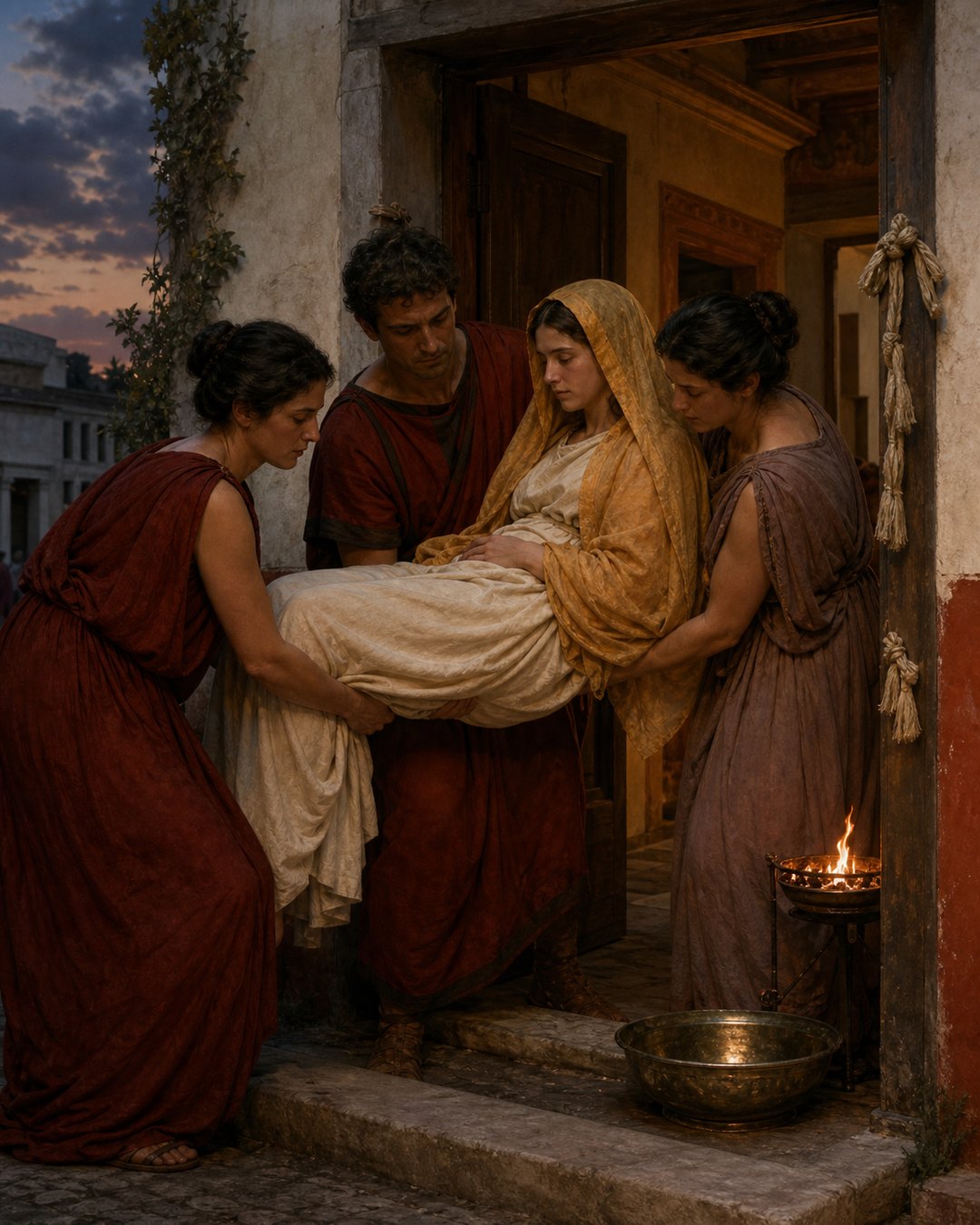
A Roman elite funeral was grief with an audience. The dead person mattered, but so did the family standing around the bier, the ancestors invoked, the offices remembered, and the crowd watching memory become performance. Mourning moved through the streets, and ambition moved with it. Roman funerals mattered because they made family ambition public. They … Read more

Why Roman Marching Camps Made Conquest Repeatable

A Roman army did not simply stop when the day’s march ended. It measured a place, cut a ditch, raised a rampart, set gates, arranged tents, posted watches, and turned unfamiliar ground into something recognizable. The camp was not an afterthought. It was conquest made repeatable. Marching camps mattered because they gave Roman movement a … Read more

Why Roman Brick Stamps Made Buildings Speak

A Roman wall could speak before anyone covered it with marble. Its voice was small, rectangular, and easy to miss: a stamp pressed into wet clay before firing. To the casual eye it was only a mark on a brick. To a historian, it can be a name, a workshop, an estate, a date, and … Read more

Why Roman Baths Made Private Ambition Public

A Roman bath was not just where the day softened. It was a place where bodies, greetings, favors, rumors, clients, attendants, and ambitions moved through steam together. Privacy entered the bath and came out social. Baths mattered because they made private ambition public. A man could wash, exercise, gossip, look generous, pursue a patron, display … Read more

Why Roman Wax Tablets Made Promises Harder to Deny

A Roman promise could be scratched into wax. That sounds fragile, but the object changed the argument. Once a name, sum, witness, obligation, or date had a surface, memory was no longer only a matter of who spoke most confidently. Wax tablets mattered because they made promises harder to deny. They did not make Rome … Read more

Why Roman Insulae Made Fire a Public Problem

A Roman apartment fire was never only a private misfortune. In a crowded block of insulae, one lamp, brazier, stairwell, or careless flame could become the problem of every neighbor above, below, and across the street. Density changed the meaning of accident. The insula matters because it made danger public. Rome’s poor and middling residents … Read more

Why Roman Triumphal Arches Made Victory Permanent

A triumph ended after one day. The crowd dispersed, the soldiers went back to ordinary duties, the captives disappeared into Roman systems of display and punishment, and the spoils found new homes. A triumphal arch solved that problem for memory. The arch made victory permanent by turning a procession into architecture. It stood where later … Read more

Why Roman Funerary Inscriptions Made Ordinary Lives Visible

Roman history can sound as if it belongs to emperors, generals, and senators. Funerary inscriptions change the volume. Along roads outside towns and cities, stones named spouses, children, freedpeople, trades, ages, patrons, and grief. They made ordinary lives visible in a world where most ordinary voices disappeared. A tomb inscription was not only a marker … Read more

Why Roman Water Clocks Made Time Public

A Roman speech could run out of water. That image feels strange only because modern time is usually invisible: numbers on a screen, a clock on a wall, a vibration in a pocket. In Rome, time could be watched as water dropped, drained, and marked the limit of a voice. Water clocks mattered because they … Read more