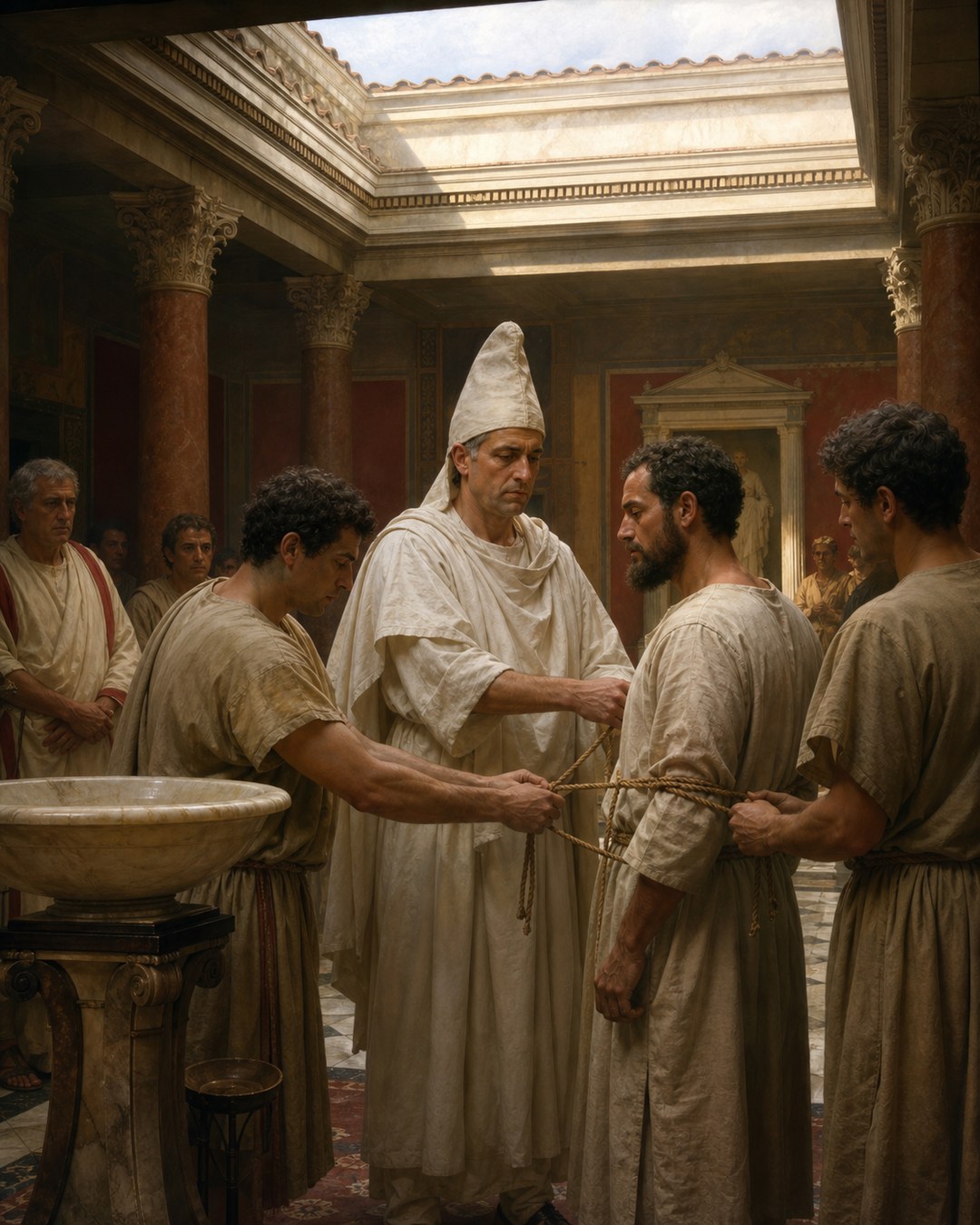
Why Roman Market Weights Made Trust Public

A Roman market did not need silence to create trust. It needed a counter, a balance, a set of weights, and enough witnesses to make a bad measure risky. The buyer could look, the seller could answer, and the object between them could speak louder than either. Roman market weights made trust public because exchange … Read more

Why Ostia’s Harbor Made Empire Feel Reachable

Empire can sound abstract until it reaches a dock. At Ostia, distance became visible as ships, ropes, sacks, amphorae, warehouses, ledgers, and laborers moving goods toward Rome. Ostia’s harbor made empire feel reachable because it turned faraway provinces into practical arrivals. The system was not only conquest or map color. It was cargo handled at … Read more

Why Roman Surveyors Made Land Disputes Visible

A Roman land dispute could begin with something small: a stone moved, a furrow crossed, a neighbor’s claim repeated once too often. The solution, at least in theory, required making the invisible argument visible. Roman surveyors made land disputes visible because they turned ownership, taxation, settlement, and jurisdiction into measured lines on the ground. A … Read more

Why Roman Fullonicae Made Clean Clothes a Public Business

A Roman garment could look calm in public: folded cloth, a clean edge, a citizen dressed for the street, a tunic or toga made to seem natural. The work behind that surface was not calm at all. The fullonica made clean clothes a public business because Roman respectability depended on labor performed in wet, noisy, … Read more

Why Roman Roadside Tombs Made Memory Public

A Roman road did not simply bring travelers to a city. It could bring them past the dead. Tombs along the roadside turned the approach to an urban gate into a corridor of memory, status, family pride, and repeated attention. Roadside tombs made memory public because they refused to let death disappear into private feeling … Read more

Why Roman Seals Made Documents Travel With Authority

Roman authority often had to travel farther than a voice could carry. Orders, accounts, receipts, private letters, and official instructions needed to move through hands, roads, rooms, and delays without losing their force. A seal mattered because it made a document a guarded object. Wax, cord, tablet, and mark told the receiver that someone had … Read more

Why Roman Taverns Made Politics Hard to Keep Private

A Roman tavern did not need a speaker’s platform to matter politically. It only needed a counter open to the street, a few cups, the smell of cooked food, and people who kept coming back because daily life gave them reasons to pause there. The taberna made politics hard to keep private because it joined … Read more

Why Roman Standards Made Legions Visible

A Roman standard was not merely decoration on a pole. It stood above dust, helmets, shields, fear, and shouted orders. Men could look toward it, rally around it, swear by what it represented, and feel disgrace if it fell into enemy hands. Standards mattered because they made the legion visible to itself. In an army … Read more

Why Roman Veteran Colonies Made Conquest Permanent

A conquest did not become permanent when the battle ended. It became harder to undo when someone measured land, drove stakes into soil, assigned plots, opened roads, and persuaded retired soldiers to build lives where an army had once passed. Roman veteran colonies mattered because they turned military victory into civilian geography. A discharged soldier … Read more