
Pliny’s first writing surface was not wax or papyrus.
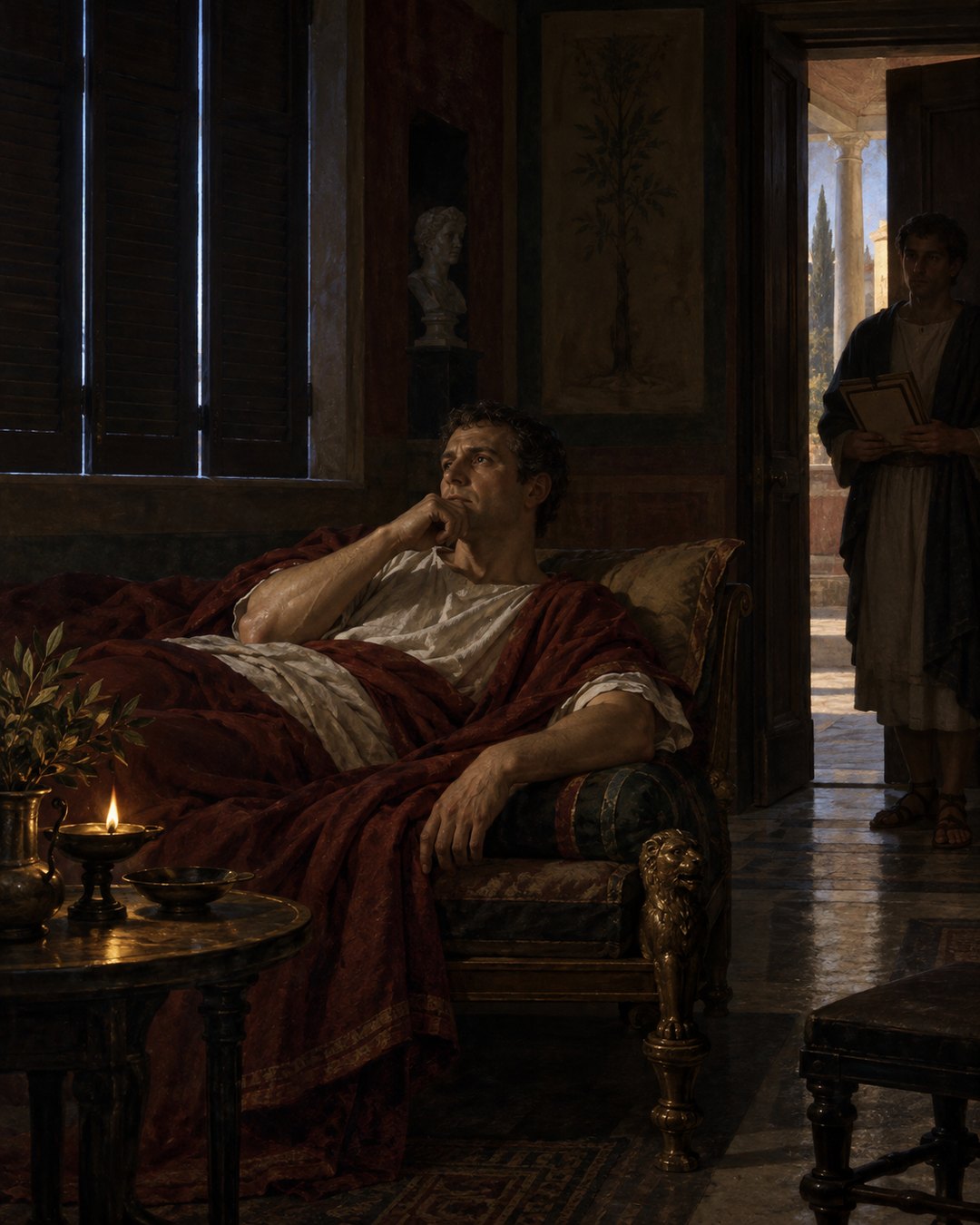
It was a dark room with the shutters closed. He held the passage in memory, revised it there, and admitted daylight only when a shorthand writer was needed.
His villa day moved words long before a stylus recorded them.
Darkness Came before Dictation
Pliny described his summer routine at the Tuscan villa because Fuscus had asked how he spent the day. He usually woke around the first hour, although sometimes earlier and rarely later.
He kept the windows shut. The reason was not sleep. Stillness and darkness, he wrote, withdrew him from distracting influences and left his thoughts to direct what his eyes perceived.
If a composition was underway, he thought it through and weighed every word as carefully as if he were physically writing or revising. Difficulty determined how much he could complete and retain.
This made memory a working manuscript. Sentences could be assembled, tested and altered without a visible line. The method demanded enough concentration to preserve earlier choices while judging the next one.
Only after that internal work did Pliny summon a shorthand writer. Daylight entered with the secretary, and the composed passage moved from memory to tablets.
The secretary then left. Pliny could call him back, dictate another portion and dismiss him again. Transcription occurred in intervals rather than as a continuous companion to thought.
That separation protected solitude while avoiding the slower labor of recording every draft himself. One person composed; another captured the finished stretch at speed.
The arrangement depended on wealth and household service. Darkness was Pliny’s chosen condition, but the waiting writer’s availability made the cycle practical. Concentration for one person rested on another person’s readiness to enter and leave.
Roman texts often expose work through its supporting bodies. Sabinus distributed remembered literature among enslaved readers. Pliny’s method was less theatrical, but it likewise joined elite authorship to specialized household labor.
The closed shutters were therefore only the visible edge of a system: memory inside, shorthand outside, and controlled access between them.
Movement Refreshed the Same Mental Work
At the fourth or fifth hour, depending on the weather, Pliny moved to a terrace or covered portico. He emphasized that he had no rigid plan for choosing between them.
The activity continued. He resumed thinking and dictating rather than declaring the morning’s literary work complete.
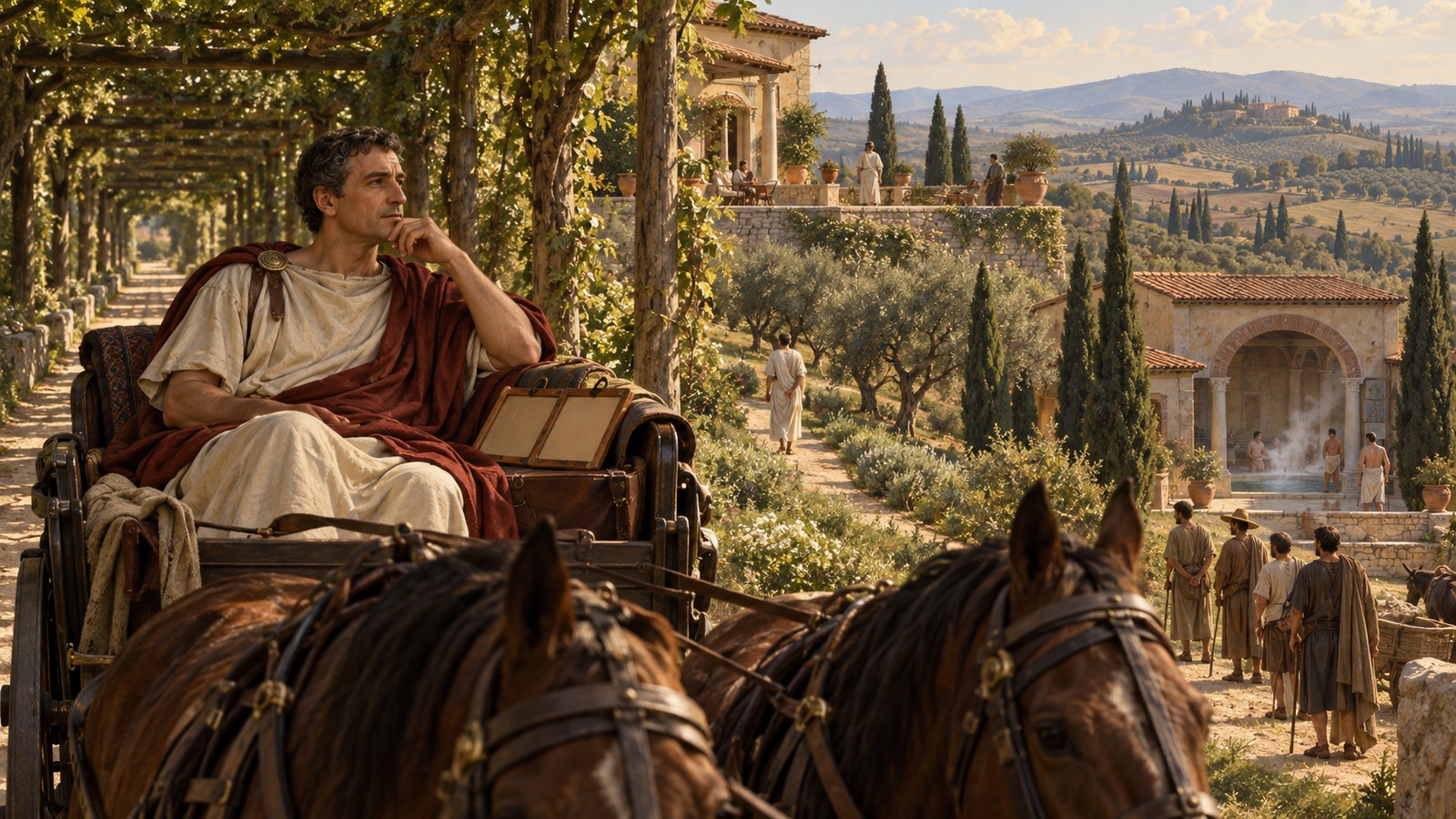
He also composed while riding in a carriage. Walking, lying down and moving on wheels could carry the same mental occupation. Change of place, he said, refreshed concentration instead of disturbing it.
This is not a schedule built from identical blocks at one desk. It alternated sensory conditions while preserving the problem under consideration.
The dark chamber reduced input. The terrace admitted weather and distance. The covered portico supplied shelter. The carriage introduced rhythm and changing surroundings. Each could become a different frame around the same words.
Pliny did not claim that every transition produced inspiration. His account is practical: concentration remained intact, or improved, when the body moved.
A brief sleep interrupted the sequence, followed by another walk. Rest was not pushed to the end of exhaustion. It appeared inside the working day as one more change of state.
Another Roman routine used movement with almost numerical regularity. Spurinna measured walks and carriage exercise at seventy-seven. Pliny’s letter is less fixed, but both men treated movement as organized time rather than empty transit.
The carriage also extended the villa’s literary space beyond a room. Writing could continue wherever memory carried enough of the draft, even when the tools of inscription were not actively in hand.
By designing transitions instead of resisting them, Pliny made variety serve continuity.
Voice, Bath, and Dinner Changed the Medium
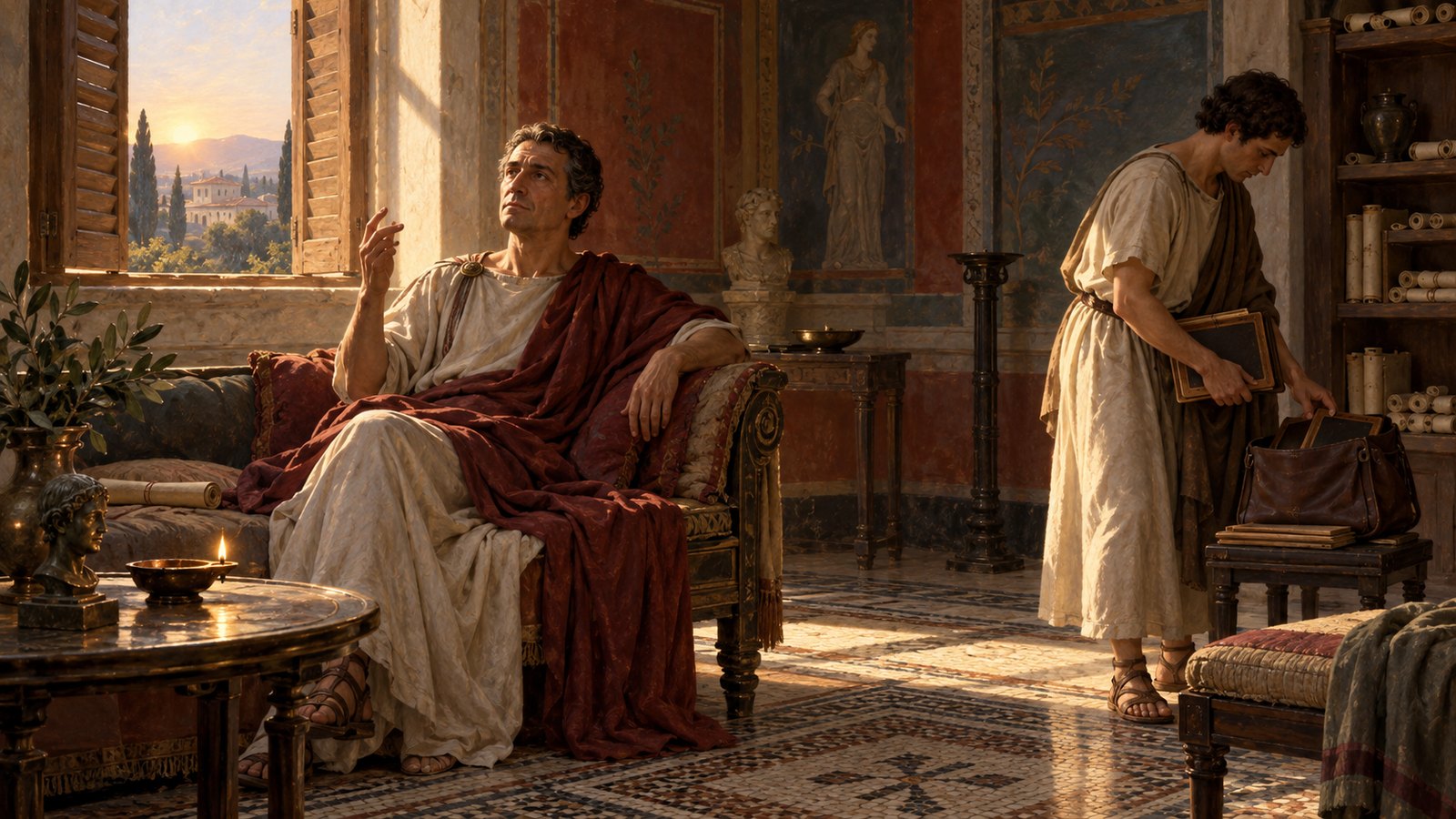
After sleeping and walking, Pliny read a Greek or Latin speech aloud. He aimed for clarity and distinctness.
He said the exercise helped digestion and also strengthened his voice. A literary text became physical training: breath, articulation and posture worked on language that the mind had to understand.
This stage differed from silent composition and dictated transcription. The material now passed through the mouth and ear. Even if the speech was someone else’s, reading it aloud trained a faculty Pliny needed for public and social performance.
Another walk followed, then anointing, exercise and a bath. The sequence joined intellectual and bodily maintenance without presenting them as rivals.
Dinner continued the circulation of words. If Pliny ate with his wife or a few friends, a book was read to the group. Afterwards they might hear a comic actor or musician.
The day had begun with sensory restriction and solitary control. It ended in shared reception, performance and conversation.
He walked with attendants, some of whom were learned, and passed the evening discussing many subjects. Talk did not merely fill the hours after “real” work. It supplied another form of testing, exchange and renewal.
The household reader who accompanied elite routines appears elsewhere in Pliny’s world. A reader could continue through bath and dinner, making literature portable across domestic activities. Letter 9.36 shows how that portability fit a complete day.
Entertainment also changed pace. Comedy and music did not demand the same sustained verbal control as composing a passage in darkness. Their difference was part of the relief they offered.
By evening, the longest summer day felt short to Pliny. That impression came not from doing one thing without pause, but from moving among connected activities before monotony took control.
Tablets Went Hunting, and Tenants Interrupted
Pliny admitted variation. A longer period lying down or walking could alter the order. Horseback travel replaced the carriage when speed mattered.
Friends from neighboring towns arrived and consumed part of the day. When he was tired, he welcomed their interruption as relief.
This flexibility prevents the letter from becoming a mechanical timetable. Pliny had a repertoire rather than a minute-by-minute rule.
Even hunting could be recruited into literary work. He said he never went without tablets. If he caught no game, he could still bring something back.
The joke reveals a portable standard of productivity. An uncertain outdoor pursuit gained a second possible yield, recorded thought.
Tablets changed the risk of the excursion. Empty hands no longer meant an entirely empty return. Waiting, watching and travel could leave traces even when animals did not appear.
Estate management also entered the day. Pliny gave some time to his tenants, though he added that they considered it too little.
The disagreement punctures the polished routine. A landowner’s literary freedom existed beside obligations to people whose livelihoods and debts were bound to the estate.
Pliny calls their complaints rustic, and says they renewed his appetite for literary work and urban engagements. That reaction tells us about his perspective, not that the complaints lacked substance.
The villa was both retreat and productive property. Terraces, carriage paths and dark rooms supported composition because other people cultivated, administered and petitioned around them.
His day therefore cannot be reduced to timeless advice about focus. It belonged to a Roman senator with household specialists, rural tenants, leisure, transport and education in two literary languages.
The letter is also a crafted self-portrait sent to a literary friend. Pliny selected the details he wanted Fuscus to see: discipline without rigidity, learning without isolation, and estate duty present but contained. We cannot observe every unmentioned hour or treat the account as an independent time sheet. Its value lies in the practices Pliny chose to make plausible to a contemporary reader—and in the social machinery those practices reveal even when his presentation is flattering.
Within those conditions, however, the attention technique is specific. Pliny controlled when to see, when to speak, when to move, when to listen and when to admit interruption.
He did not sit before an empty tablet waiting for words. He arrived at the tablet after the sentence had already lived in darkness.
Sources
Pliny the Younger, Letters, book 9, letter 36.