
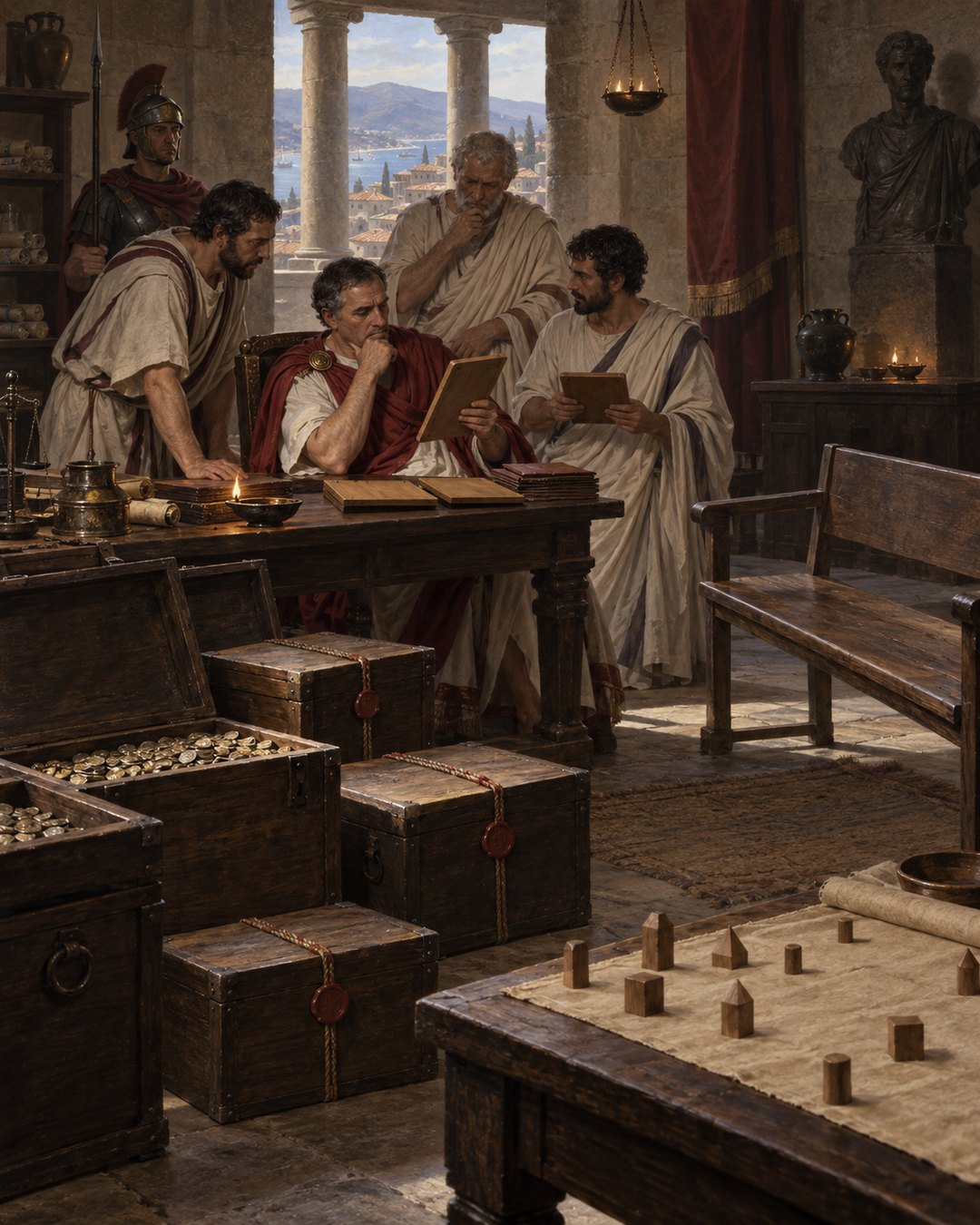
The treasury had money and no convincing place to send it.
Pliny considered making local councillors borrow the surplus against security. Trajan accepted a lower price for credit, but not a manufactured demand for debt.
Two short letters draw a boundary between investing public cash and forcing private balance sheets to absorb it.
Successful Collection Produced an Awkward Surplus
Pliny opened his report to Trajan with administrative success. Through imperial forethought and provincial management, public revenues had either been collected already or were arriving.
Collection did not complete the task. Money held without use created a second problem: Pliny feared that it would lie idle.
The concern makes sense inside a system where accumulated coin represented resources removed from circulation and entrusted to public management. Storage protected the principal, but it did not automatically produce a return.
Pliny looked first toward land. A public body could place capital into property rather than leave chests untouched. Yet he reported that opportunities to buy land arose rarely or never.
That constraint was not solved by having more cash. A buyer cannot purchase suitable property merely by wanting an asset if owners are not offering one on acceptable terms.
The governor then considered lending. Here too, supply failed to create its own destination. People were not ready to borrow from the state.
Public money therefore sat between two missing matches. There was no regular flow of land to buy and no line of willing borrowers at the official terms.
Rome could design durable public credit when borrowers and purposes aligned. The Veleia alimentary scheme tied farm mortgages to support for children. Pliny’s letter describes the uncomfortable earlier question: what if a fund exists before acceptable uses do?
Calling the money idle was not the same as calling it free. It remained public property. Any attempt to earn from it needed repayment, security and an arrangement the administration could defend.
Keeping it safe also carried an opportunity cost that the letter leaves implicit in the word “idle.” Coin in storage could meet a later public expense, but it produced no interest while waiting. Pliny was balancing liquidity against return without knowing when a better purchase or borrower would appear. The governor’s unease came from responsibility for both sides of that choice: he could be criticized for exposing funds through weak loans, yet also for allowing a collected surplus to remain unproductive. Asking Trajan shifted no coin by itself, but it made the tradeoff visible before an irreversible allocation.
Private Credit Set the Competitive Rate
Pliny identified a reason borrowers stayed away. At the public rate, they could obtain loans from private individuals instead.
The state was not lending into an empty market. It competed with people already willing to provide credit. Official ownership of the capital did not guarantee customers.
That comparison turned the interest rate into an operating variable. If suitable borrowers would not approach at the existing price, lowering the rate might attract them.
Pliny asked Trajan to consider exactly that remedy. The proposal did not promise that every reduction would work. It treated demand as something to test rather than command.
A lower return could still be better than no return if the alternative was prolonged idleness, provided the borrower and security remained acceptable. The treasury would exchange some yield for a greater chance of deployment.
The word “suitable” matters. Pliny did not simply ask to scatter public cash at any price. The administration still needed debtors capable of giving the state a credible claim.
Private competition also supplied information. If citizens could borrow elsewhere on equivalent or better terms, their refusal told the governor something about his offer. The empty queue was a price signal.
Roman financial life did not depend on one state bank. Private lenders, municipal funds, property owners and officeholders occupied overlapping spaces. Pliny’s frustration came from entering that space with capital that had a public duty attached to it.
Similar practical calculation appears when Pliny divided a bad vintage’s loss among wine buyers. In both cases, money management was not a slogan about thrift; it was adjustment to counterparties whose choices mattered.
Lowering the rate respected that choice because the offer changed while acceptance remained voluntary.
Pliny Considered Assigning Debt to the Council
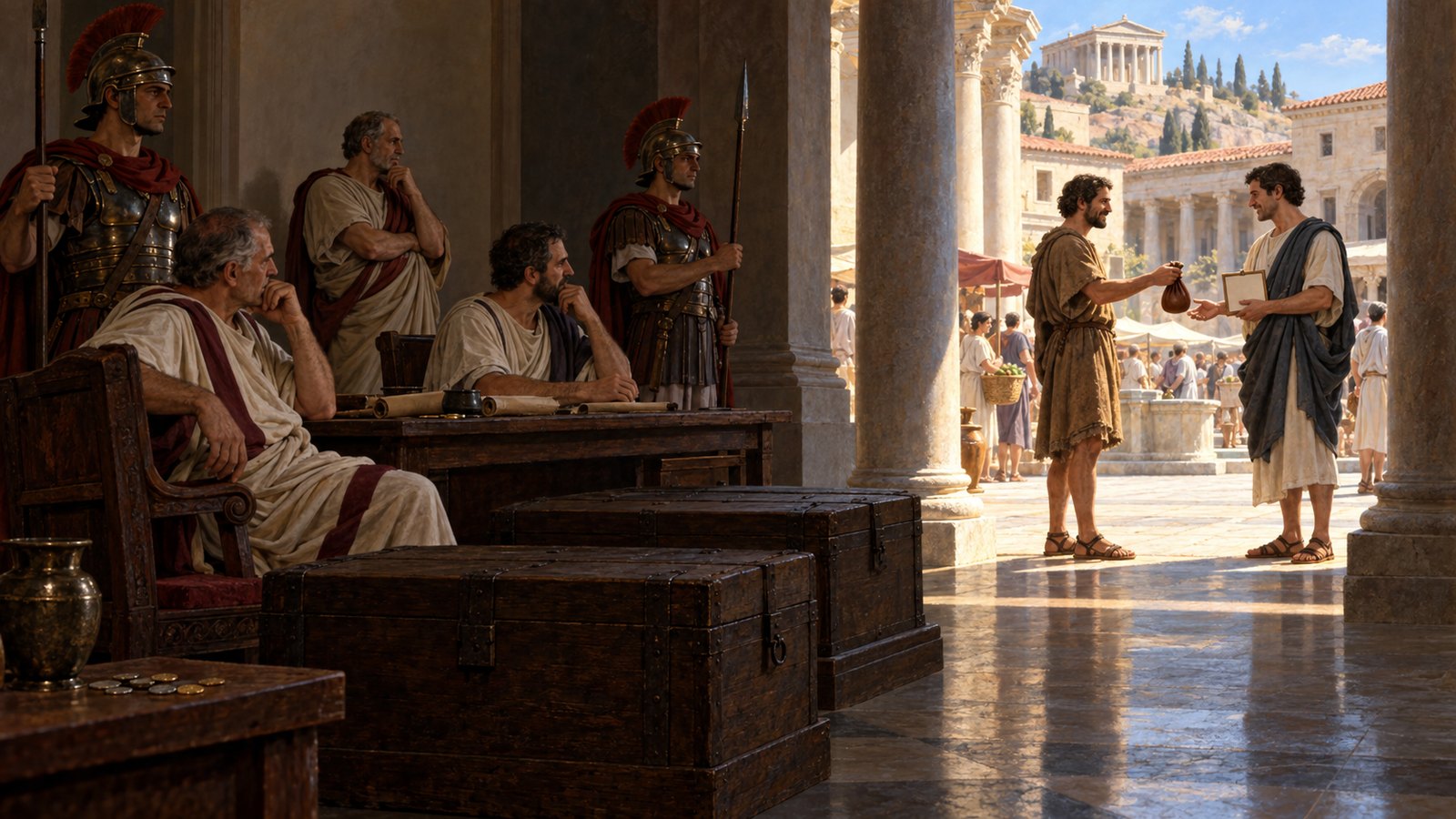
Pliny’s alternative was more coercive. If borrowers still did not appear, he proposed dividing the money among the decurions, the local councillors who carried municipal status and obligations.
They would not simply receive a gift. They would provide good security to the state, making each allocation a loan expected to be repaid.
Pliny openly recognized the difficulty. The councillors might dislike the plan and be unwilling to take the money. A reduced rate, he thought, would make the measure less objectionable.
The proposal converted a public investment problem into a mandatory private one. Instead of officials searching for assets, designated households would receive cash and owe principal plus interest.
Security protected the treasury only from one risk. It helped if a borrower failed to repay, but it did not prove that the borrower had any useful employment for the funds.
A councillor compelled to accept a loan could place it badly, keep it unproductive or displace money he would otherwise have used. The state might replace idle public cash with idle private cash and add an obligation on top.
The social position of decurions made them visible targets. They possessed property that could stand behind security, and public office already exposed them to civic burdens. Those features made compulsion administratively imaginable.
They did not make it economically productive. Pliny’s own admission that they might resist showed the mismatch between capacity to secure a loan and desire to use one.
This was more than a debate over kindness to wealthy councillors. Forced distribution could hide the original problem. The accounts would show money “invested,” while the recipients still lacked investments of their own.
The governor sent both options upward instead of silently choosing. That preserved the disagreement in a pair of letters: cheaper voluntary credit on one side, secured compulsory borrowing on the other.
Trajan Let Demand Set the Limit
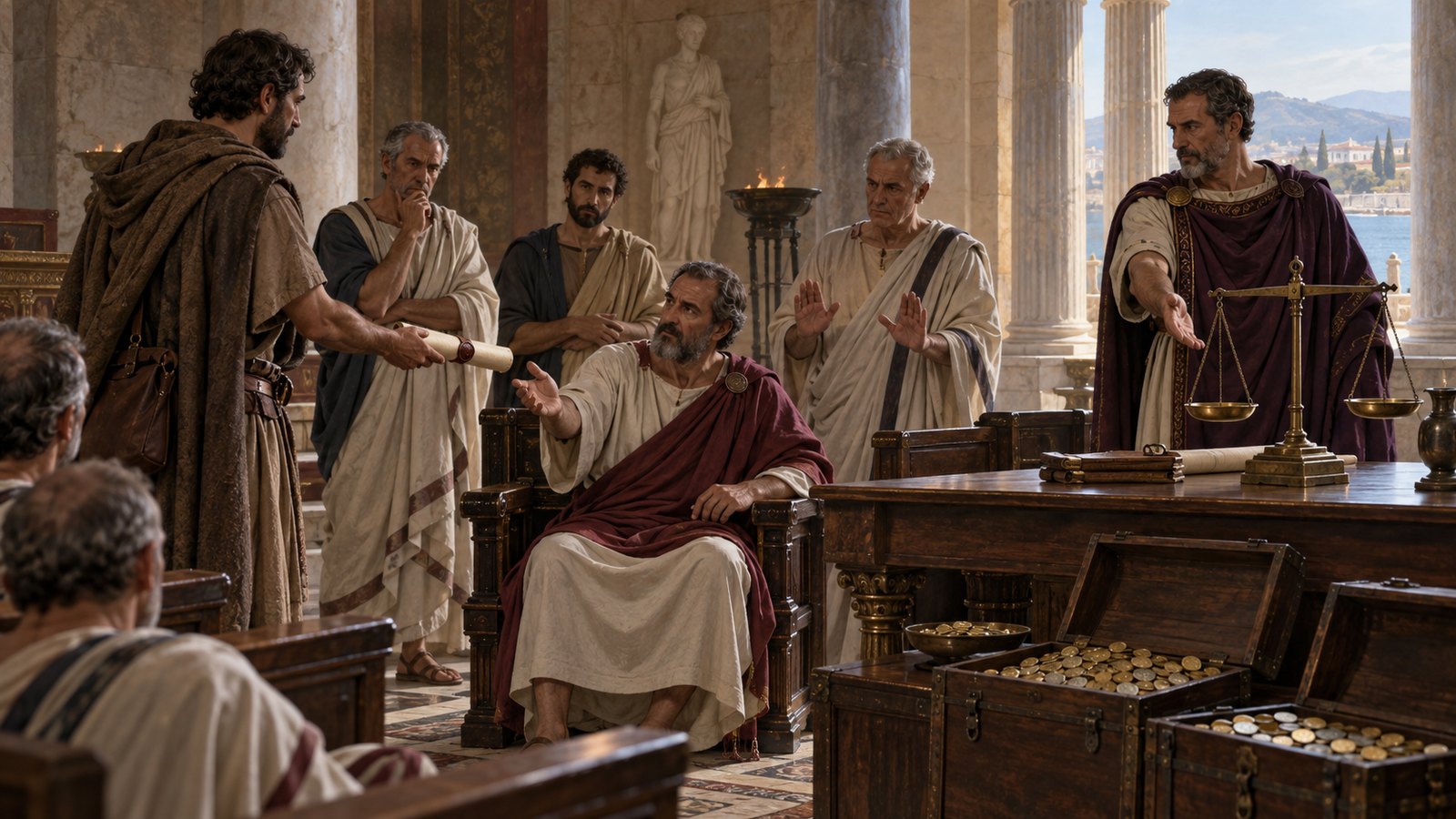
Trajan’s answer was concise. He saw no remedy other than reducing the rate to facilitate investment of the public money.
He did not impose one universal figure from Rome. Pliny was to fix the rate according to the number of people likely to borrow.
That instruction made local demand part of public administration. A rate suitable in one market or season might fail in another. The governor had to observe response and adjust.
Trajan then rejected the compulsory branch. If people were averse to borrowing, forcing a loan upon them would not accord with the justice claimed for his reign.
The reply joined principle to practical consequence. The emperor added that unwilling recipients might themselves find no investment for the money.
That sentence returned to the original scarcity. Pliny had found little land to buy and few borrowers. Passing cash to councillors by order would not conjure profitable land, trade or contracts for them either.
The boundary is notable because Roman government regularly imposed duties on local elites. Here, however, status did not justify converting a person into a debtor merely to improve the public fund’s appearance.
Trajan’s solution could still leave some money idle. He accepted that possibility rather than declare every surplus successfully invested through compulsion.
The exchange therefore distinguishes action from accounting theatre. Lowering the rate changed the offer and invited a market response. Forced loans would change the ledger even if no productive use followed.
Public revenue collection had created capacity. Sound management required admitting that capacity did not always have an immediate destination.
The coin could wait for willing demand. Trajan would not make unwilling people pretend demand existed.
Sources
Pliny the Younger, Letters, book 10, letters 54–55.