
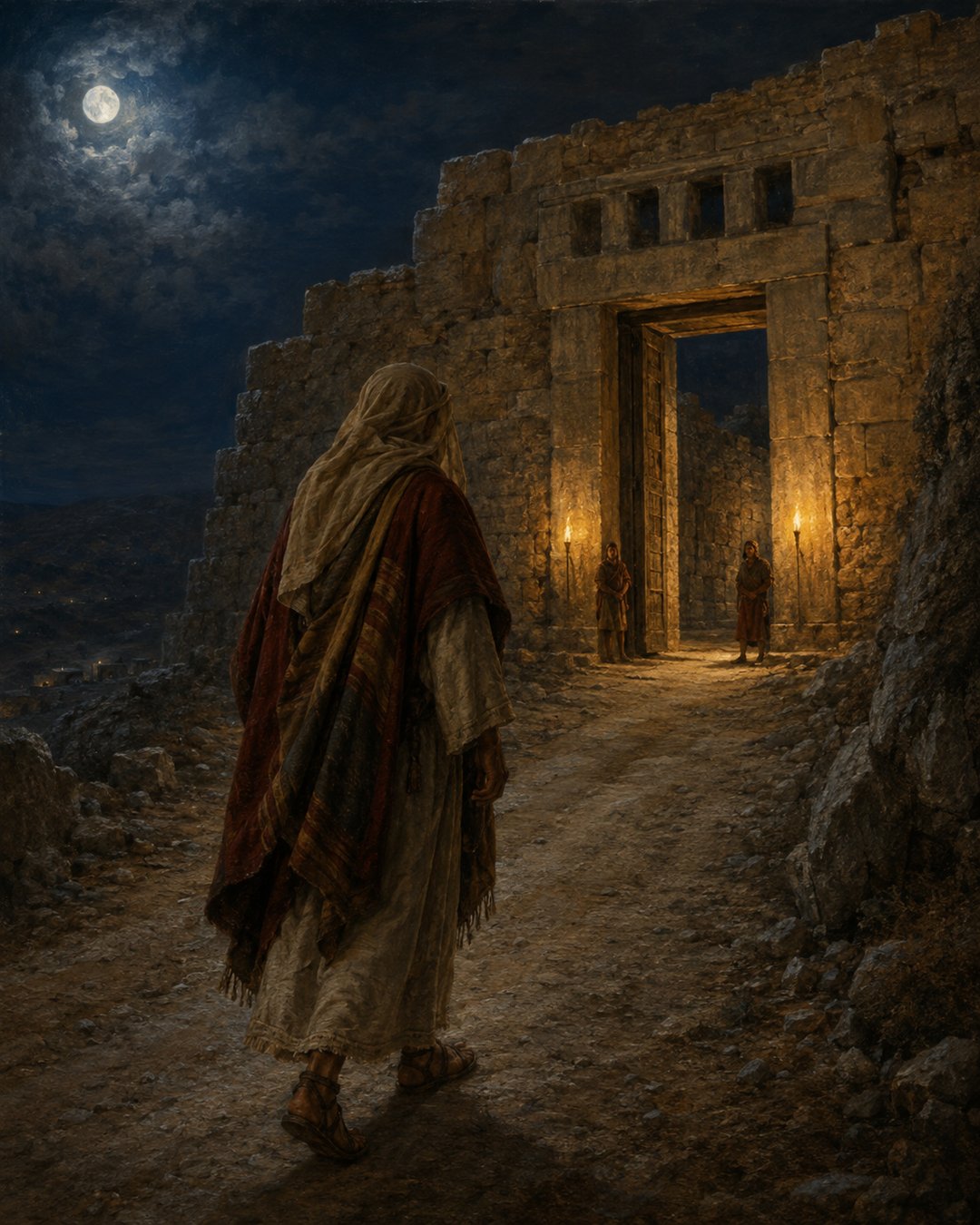
Darkness gave Euclides a narrow road back to his teacher. In the story Aulus Gellius preserves, Athens had decreed death for any citizen of neighboring Megara found setting foot in the city. Euclides was a Megarian, and he had been accustomed to visiting Socrates before that boundary hardened.
He did not answer the decree with a public speech. As evening fell, he put on a long tunic, wrapped himself in a multicolored mantle and covered his head. The clothing allowed him to be read as someone else while he walked into Athens, shared part of the night in Socrates’s conversation, and left again before daylight could expose him.
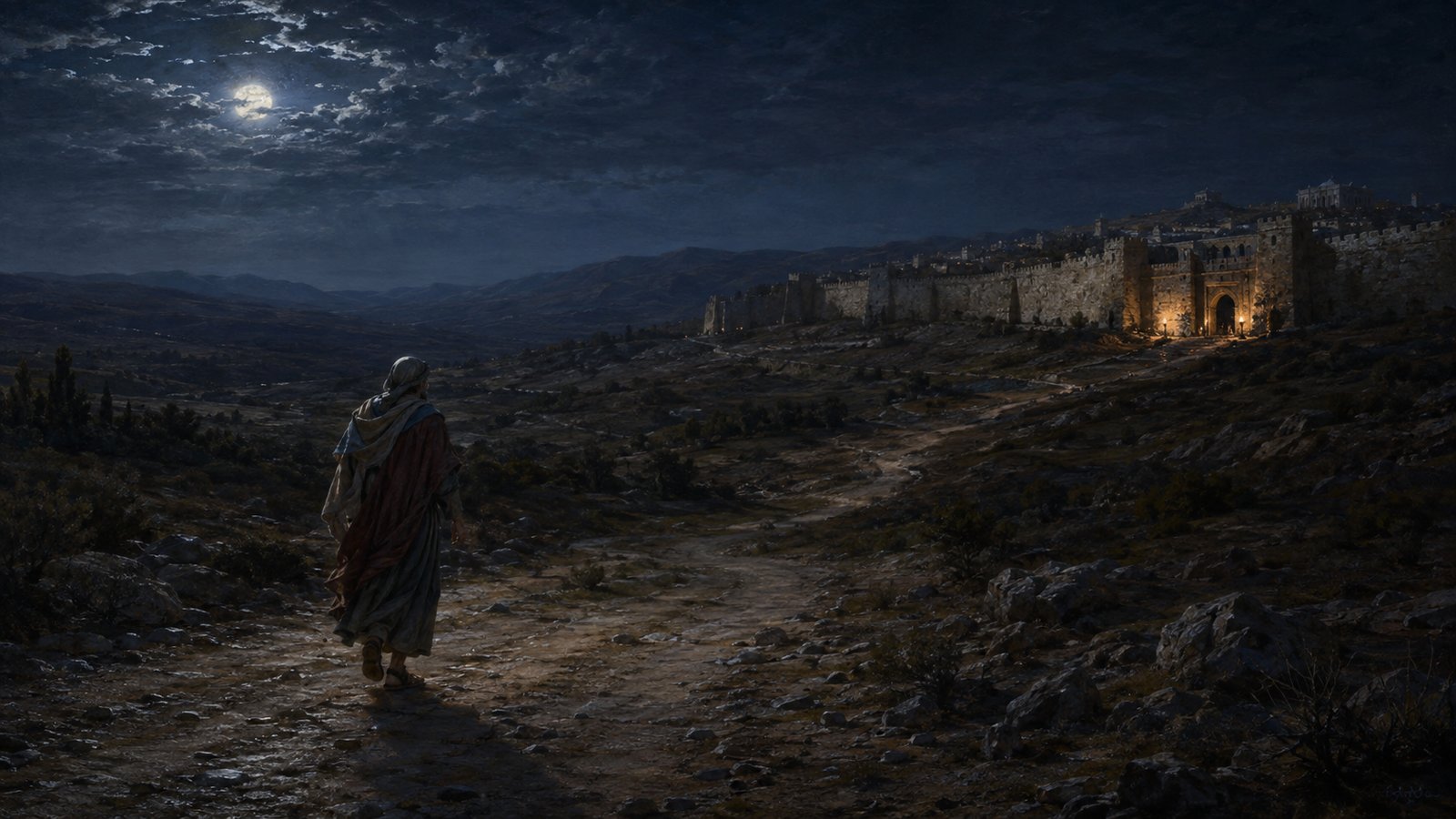
The return to Megara was somewhat more than twenty miles. Gellius does not present that distance as scenery. It is the measure of how strongly Euclides wanted access to a particular voice, and of how thoroughly politics had reorganized an ordinary act of learning.
A Decree Turned a Neighbor into a Capital Offender
Gellius introduces the episode through Taurus, a celebrated Platonist of his own era. Taurus liked examples that could shake students out of passivity. Euclides the Socratic supplied one because every part of his journey converted study into action.
In Taurus’s version, the Athenians had enacted a decree declaring that a citizen of Megara who set foot in Athens should suffer death. The account gives us the rule and its penalty but not a case file showing an arrest, trial or execution under it. Its surviving function is rhetorical: the law makes the border dangerous enough for a student’s persistence to become memorable.
That distinction matters. Gellius was writing about a story told by a teacher, not publishing the decree’s text from an archive. We can follow his evidence without pretending to possess details he never supplies. He says the measure expressed fierce Athenian hostility toward neighboring Megara. He does not tell us who proposed it, how guards identified entrants or how consistently it was enforced.
Euclides belonged to the excluded community. Before the measure, he had been used to coming to Athens and listening to Socrates. The decree therefore did more than forbid a new destination. It interrupted an established route between student and teacher. A political category—Megarian—suddenly determined whether an intellectual relationship could occupy the same city.
Three Pieces of Clothing Reopened the Road
The surviving description of the disguise is unusually physical. Euclides wore a woman’s long tunic, added a multicolored mantle and covered his head. Gellius does not describe make-up, a false name or a rehearsed voice. Recognition was managed through silhouette, fabric and concealment.
The point was passage, not performance for an audience. Night reduced what observers could see. The long garment and mantle changed what they thought they saw, while the veil denied them the face that might settle the question. Each element supported the others, and the road itself rewarded a disguise that could survive movement rather than close inspection.
Ancient clothing signaled status, gender and occasion before a traveler said anything. Taurus’s anecdote depends on that legibility. Euclides did not become invisible; he supplied a different visible explanation for his presence. The forbidden Megarian student was recoded as a veiled traveler whom darkness made less likely to invite scrutiny.
It is tempting to decorate the episode with checkpoints, passwords or near captures, but none belongs to Gellius’s account. The tension comes from the simpler sequence he actually preserves: a capital prohibition, recognizable origin, concealing garments and repeated movement through the hours when recognition was weakest.
Socrates Occupied Only Part of the Night
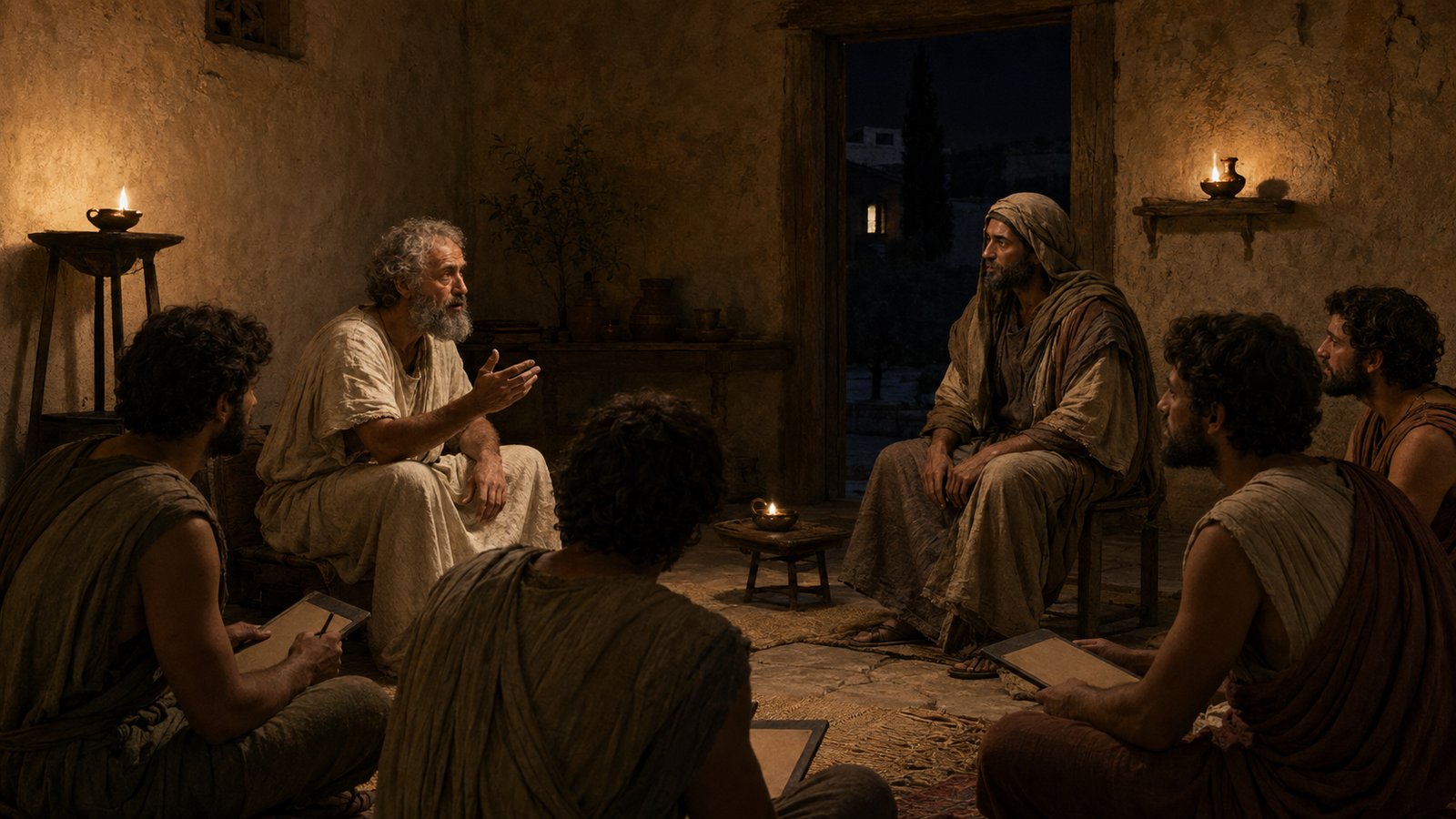
Euclides’s goal was modestly phrased. He wanted at least some part of the night in Socrates’s teaching and discourse. The journey did not purchase a full day at a school. It created a temporary overlap between two men before the conditions that protected the visitor disappeared.
That compressed access gives a practical counterpart to the story of Socrates standing in thought from one dawn to the next. In one anecdote, the philosopher’s stillness defeats the clock. In the other, the student must obey it. Euclides has to calculate entry, conversation, departure and more than twenty miles of road around darkness.
Gellius names teaching and conversation together. What drew Euclides was not merely possession of a doctrine that might have been repeated elsewhere. Taurus presents proximity to Socrates’s living speech as worth the risk and labor. The night visit mattered because this teacher, this exchange and this small interval could not be replaced by a more convenient appointment.
The account also resists a modern picture of study separated from the body. Dust, sandals, fabric, fatigue and the coming light all governed whether the lesson could happen. Philosophy here required transport and concealment before it required an argument.
Dawn Collected the Cost of Every Lesson
Just before dawn, Euclides set out again wearing the same garments. The disguise had to work twice: first for movement into the prohibited city and then for withdrawal. Remaining safely with Socrates after sunrise was not part of the plan.
Gellius places the distance after the return, giving it the force of a reckoning. Euclides went somewhat more than twenty miles back to Megara. The wording is easy to misread as the total journey, but the sentence attaches it to the homeward movement. Even without calculating the complete circuit, the reported return alone makes the night’s logistics severe.
Dawn was therefore not a poetic flourish. It closed the conditions under which the clothing and covered head were most protective. Every extra stretch of conversation reduced the darkness available for the road. The teacher offered time; the sky imposed the deadline.
The same collection of hour, body and judgment appears differently in Gellius’s account of a Stoic caught in a storm. There the body reacts before reason can assess the impression. Here a student arranges the body in advance—clothing it, moving it and removing it before light—in order to preserve access to reasoned conversation.
Taurus Reversed Who Waited at Whose Door
Taurus did not tell the story merely to praise Euclides. He ended by turning toward his own educational world. In his complaint, contemporary philosophers ran to the doors of rich young men and sat waiting until nearly noon while the pupils slept off the previous night’s wine.
The contrast rearranges status. Euclides carried himself across distance and danger to reach Socrates. Taurus’s fashionable teacher carries instruction to wealth and waits to be admitted. The old student sacrifices sleep for conversation; the rich young pupil sleeps while a philosopher waits outside.
This closing sneer is evidence for Taurus’s moral performance, not a census of every teacher and pupil in Gellius’s day. It exaggerates to shame its immediate audience. Yet the comparison reveals why the Euclides story was useful: it made effort visible in miles, hours and clothing before asking listeners how much inconvenience they would accept.
The veil was not the lesson’s opposite. It was part of the lesson’s infrastructure. Law had attached danger to Euclides’s place of origin; darkness reduced exposure; clothing redirected recognition; a narrow interval restored conversation; and dawn sent the student home. Taurus could then ask his pupils a question without stating it directly. If one night of philosophy once required an illegal journey of more than twenty miles, what did their own delay say about desire?
Sources
Aulus Gellius, Attic Nights 7.10.