
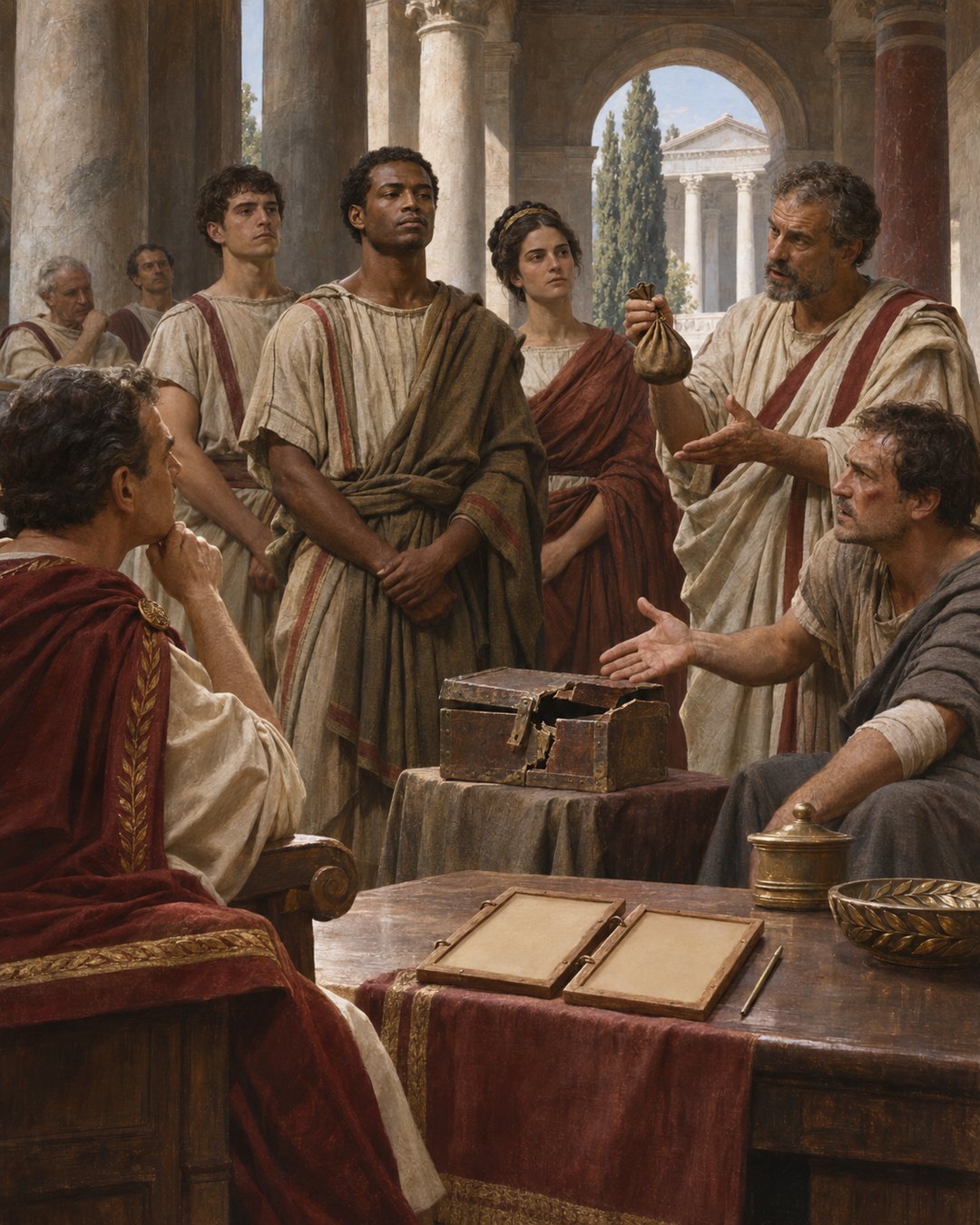
A Roman household could face a lawsuit for a wrong committed by someone under its legal power. Gaius gives theft and outrage as examples. The person sued was not necessarily the person who stole, struck or damaged anything. If the offender was a son or an enslaved person, the action could be brought against the father or owner.
The rule did not simply transfer every consequence upward. It offered a severe choice: pay the assessed damages or surrender the offender to the injured party. Roman lawyers called this a noxal action. The lawsuit attached responsibility to control, but it also followed the person who had committed the wrong when that control changed. The result was a system in which legal status could redirect a claim without erasing the underlying act.
The Lawsuit Began with Power, Not Just Blame
Gaius opens the discussion in Book 4 of his Institutes with a compact rule. When a son or enslaved person committed a delict such as theft or outrage, a noxal action lay against the father or owner. “Delict” here means a private wrong that created a claim, not a modern criminal charge prosecuted by the state.
The immediate target of the action was therefore the person with legal power over the offender. That structure reflected the Roman household. A son under patria potestas and an enslaved person under an owner did not stand in court as fully independent heads of property. The legal system had to decide how an injured outsider could recover when the wrongdoer occupied that dependent position.
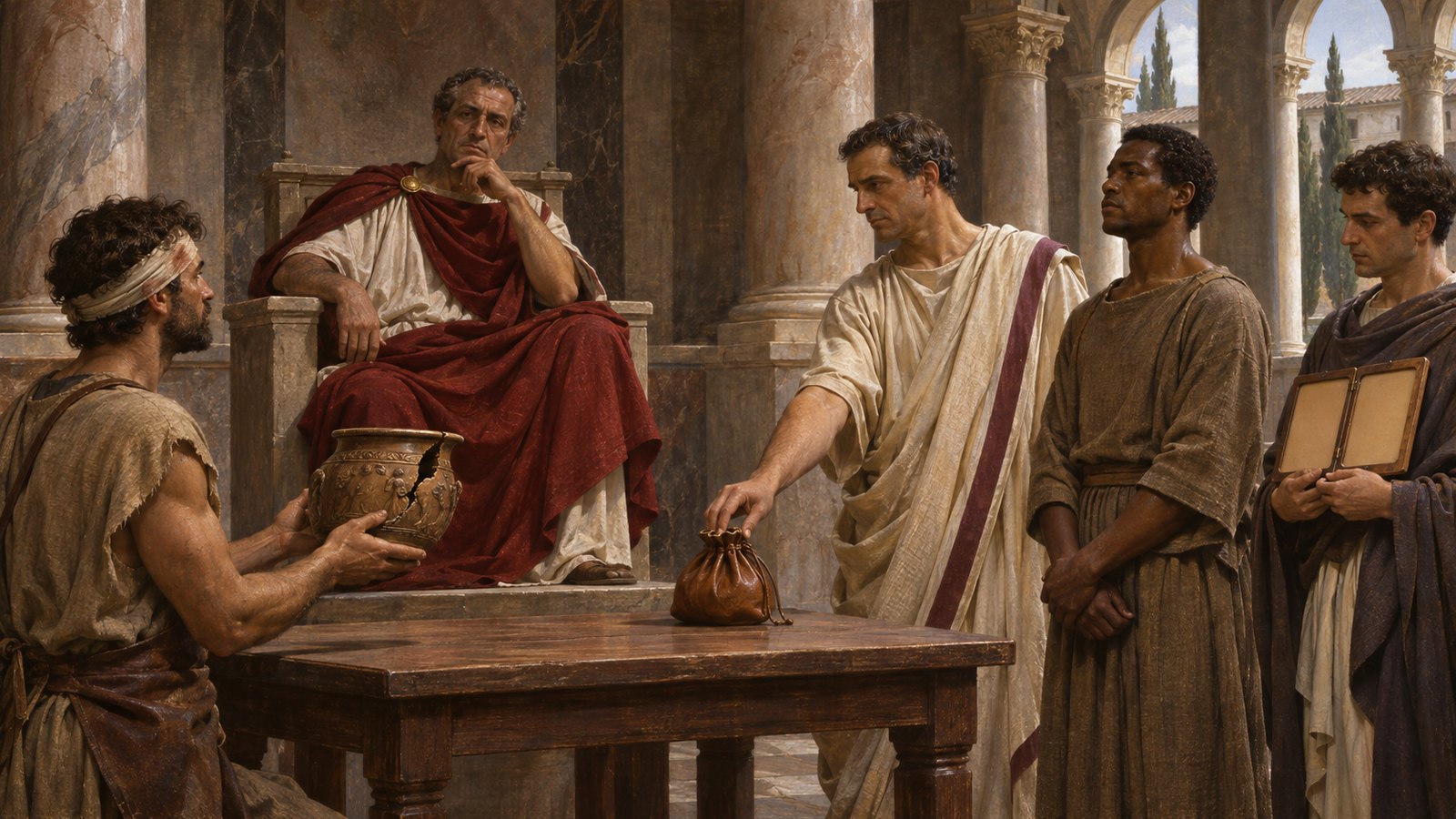
Gaius’s answer joined remedy to hierarchy. The superior could defend the action and pay. He could also choose surrender. Gaius explains the limit in stark terms: it would be unjust for the son’s or slave’s wrongdoing to cost the father or owner more than the loss of that person’s body. The sentence exposes the system’s priorities. It capped financial exposure by treating control over a human being as the asset that could be yielded.
Payment and Surrender Were the Two Doors
The option did real work inside the procedure. An assessed sum might exceed what the household head was willing to pay. Surrender transferred the offender to the injured party instead. The choice made the lawsuit more than an abstract declaration that someone else was at fault. It forced the defendant to put money or power over a person behind the judgment.
Gaius says noxal actions came from more than one legal source. The Twelve Tables supplied the action for theft. The lex Aquilia supplied the action for unlawful damage to property. The praetor’s edict supplied actions for outrage and rapine. Noxal liability was therefore not confined to one unusual offence. It was a procedural form applied across several kinds of private wrong.
The structure resembles another Roman habit: matching liability to the person who controlled a risky sphere. An innkeeper could owe for a theft he never committed because the law attached responsibility to the business that received guests and their goods. Noxal actions reached a different relationship, but the practical question was related. When the direct wrongdoer was not an independent defendant with accessible property, where should the claimant’s remedy land?
The Claim Followed the Offender into a New Household
Gaius then gives the doctrine its moving part. Noxal actions, he says, “follow the person” of the offender. If a son or slave committed the wrong while under one person’s power, the action initially lay against that person. If the offender later entered another person’s power, the action shifted to the new superior.
This prevented a simple transfer from washing the claim away. Imagine an enslaved person who damaged a neighbour’s property and was then sold. The original owner no longer held the person whose surrender formed the alternative remedy. Under Gaius’s rule, the noxal action moved with the offender and could be directed against the new owner.
The rule also worked when dependence ended. If the wrongdoer became legally independent—sui iuris—a direct action lay against that person, and the noxal action ended. Responsibility did not vanish; its procedural route changed. The law stopped addressing a superior because there was no longer a superior standing between the claimant and the wrongdoer.
Gaius even describes the reverse transformation. A person originally liable to a direct action might later come under someone else’s power. In that case, the direct action could become noxal and run against the new superior. The claim’s form followed current status, while the underlying wrong remained the anchor.
A Wrong Inside the Household Created a Paradox
The system became stranger when the injured party and wrongdoer came under the same power. Gaius says no action arose for a wrong committed by a son or enslaved person against the father or owner. Roman legal thought did not allow an obligation between the household head and someone held in that head’s power in the ordinary way.
Then he poses a harder case. Suppose another person’s son or slave wronged you and later entered your power. You would now occupy both sides of the relationship: injured claimant and legal superior of the offender. Could your existing action survive until the person left your power again?
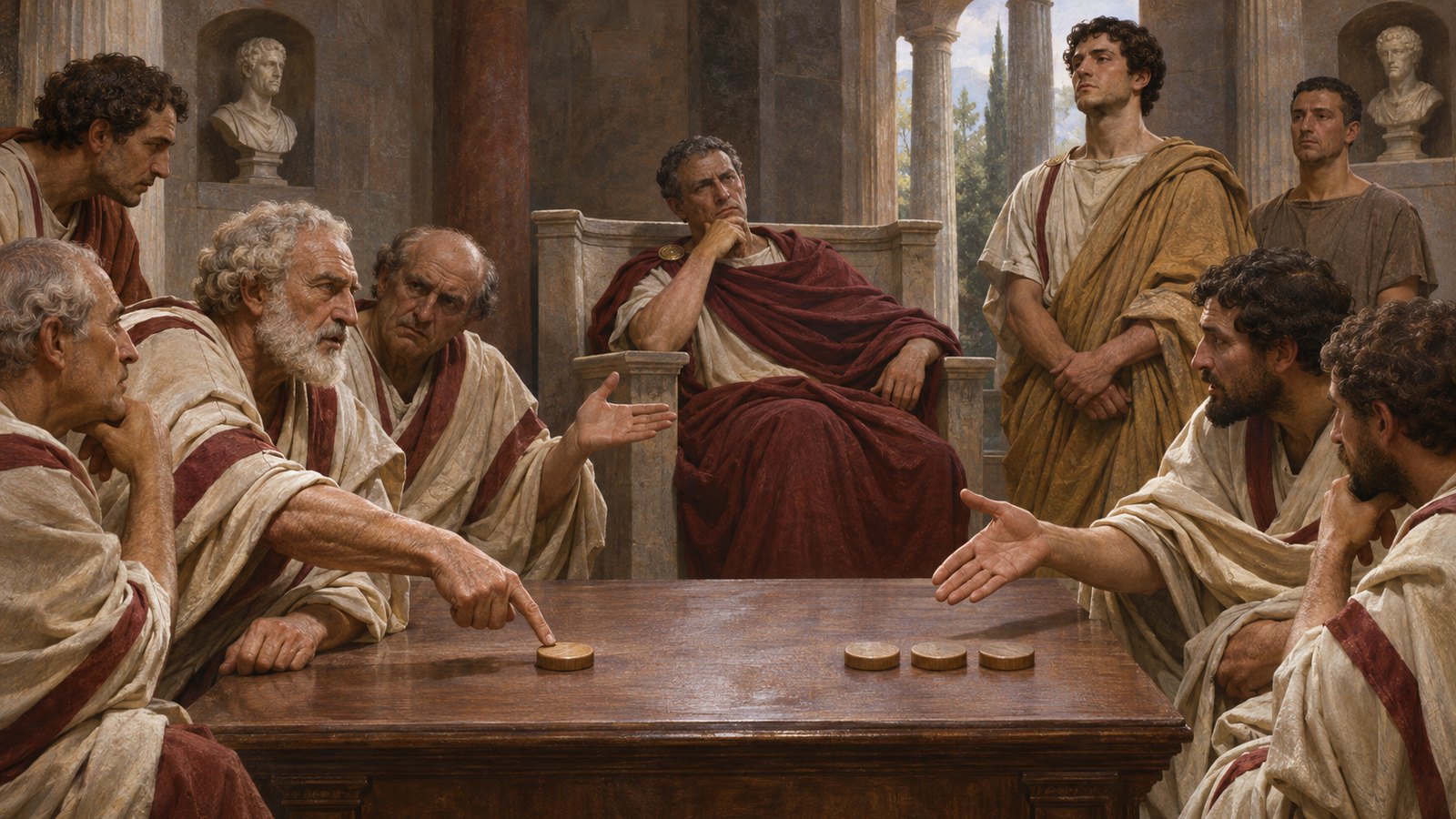
The Roman schools disagreed. Gaius says his school treated the action as extinguished because a situation had arisen in which suit was impossible. The rival school treated it as merely suspended, able to revive when the offender passed out of the injured party’s power. This was not a dispute over whether the original wrong occurred. It was a dispute over what status did to an already existing procedural claim.
That disagreement shows Roman law working at its most technical. A practical injury was translated into relationships: who held power, who could sue, who could be sued, and whether an impossible action died or slept. The answer depended on legal architecture rather than moral language.
Even a Son’s Surrender Split the Schools
Gaius closes this sequence with another disagreement. If a son was surrendered to the injured party after a noxal action, how many formal conveyances were required? One school said three, drawing on the Twelve Tables’ rule that a son did not pass out of paternal power until three mancipations.
Sabinus, Cassius and the authorities followed by Gaius said one conveyance was enough. In their view, the old requirement of three applied only to voluntary mancipations, not surrender under a noxal judgment. One wrong had now led from theft or damage to a debate about the exact machinery needed to alter paternal power.
The argument makes the noxal action’s stakes unmistakable. “Surrender” was not a metaphor for assigning blame. It required a change in legal control over a human being, and Roman lawyers had to decide which formal act could produce that change.
Gaius’s account is valuable precisely because it refuses to soften the rule. The injured party needed a remedy. The household head received a limit on monetary exposure. The offender’s status determined the path between them. As in Trajan’s attempt to divide responsibility when two enslaved recruits entered the army, Roman administration could separate fault, control and consequence into different legal boxes.
A noxal claim therefore did something more precise than make an owner “responsible.” It tracked the wrongdoer through transfers, freedom and changes of status. At each stage, the law asked who currently possessed the power that made payment or surrender possible. The action followed the person, but the system saw that person through the hierarchy surrounding them.
Sources
Gaius, Institutes, 4.75–79, translated by Edward Poste.