Roman Dolia Turned Wine into Stored Wealth

A full Roman dolium could not be lifted onto a cart when the owner changed his mind. The vessel might hold more than a thousand litres, stand taller than a crouching worker, and sit partly buried in the floor. Wine went into it by bucket, funnel, or jar. Once filled, the clay container became less … Read more

When Rome Panicked, It Opened the Sibylline Books

Rome did not open the Sibylline Books to ask who would win a private lawsuit or whom a young aristocrat should marry. The collection belonged to the state, rested under guarded custody, and entered public life when plague, prodigy, defeat, or some other rupture made normal ritual feel insufficient. The senate authorized consultation; appointed priests … Read more

The Corvus Turned a Sea Battle into a Fight on Deck

A Carthaginian captain approaching a Roman warship early in the First Punic War expected the familiar contest of oars, angles, rams, and disciplined seamanship. Then a timber gangway swung overhead. Its iron point crashed into the deck, rails framed a narrow passage, and Roman infantry began crossing. The sea had not disappeared, but the decisive … Read more

Garum Made the Roman Mediterranean Taste Connected

Before garum reached a Roman dining room, it had already passed through a landscape of nets, knives, salt, vats, sun, strainers, amphorae, and ships. The finished liquid might be clear and amber, but its origin was deliberately messy: small fish and selected fish parts were packed with enough salt to control decomposition while time transformed … Read more

Roman Surgery Began with the Hand

The Latinized word chirurgia carries its own correction to the way ancient surgery is often imagined. It joins hand and work. Bronze probes, forceps, hooks, knives, and cauteries mattered, but an instrument lying on a table did nothing. Treatment began when a trained hand examined a wound, aligned a limb, chose restraint, or decided not … Read more

Roman Artillery Stored Violence in Twisted Rope

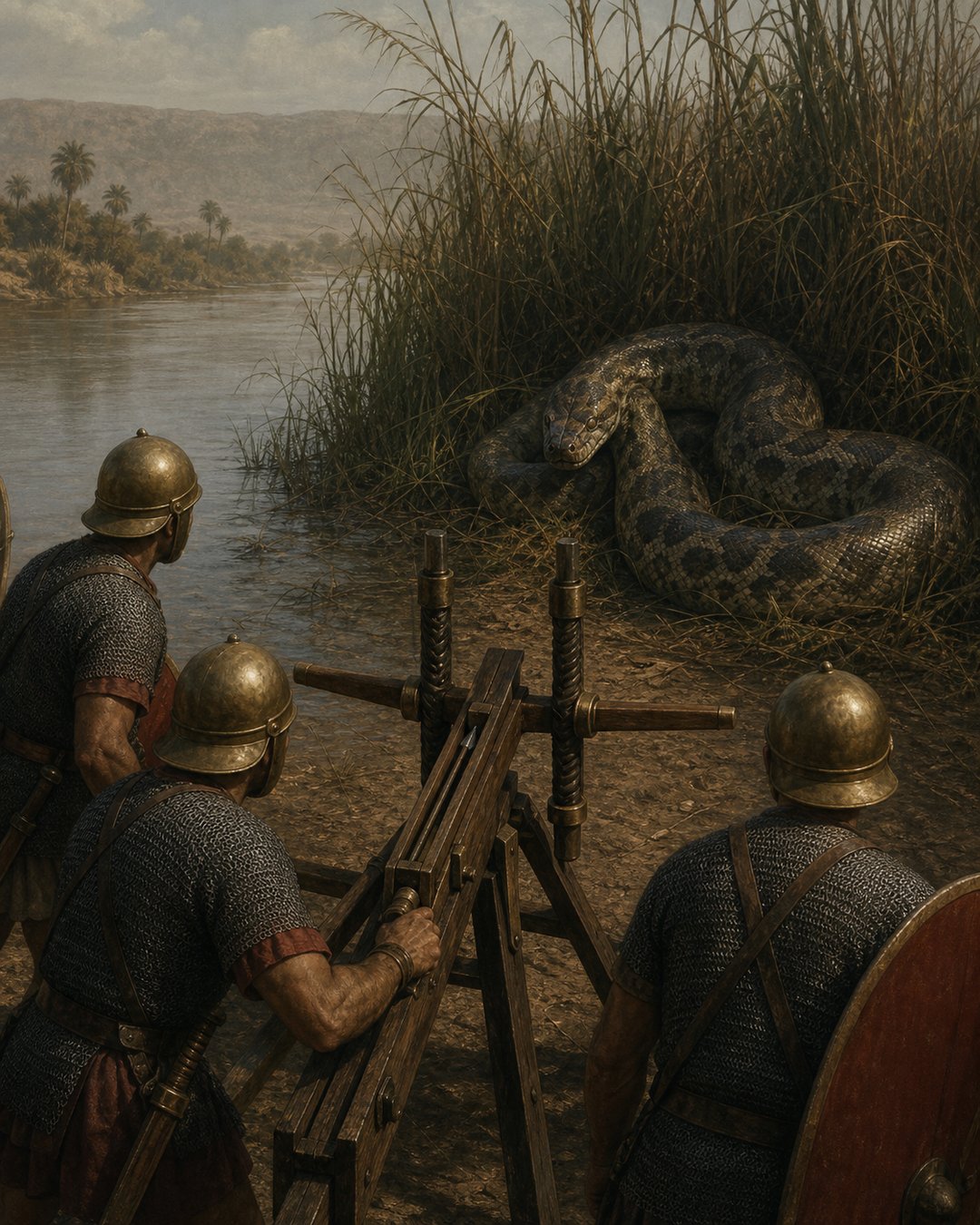
A Roman artillery engine was dangerous before anyone loaded a stone. Its power sat invisibly inside bundles of hair, sinew, thong, or plant fiber that crews had twisted under tension. The timber frame did not create force by size alone. It held a material spring that specialists could prepare, aim, and release. That is the … Read more

A Toga Was Rome’s Public Dress Code

The toga looks effortless in marble because marble cannot complain. On a living body it was a large wool garment that had to be placed, folded, balanced, and carried with care. It restricted the easy movements of work, left its wearer conscious of every shift in the cloth, and made neglect visible to everyone nearby. … Read more

Inside a Roman Lock, Security Began with a Bolt in the Floor

A Roman lock began below eye level. On surviving Pompeian thresholds, two holes mark where the fastenings of a double door entered the stone. Each leaf had its own bolt. Before a key became the object carried on a ring, security was a matter of wood, iron, leverage, and a socket worn into the sill. … Read more

Before a Roman Mirror Showed a Face, Someone Had to Polish It

A Roman mirror did not begin with a face. It began with ore, alloy, heat, hammering, abrasion, and the patient removal of every dull patch that broke the reflection. Before anyone could inspect an earring or arrange a fold of cloth, a craftsperson had to persuade metal to behave like an image. That material fact … Read more