Pompeii’s Stepping Stones Made the Street Crossable

After rain, a Pompeian street did not become an empty ribbon of clean stone. Water followed the lower carriageway, carrying mud, animal waste, spilled food, and workshop debris between high sidewalks. A pedestrian approaching from one side faced a shallow urban channel rather than a modern curb and painted crossing. Pompeii answered with rock. Large … Read more

Roman Sundials Made an Hour Change with the Season

A Roman waiting in a forum did not glance at a row of identical digits. He watched a shadow. A bronze point or stone edge cut across lines carved into a dial, and the sun slowly moved that mark while business, meals, hearings, and appointments gathered around it. Time appeared as light touching prepared stone. … Read more

The Colosseum Velarium Made Shade a Public Performance

Before a Colosseum crowd looked down toward the arena, many spectators looked up. Masts ringed the highest level. Ropes crossed open sky. Vast sections of canvas pulled outward, caught the light, and cast broad moving bands of shade across stone seats packed with tens of thousands of bodies. The velarium was not a lid placed … Read more

Roman Cranes Turned Footsteps into Lifting Power

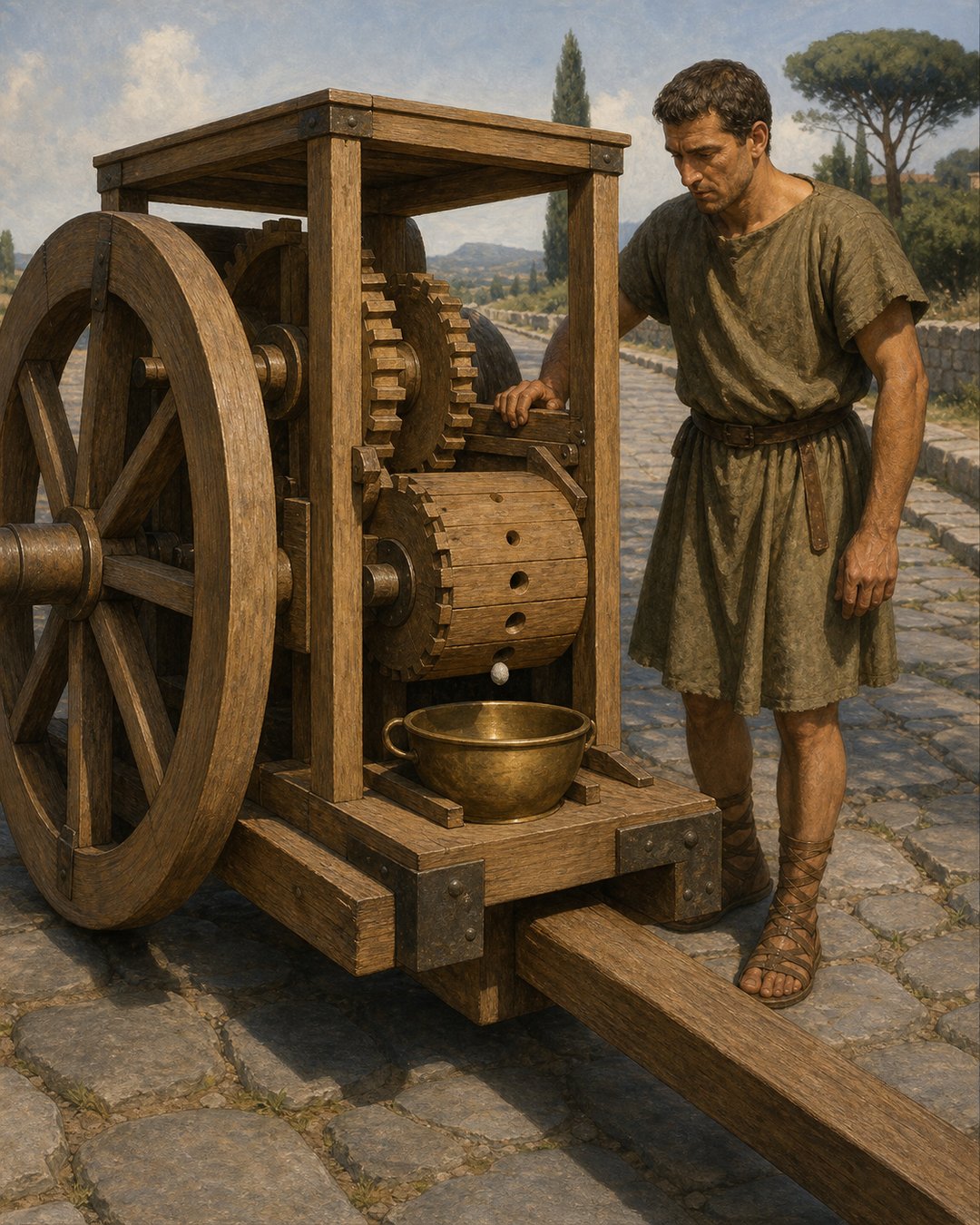
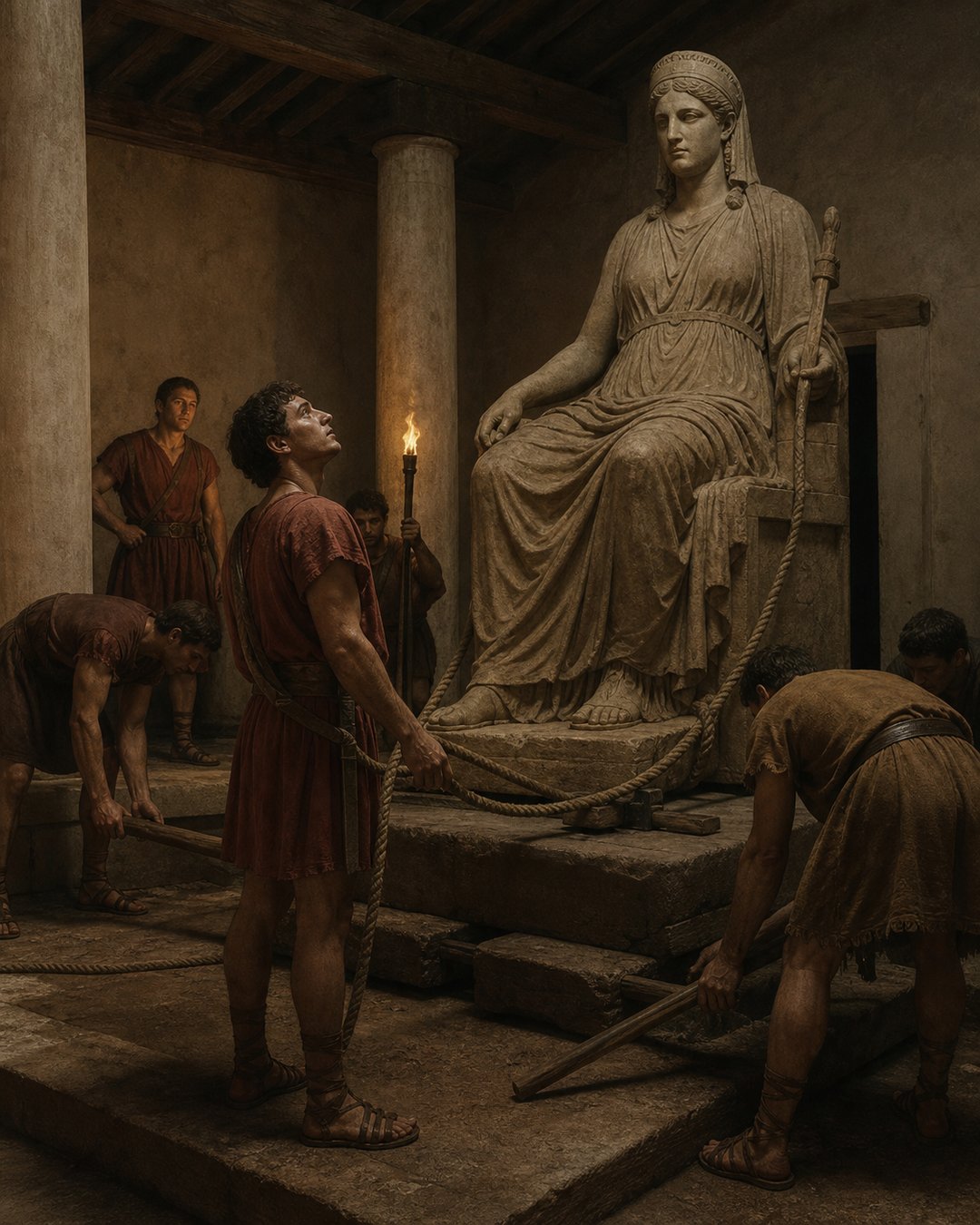
A massive Roman stone did not rise because a workforce suddenly became stronger. It rose because timber, rope, and rotation rearranged what human effort could do. Men turned a windlass, pushed a capstan, or walked inside a tall wooden wheel. Far above their feet, a block left the ground a little at a time. The … Read more

Roman Dice Made Luck Impossible to Hide

A Roman die was small enough to disappear inside a closed fist, but the result of its throw belonged to everyone around the table. Bone struck wood. A cube stopped with one face upward, or four knucklebones settled on their narrow sides. For a heartbeat the players leaned toward the same few objects. Hope became … Read more

Roman Bankers Made Trust Visible at a Table

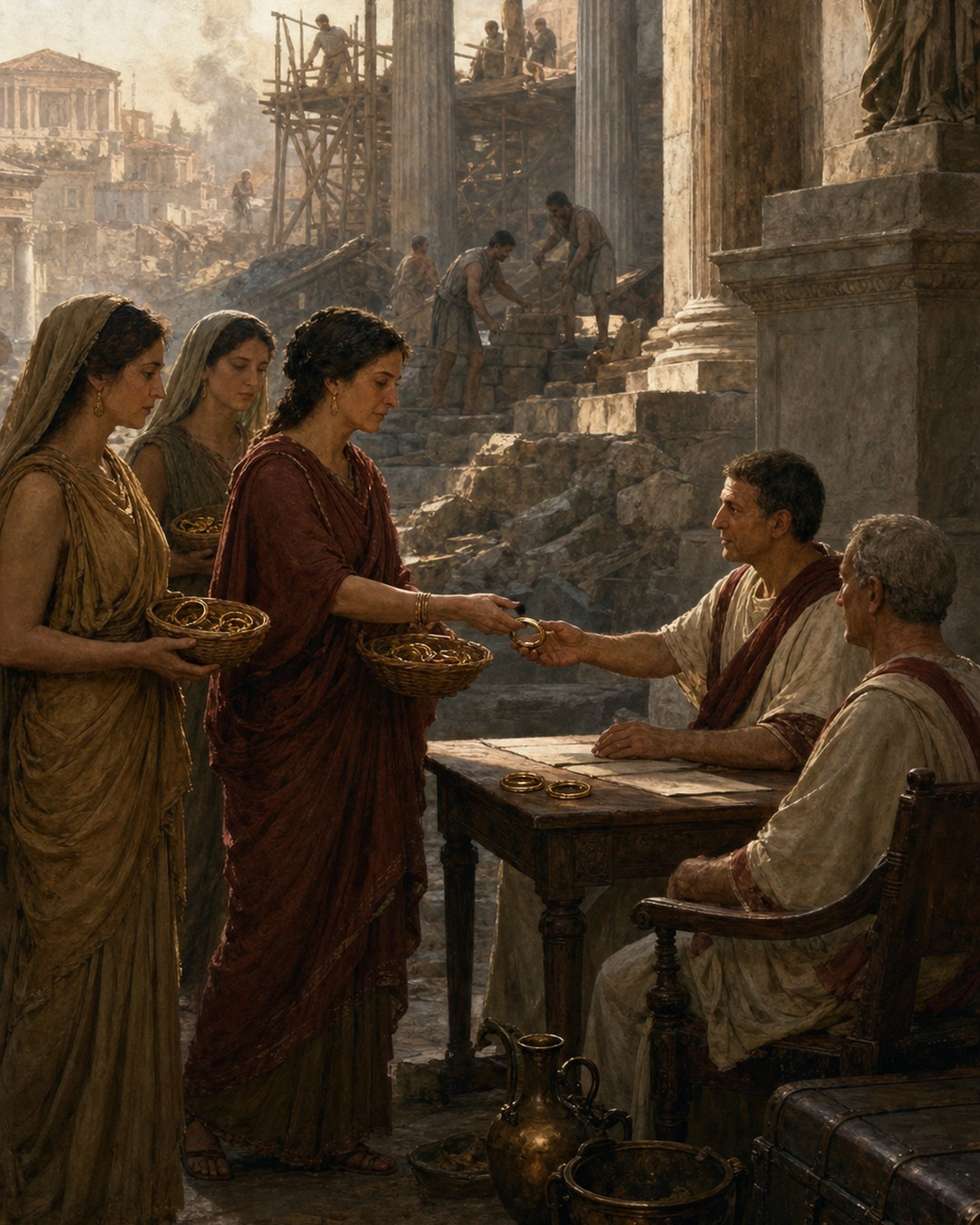
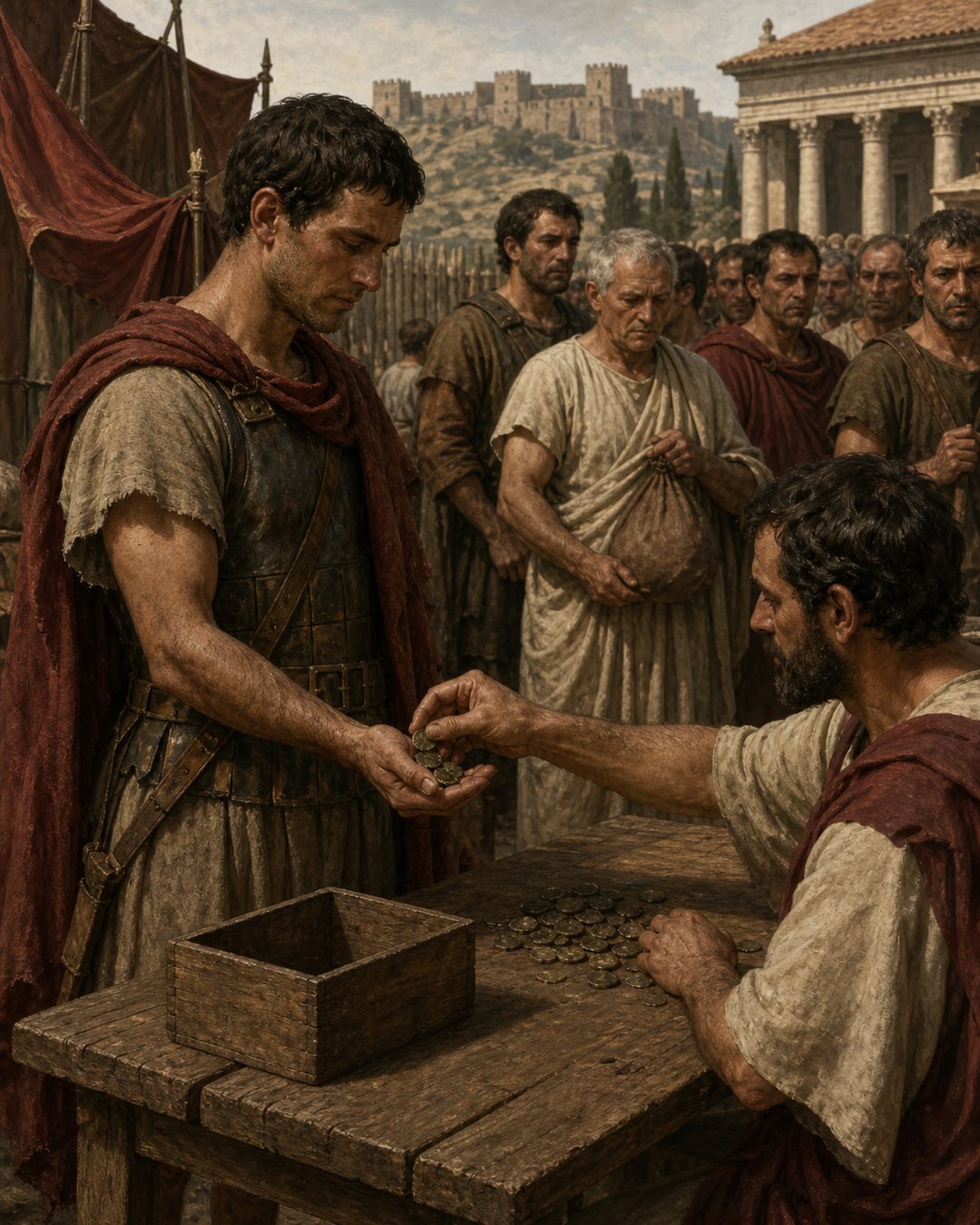
A Roman banker could make confidence visible with ordinary objects. Coins landed on wood. A small balance tipped. A stylus opened a pale line in wax. Sealed purses, witnesses, account names, and the banker’s location gave a transaction a shape that memory alone could not provide. The argentarius did not make risk disappear. He made … Read more

Roman Window Glass Changed What a Wall Could Do

A Roman window pane did not have to show a perfect landscape to change a room. Pale blue-green glass, cloudy with bubbles and ripples, could turn hard sunlight into a diffuse glow. The wall remained closed against a gust or shower, yet the interior no longer depended entirely on an open doorway, courtyard, lamp, or … Read more

Roman Barbers Turned Grooming into Public Theatre

The Roman customer who offered his throat to a barber did not disappear behind a locked door. He sat where other men waited, watched, interrupted, and judged. Small shears tugged through hair. An iron razor crossed skin without a modern safety guard. A mirror returned the finished face while the open shop admitted street noise, … Read more

Roman Latrines Made Privacy a Public Negotiation

A Roman public latrine could place a row of people shoulder to shoulder on one stone bench. Openings were spaced for bodies, not separated by doors. Water might move in a channel at their feet and another drain below. Conversation, silence, waiting, smell, and maintenance occupied the room together. The arrangement is easy to turn … Read more

Pompeii’s Graffiti Made the City Talk Back

Pompeii’s walls did not wait for permission to speak. Someone scratched a name beside a doorway. Another person praised a gladiator, complained about a host, copied a remembered line of poetry, drew a ship, or answered a message already in the plaster. The result was not one civic announcement but thousands of small attempts to … Read more