
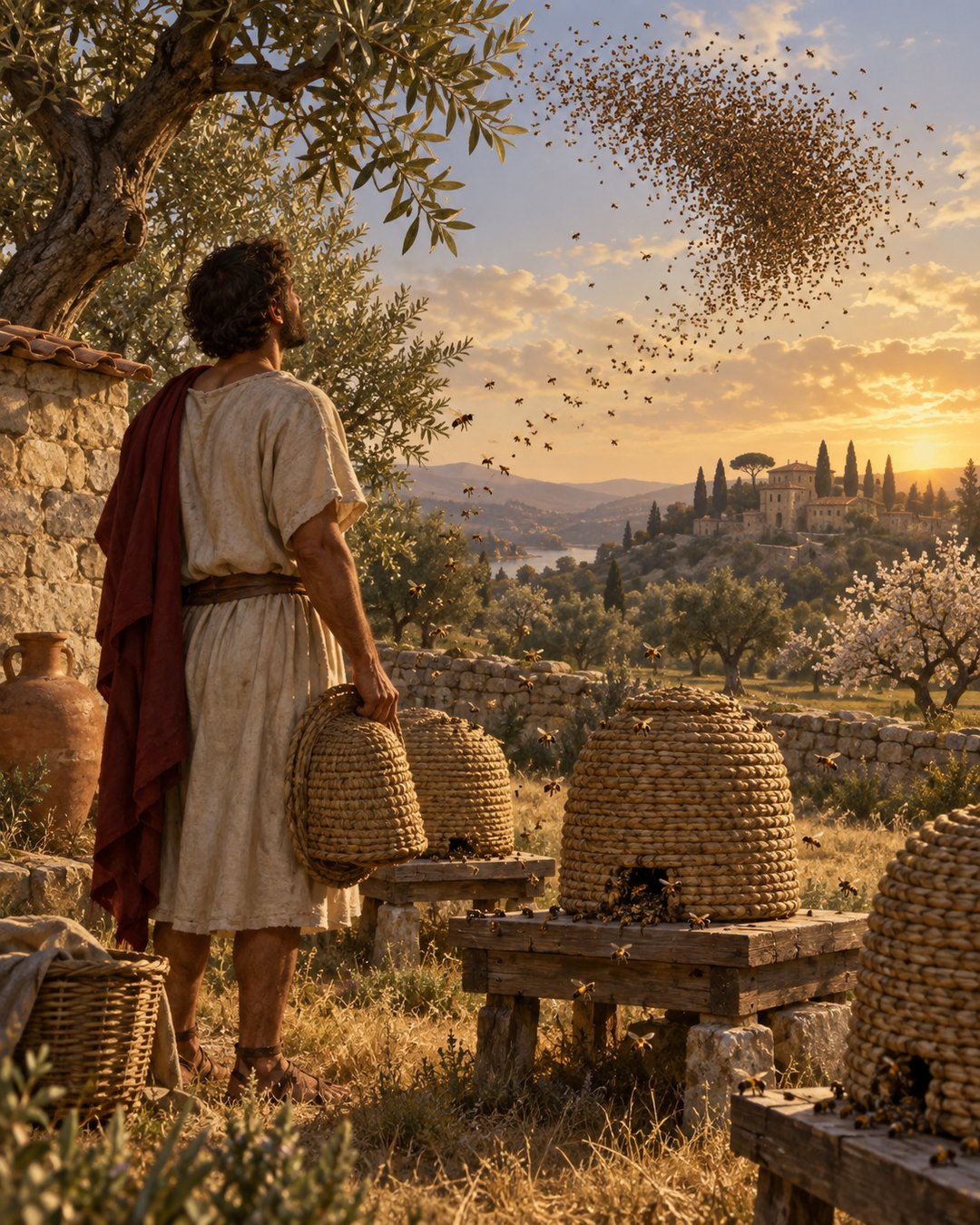
A Roman beekeeper did not lose a colony each time its workers flew beyond his reach. Gaius placed bees beside pigeons and deer accustomed to leave for the forest and return. Their movement demanded a rule different from the one applied to a fish in a net or a wild animal held after capture.
The difference rested on repetition. Animals that regularly went away could still belong to someone because departure formed one half of an established pattern. The claim ended when the pattern ended—when, in Gaius’s language, they no longer had the intention to return. He located that change in conduct: they were considered to have lost the intention when they abandoned the habit of coming back.
This is not a sentimental claim that Roman jurists interviewed bees about their wishes. It is a legal boundary drawn from visible behavior. Constant physical custody was unnecessary for creatures whose return could be expected from experience. Once that expectation broke, however, an old owner could not stretch a past connection indefinitely across the countryside.
Capture Made Ownership, but Custody Had to Hold It
Gaius introduces the rule inside his account of property acquired by occupancy. Animals taken on land, in water or in the air can become the captor’s because they had belonged to no one. The category includes a wild animal, a bird and a fish, treating very different environments through one act: taking control of something unowned.
Capture alone does not freeze the relationship forever. A wild creature remains the captor’s only while it stays in custody. If it escapes control and recovers what Gaius calls natural liberty, it becomes available to the first person who occupies it. The former owner’s biography with the animal is no substitute for present control.
The text gives two practical signs of recovered liberty. One is disappearance from sight. The other is more revealing: the creature may still be visible, yet pursuit has become difficult. Eyes can continue to follow what law no longer treats as safely held. Distance matters because control, not memory, carries the claim.
That threshold resembles the concrete judgments in the case where a stray ball drove a barber’s razor into a customer. Neither problem is solved by a broad slogan alone. The jurist identifies a physical sequence—custody, escape, sight and pursuit—then asks where responsibility or ownership changes as the sequence unfolds.
Bees Needed a Rule for Leaving without Escaping
Bees make the custody rule awkward because ordinary beekeeping depends on movement. Foragers pass out of the hive, cross ground the keeper does not hold and return. Calling every flight an escape would dissolve ownership during the very activity that makes a colony productive.
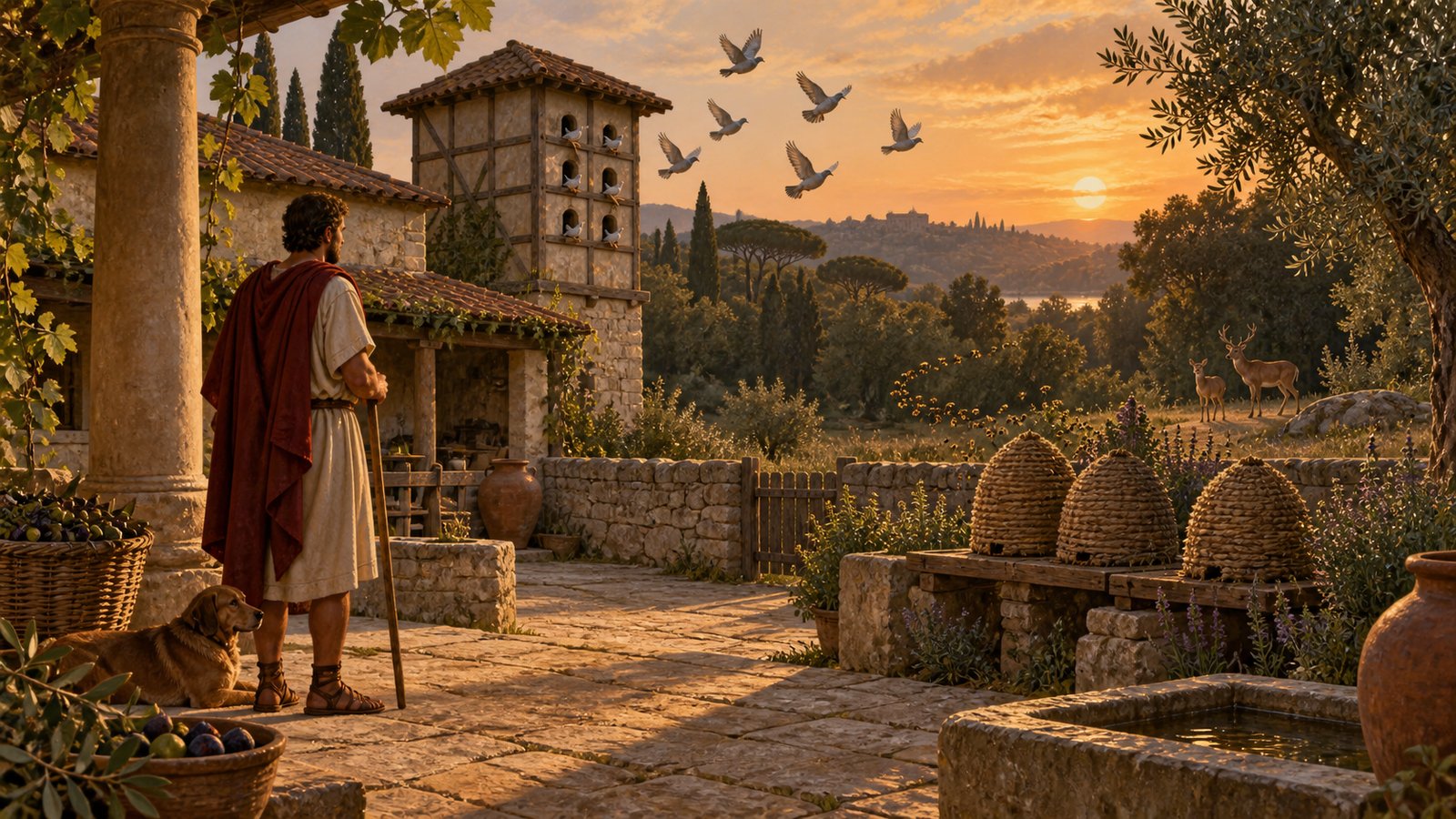
Gaius therefore turns to a rule received from earlier times for animals accustomed to go away and return. Pigeons are the first example, bees the second. He adds deer that habitually enter forests and come back. A built dovecote, a hive and a woodland routine look unlike one another, but each creates the same legal problem: absence is expected rather than final.
The grouping is more precise than it first appears. These are not domesticated animals described as permanently confined. Their usefulness or established behavior includes crossing the owner’s immediate boundary. Law recognizes the return pattern instead of demanding an impossible handhold over every wingbeat or trip among trees.
That made time part of possession. One departure could not answer the question. A sequence of departures and returns established the habit, while a sequence that stopped returning could undo it. The keeper’s claim was supported by a living routine rather than by a mark imagined on the animal’s body.
The Habit of Return Stood in for a Wall
Gaius phrases the endpoint as a loss of intention to return, then immediately supplies the outward test. The animal is considered to have abandoned that intention when it abandons its habit of returning. The second sentence disciplines the first. It tells a decision-maker what can actually be observed.
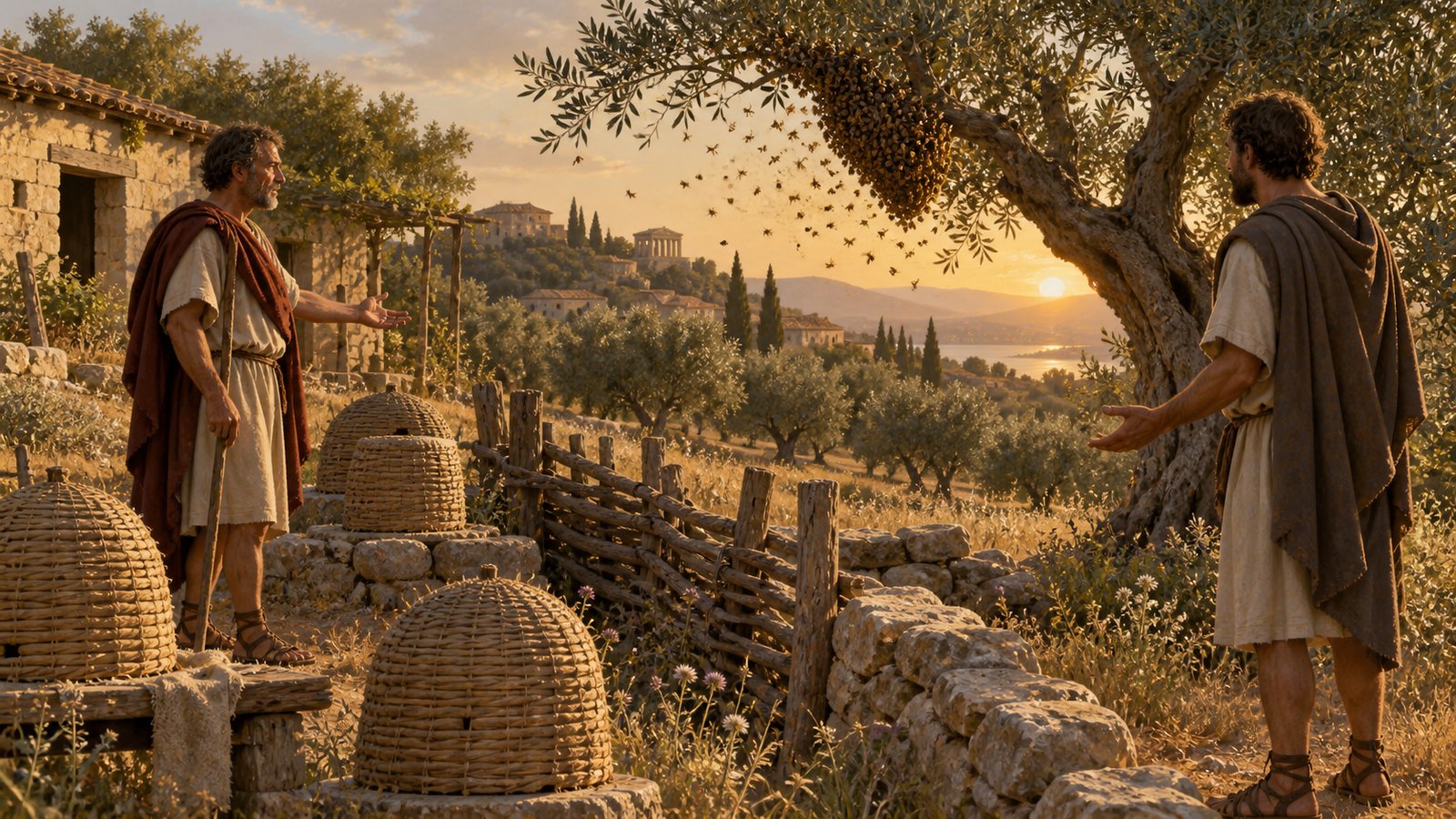
A hive owner could point not merely to a prior capture but to repeated homecoming. A neighbor who saw bees over his flowers could not treat each visitor as unowned merely because no person accompanied it. The legal relation endured across temporary absence because the conduct connected the creature to a place and keeper.
At the same time, habit was not an invisible tether that reached forever. When return ceased, ownership ceased. The text does not specify a number of missed journeys, a season or a prescribed waiting period. Inventing one would make the rule falsely mechanical. Gaius gives the criterion, not a timetable for every species and circumstance.
This makes the law practical and uncertain in the same moment. It avoids the absurdity of losing pigeons on every circuit, but it leaves facts to be judged. Was the animal still following its old pattern, or had the pattern genuinely ended? The answer had to arise from behavior, not from a permanent label.
A First Occupant Waited beyond the Broken Pattern
Once a returning animal no longer had the habit of return, it ceased to belong to its former owner and became available to a first occupant. That final phrase matters. The rule did not automatically transfer a wandering swarm to the nearest landholder, nor did mere sight necessarily complete acquisition. Occupancy still required someone to take the now-unowned creature.
The sequence protected both sides of the boundary. It kept opportunistic observers from claiming another person’s regularly returning bees, while preventing an absentee claim from following a colony after its old behavioral connection had dissolved. Past ownership received respect, not immortality.
The same section places this rule among other moments when natural processes disturb fixed property lines. Gradual alluvion adds soil too slowly to identify one instant of transfer. A large piece torn away by a river remains tied to its original owner. A new island is divided according to where it rises. Each example asks law to describe movement without pretending the world stays still.
Bees are especially vivid because the movement is constant and purposeful in appearance. Yet Gaius does not build a special law of honey. He uses them to show how general property concepts bend around recurring conduct. Custody supplies one form of continuity; a demonstrated habit of return supplies another.
The Bee Rule Revealed Ownership as a Maintained Relation
Nearby sections sharpen the point through materials that do not move by themselves. A building erected on another person’s land follows the soil. A planted tree does so once it takes root. Writing added to someone else’s parchment, even in gold letters, follows the writing surface, although reimbursement can matter. Attachment and substrate answer questions that animal movement answers through custody or return.
The contrast helps explain why the bee rule is not picturesque trivia. Roman jurists were sorting different kinds of connection. Soil can absorb a structure. Parchment can carry letters. A hand can hold a wild creature. A repeated route can connect bees, pigeons or deer to an owner even while they are physically away.
The archive’s case of a will that made a steward guardian to a child shows another Roman attempt to make a continuing relation survive absence and death. Gaius’s animals present the humbler physical version. The relation lasts only while the facts that sustain it still exist.
A beekeeper’s strongest evidence was therefore not that the bees had once been caught. It was that they kept coming back. Roman ownership could tolerate open sky, neighboring fields and repeated departure. What it could not tolerate was a claim detached from both custody and return.
Sources
Gaius, Institutes 2.65–78.