Cato’s Country Houses Were Still Unwhitewashed at Seventy
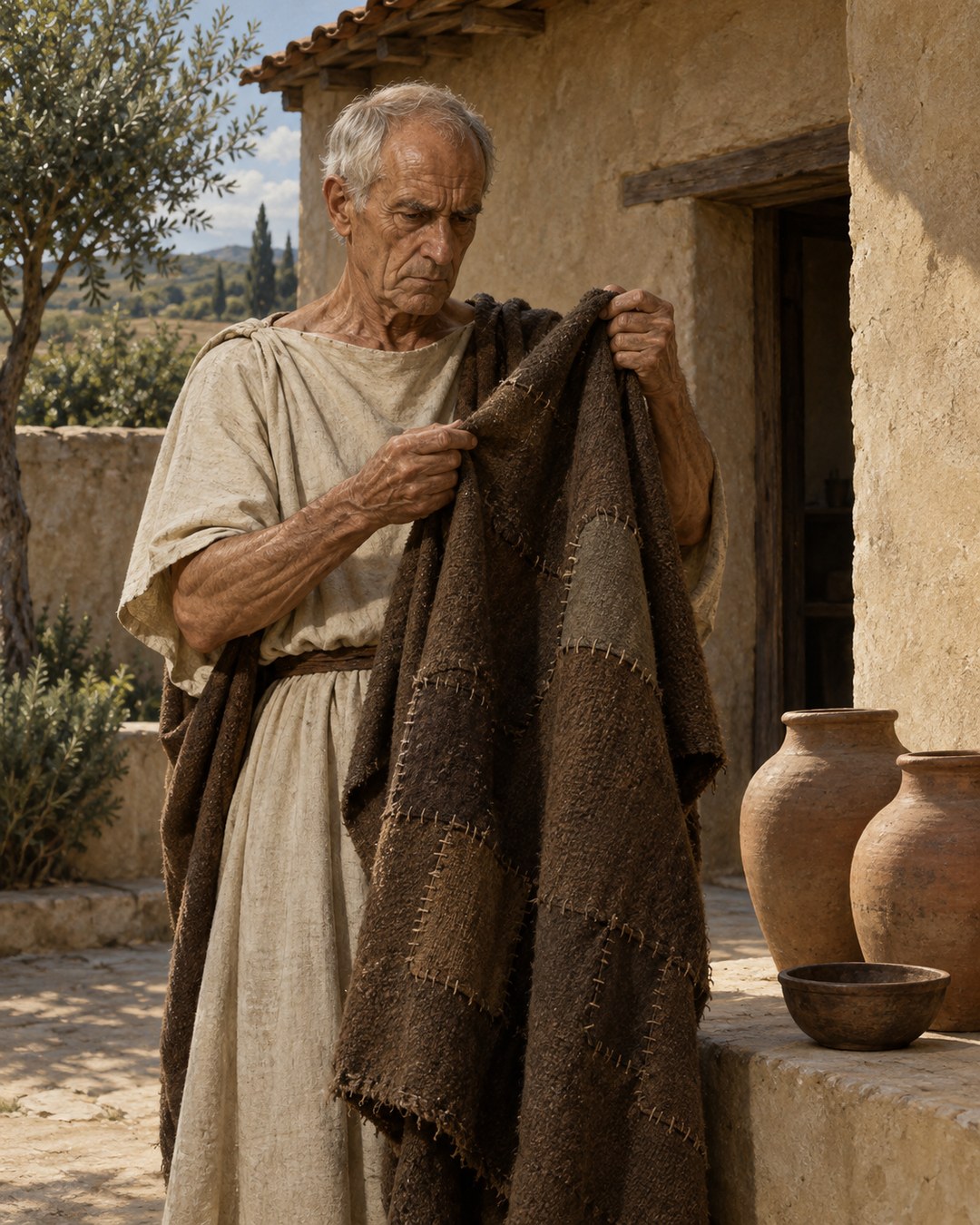
By his seventieth year, Marcus Cato’s country houses still had no whitewash. The walls were not ruins. They belonged to an ex-consul and ex-censor who had lived through Rome’s expanding wealth. Cato pointed to their plain surfaces because a finish had become affordable enough to seem normal, and normal enough to become a test of … Read more
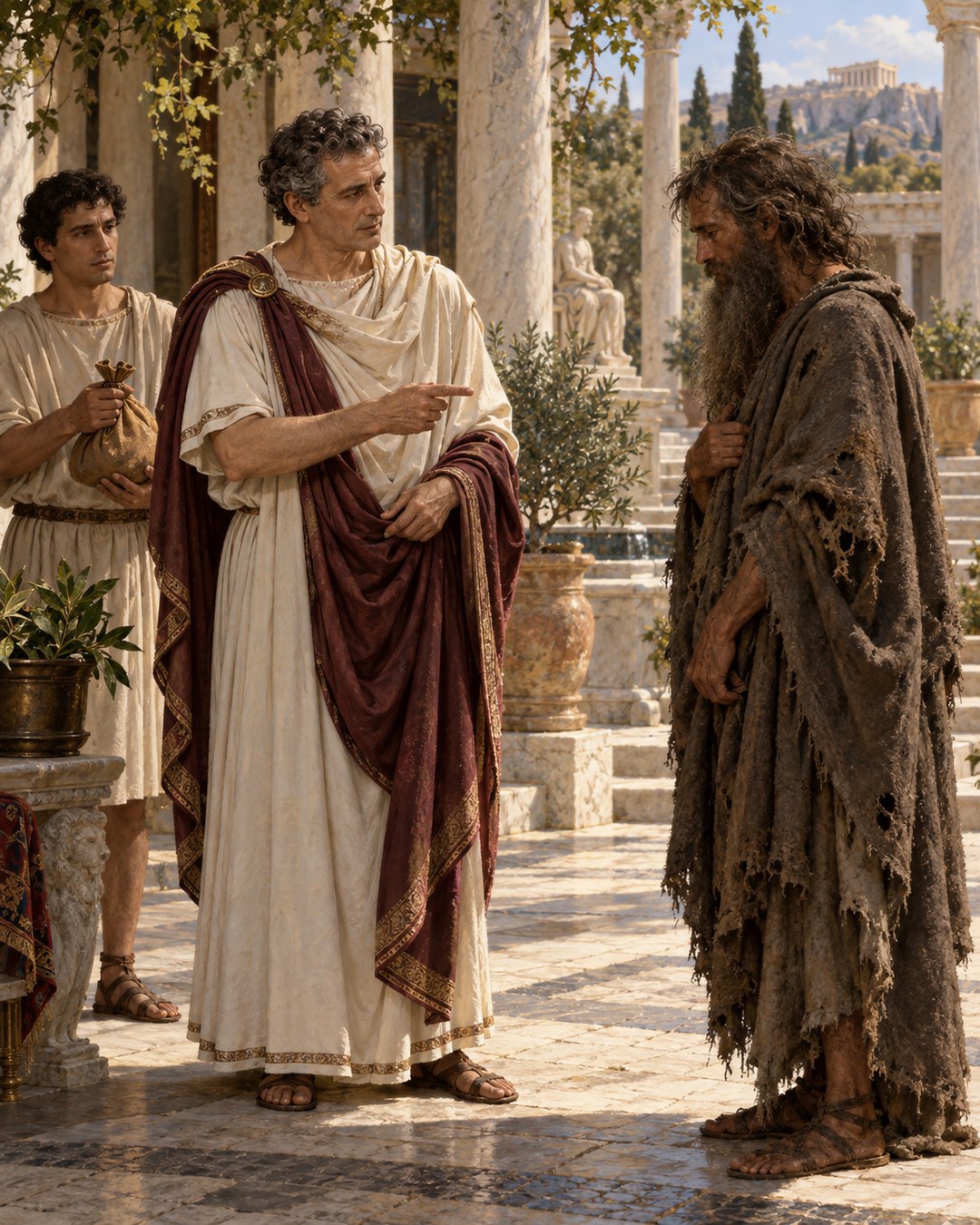
Herodes Saw a Beard and Cloak, but No Philosopher

The beard reached almost to the petitioner’s waist. Herodes Atticus still asked who he was. The man pointed, in effect, to the answer he was wearing: long hair, a philosopher’s cloak and the cultivated appearance of someone who had renounced ordinary concerns. He grew angry that an ex-consul celebrated for Greek eloquence could fail to … Read more

Cato’s Overseer Rose First and Went to Bed Last

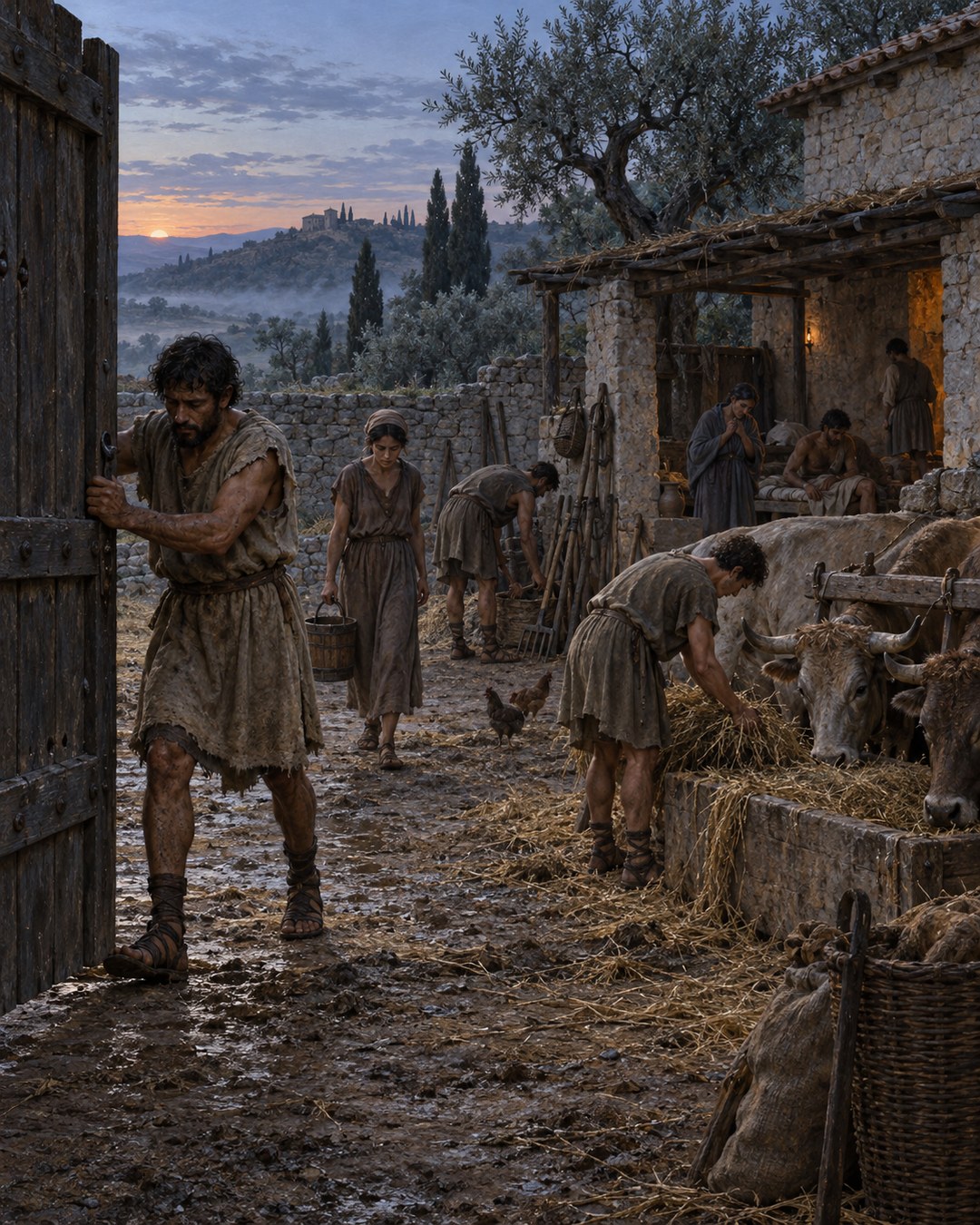
Before the overseer slept, he had to know who was in each bed, whether the gate was barred and whether the oxen had fodder. At dawn, Cato wanted him up before everyone else. Those two instructions are often read as a compact tribute to diligence. Inside On Agriculture, they form the outer frame of something … Read more

A Thrush Room Could Earn Sixty Thousand Sesterces

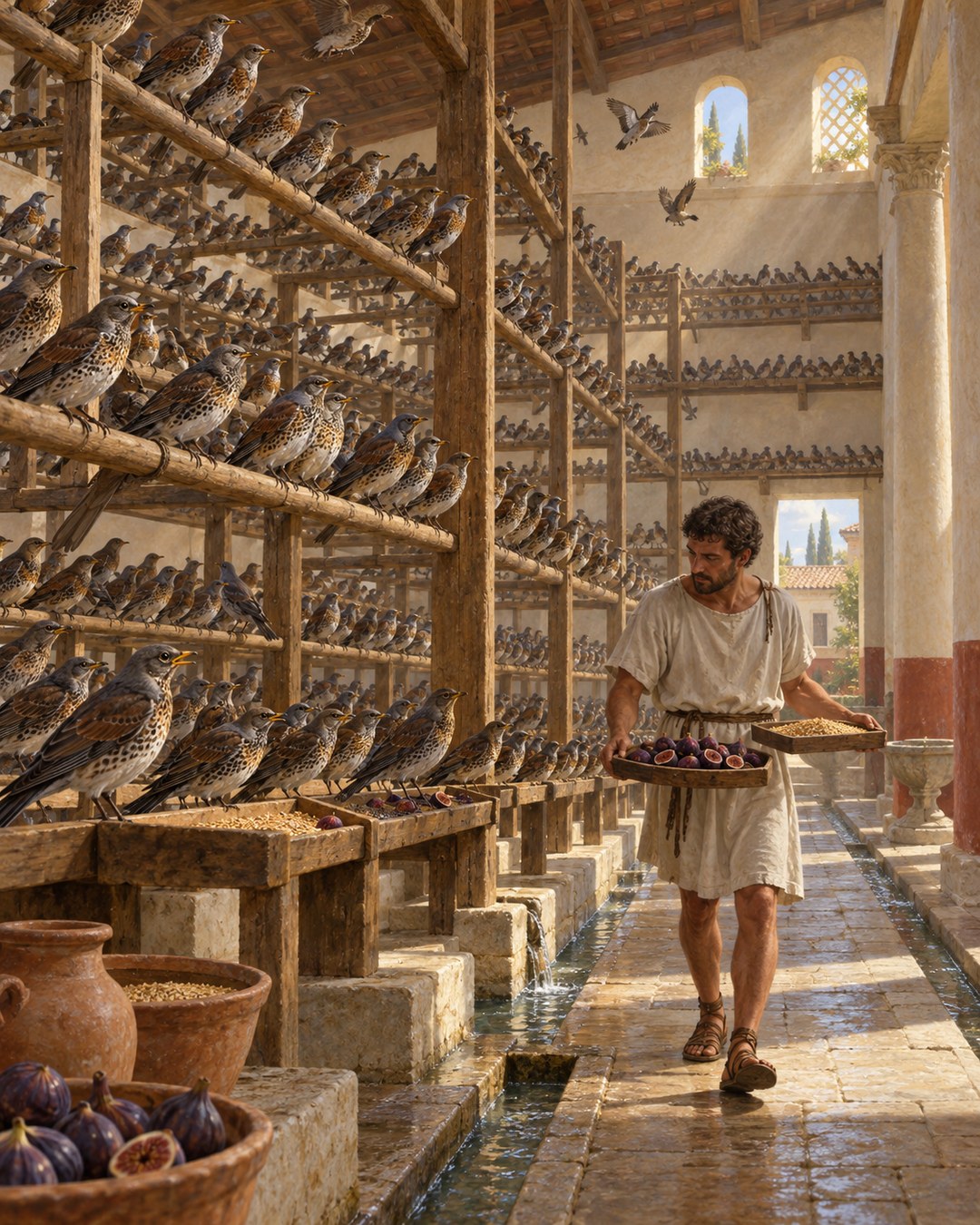
The profit began by making a migratory bird forget the view outside. Varro reports an extraordinary Sabine sale: five thousand fieldfares at three denarii apiece, producing sixty thousand sesterces from one aviary in one year. He immediately warns that such money needed the appetite of a banquet, triumph or dining club. Demand could spike. Birds … Read more

Three Guests Made a Beginning; Nine Made a Crowd

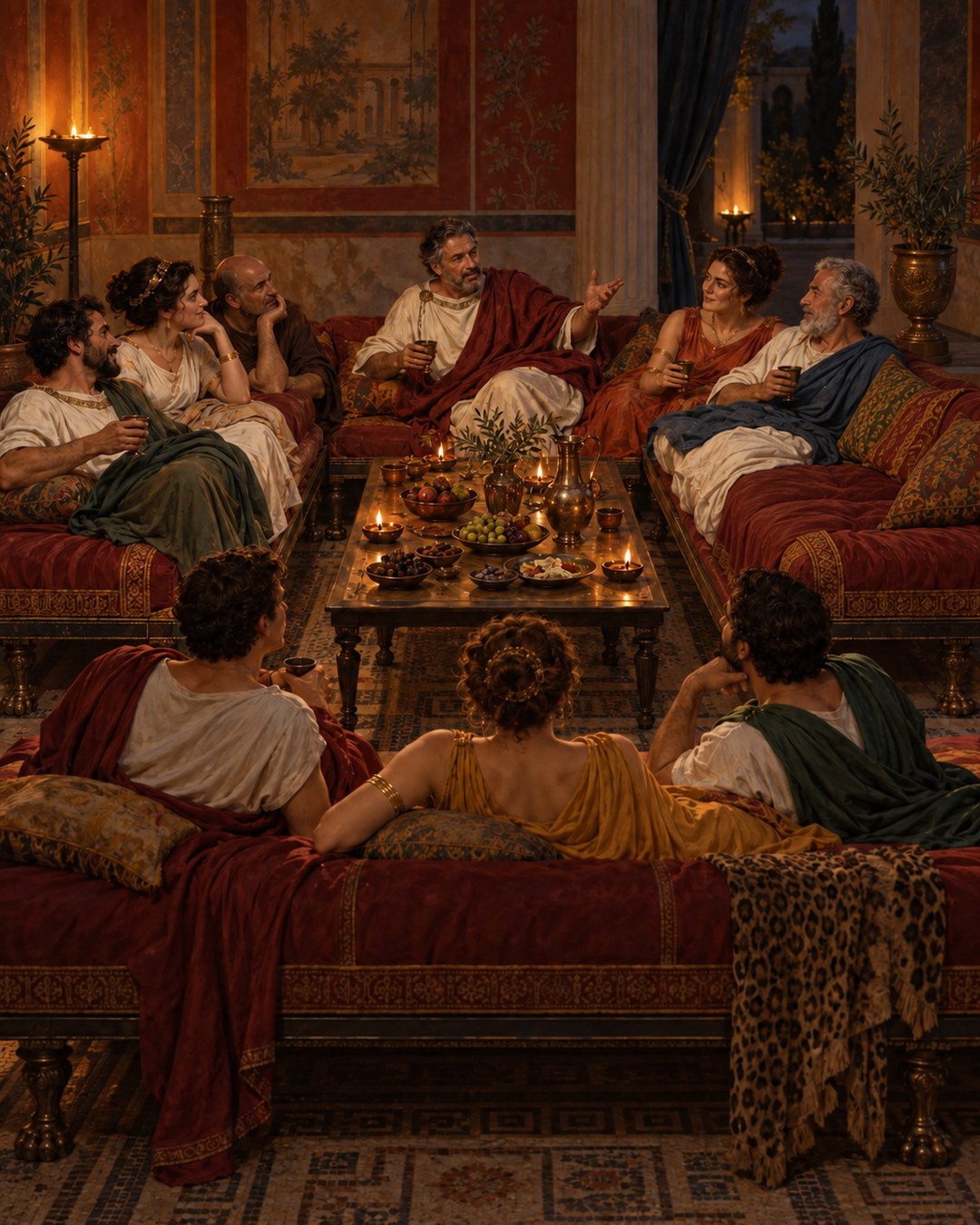
Nine was not a lucky ceiling. It was the point at which one conversation threatened to become a crowd. Marcus Varro mapped the ideal Roman dinner between divine numbers. The smallest company matched the three Graces; the largest matched the nine Muses. Fewer did not make a dinner, and more no longer reclined as one … Read more

Frontinus Made Aqueduct Crews Record Each Day’s Work

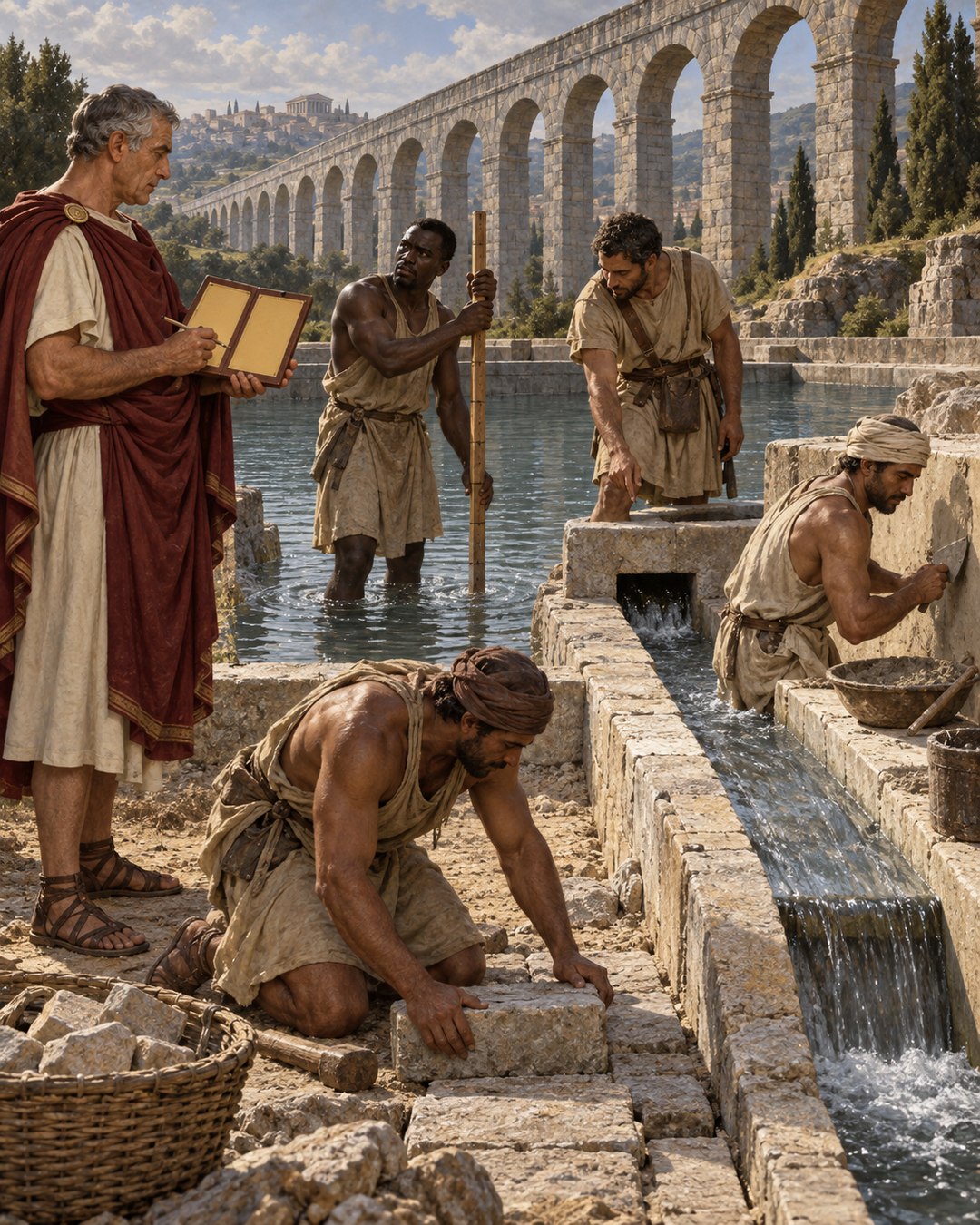
Frontinus wanted tomorrow’s aqueduct work written down before tomorrow began. Rome maintained two large gangs for its water system. One belonged to the State and numbered about 240 workers. The other belonged to Caesar, numbered 460 and dated to Claudius’s new aqueduct. Their specialists watched reservoirs, inspected structures, laid paving and repaired plaster. But a … Read more

Sealed Trenches Promised Wheat for Fifty Years

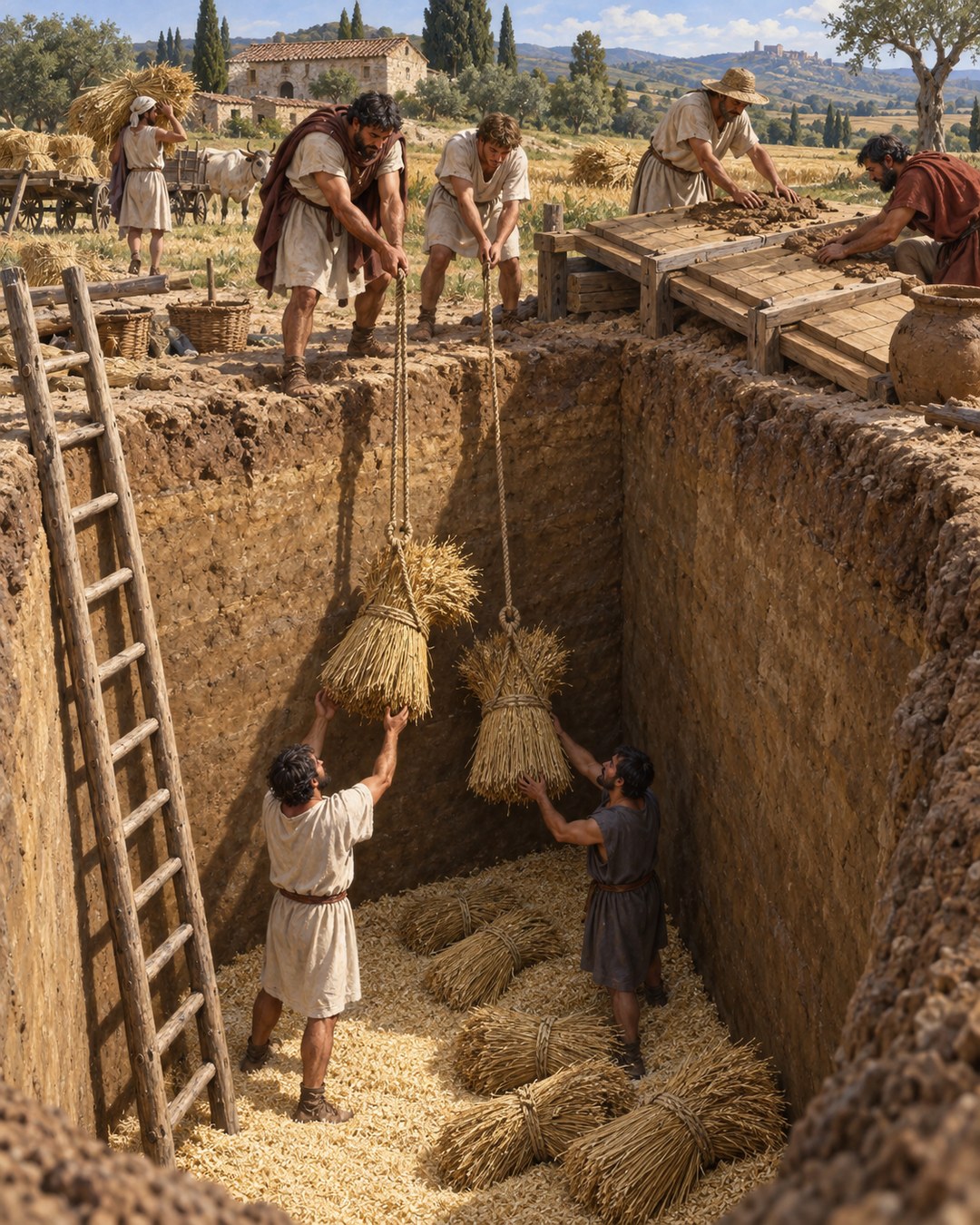
Fifty years was the promise attached to one sealed store of wheat. Pliny reports the figure from Varro while describing trenches called siri. They were dug in dry soil, bedded with chaff, filled with grain still in the ear and closed against incoming air. Under those conditions, Varro said wheat could last fifty years and … Read more

Heavy Grain Slid to the Edge of a Roman Threshing Floor

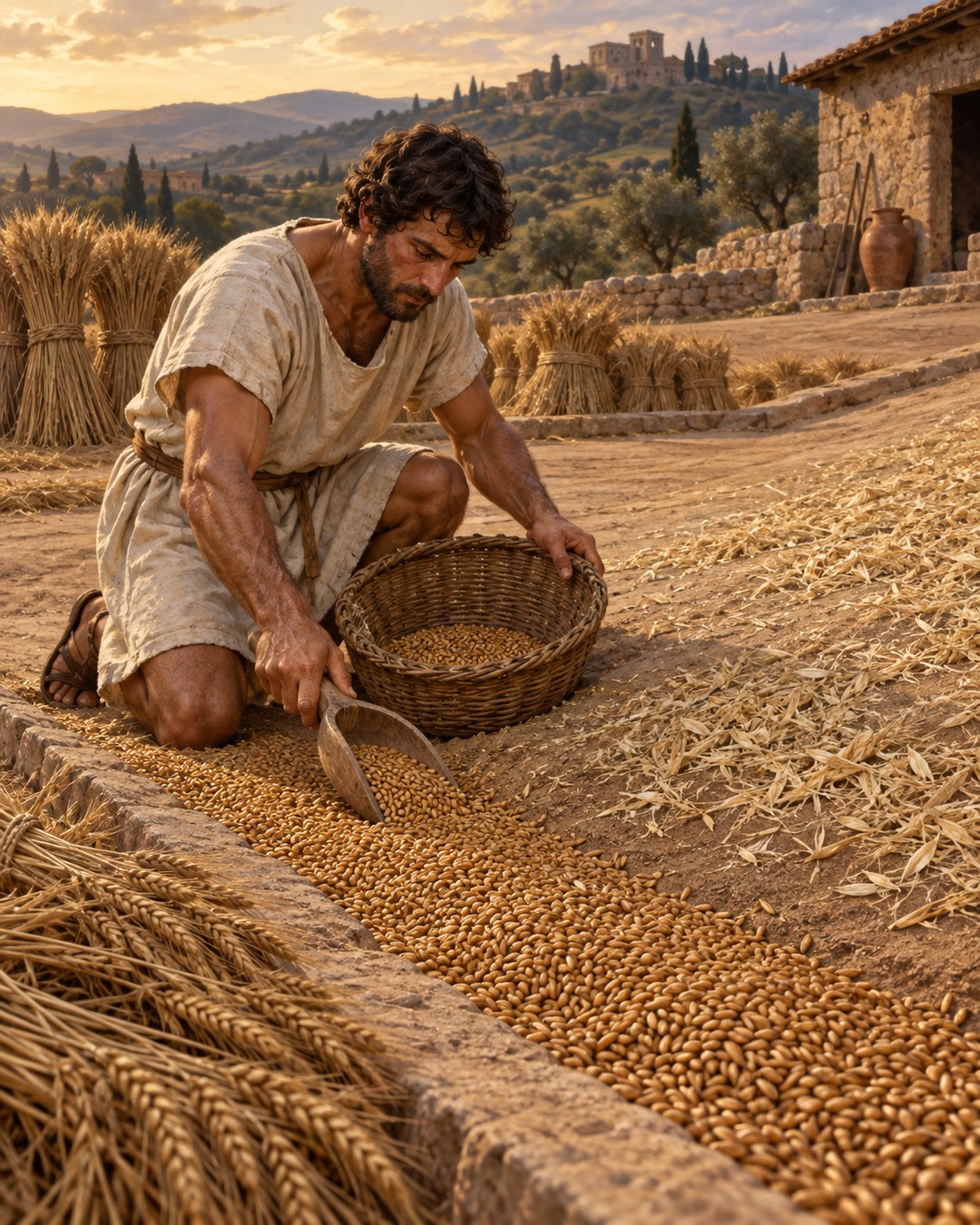
The best seed waited at the low edge of the floor. Pliny told farmers to reserve the grain that fell to the bottom of the threshing floor. It was the heaviest fraction, and in his account weight supplied the best practical sign of quality. The floor had already helped separate crop from straw and chaff. … Read more

Beehives Travelled Five Miles Upriver to Find New Flowers

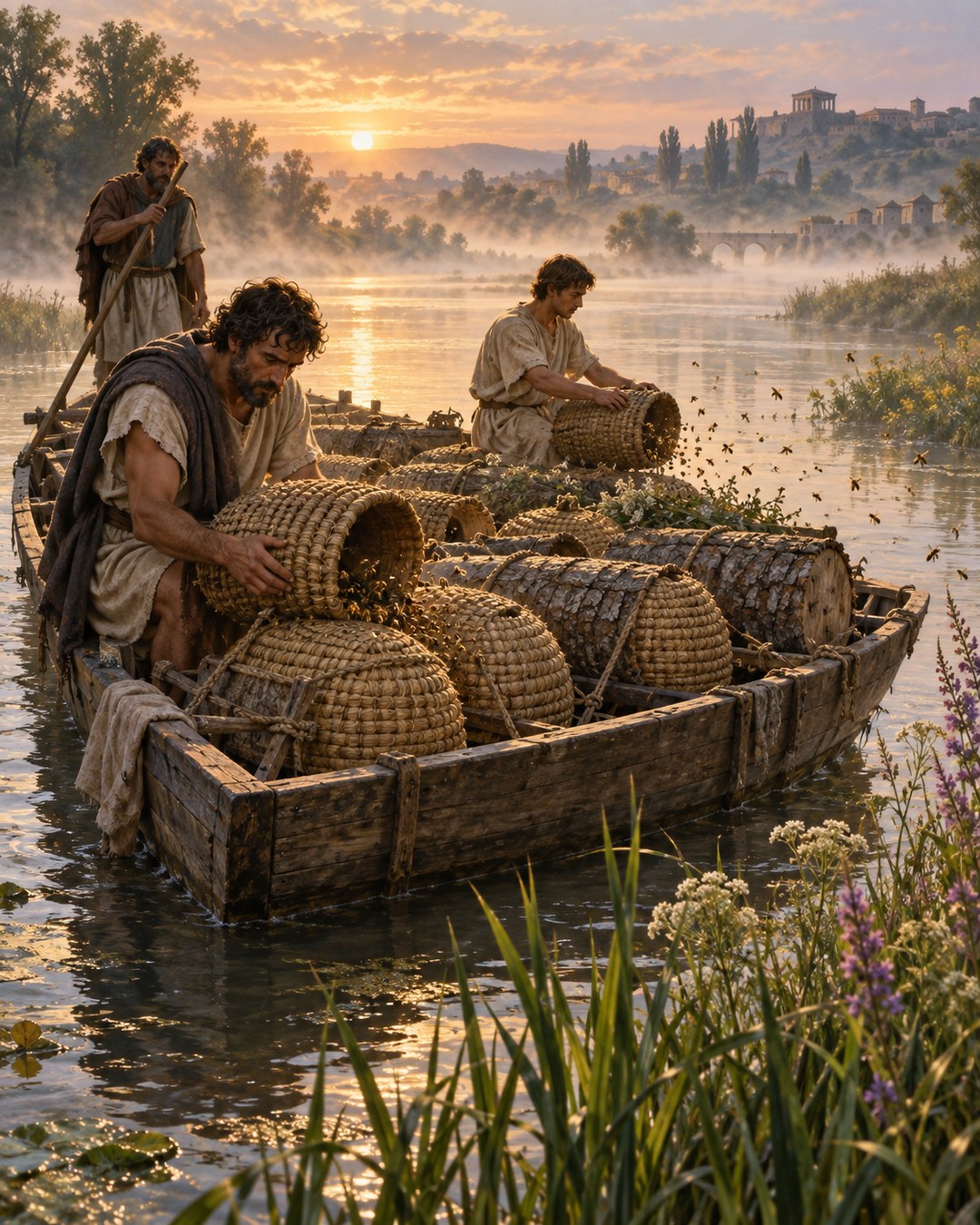
At night, Hostilia’s beehives went upriver. Pliny describes villagers on the Padus placing colonies in boats when nearby food failed. They carried the hives about five miles upstream in darkness. Morning released the bees into a new feeding area, and evening brought them back to the same floating base. The boat moved again from day … Read more

Augustus Wore Four Tunics and Still Feared Winter Sun

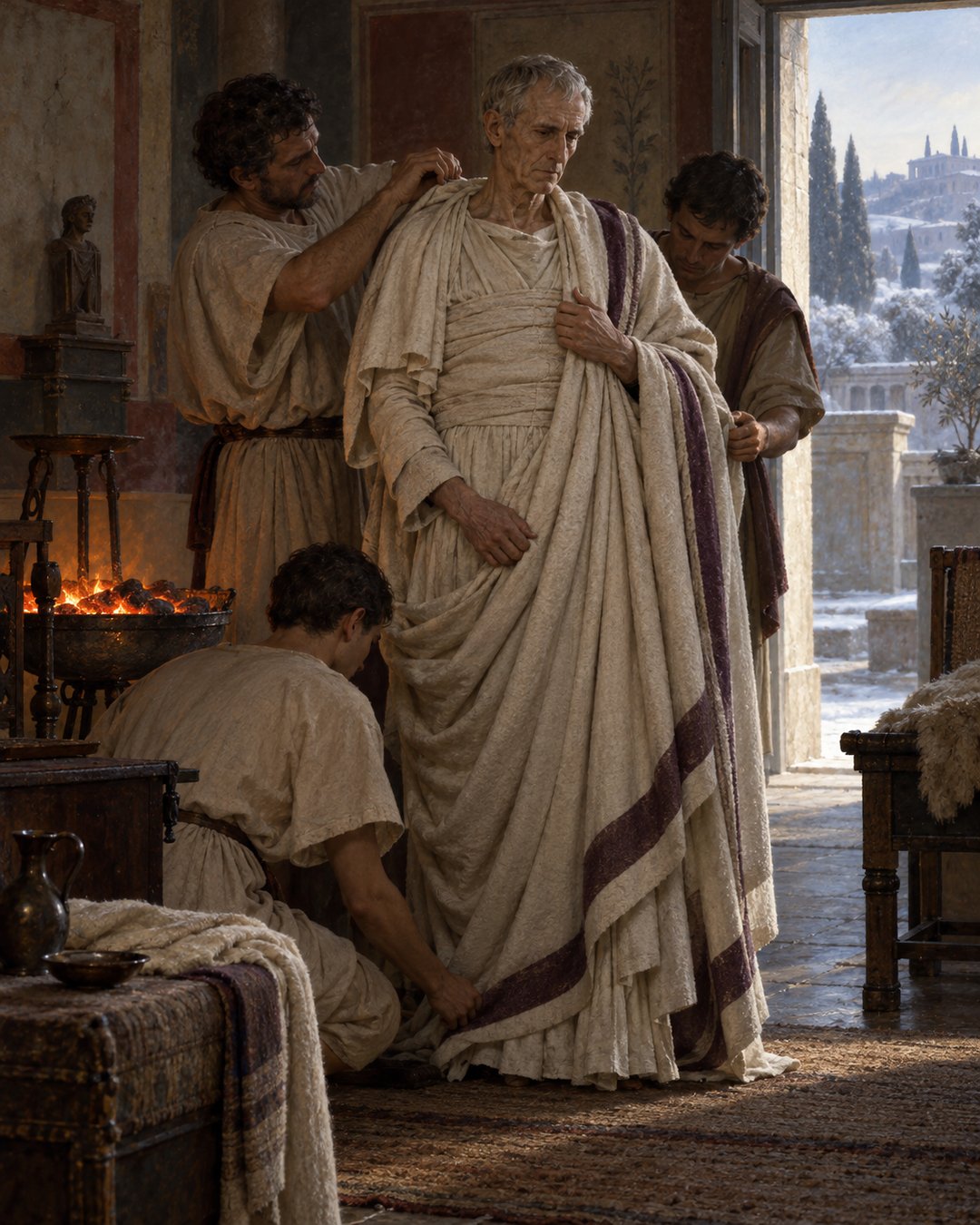
Four tunics stood between Augustus and a Roman winter. Suetonius adds a heavy toga, a woollen undershirt, a chest-protector, drawers and coverings for the legs. This was not the ceremonial wardrobe of a ruler displaying rank. It was a practical barrier assembled around a man who, his biographer says, could not easily endure cold or … Read more