Roman Roof Tiles Made Rain Follow Rules
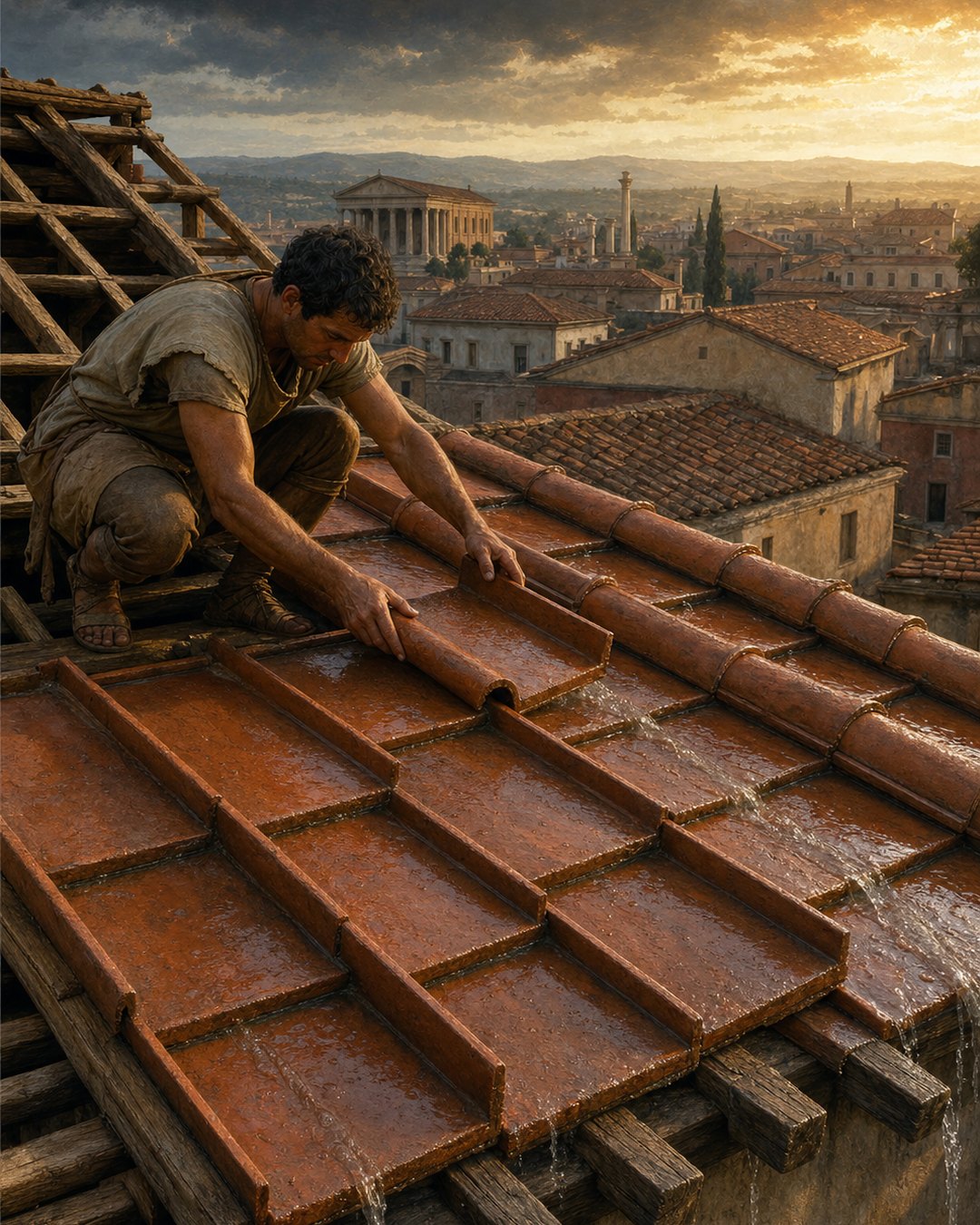
Rain did not need to be stopped on a Roman roof. It needed to be persuaded downhill. Flat fired-clay tegulae lay in overlapping rows, each with raised edges. Curved imbrices covered the long joints between them. Water struck thousands of hard surfaces, crossed one tile after another and finally left the building at the eaves. … Read more
Roman Anchors Made Stopping a Ship Active Work

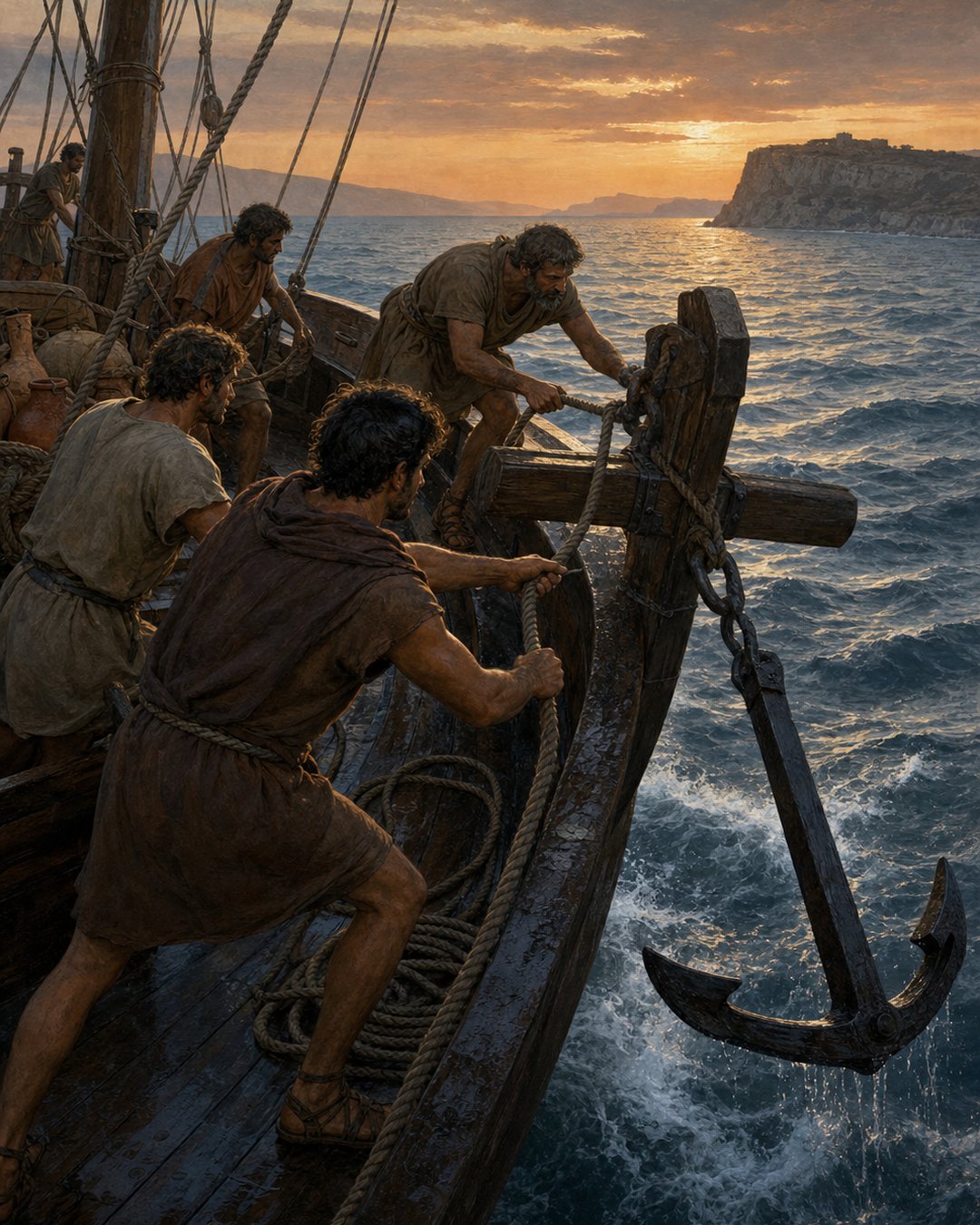
A ship could lower a heavy anchor and still keep moving. Weight carried the device through dark water, but stopping began only when a fluke met the seabed, the stock rolled it into position and the cable pulled at an angle low enough to make it bite. Wind continued pushing every plank above. Roman sailors … Read more

Pompeii’s Stepping Stones Made the Street Crossable

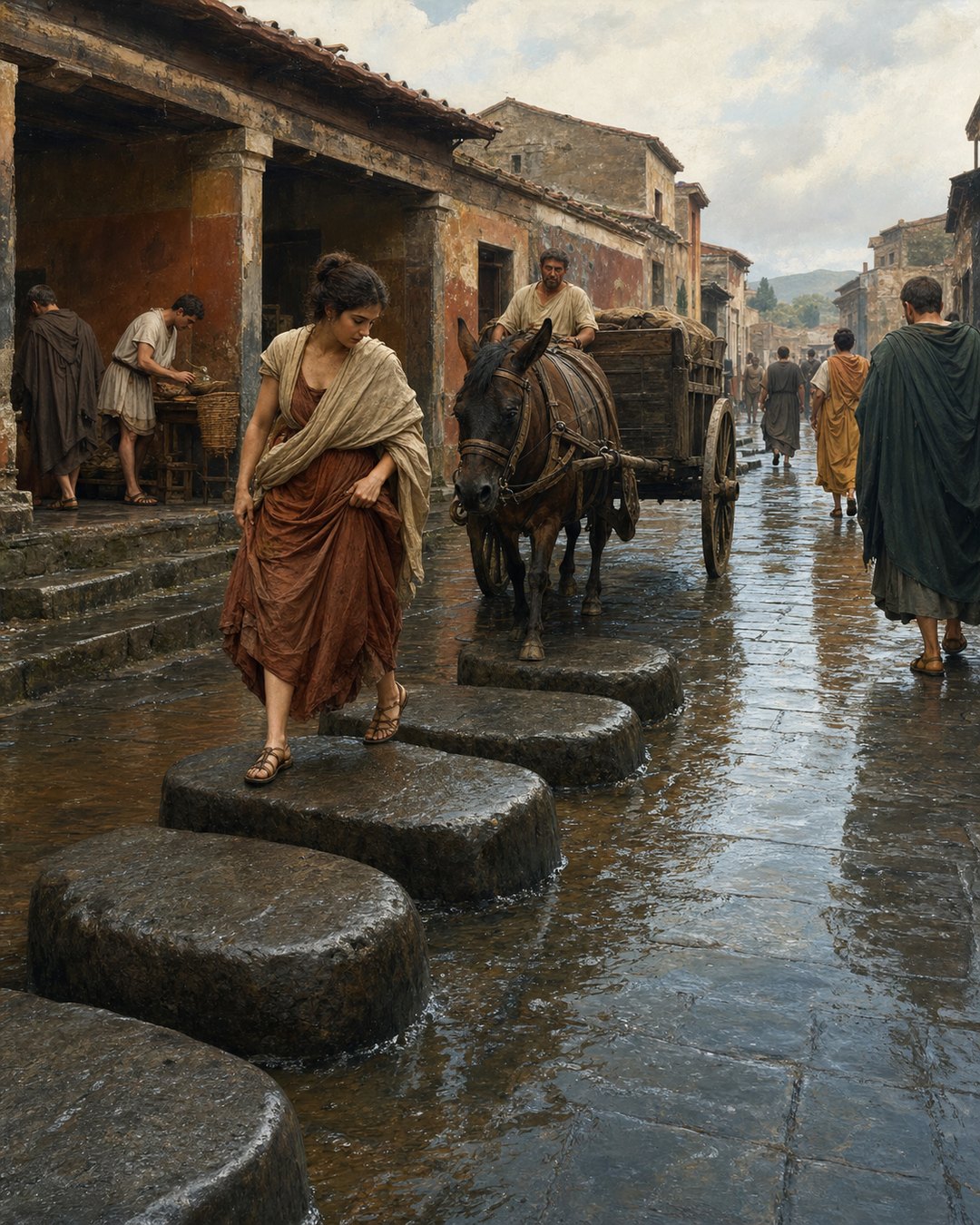
After rain, a Pompeian street did not become an empty ribbon of clean stone. Water followed the lower carriageway, carrying mud, animal waste, spilled food, and workshop debris between high sidewalks. A pedestrian approaching from one side faced a shallow urban channel rather than a modern curb and painted crossing. Pompeii answered with rock. Large … Read more

Roman Cranes Turned Footsteps into Lifting Power

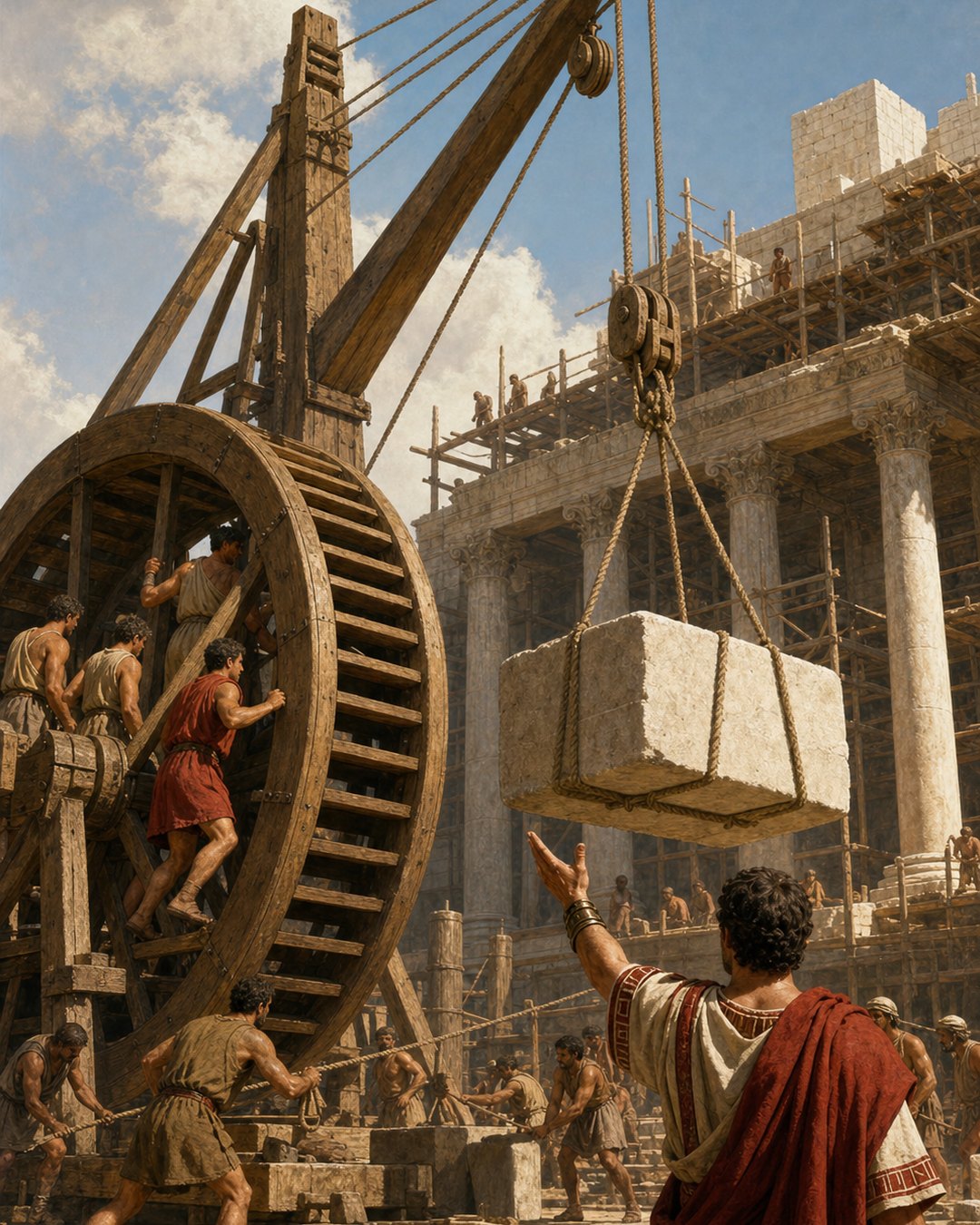
A massive Roman stone did not rise because a workforce suddenly became stronger. It rose because timber, rope, and rotation rearranged what human effort could do. Men turned a windlass, pushed a capstan, or walked inside a tall wooden wheel. Far above their feet, a block left the ground a little at a time. The … Read more

Roman Latrines Made Privacy a Public Negotiation

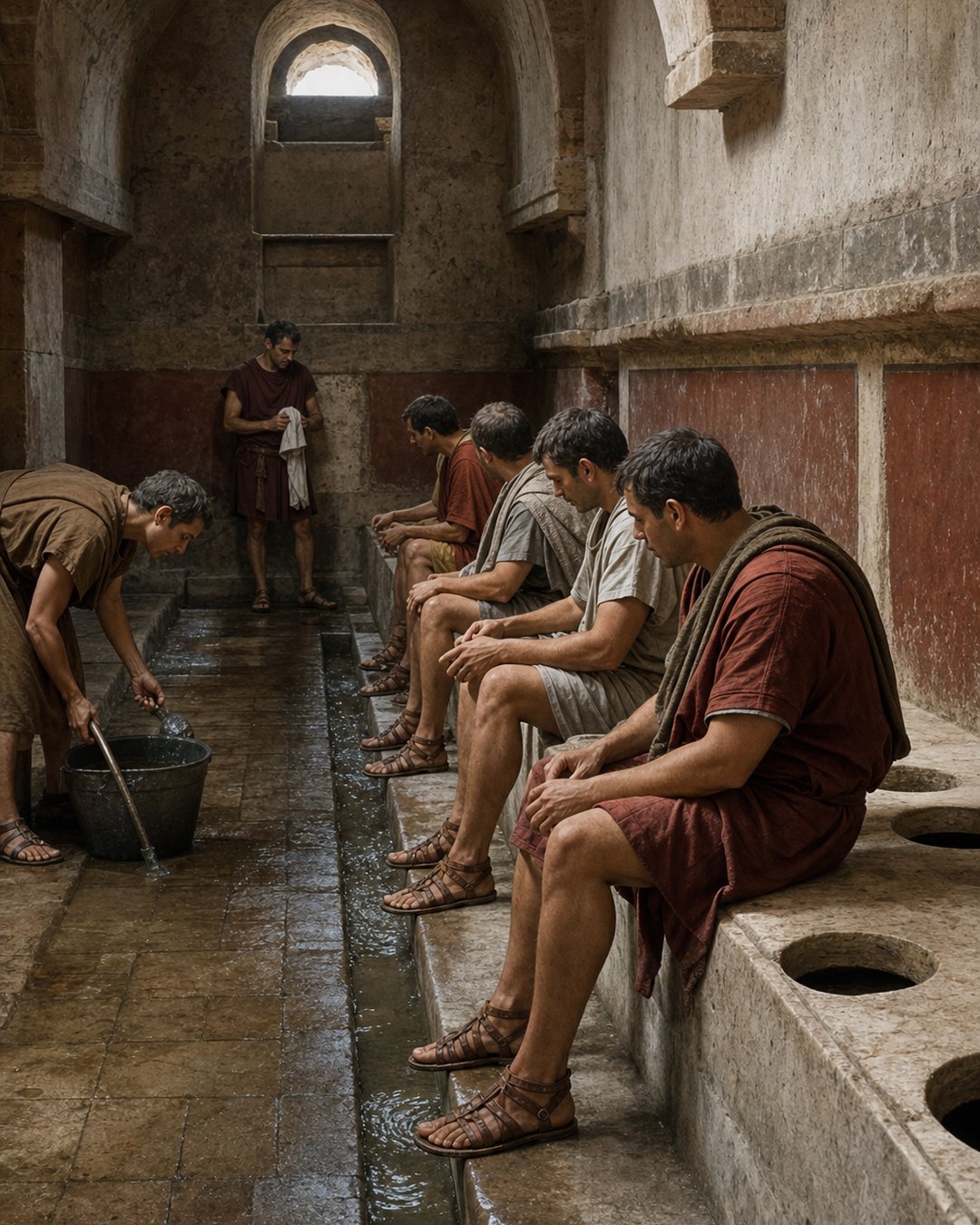
A Roman public latrine could place a row of people shoulder to shoulder on one stone bench. Openings were spaced for bodies, not separated by doors. Water might move in a channel at their feet and another drain below. Conversation, silence, waiting, smell, and maintenance occupied the room together. The arrangement is easy to turn … Read more

Why Roman Milestones Made Roads Measurable

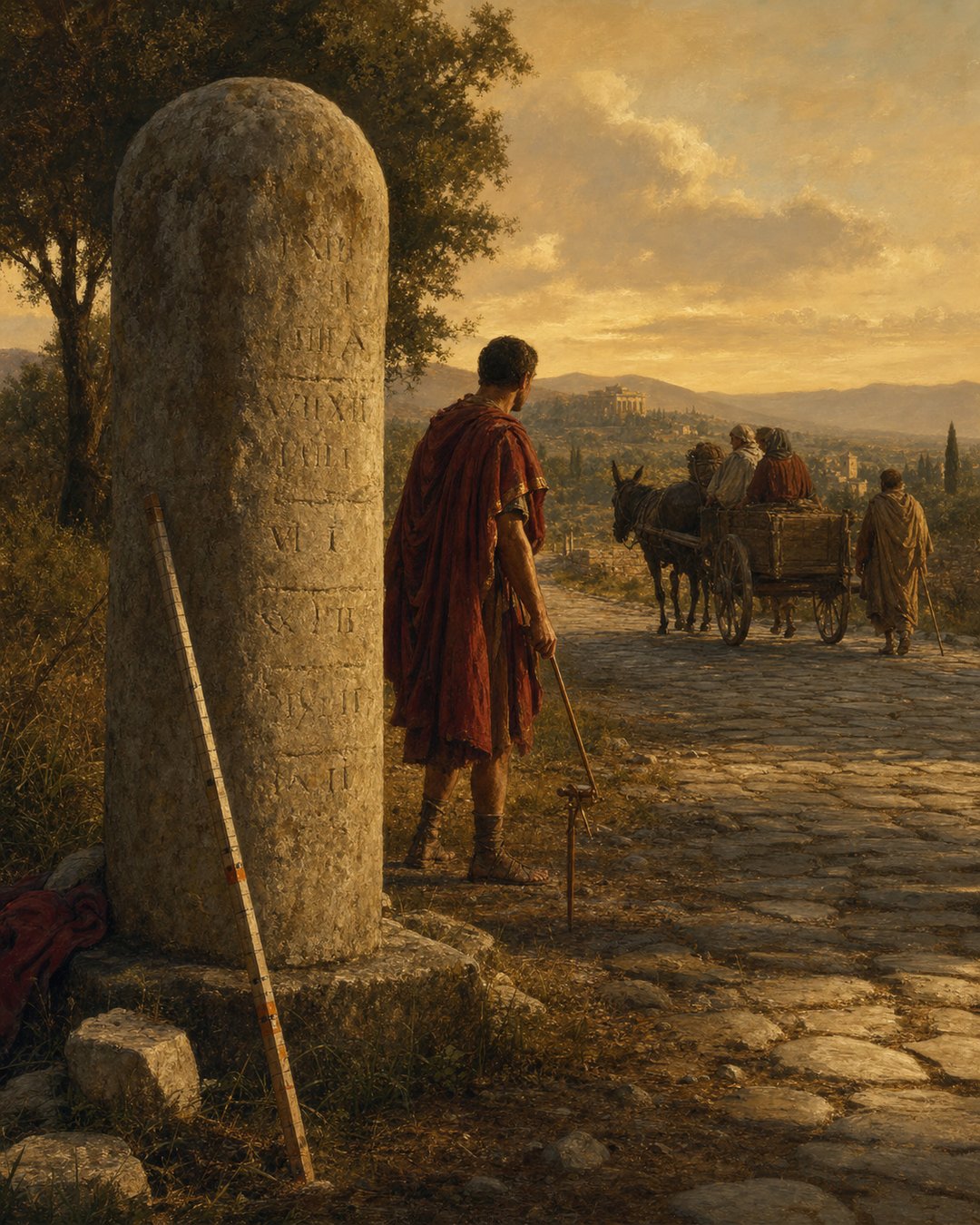
A Roman road was not only a strip of hard surface. It was also a measured promise. A traveler could walk over fitted stones, pass tombs and fields, watch the next rise of land, and then meet a marker that said the journey was not just felt in tired legs. It was counted. That small … Read more

How Roman Surveyors Made Boundaries Measurable

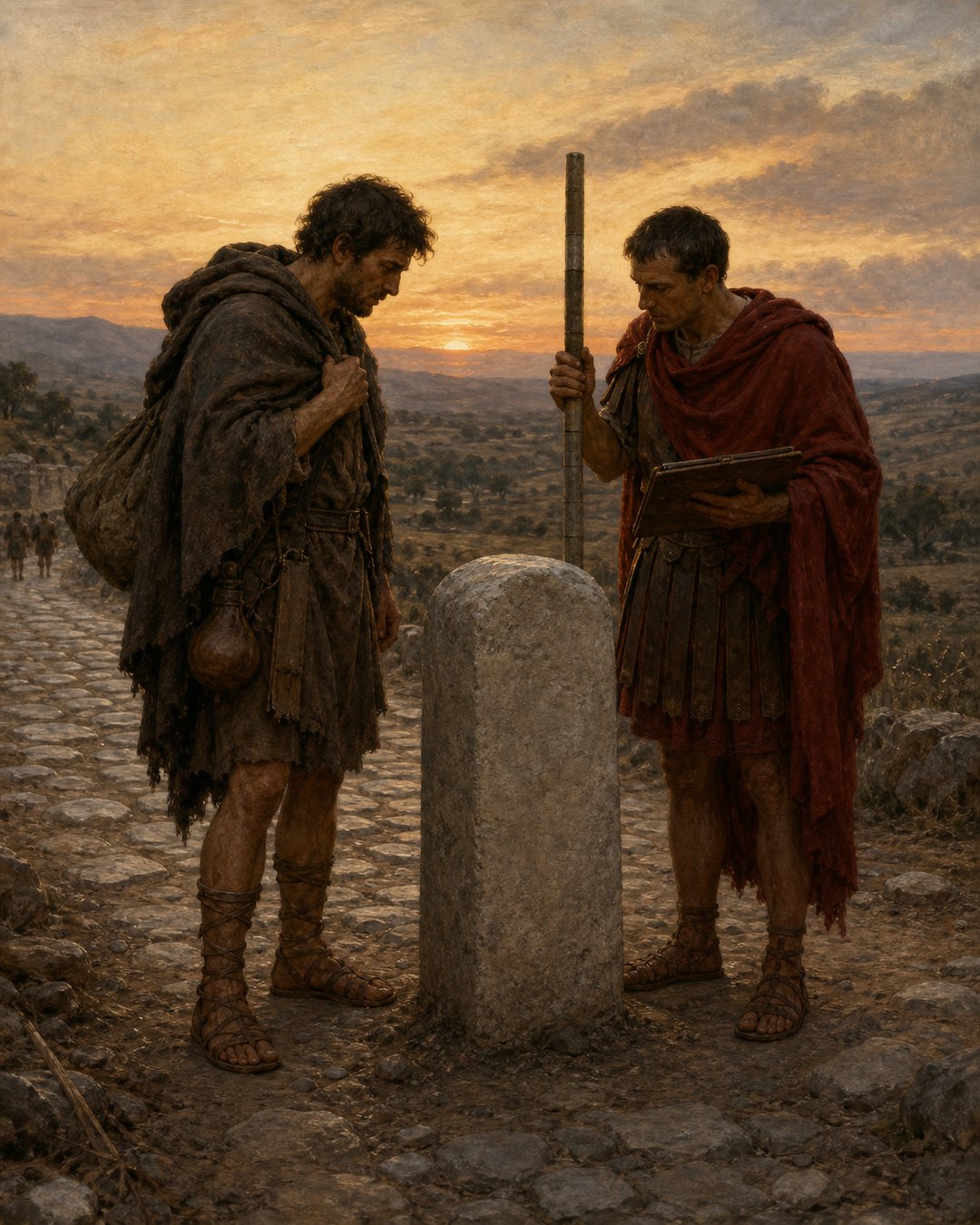
A Roman boundary could look ordinary from a distance: a stone, a line of sight, a field edge, a road, or a remembered limit between neighbors. Yet the moment land became measurable, it became easier to tax, assign, defend, and dispute. Measurement did not remove conflict. It gave conflict a public shape. Roman surveyors made … Read more

Why Roman Mansiones Made Imperial Travel Reliable

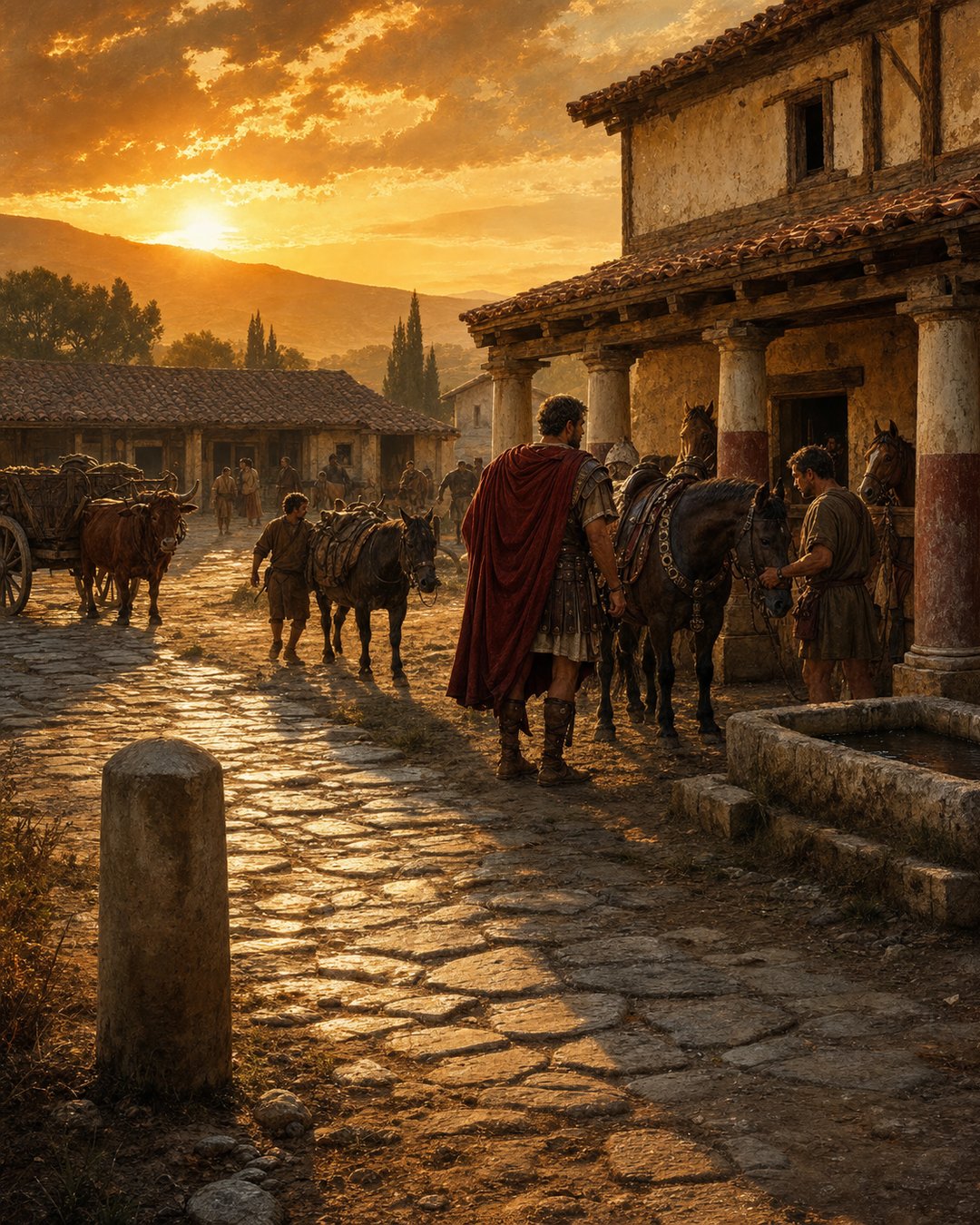
A Roman road can look self-sufficient in the imagination: straight stone, disciplined engineering, and a line across the landscape. But a road without places to stop is only a hard surface that exhausts people and animals. Roman mansiones made imperial travel reliable because they turned distance into a chain of known halts. Arrival, rest, repair, … Read more

Why Roman Burial Clubs Made Memory Affordable

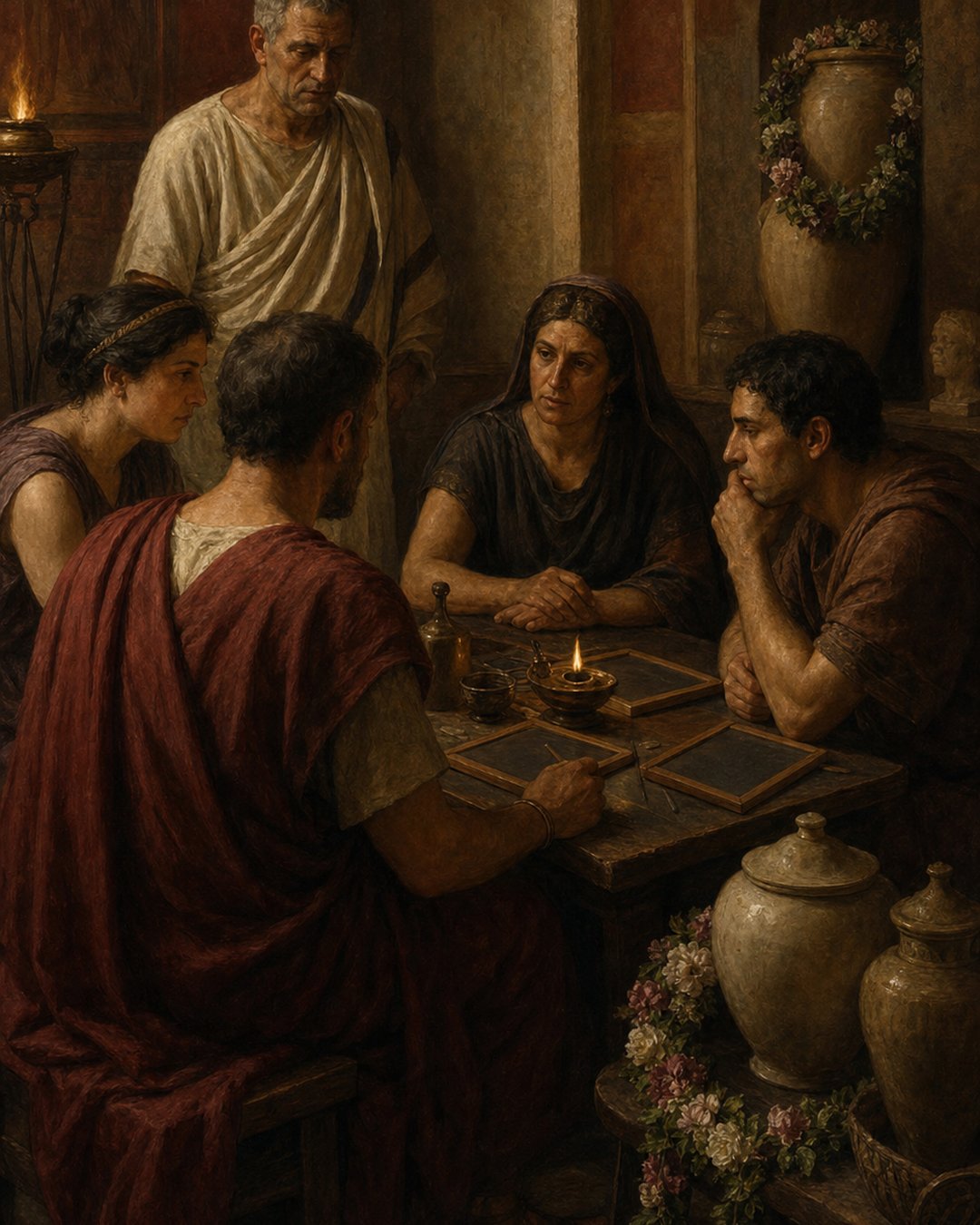
Death exposed Roman inequality with unusual cruelty. Some families could turn grief into monuments; others faced the fear of being forgotten, mishandled, or left without the rituals that made a life socially complete. Roman burial clubs made memory affordable because they turned funerary care into a collective obligation. A modest association could give ordinary people … Read more

Why Roman Bridges Made Rivers Feel Governable

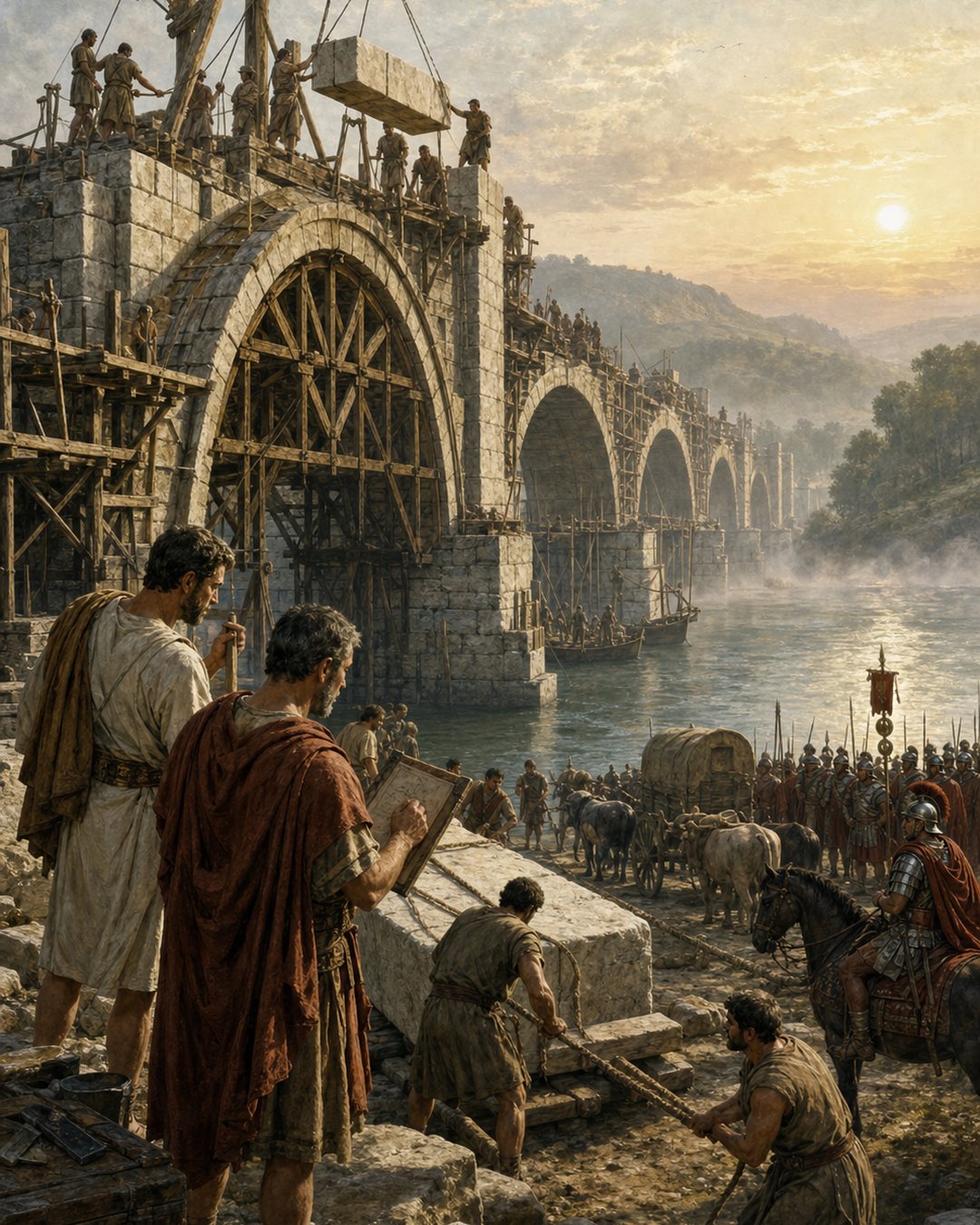
A river is not only water. It is delay, risk, negotiation, weather, memory, and the chance that movement will fail at exactly the wrong place. Rome understood that a crossing could be political before anyone called it that. Roman bridges made rivers feel governable because they turned an uncertain edge into a repeated route. Stone, … Read more