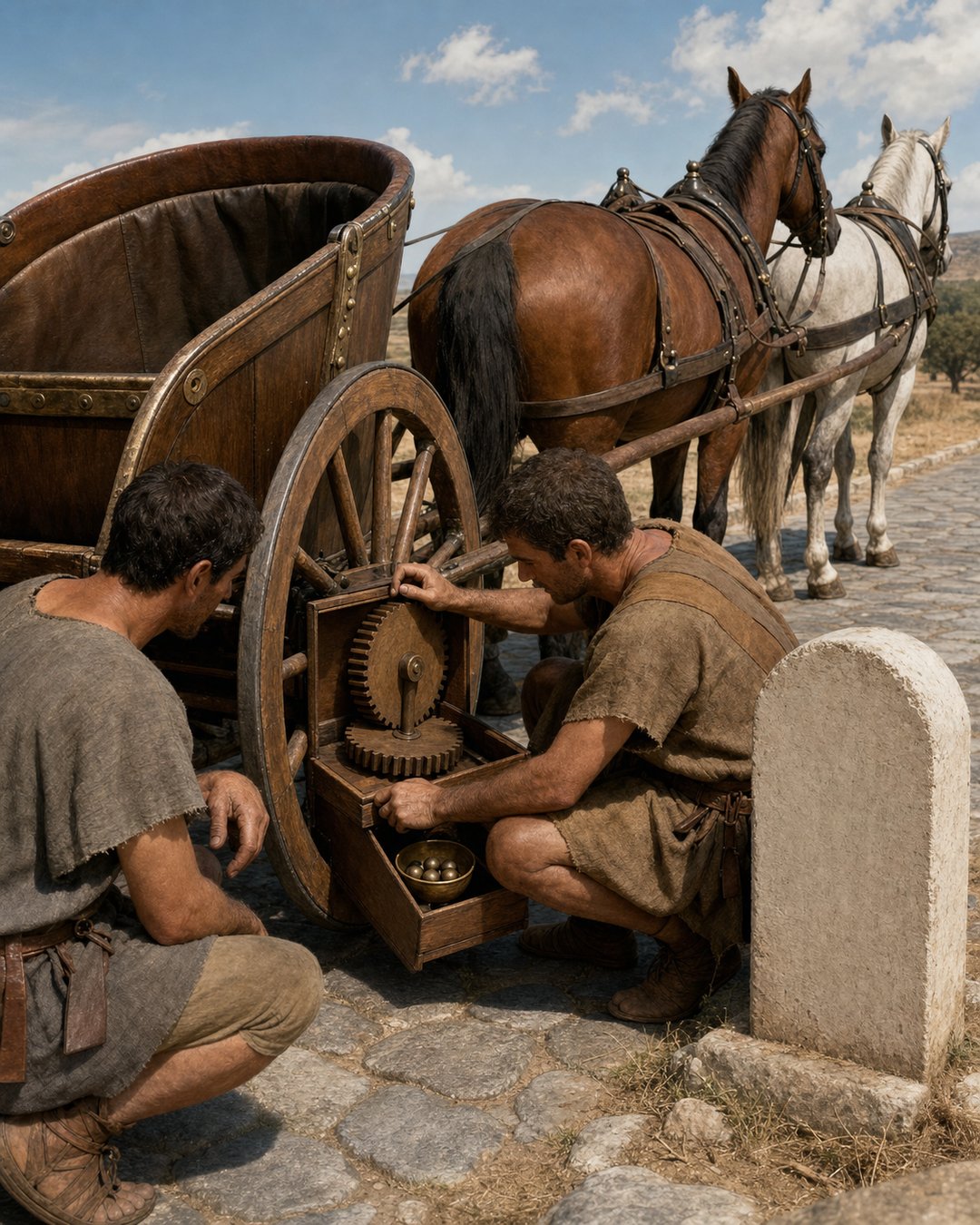
A Bronze Ball Counted Each Roman Mile

A traveller did not have to stop, look back or ask how far the chariot had gone. In Vitruvius’s design, the vehicle answered with a sound from inside its own body. One small ball fell through a channel and struck a bronze vessel. The noise marked a mile. At day’s end, the balls collected below … Read more
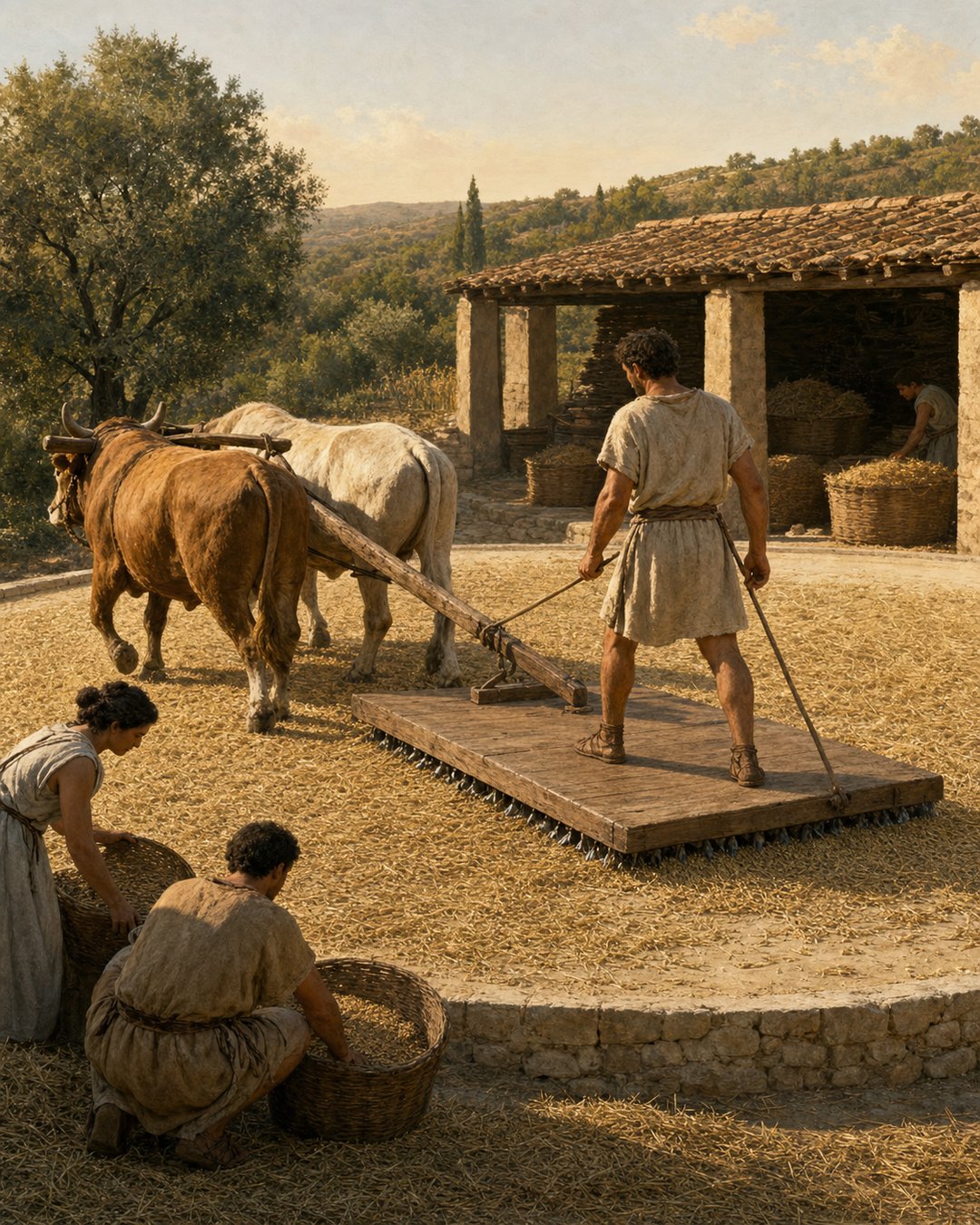
Hooves, Flint and Wind Separated a Roman Harvest

The grain reached the farmyard still fastened to ears, mixed with straw and vulnerable to a change in the sky. It left as heavy kernels gathered in baskets. Between those states stood a round patch of engineered ground. Varro treats threshing as a chain of decisions. The crop had to arrive in the right form. … Read more

Four Letters Let Cicero Escape Pompey’s Grammar Trap

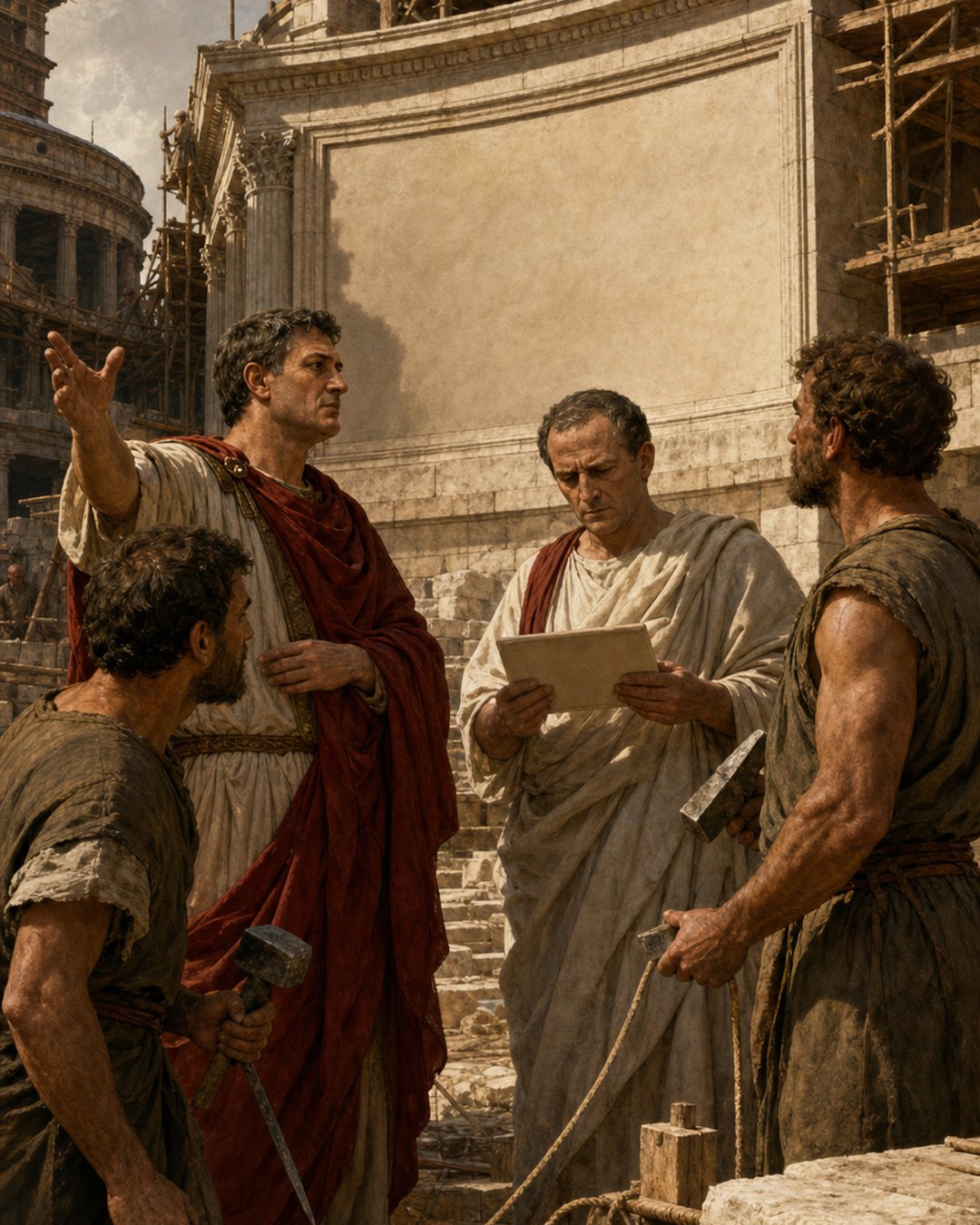
Pompey had conquered armies, crossed seas and accumulated honours. Four letters on a theatre still presented a problem he did not want to decide alone. The inscription was meant to record his third consulship. The grammatical dispute turned on the ending of one Latin word: should the monument say tertium or tertio? Learned Romans defended … Read more

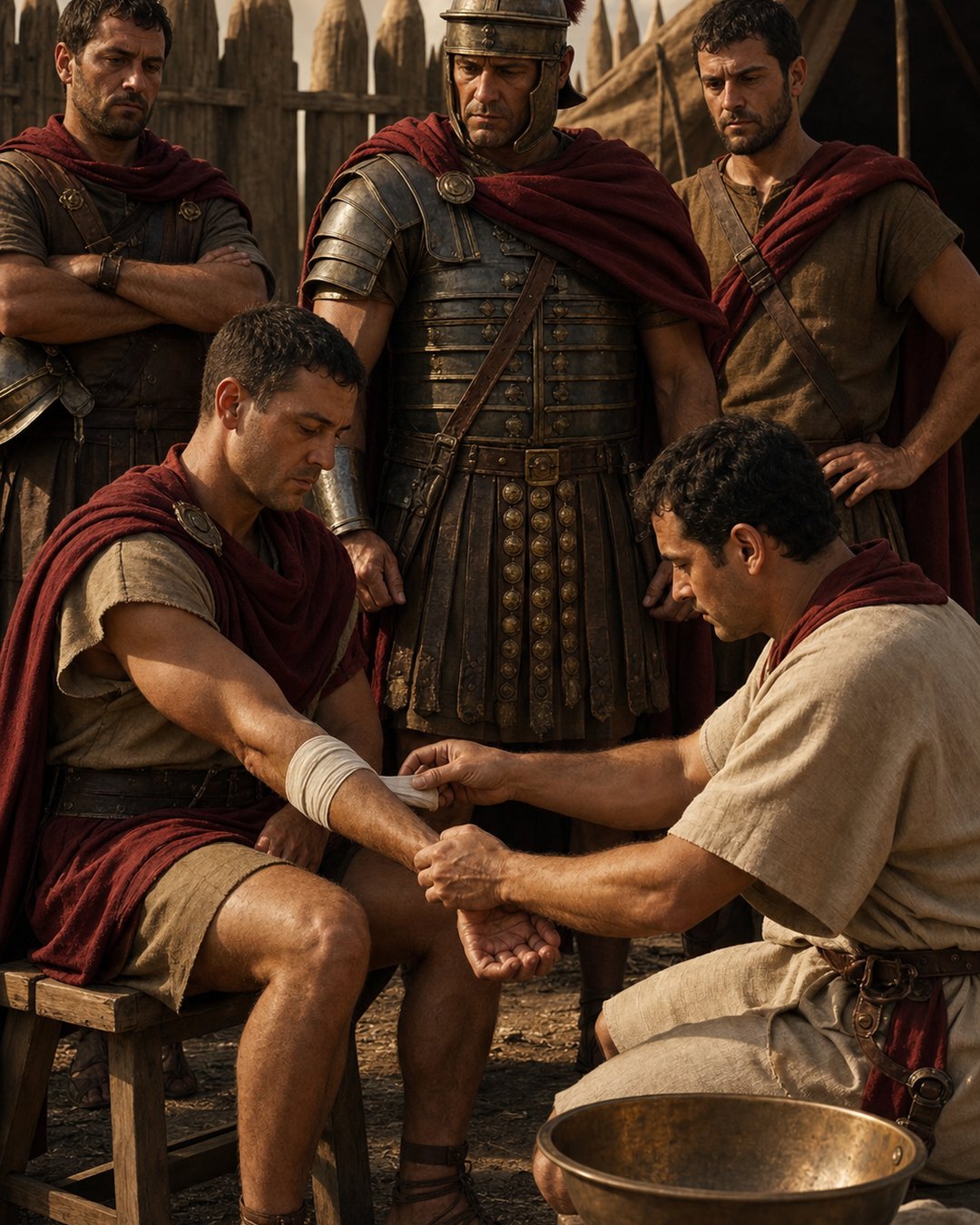
An Opened Vein Marked a Roman Soldier with Disgrace

The order did not send a Roman soldier to the whipping post or the execution ground. It sent him to have a vein opened. Aulus Gellius preserves the punishment in a chapter only a few sentences long. He calls it an old military penalty and says its purpose was disgrace. Blood was deliberately let from … Read more

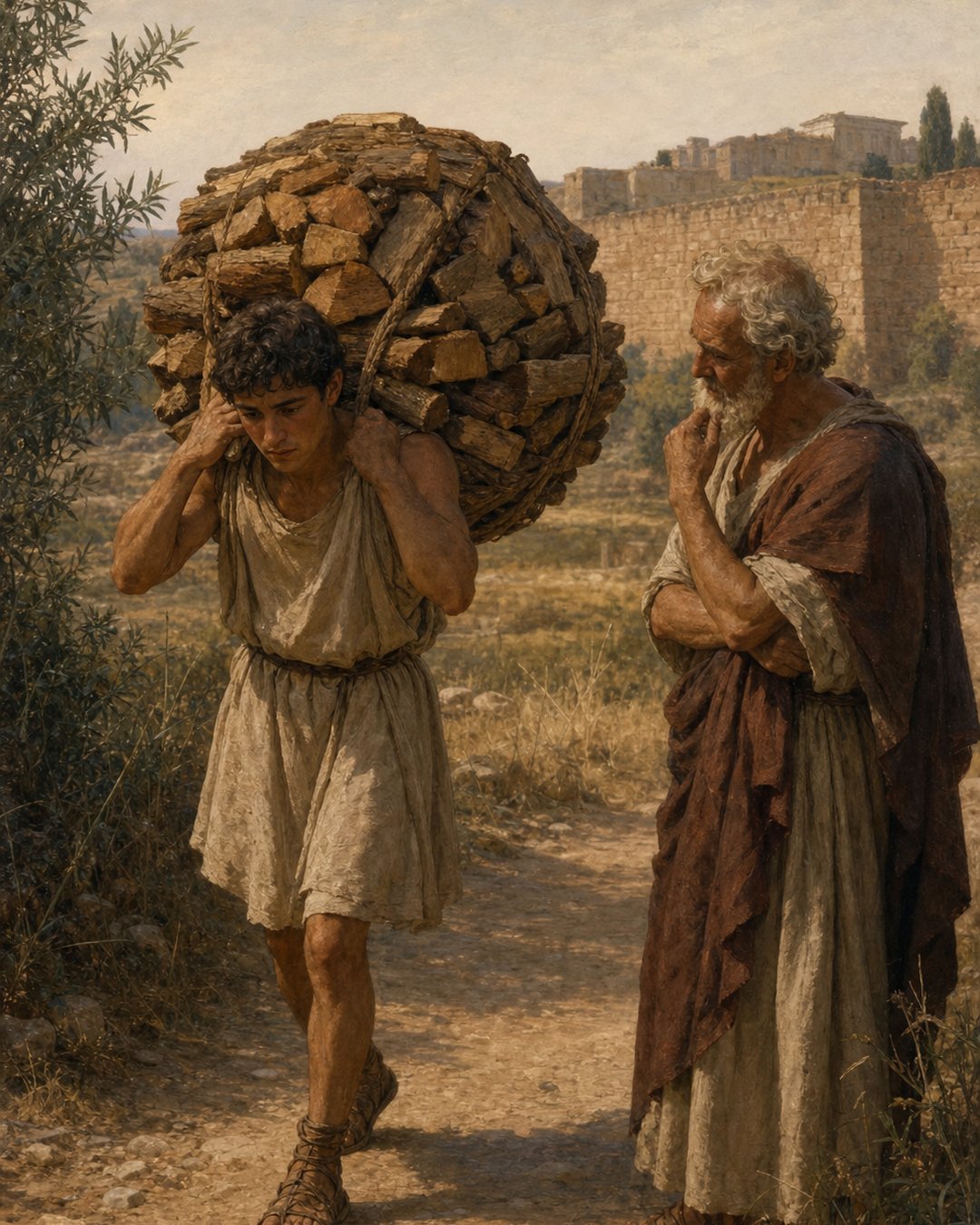
One Short Rope Revealed Protagoras Before Philosophy

Before Protagoras entered philosophy, a bundle of firewood made someone stop him on the road. Aulus Gellius says the young man earned his living as a hired porter. He was carrying many blocks of wood from the countryside into Abdera, bound with a short rope. The load was awkward, yet he walked easily and quickly. … Read more

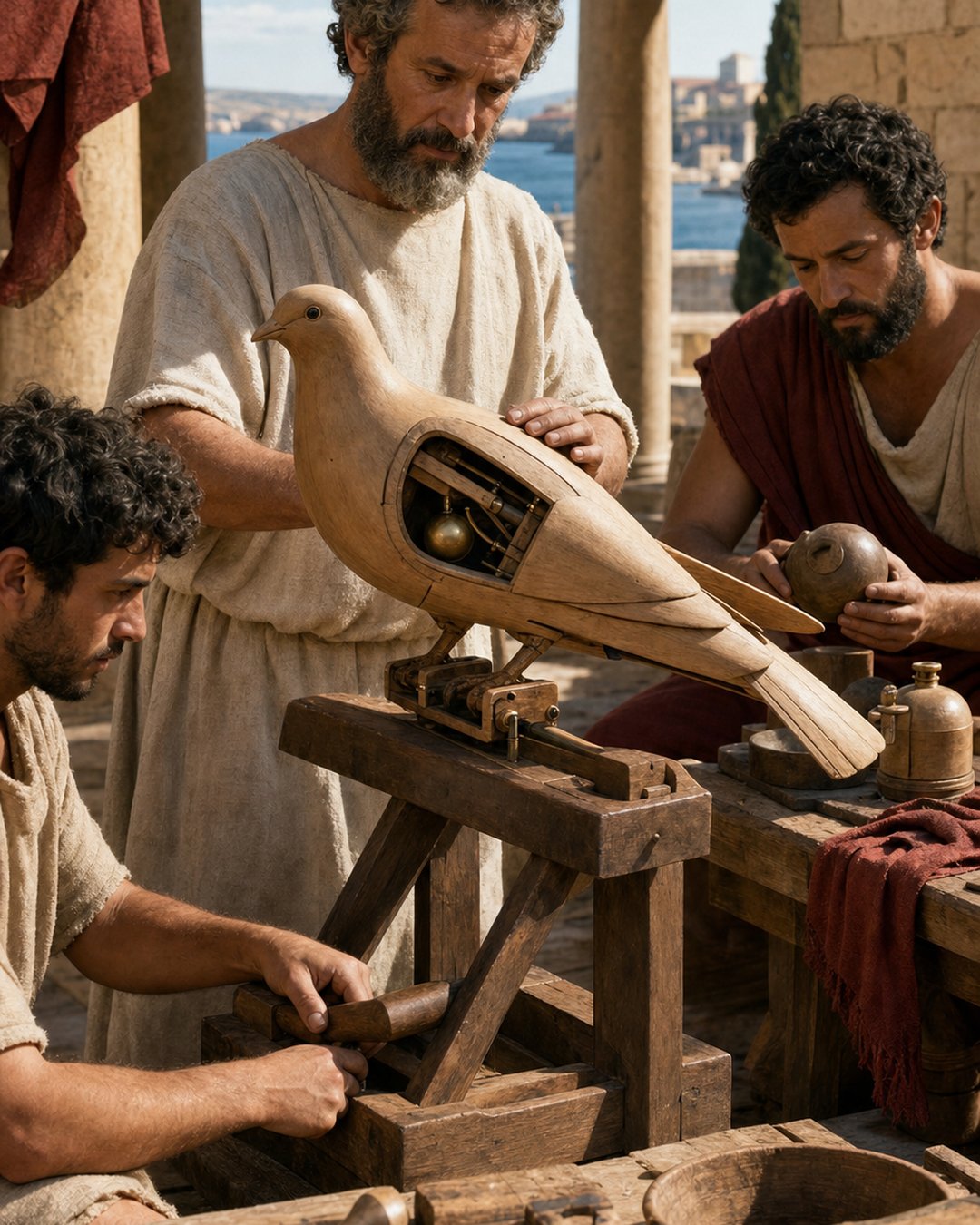
Weights and Hidden Air Made Archytas’s Wooden Dove Fly

The most useful detail in the story of Archytas’s flying dove is not that it flew. It is that it could not take off again. Aulus Gellius reports a wooden model made by Archytas of Tarentum. Balanced by weights and moved by a hidden current of enclosed air, the dove crossed the boundary between crafted … Read more

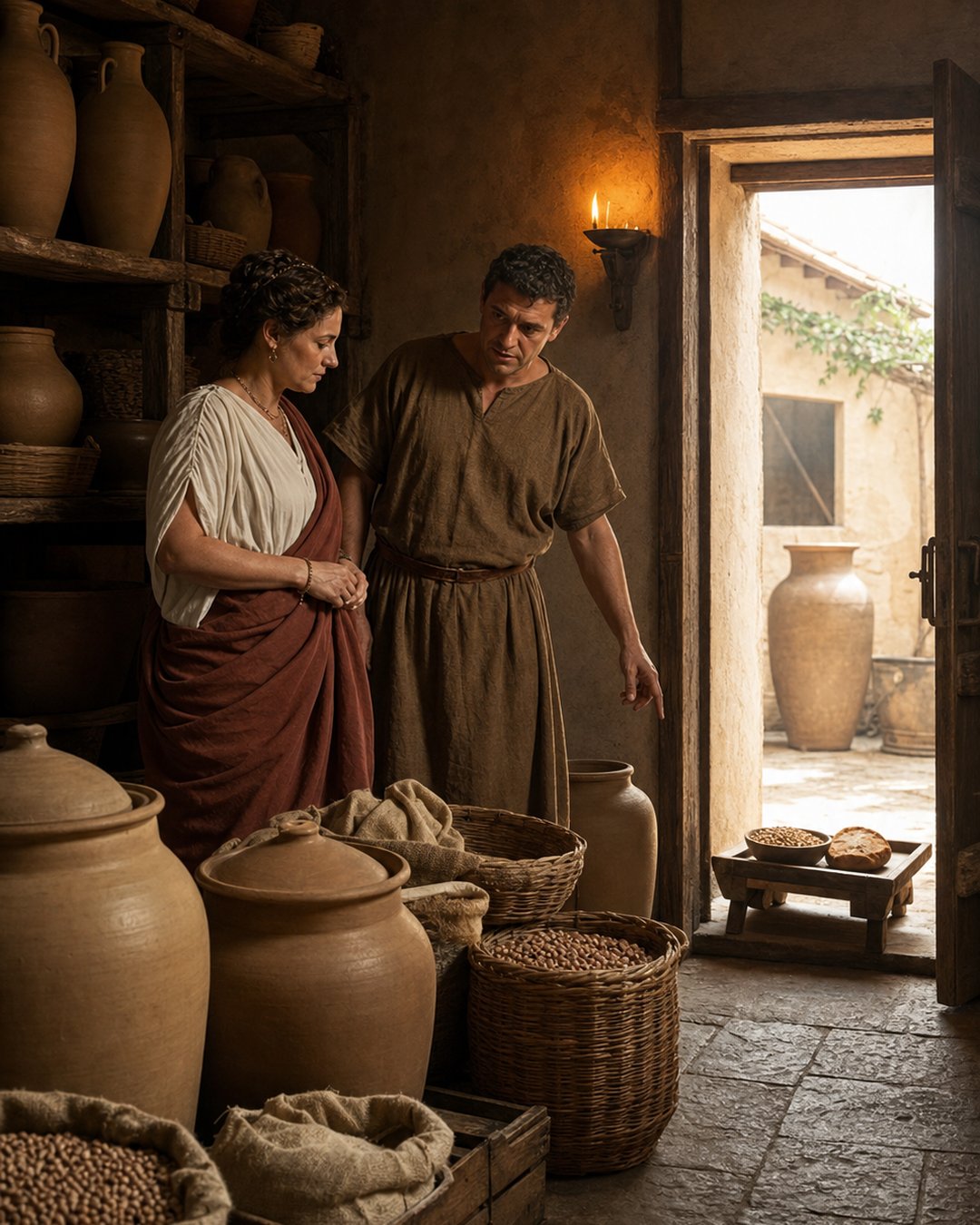
One Year of Supplies Drew the Roman Pantry’s Boundary

A Roman pantry could not be defined simply by opening a door and naming what stood inside. Aulus Gellius records a conversation in the entrance hall of the imperial palace on the Palatine. An overconfident grammarian was discussing the gender and declension of penus, a Latin word for household stores. The philosopher Favorinus interrupted with … Read more

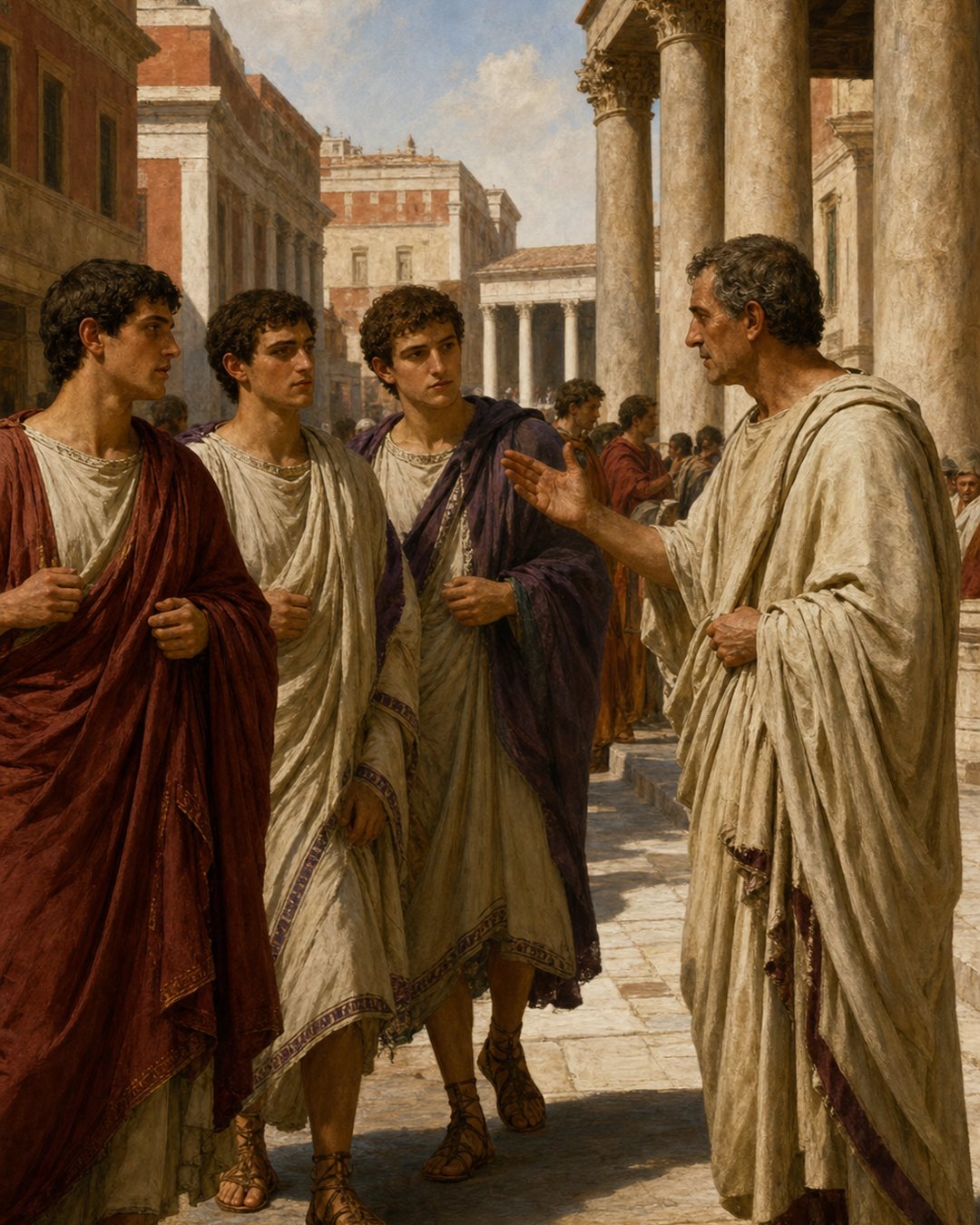
A Rhetoric Teacher Stopped Senators in Holiday Slippers

The rhetoric lesson began after the students had left their formal clothes behind. Aulus Gellius says his teacher Titus Castricius encountered several pupils who had become senators. It was a holiday, and they crossed Rome in tunics, cloaks and open Gallic slippers. Castricius stopped them. Long custom might excuse the relaxed garments, he conceded. Yet … Read more

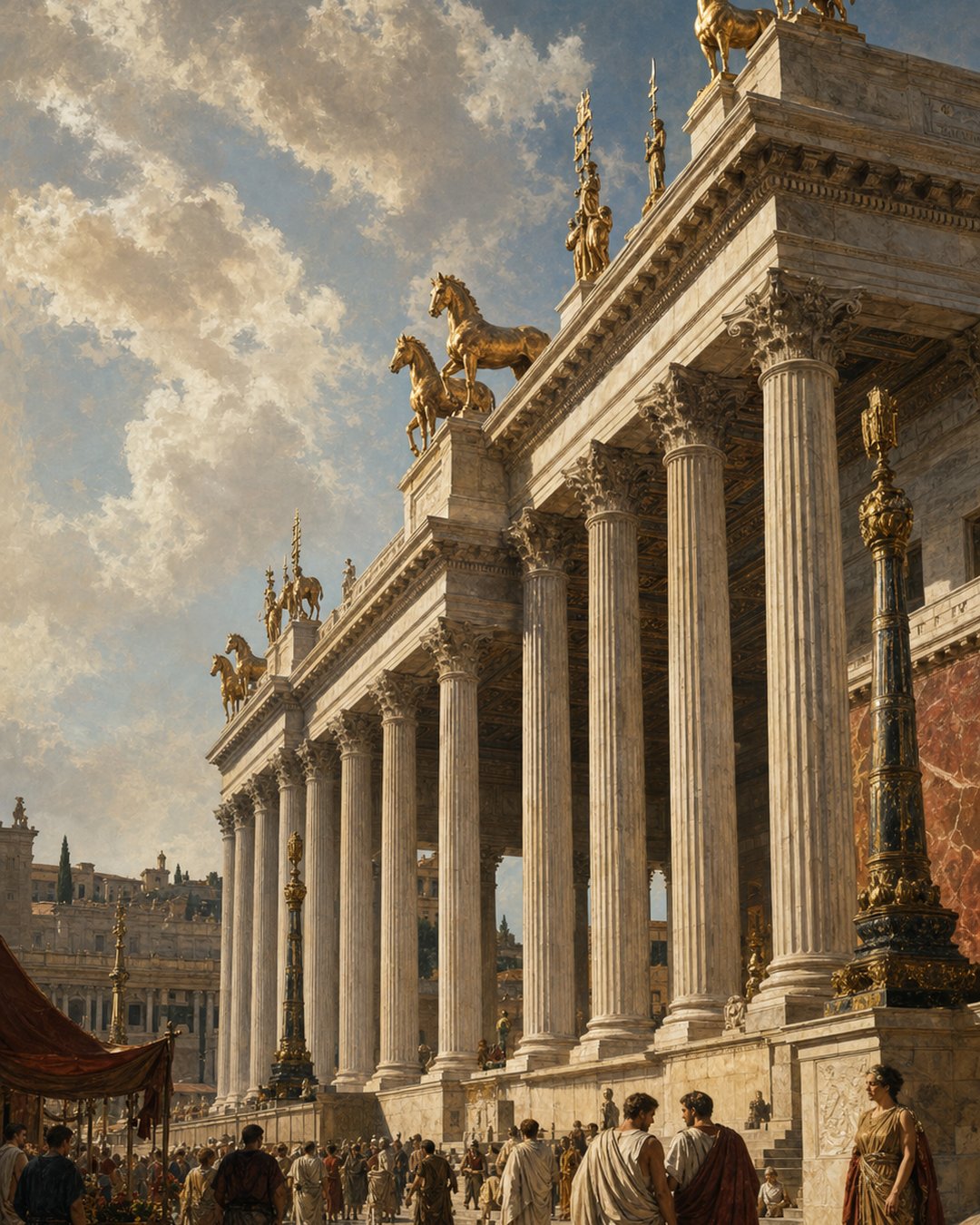
Sold Loot Paid for the Gilded Horses Above Trajan’s Forum

The gilded horses above Trajan’s Forum were not trophies lifted whole from an enemy city. Their inscription pointed to a less visible route. Aulus Gellius remembered walking through the Forum with the philosopher Favorinus while a consul heard cases nearby. Along the roofs of the colonnades stood gilded horses and representations of military standards. Beneath … Read more

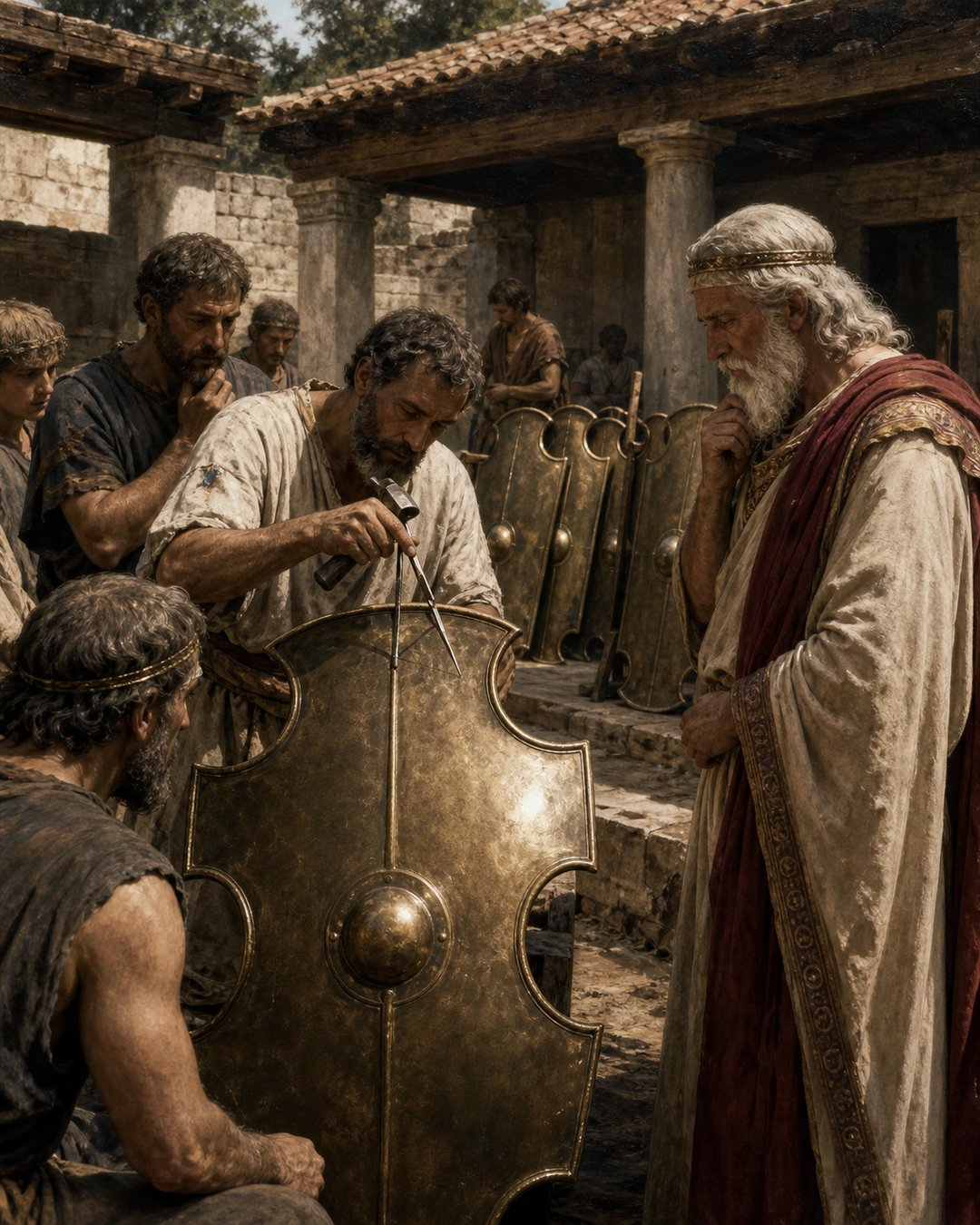
Eleven Copies Hid the Shield That Fell from the Sky

Rome protected one sacred shield by making it impossible to tell which shield was sacred. Plutarch says a bronze buckler fell from the sky during a pestilence in Numa’s reign. The king treated it as a pledge of the city’s preservation. A unique object, however, invited a simple danger: a thief needed to steal only … Read more