Two-Hundred-Year Wine Became Honey in the Cellar
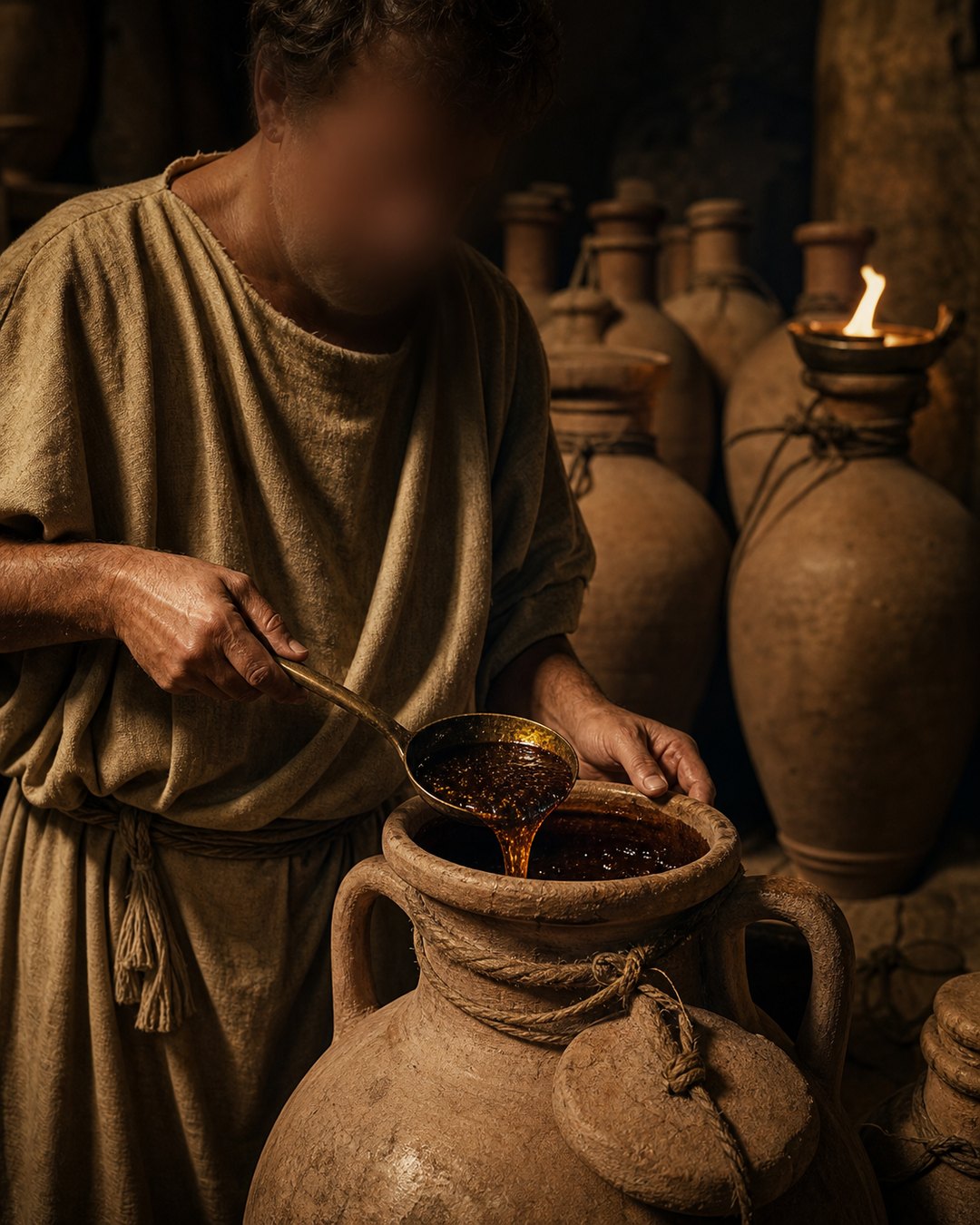
Pliny the Elder knew of wine that had outlived dynasties. It came from the consulship of Lucius Opimius, the year in which Gaius Gracchus was killed: Rome’s year 633, or 121 BCE. Nearly two centuries later, some of that vintage still survived. It did not survive as a perfectly improved version of the young drink. … Read more
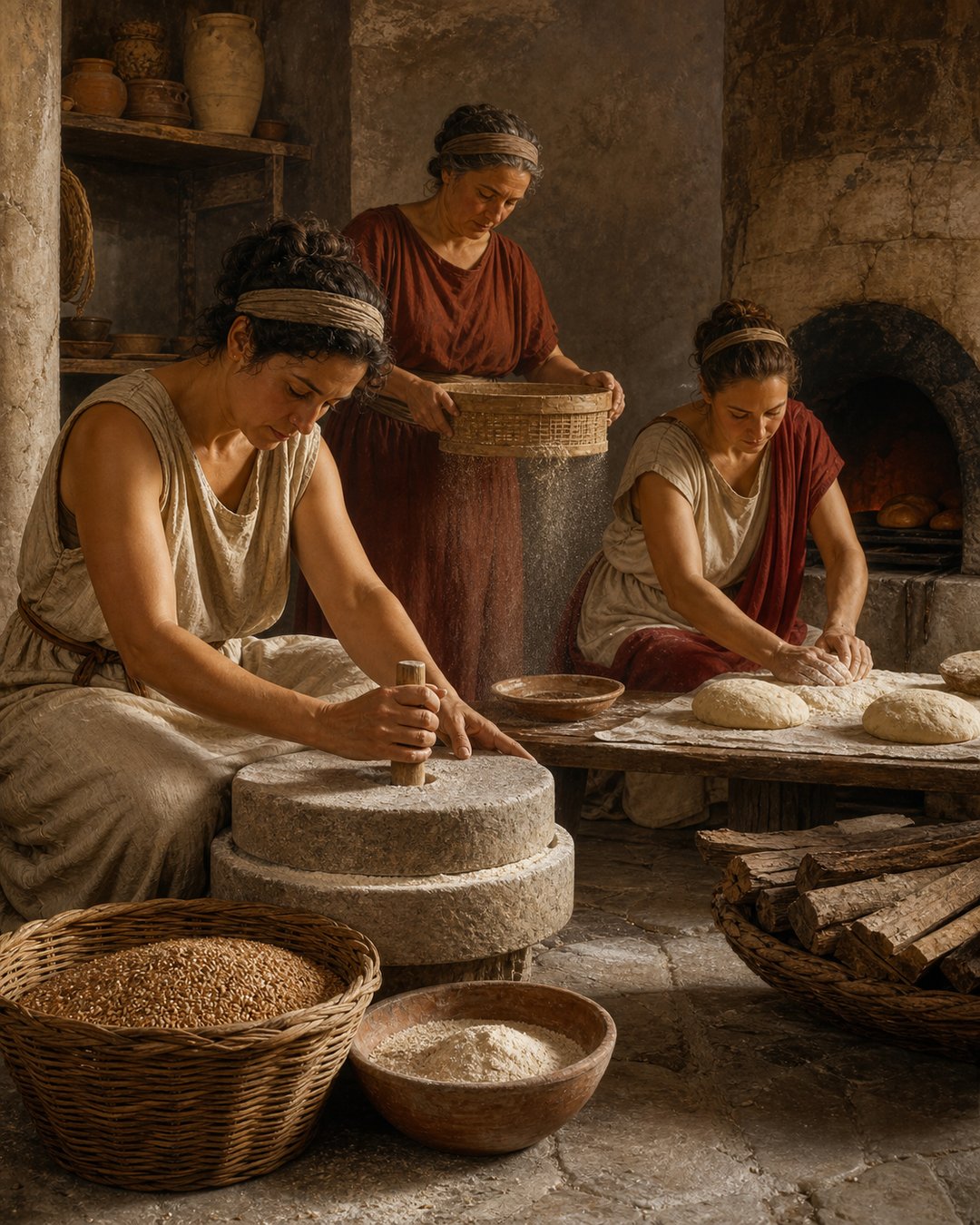
Bread Became a Trade After Five Hundred Eighty Years

Rome did not discover bread when it discovered the baker. Pliny the Elder draws a distinction that is easy to miss: the food was ancient, but the specialist trade was not. He says there were no bakers at Rome until the war with King Perseus, more than five hundred and eighty years after the city’s … Read more

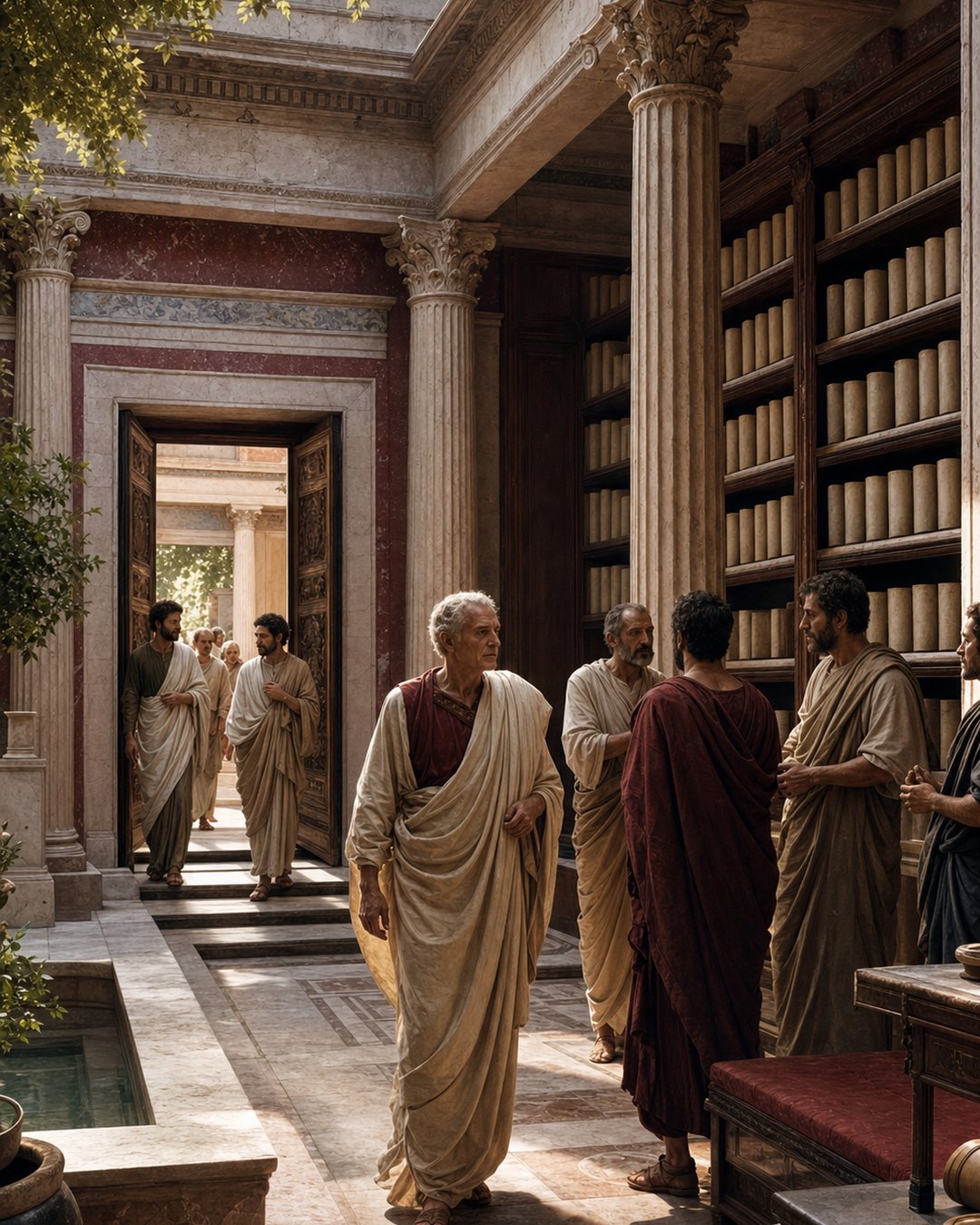
Lucullus Opened His Library to Rome’s Greek Visitors

Lucullus could have kept his books as another form of captured wealth. Plutarch says he collected many fine volumes, but the biographer praises their use more than their acquisition. The libraries were open. Greek visitors in Rome could enter the surrounding cloisters and study rooms without restriction, spend the day together, and encounter the owner … Read more

Cato Wrote Rome in Large Letters for One Reader

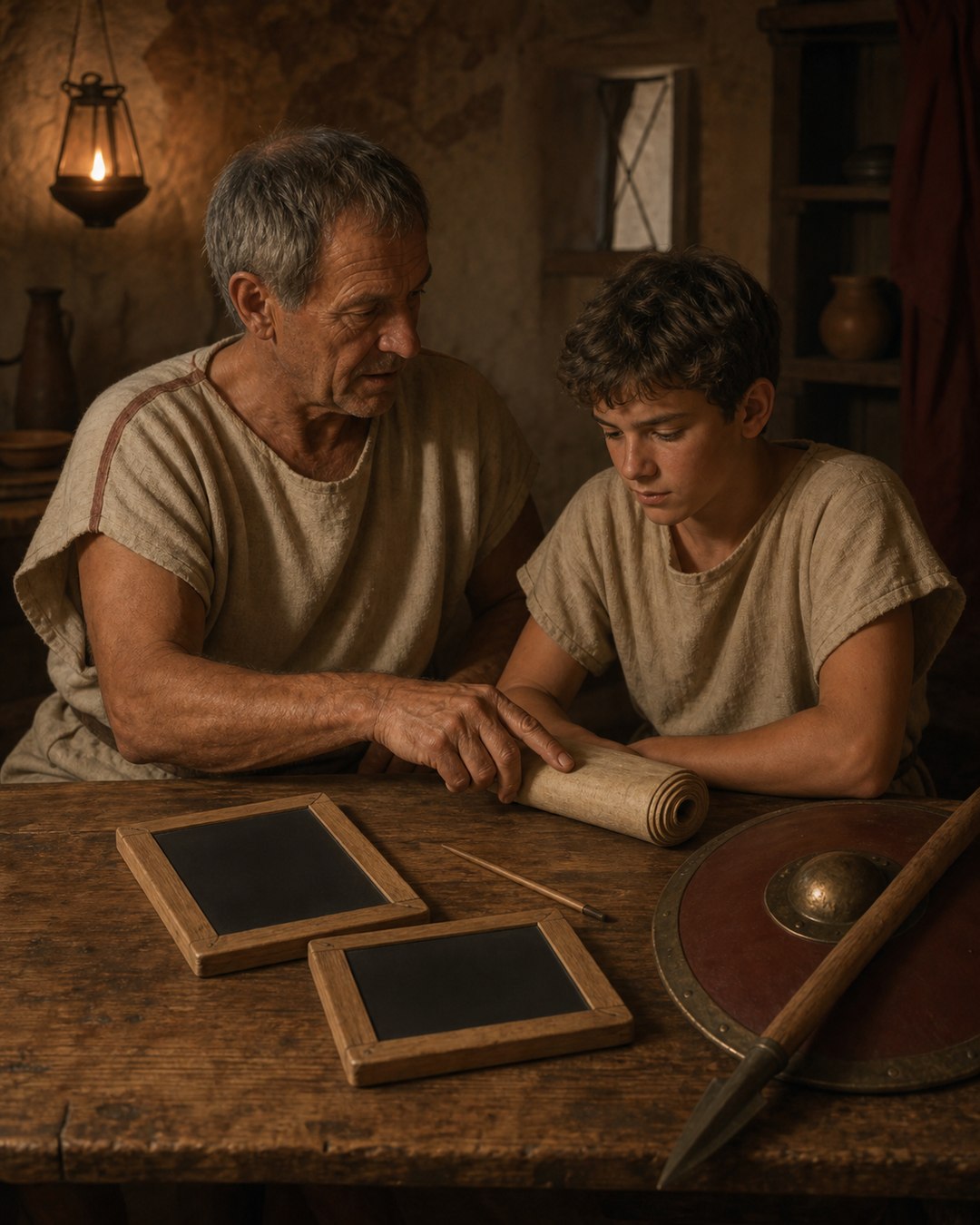
Cato the Elder had an accomplished schoolteacher in his household. He still chose to teach his son himself. The decision required more than hearing a reading lesson. Cato became instructor in letters, law and athletics. He taught riding, boxing, weapons, heat, cold and swimming through the Tiber’s current. Then he copied out a history of … Read more

Eight Trades Broke Rome’s Old Sabine Divide

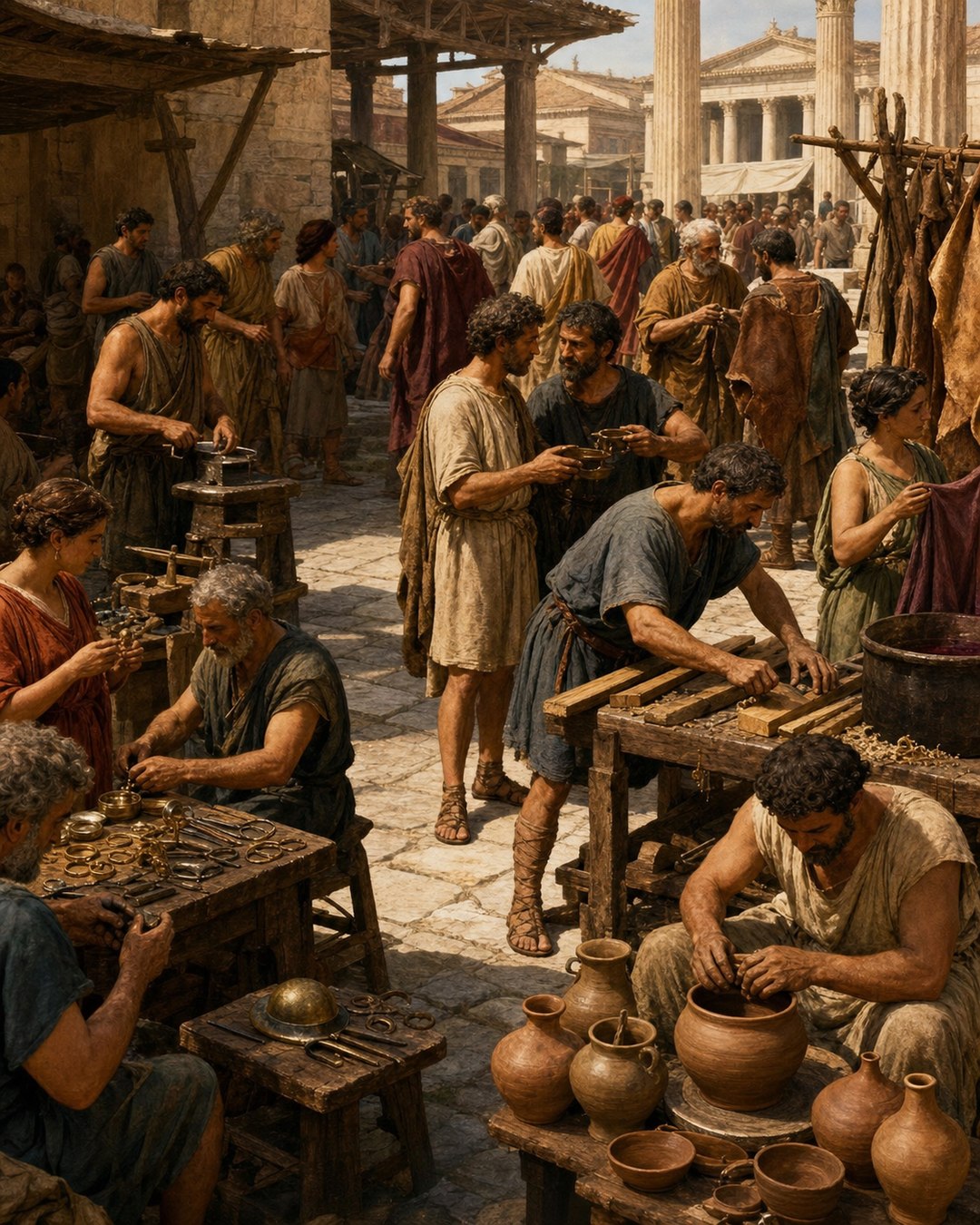
A potter did not stop remembering whether his family belonged to Rome’s original settlers or to the Sabines. Plutarch’s Numa tried something subtler. He gave the potter another group in which to act. Musicians, goldsmiths, carpenters, dyers, leather-workers, curriers, braziers and potters became named bodies. Other occupations entered a ninth collective group. Each body received … Read more

A Bronze Ball Counted Each Roman Mile

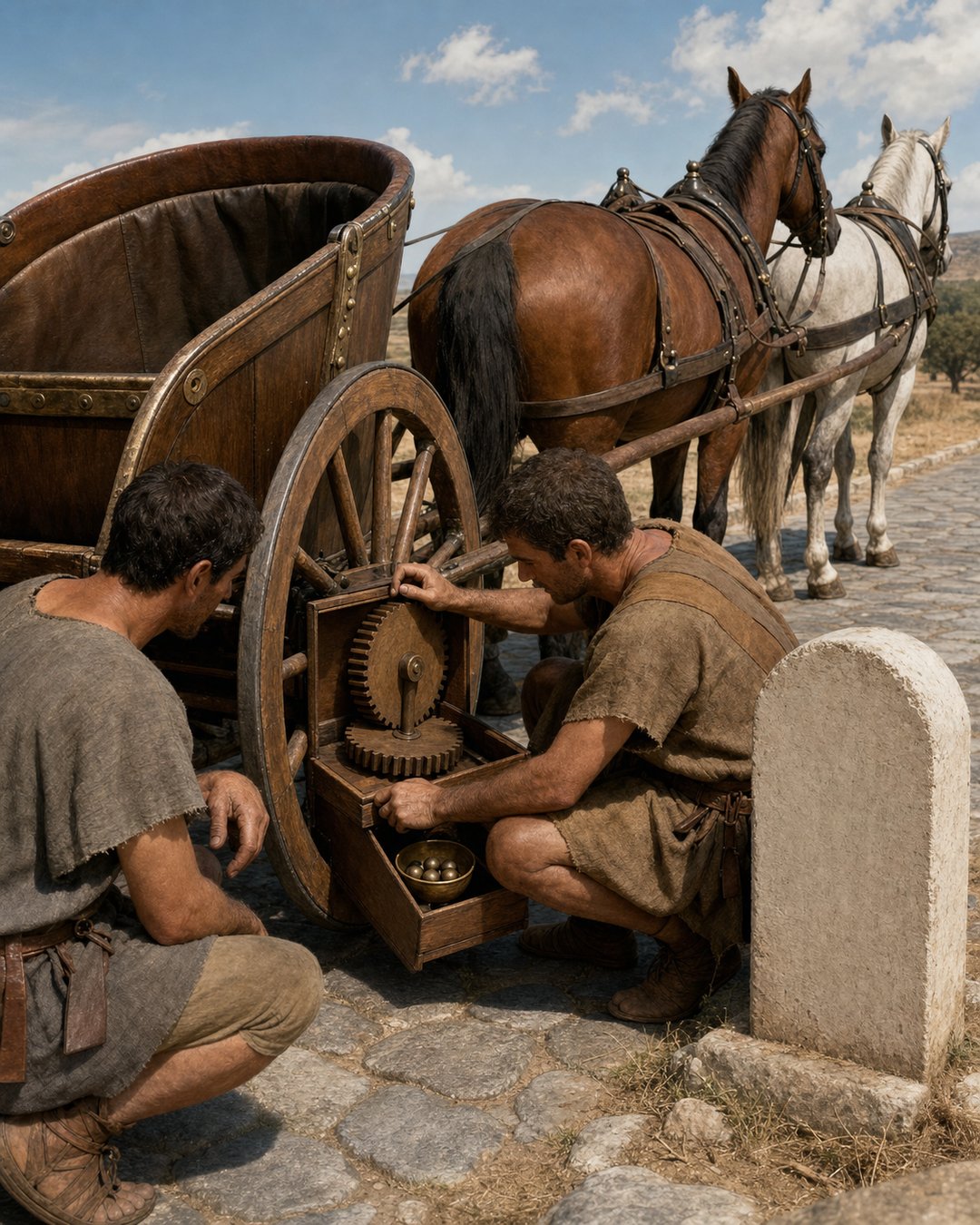
A traveller did not have to stop, look back or ask how far the chariot had gone. In Vitruvius’s design, the vehicle answered with a sound from inside its own body. One small ball fell through a channel and struck a bronze vessel. The noise marked a mile. At day’s end, the balls collected below … Read more

Hooves, Flint and Wind Separated a Roman Harvest

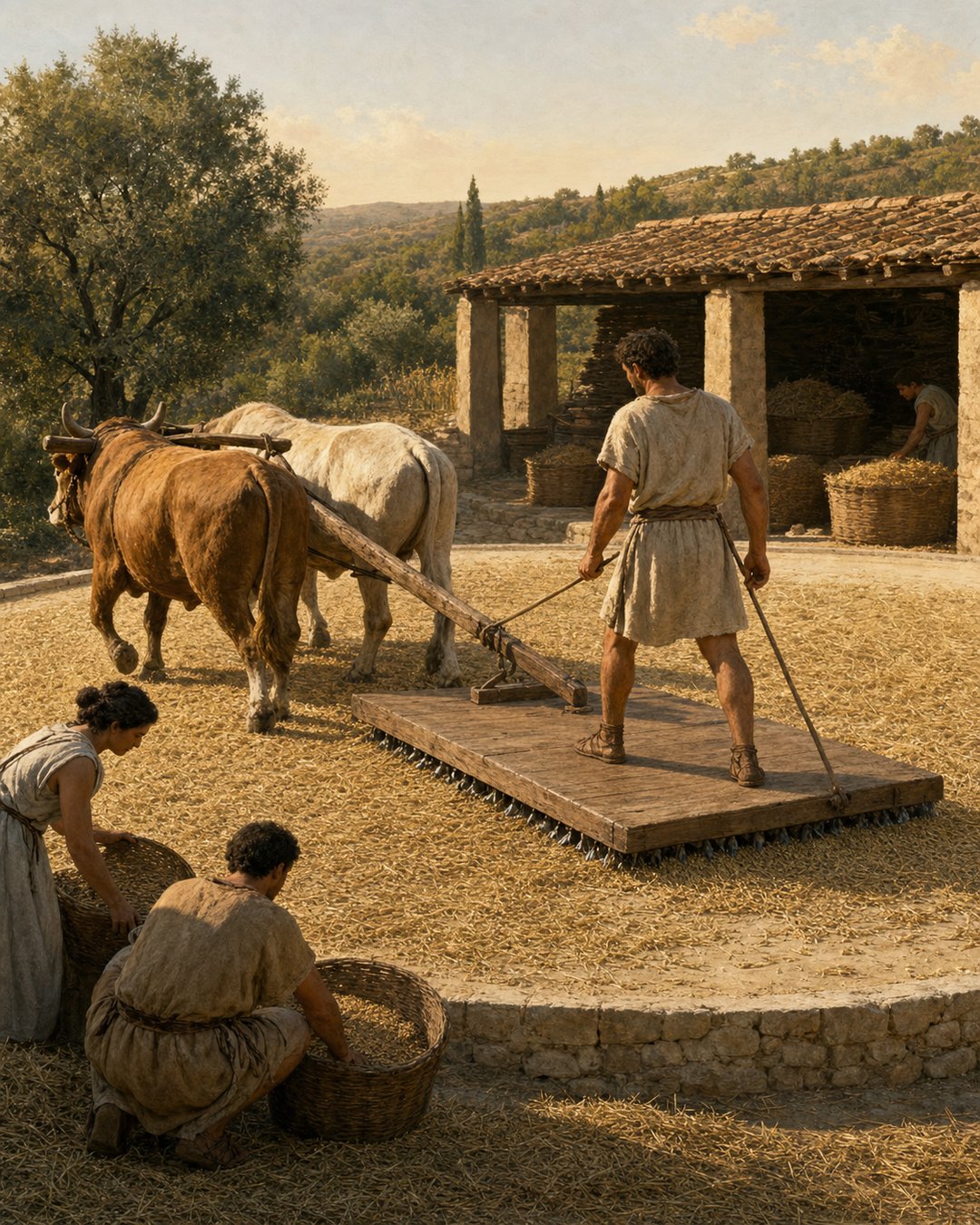
The grain reached the farmyard still fastened to ears, mixed with straw and vulnerable to a change in the sky. It left as heavy kernels gathered in baskets. Between those states stood a round patch of engineered ground. Varro treats threshing as a chain of decisions. The crop had to arrive in the right form. … Read more

One Short Rope Revealed Protagoras Before Philosophy

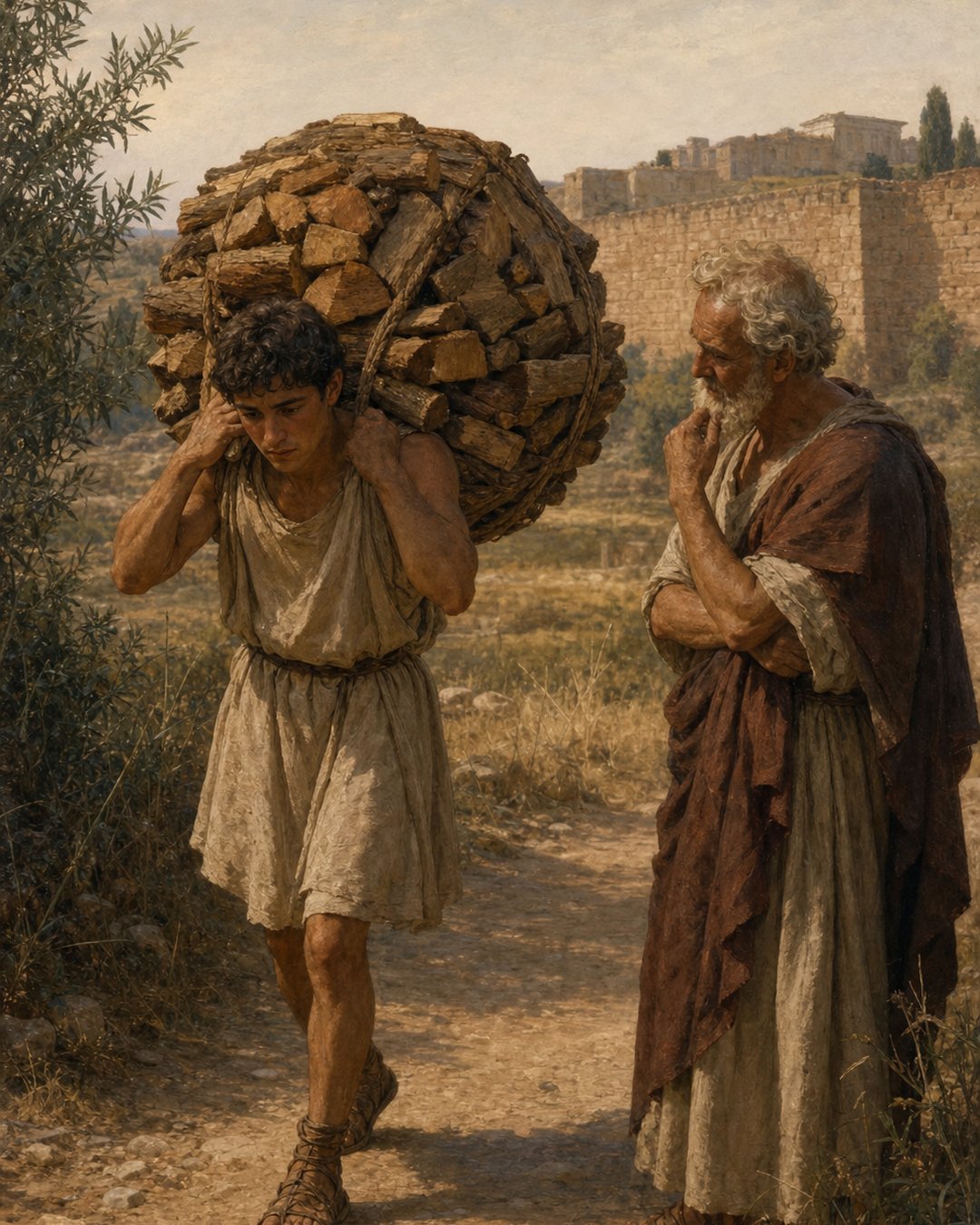
Before Protagoras entered philosophy, a bundle of firewood made someone stop him on the road. Aulus Gellius says the young man earned his living as a hired porter. He was carrying many blocks of wood from the countryside into Abdera, bound with a short rope. The load was awkward, yet he walked easily and quickly. … Read more

Weights and Hidden Air Made Archytas’s Wooden Dove Fly

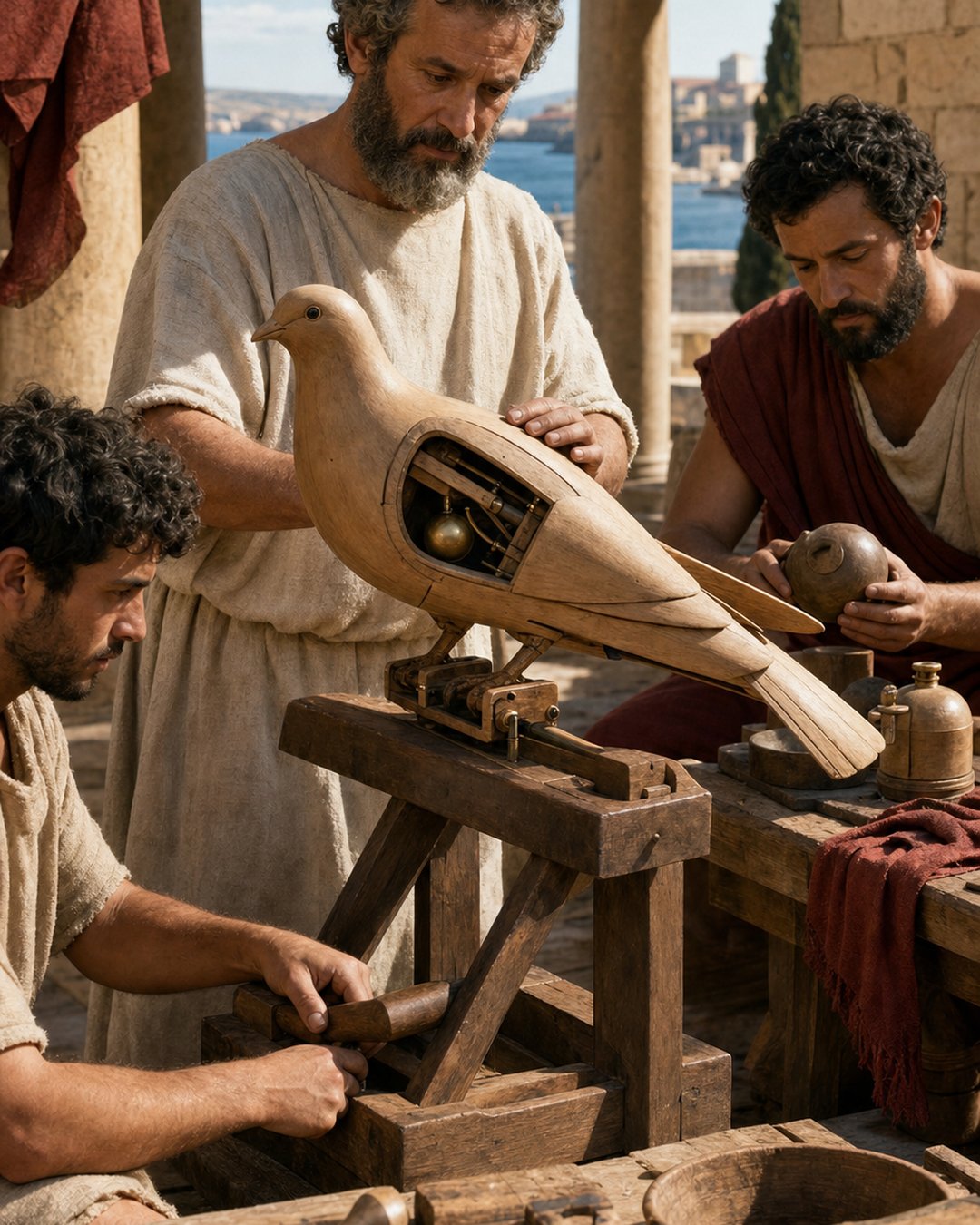
The most useful detail in the story of Archytas’s flying dove is not that it flew. It is that it could not take off again. Aulus Gellius reports a wooden model made by Archytas of Tarentum. Balanced by weights and moved by a hidden current of enclosed air, the dove crossed the boundary between crafted … Read more

One Year of Supplies Drew the Roman Pantry’s Boundary

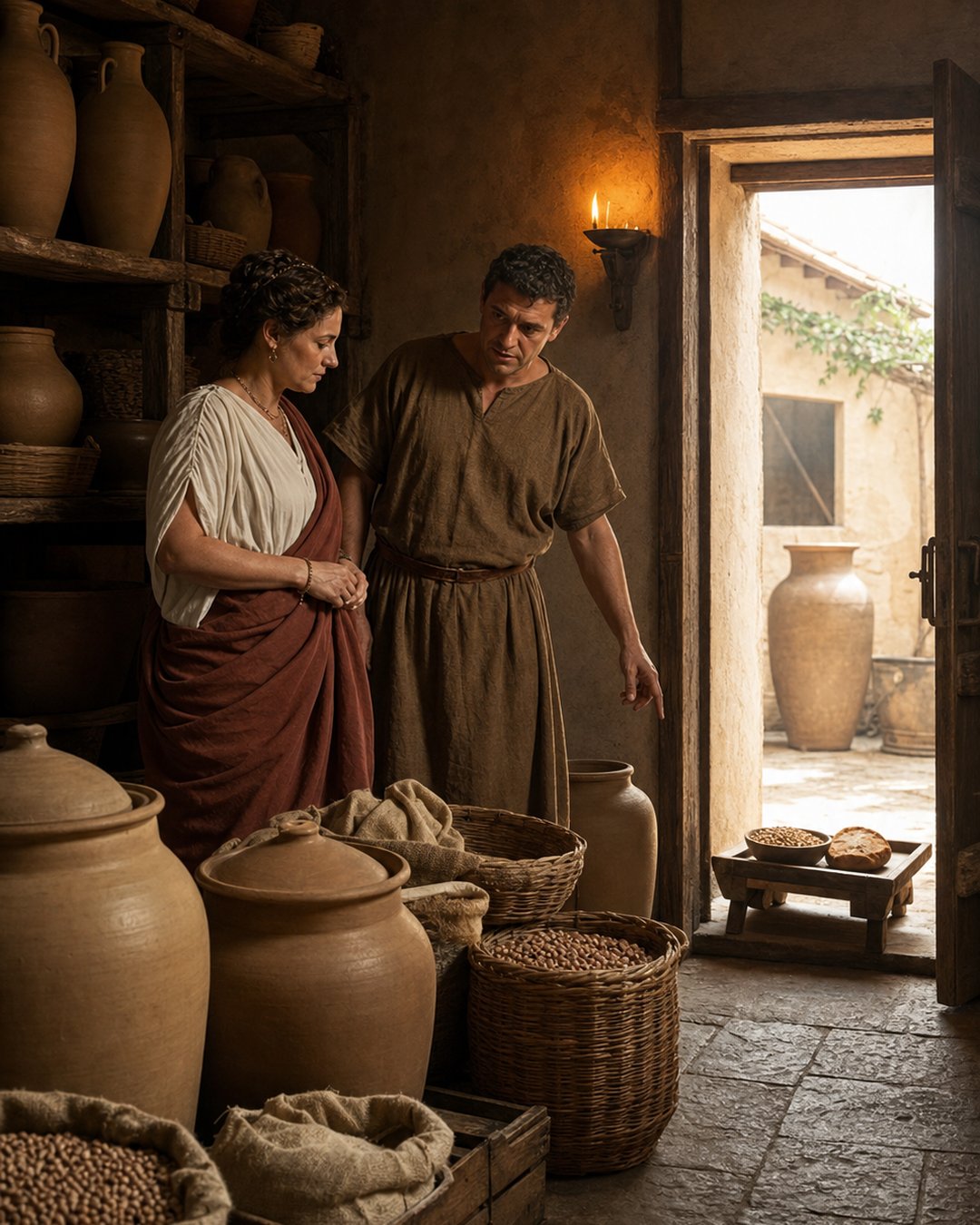
A Roman pantry could not be defined simply by opening a door and naming what stood inside. Aulus Gellius records a conversation in the entrance hall of the imperial palace on the Palatine. An overconfident grammarian was discussing the gender and declension of penus, a Latin word for household stores. The philosopher Favorinus interrupted with … Read more