An Imagined House Could Hold an Entire Roman Speech

A Roman speaker could prepare for court by walking through a house without moving his feet. He began at the doorway, crossed the atrium, passed a column, paused at a couch and continued toward a staircase. At each familiar place he set a vivid mental image for one part of the speech. When the moment … Read more

Every Eighth Day Brought the Countryside into Rome

Rome’s countryside did not enter the city at random. On a recurring market day, farmers and rural buyers could plan to bring produce, settle business, hear news and return home with goods that were difficult to obtain locally. The cycle was called the nundinae, a “ninth day” by Roman inclusive counting but an eight-day interval … Read more

A Baker Built His Tomb Like the Machinery of Bread

Marcus Vergilius Eurysaces did not ask Rome to remember a borrowed heroic ancestor. He put bread production on his tomb. Near the Porta Maggiore, the monument announces a baker, contractor and public servant in letters large enough for traffic to read. Above them, ranks of cylinders and a relief sequence turn commercial machinery into funeral … Read more

Pepper, Ivory and a Loan Contract Across Two Oceans

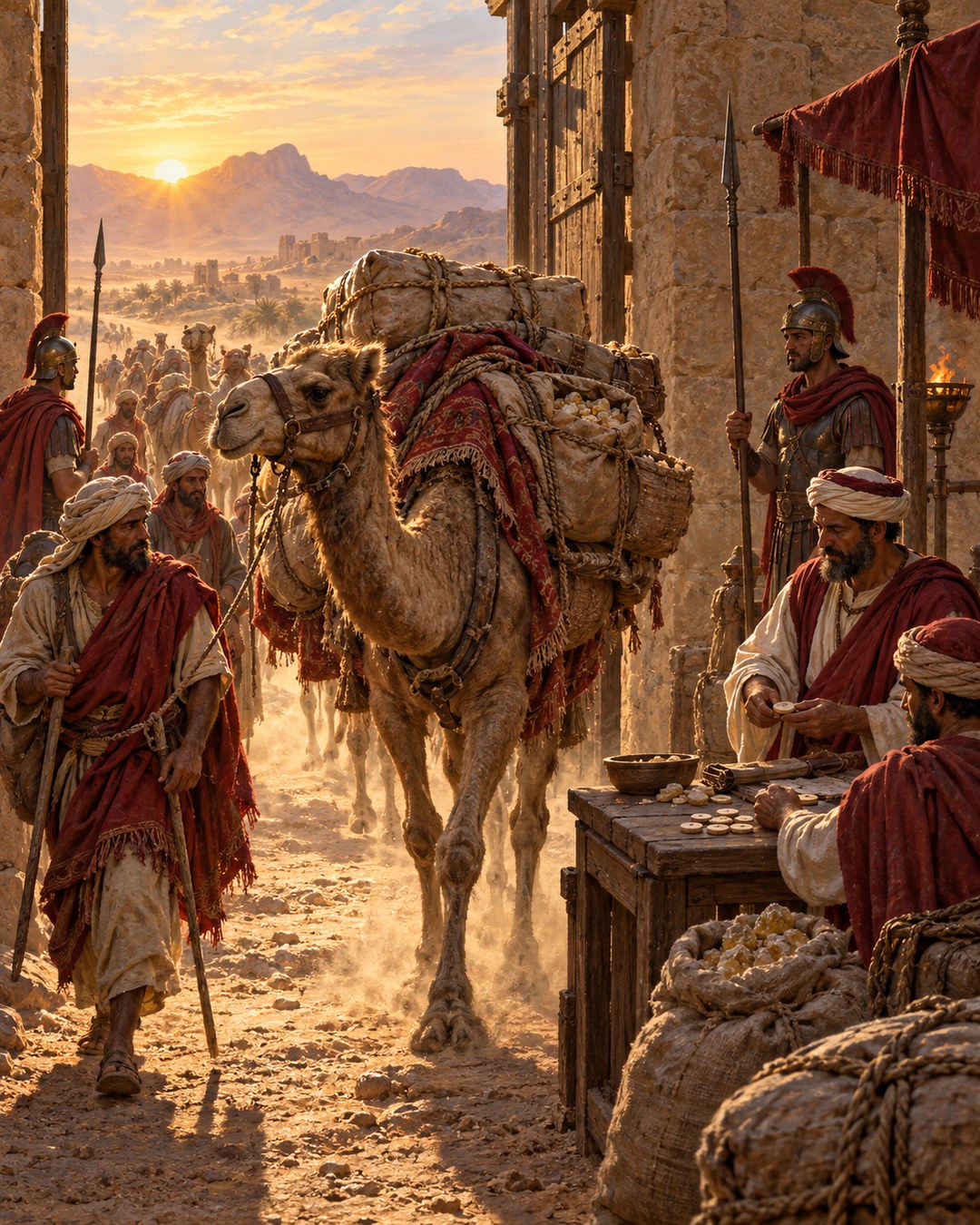
A torn papyrus preserves a ship called the Hermapollon, sixty boxes of Gangetic nard, thousands of pounds of ivory and a cargo valued in talents and drachmas. It is easy to read those fragments as an exotic shopping list. The more important revelation is less glamorous: Roman trade with India was held together by clauses … Read more

Diocles Won 1,462 Races—and Chose When to Hold Back

A stone inscription set up at Praeneste does something modern sports archives would recognize immediately: it turns a career into numbers. Gaius Appuleius Diocles raced for twenty-four years, entered 4,257 contests, won 1,462 times and accumulated 35,863,120 sesterces in prize money. Those figures are so large that they can make him look like a legend … Read more

Eighty Million Broken Oil Jars Became a Roman Hill

South of ancient Rome’s center stands a hill that the landscape did not make. Monte Testaccio rises from fragments of transport jars, overwhelmingly amphorae that once carried olive oil. Estimates approach eighty million containers. Their handles, rims and walls accumulated into terraces high enough to become urban topography. The hill is often called a rubbish … Read more

Eumachia Built Her Name into the Heart of Pompeii

Pompeii preserved very few ancient women at monumental scale. Eumachia is the startling exception. Her name ran across the façade of a vast building beside the Forum, appeared again at a side entrance, and stood beneath a marble portrait placed in the rear portico. She did not survive merely as someone’s wife. She survives as … Read more

Thousands of Scratches: How a Rasp Finished Roman Marble

A Roman marble carver could make a surface smoother by covering it with more marks. The rasp did not polish by erasing every trace at once. Its flattened ends carried fields of sharp points, and every rubbing stroke laid fine scratches across the stone. Later passes crossed and overlapped them until the rougher evidence of … Read more

Roundels: The Small Tools Made for Deep Stone Hollows

A flat chisel carries two corners into every cut. On an open surface they help define a clean edge; inside a hollow, either corner can bite before the centre arrives. Roman stone carvers had another option. The roundel replaced the straight cutting edge with a curve, from an obvious semicircle to one so slight that … Read more

How Callipers Carried Human Proportions into Stone

A Roman sculptor could carry a distance without writing it down. Open the callipers across a model’s shoulder, keep the legs fixed, then move the tool to the block: the empty gap between the points had become a portable instruction. Nothing had been marked with a numeral, yet one object could now answer another. The … Read more