A Plow Marked Horatius’s Reward for Saving Rome’s Bridge
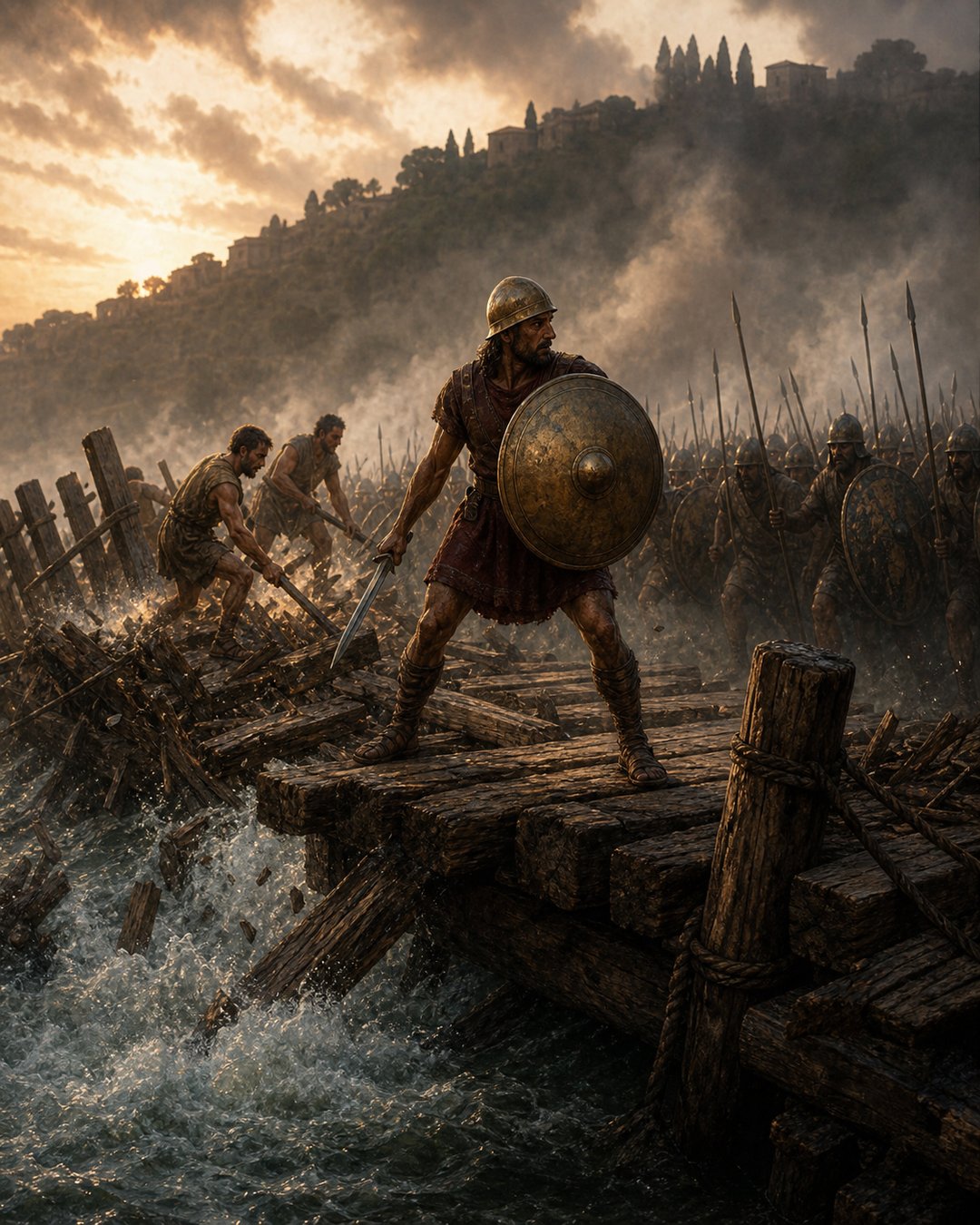
Horatius Cocles stood at the Sublician Bridge while Romans hacked and burned the crossing behind him. The enemy could reach the city if the timber remained intact. Rome’s defence therefore depended on destroying its own route across the Tiber. When the bridge crashed down, Horatius prayed to Father Tiber and jumped fully armed into the … Read more
Brambles Hid Archimedes’s Tomb Until Cicero Read the Stone

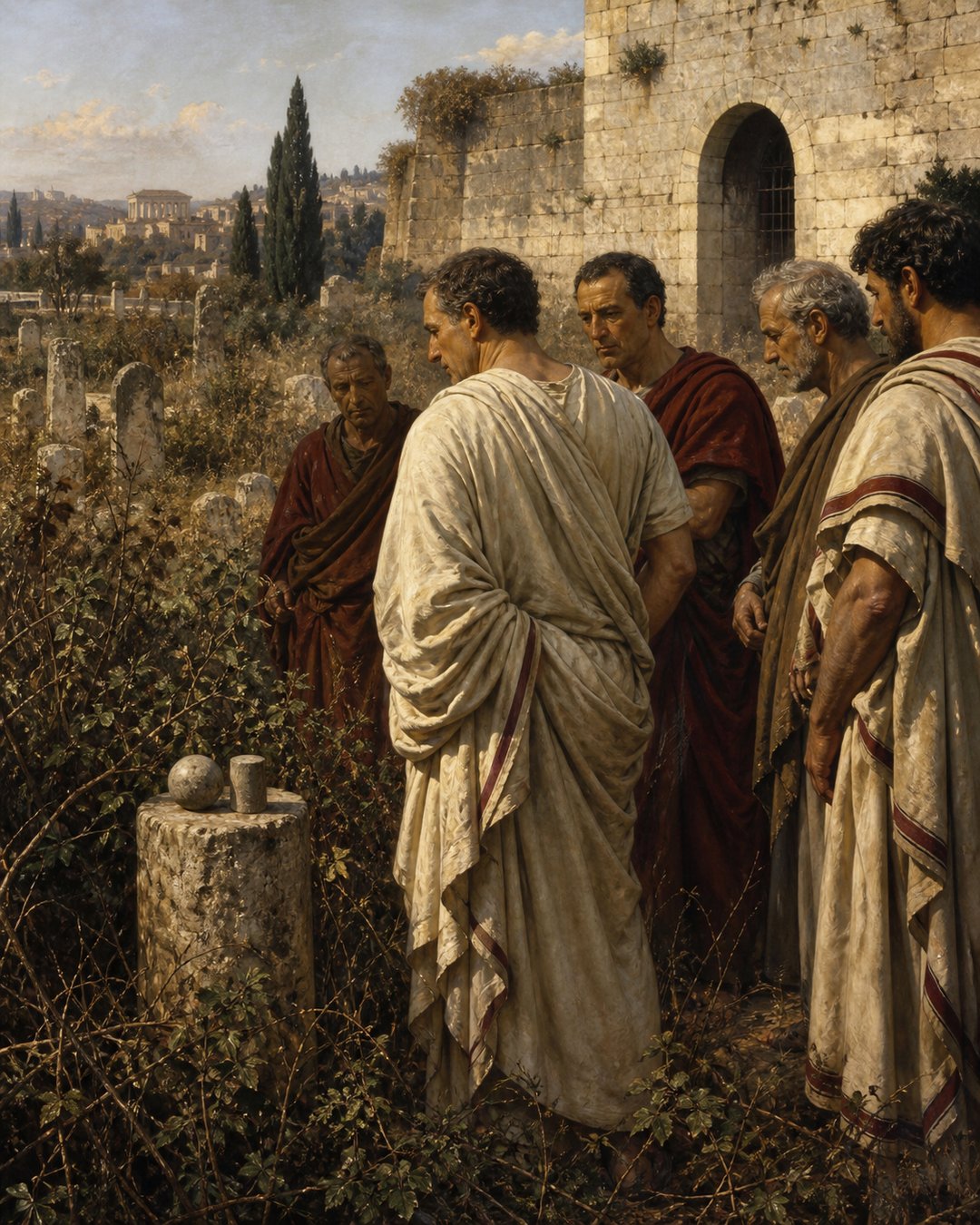
The Syracusans told Cicero that Archimedes’s tomb no longer existed. Cicero disagreed because he remembered verses describing the monument. They said a sphere and a cylinder stood on its top. He searched among the many tombs near Syracuse’s Achradina Gate. Above shrubs and brambles he noticed a small column carrying exactly those two geometric figures. … Read more

A Dolphin Carried a Schoolboy Across the Bay

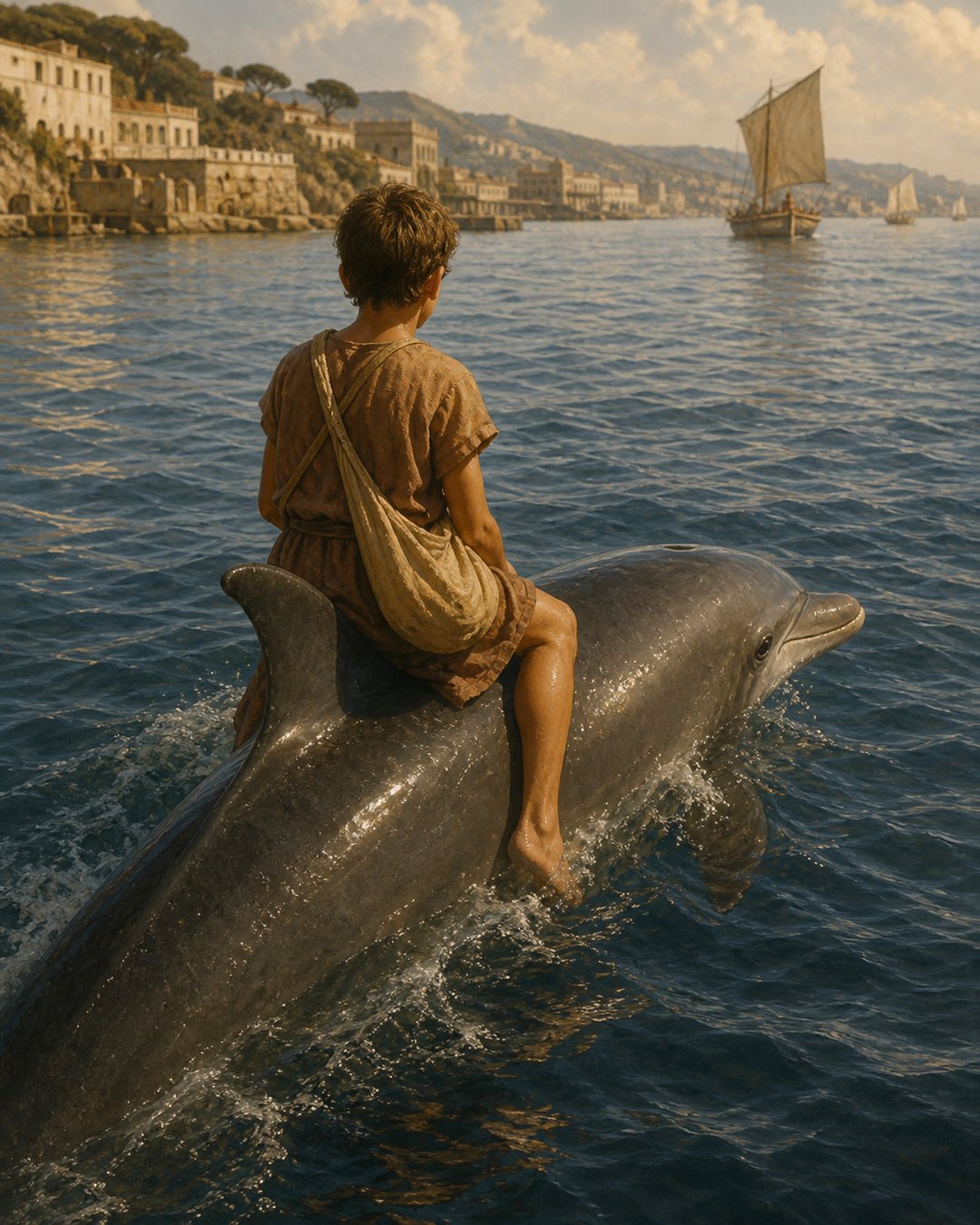
A poor boy travelling from the district of Baiae to school at Pozzuoli carried bread for the journey. At the Lucrine Lake he called a dolphin he had named Snub-nose and offered pieces from his meal. Pliny the Elder says the dolphin came from the depth, ate from the boy’s hand and allowed him to … Read more

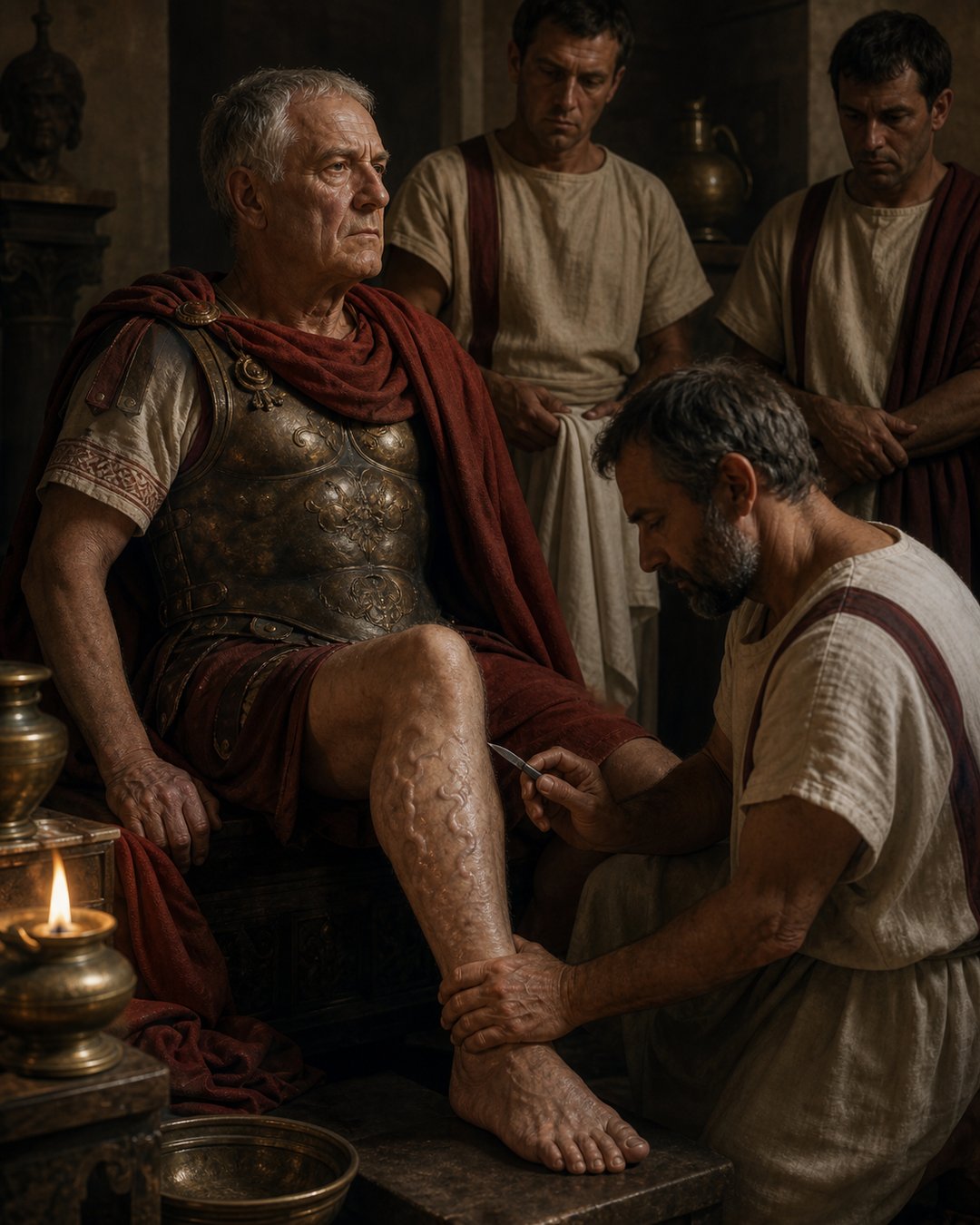
Marius Offered One Leg to the Surgeon’s Knife

Gaius Marius placed one leg before a physician and refused to be tied down. Plutarch says the Roman endured the knife without movement, groan or change of expression. Then the physician approached the second leg. Marius stopped him. The cure, he decided, was not worth the pain. The abrupt refusal completes the anecdote rather than … Read more

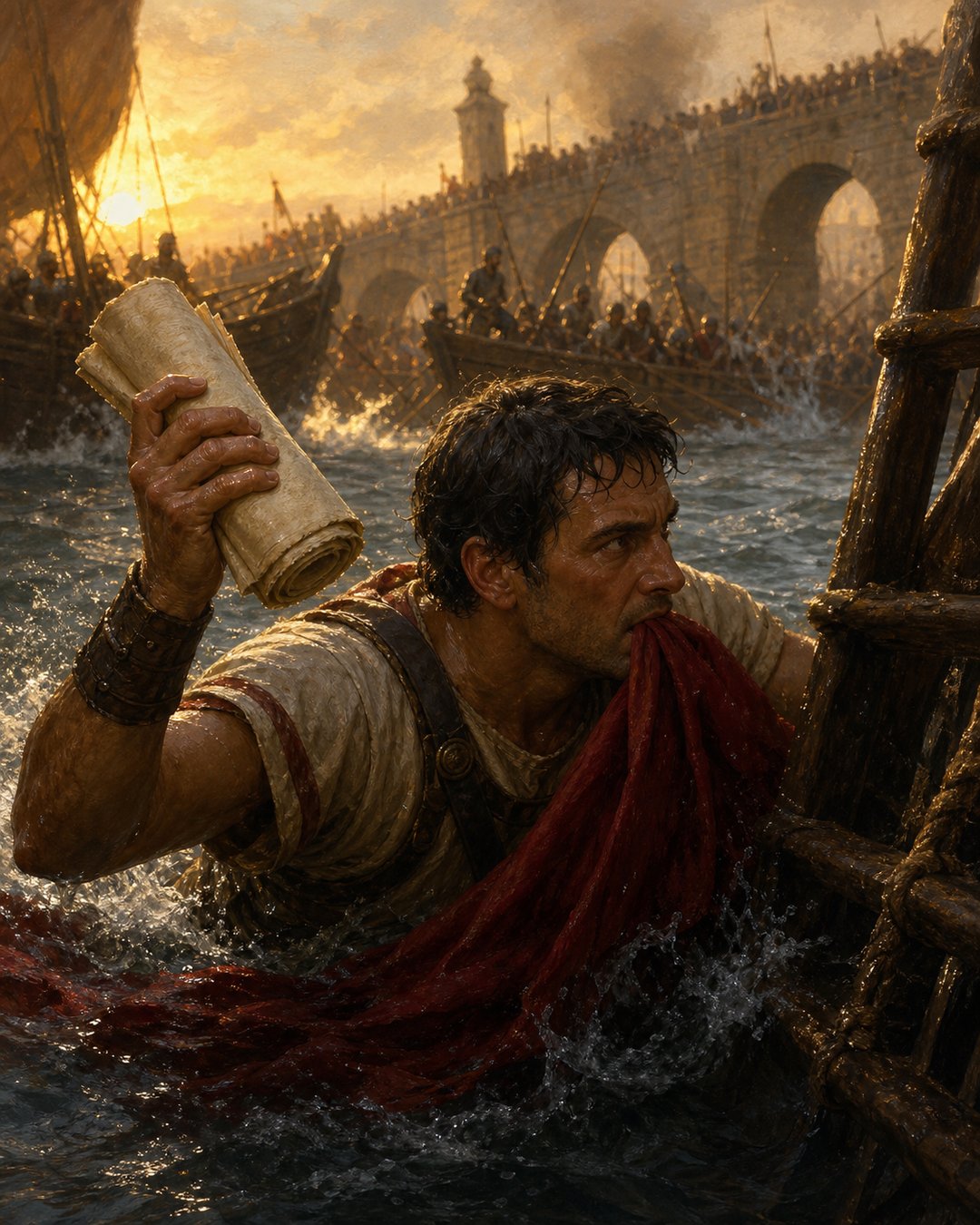
Caesar Kept His Papers Dry While Swimming from Alexandria

A boat at Alexandria filled with men as enemy troops surged toward a bridge. Julius Caesar chose the water. He swam toward another ship roughly two hundred paces away, but he did not enter the sea empty-handed. Suetonius says Caesar held papers above the surface with his left hand. He dragged his commander’s cloak behind … Read more

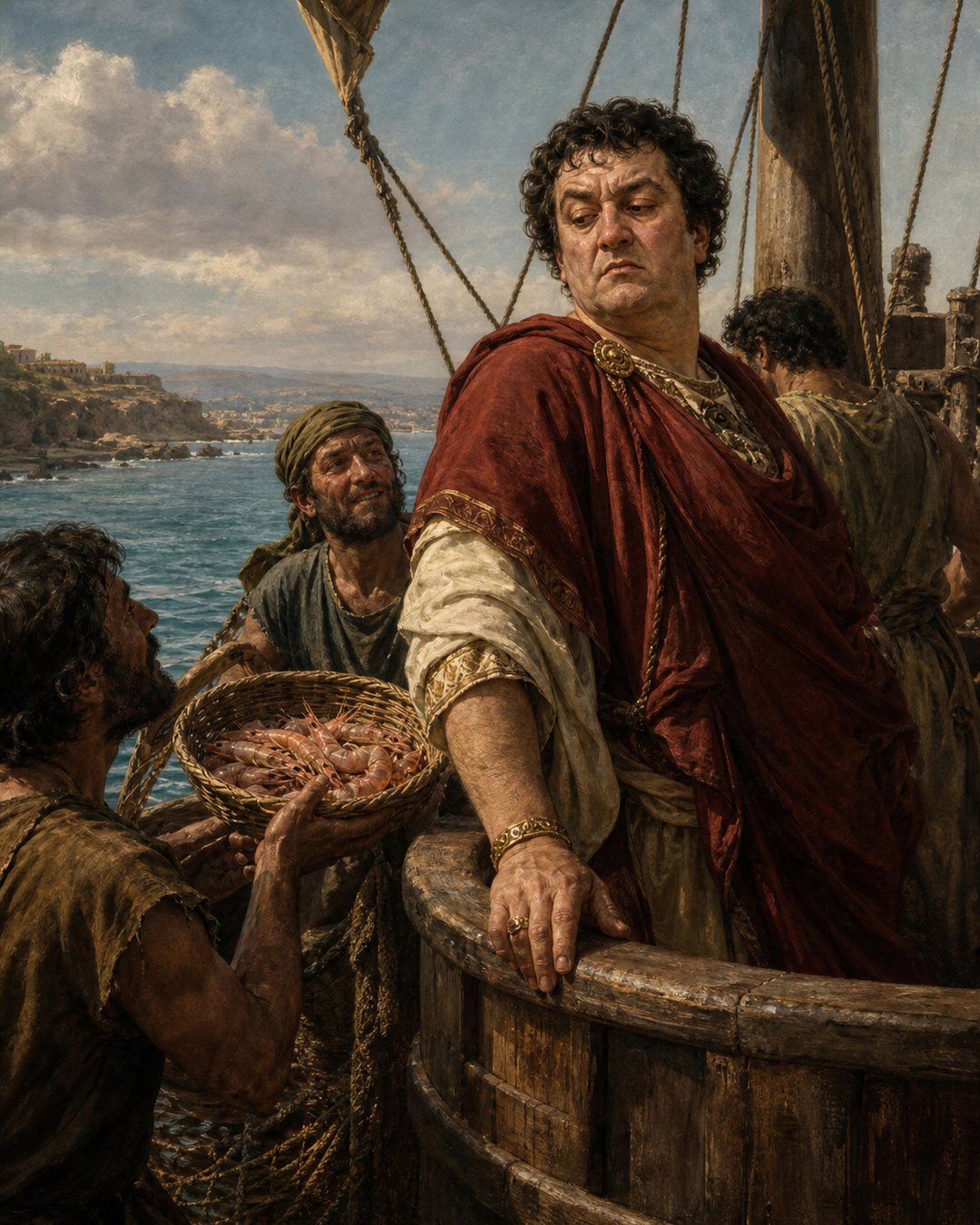
Apicius Crossed the Sea for Prawns and Turned Back

Apicius heard that enormous prawns lived off Libya. The report was enough to launch a voyage. He crossed the Mediterranean in search of a specimen larger than anything available near his Italian home. Fishermen came out to meet the arriving ship. Apicius asked whether they possessed prawns greater than the celebrated catch of Campania. They … Read more

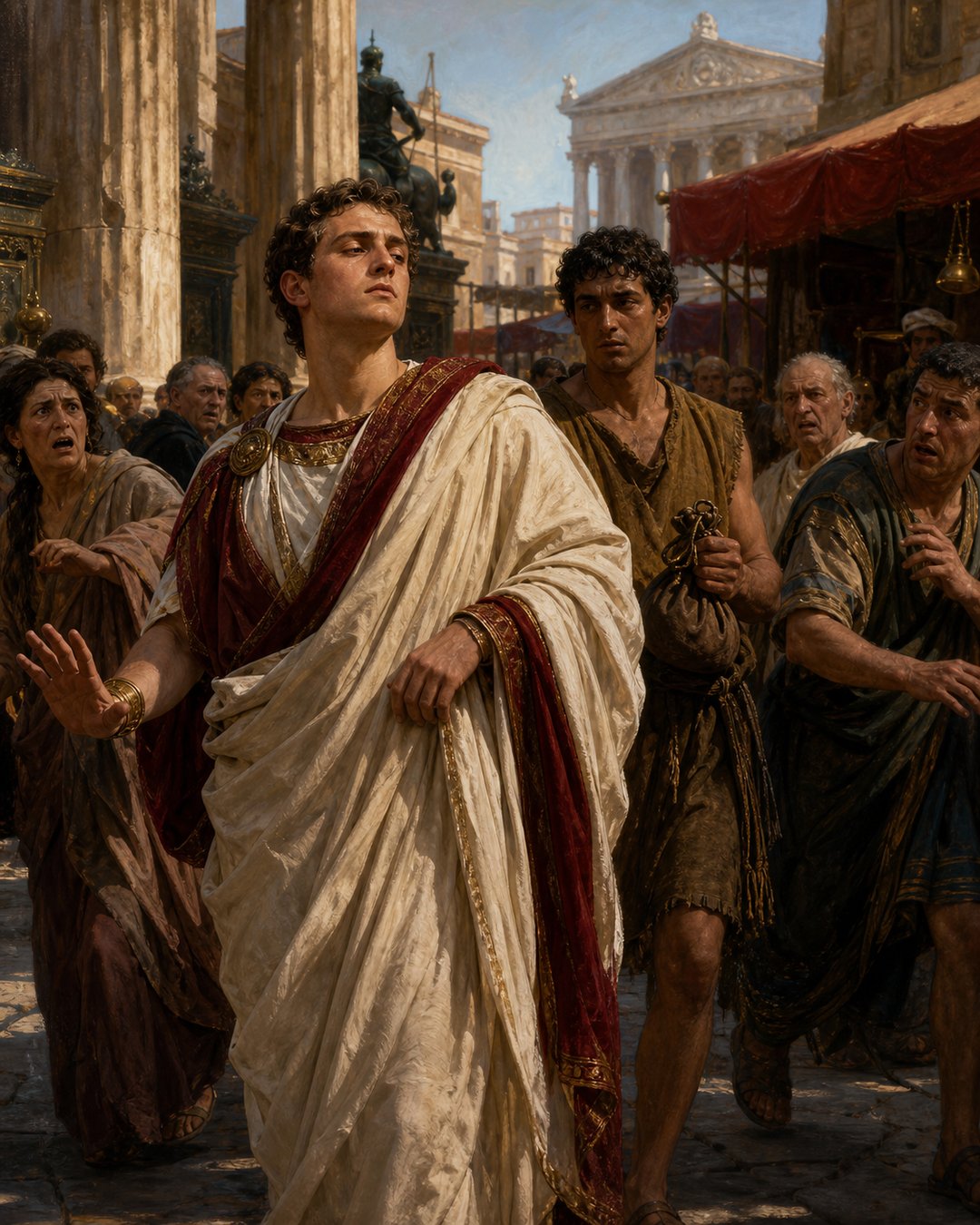
Twenty-Five Asses Turned a Slap into a Purchase

Lucius Veratius walked through Rome striking free citizens in the face. An enslaved attendant followed him with a purse. After each blow, the attendant counted out twenty-five bronze asses. Aulus Gellius presents the scene as an argument about old law. The Twelve Tables had attached a fixed payment to one form of personal injury. Once … Read more

Fabius Pictor Signed Rome’s First Famous Temple Painting

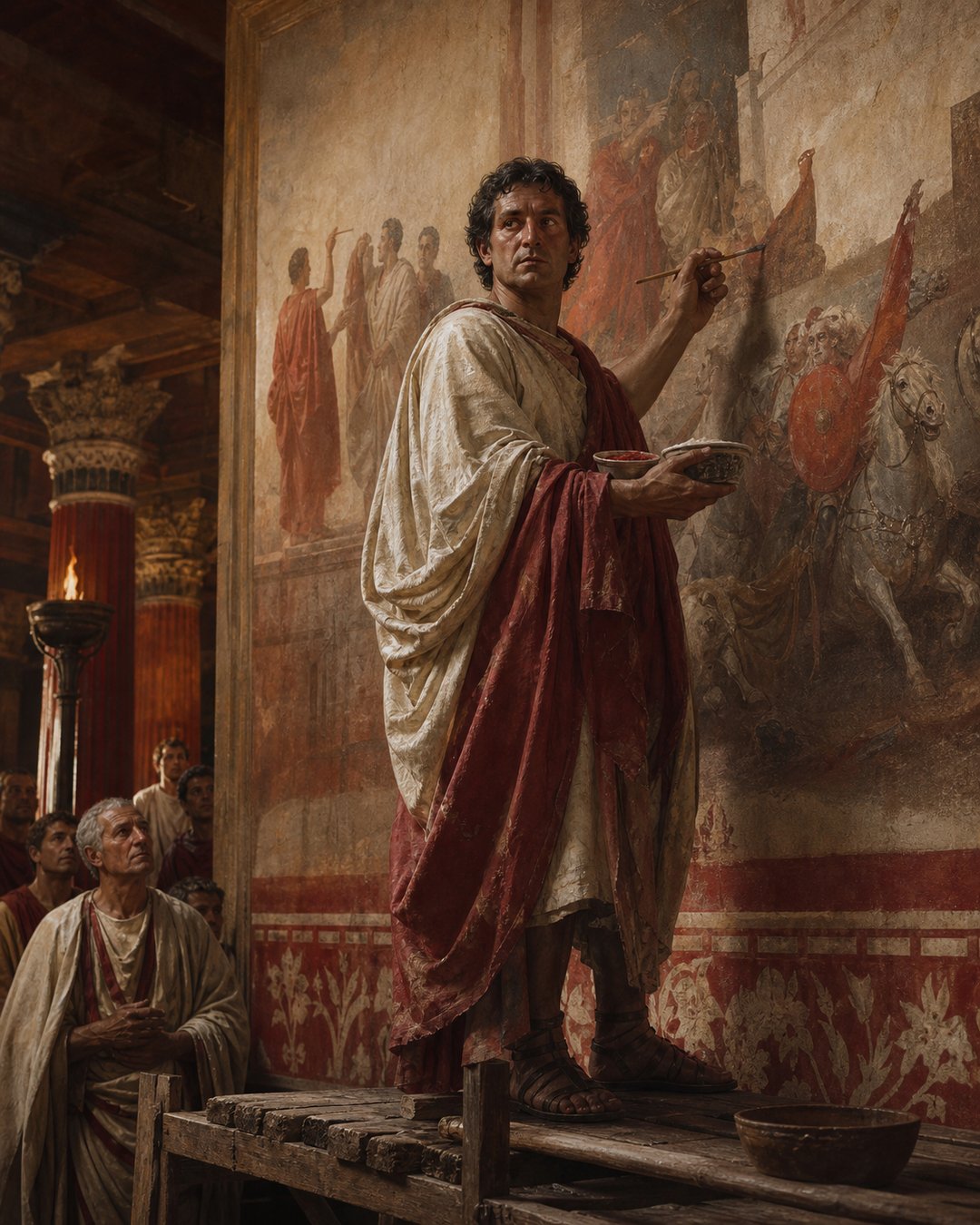
In 304 BC, a Roman aristocrat climbed into the role of a painter. Gaius Fabius decorated the Temple of Salus, placed his name on the work and left his descendants a surname: Pictor, the painter. Pliny the Elder considered the choice remarkable. Painting was not an obvious occupation for a man from a leading family, … Read more

Caracalla Made Nearly Every Free Imperial Subject a Citizen

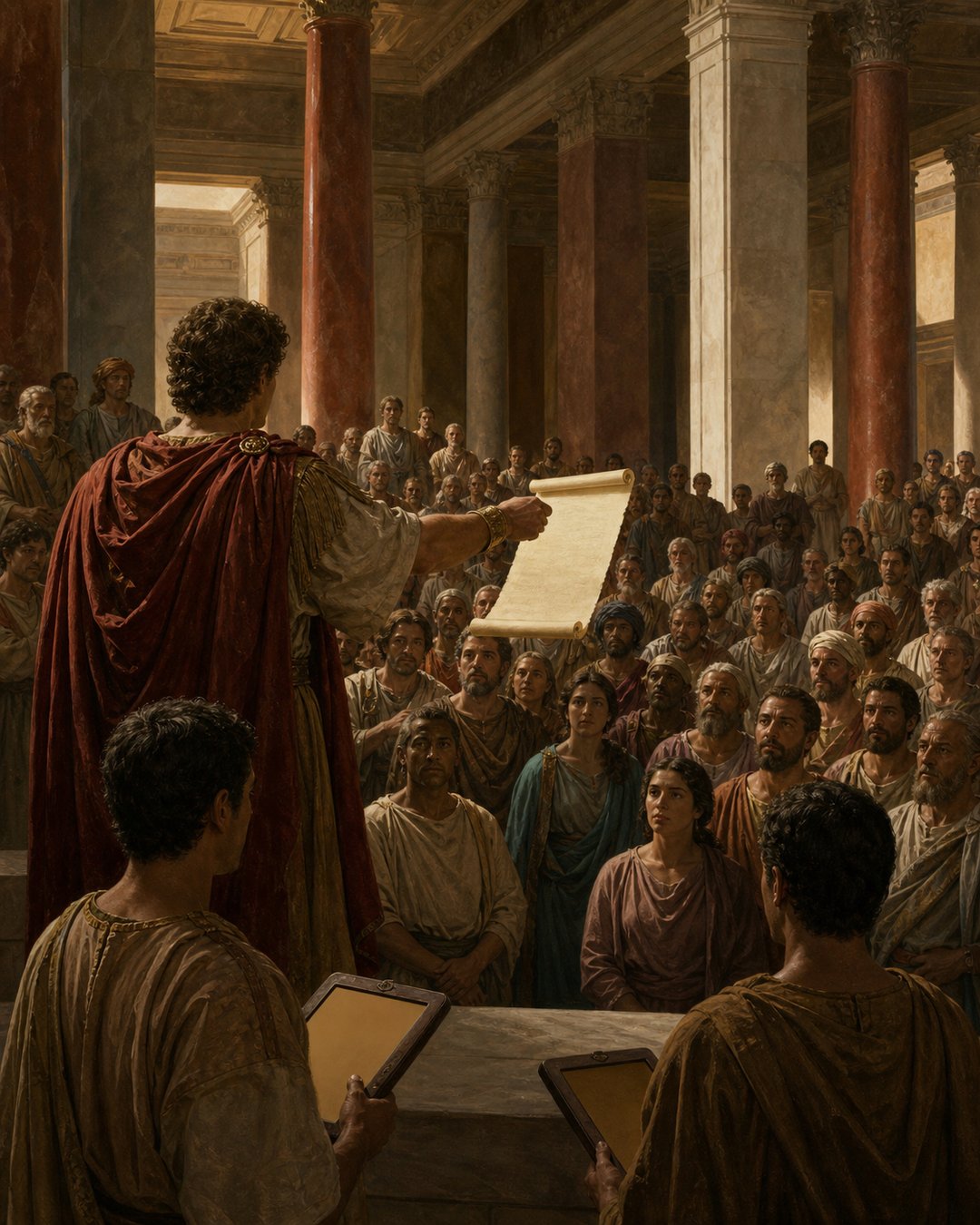
A damaged papyrus preserves the opening of an imperial decision that changed the legal identity of millions. In AD 212, Marcus Aurelius Antoninus—better known as Caracalla—extended Roman citizenship to almost every free inhabitant of the empire. The decree did not flatten the empire into one uniform society. It did something narrower and still enormous: it … Read more

Claudius Added Three Letters to the Roman Alphabet

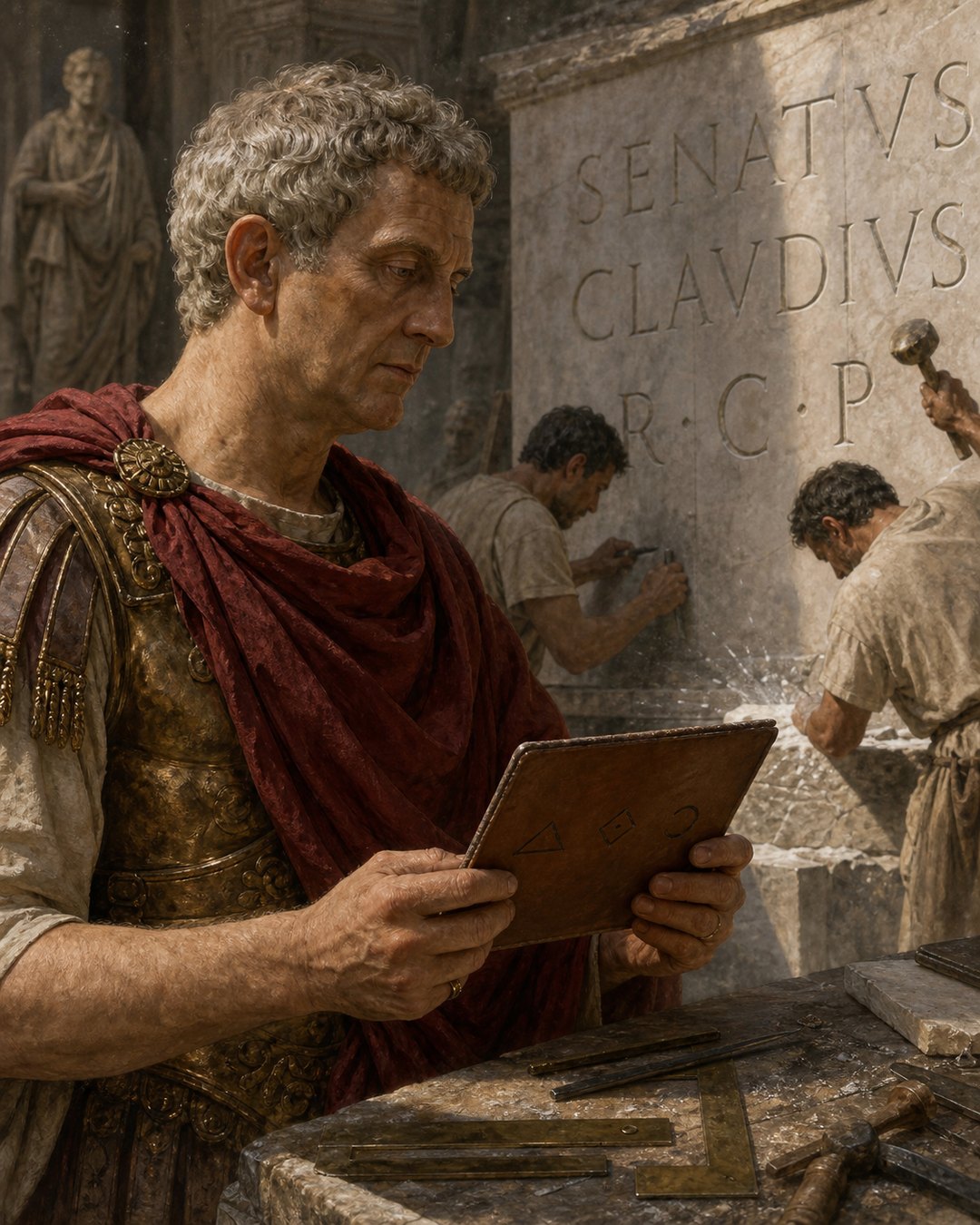
Claudius did not stop at writing histories in Latin and Greek. Before he became emperor, he designed three additions to the Latin alphabet, argued for them in a book, and later used imperial power to put them into public circulation. Suetonius says the characters appeared in books, Rome’s daily gazette, and inscriptions on public buildings. … Read more