Claudius Left Court When He Smelled the Salii’s Meal
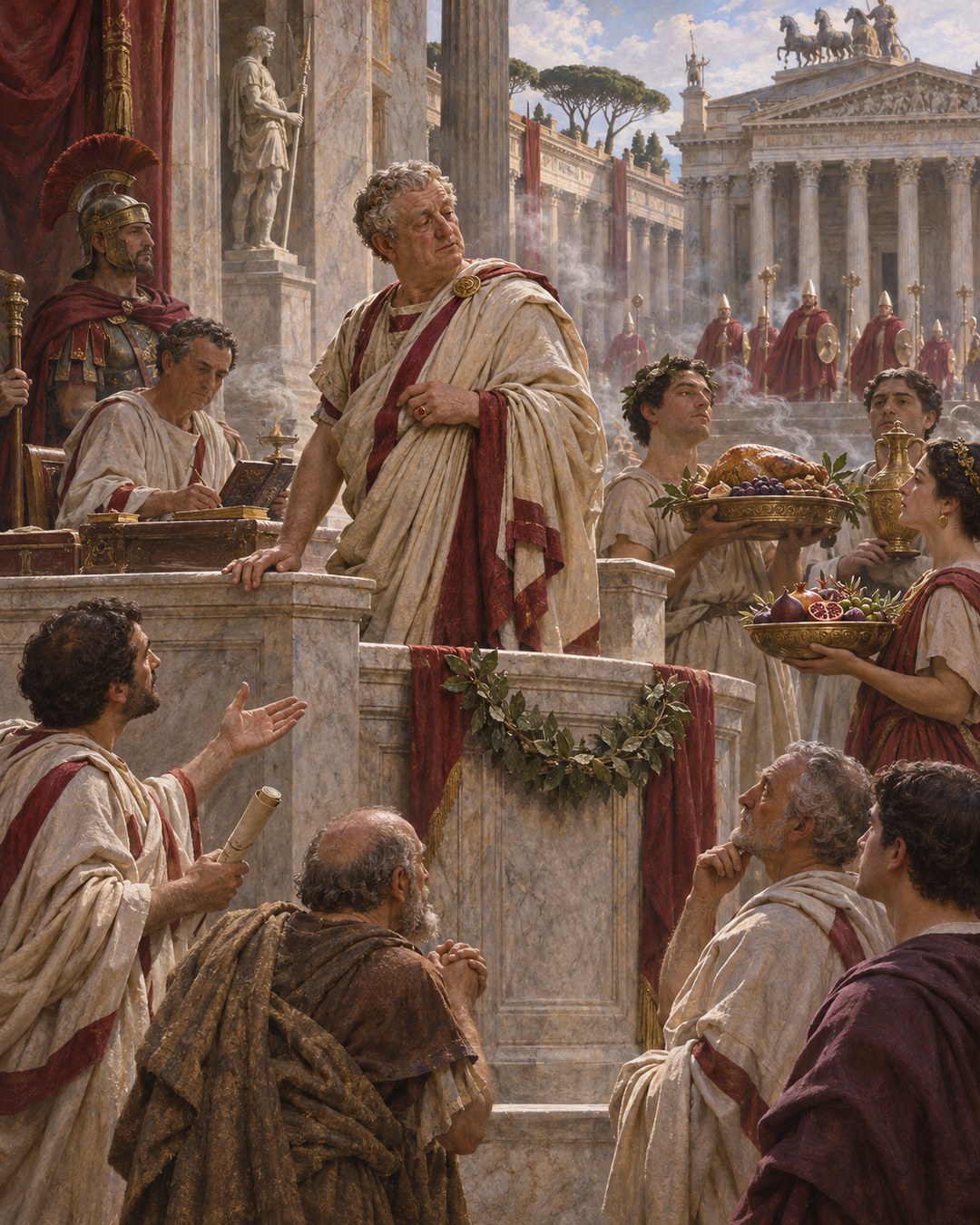
Emperor Claudius was holding court in the Forum of Augustus when another institution of Roman power reached him through the air. Nearby, in the Temple of Mars, a meal was being prepared for the Salii, the ancient priesthood associated with Mars. Claudius caught its savour. According to Suetonius, he left the tribunal, went up to … Read more
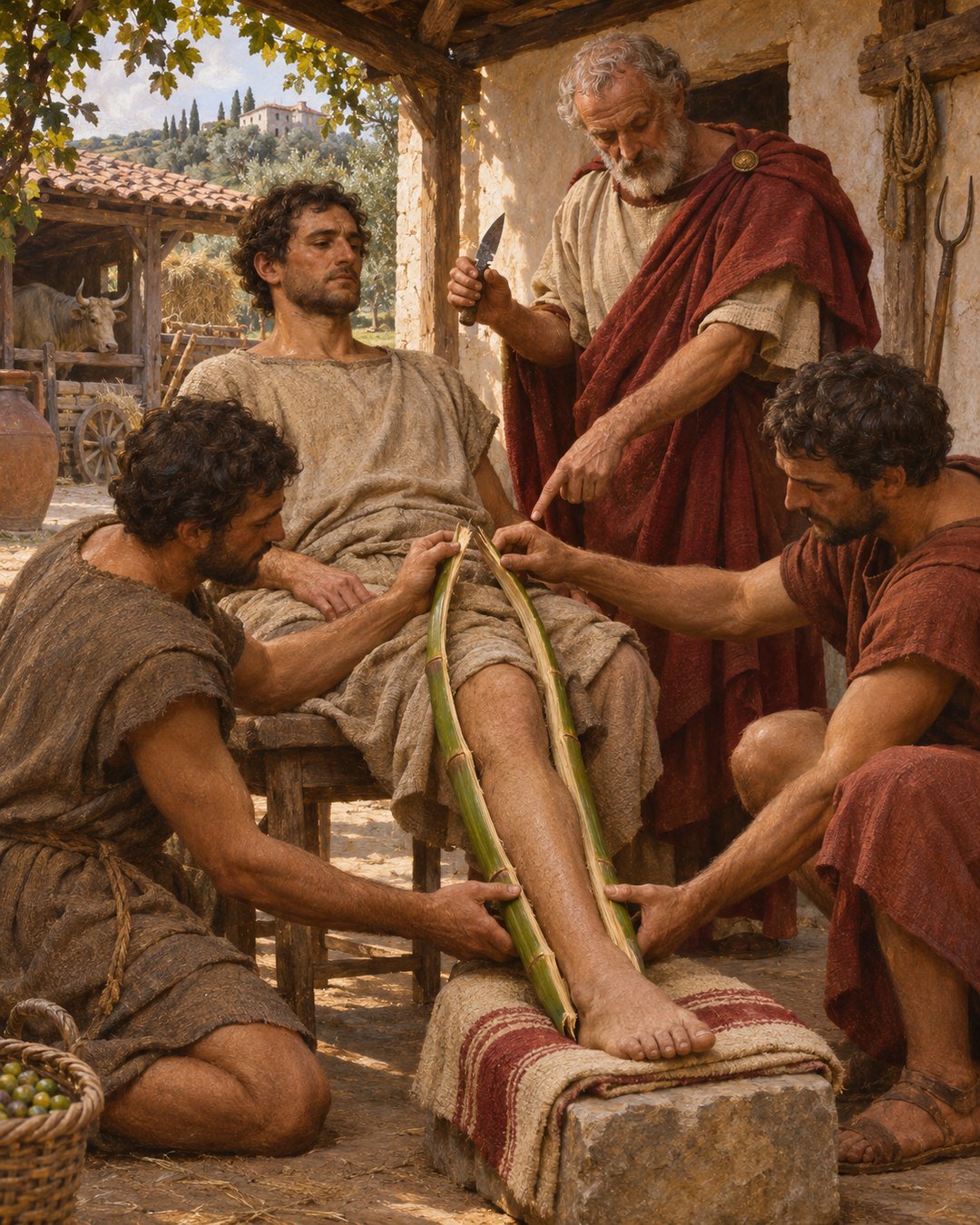
Two Men Closed a Split Reed over a Roman Fracture

A green reed four or five feet long, two helpers, a knife and a sequence of spoken sounds formed one of Cato’s most startling farm remedies. The procedure was meant for a dislocated or fractured bone. It did not begin with a drug. It began by splitting the reed from end to end and arranging … Read more

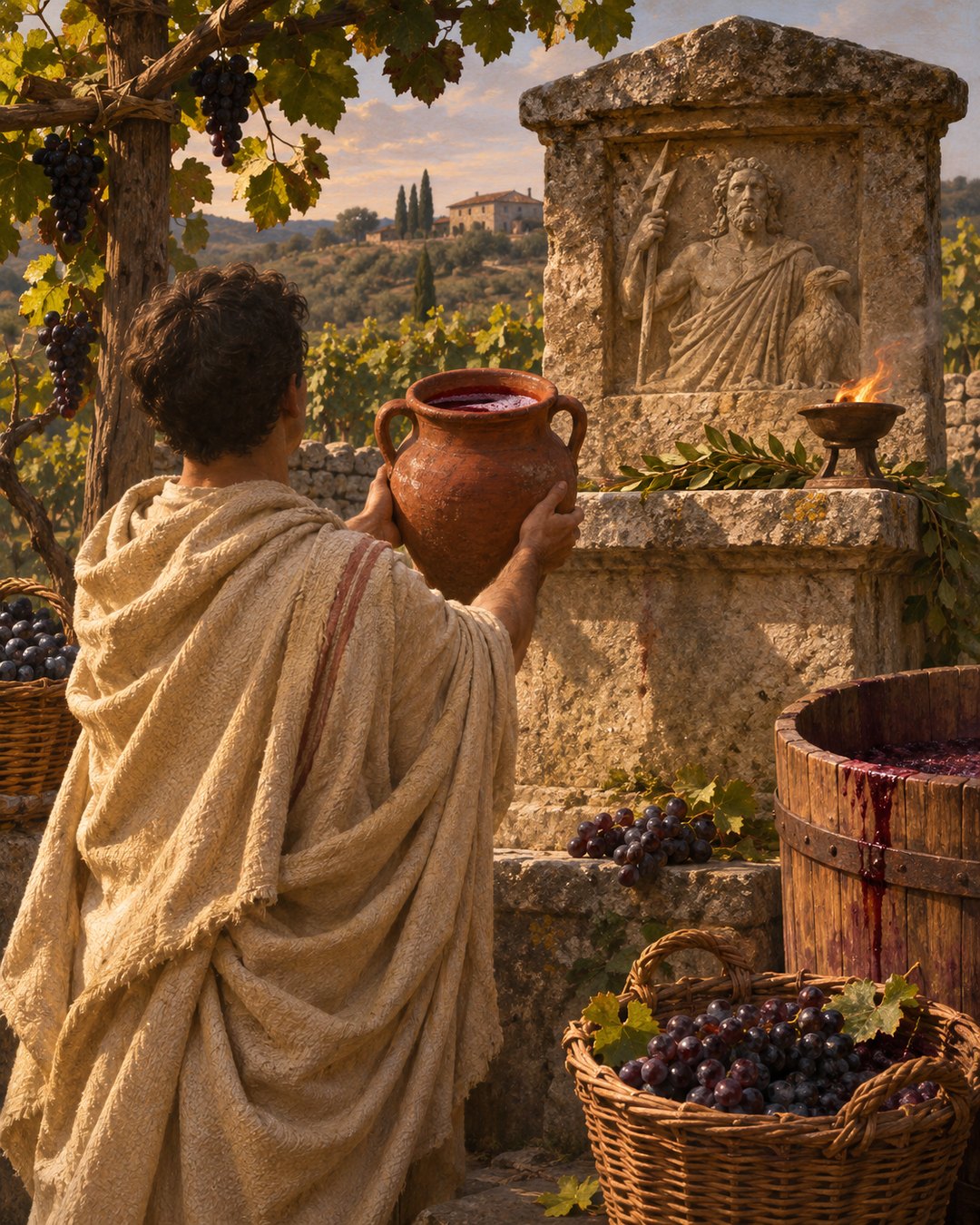
Jupiter Claimed the First Wine from Latium’s Vintage

On April 23, a Roman could meet two very different stories in the same festival. Myrtle, mint, rushes and roses belonged to Venus. New wine belonged to Jupiter. Ovid does not smooth away that awkward division. He stops over it, asks why the Vinalia carries the presence of one deity but the claim of another, … Read more

Silver Eyes Watched from a Roman Bacchus Tripod Mount

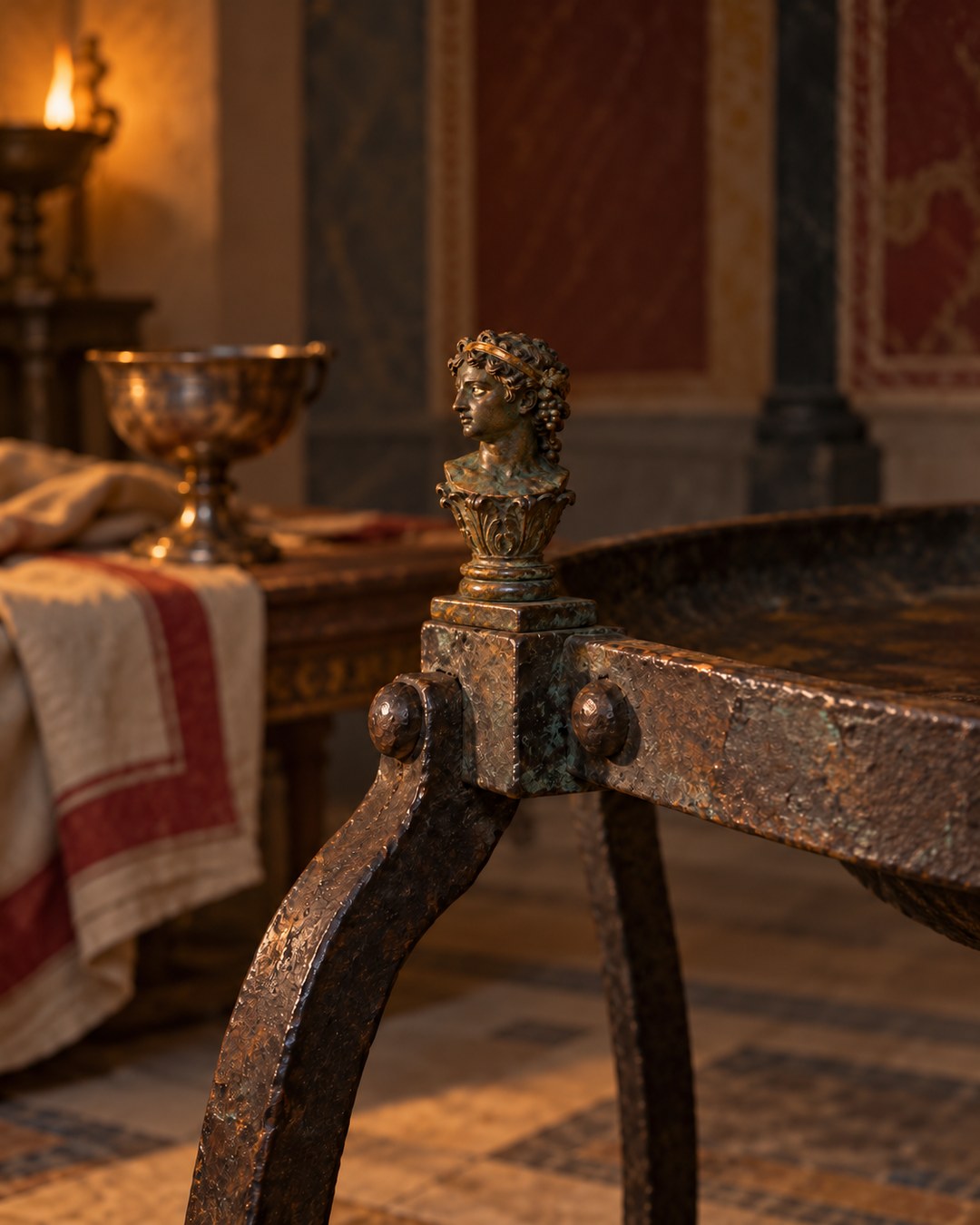
Two tiny silver eyes interrupt the brown-green surface of a copper-alloy face. The head turns left. Flowing hair rises beneath a diadem, while the bust emerges from an acanthus calyx fixed over a square hollow base. This is not a freestanding household god. It is a mount from an iron tripod. The London Museum dates … Read more

A 54-Millimetre Isis Balanced a Roman Steelyard

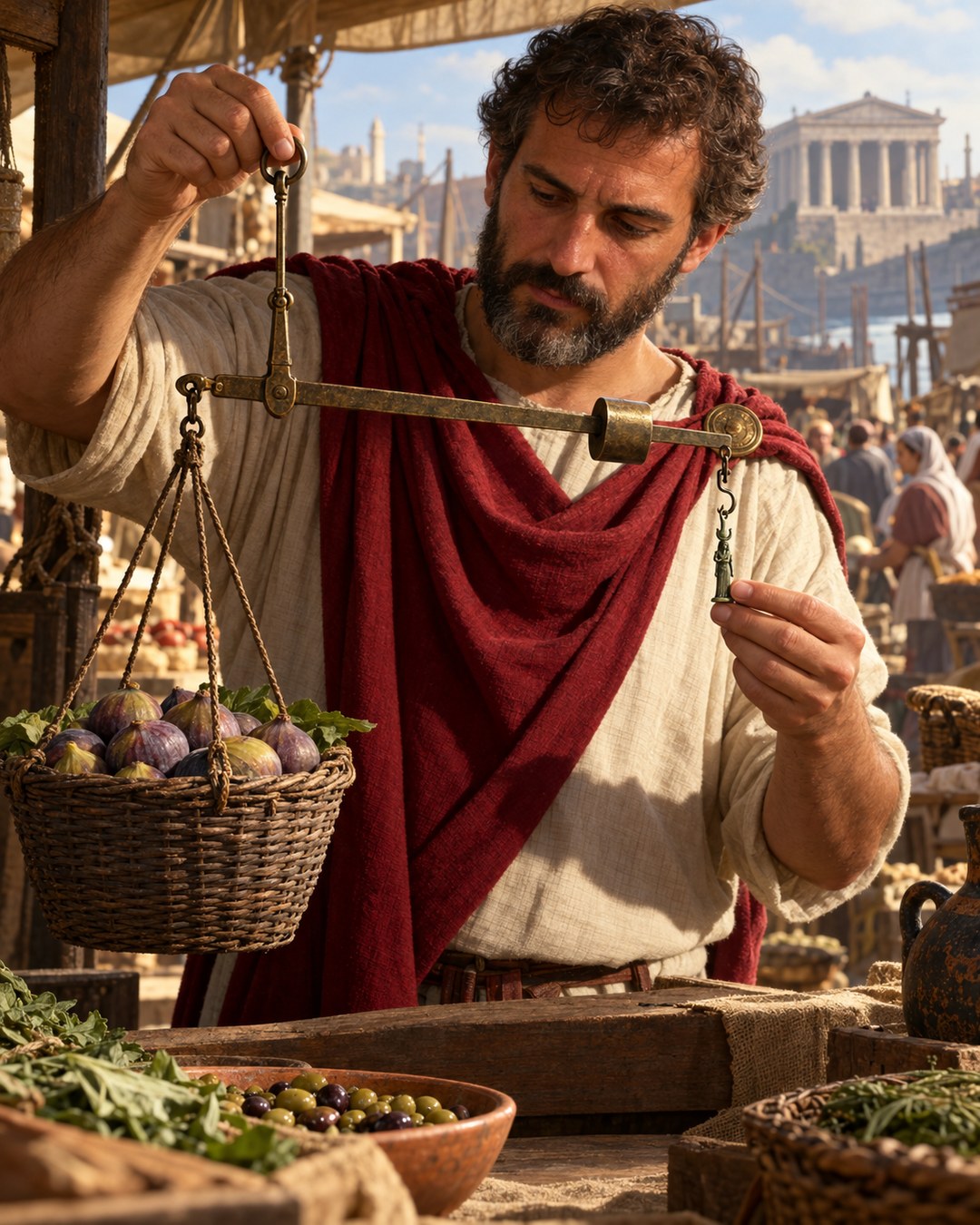
A trader lifts a bronze beam while a basket hangs below it. On the longer arm, the counterweight is not an anonymous lump. It has been cast as Isis. The surviving object in the London Museum is only 54 millimetres long, 35 millimetres wide and 22 millimetres high, but those dimensions were enough to give … Read more

Why a Roman Pioneer’s Axe Was Rebuilt in Miniature

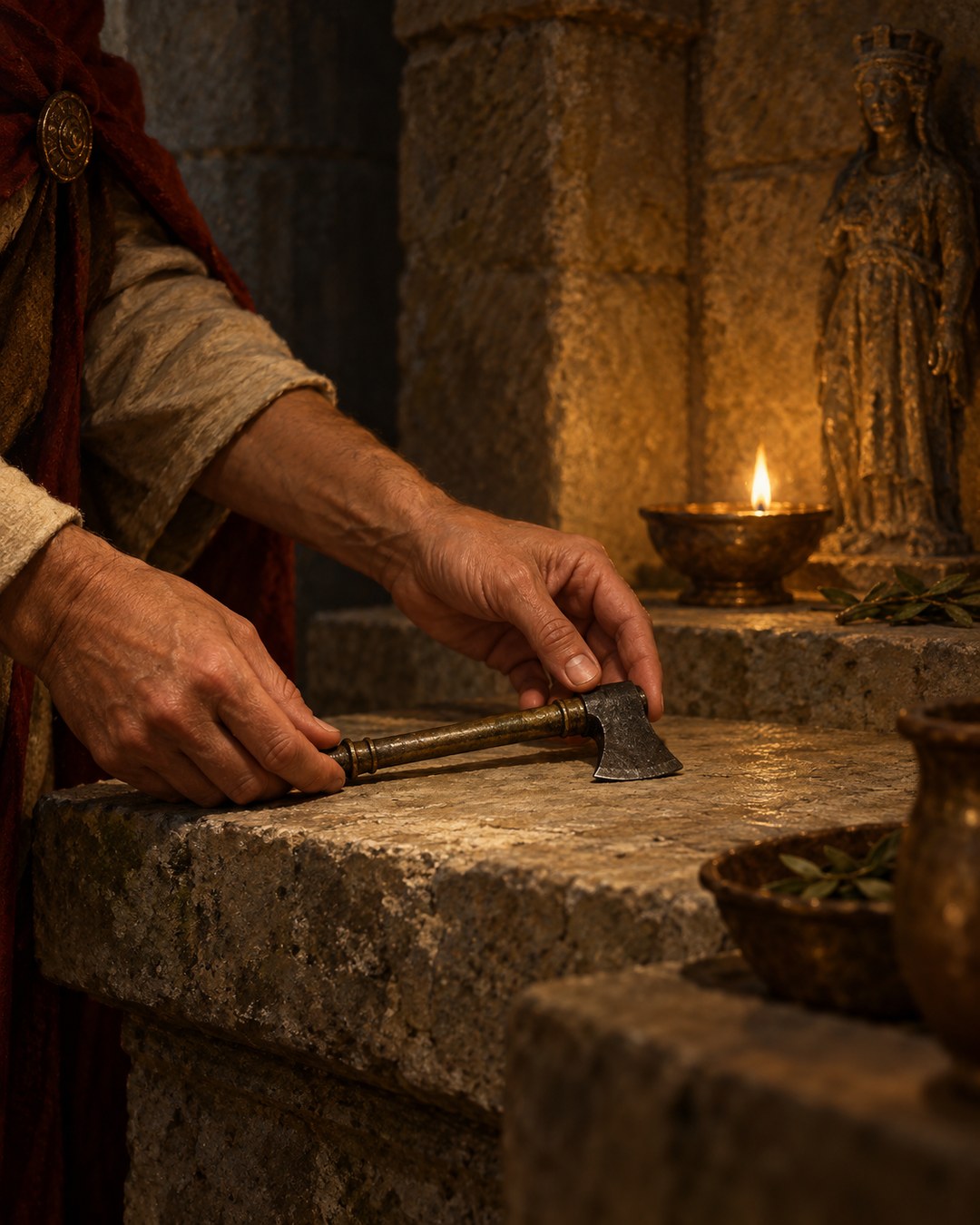
An axe normally announces itself through scale. Its head needs weight, its haft needs reach, and its edge belongs in the world of timber, earth and hard physical work. A Roman object in the London Museum reverses that expectation. It is recognisably a pioneer’s axe, yet it is only 178 millimetres long, 88 millimetres wide … Read more

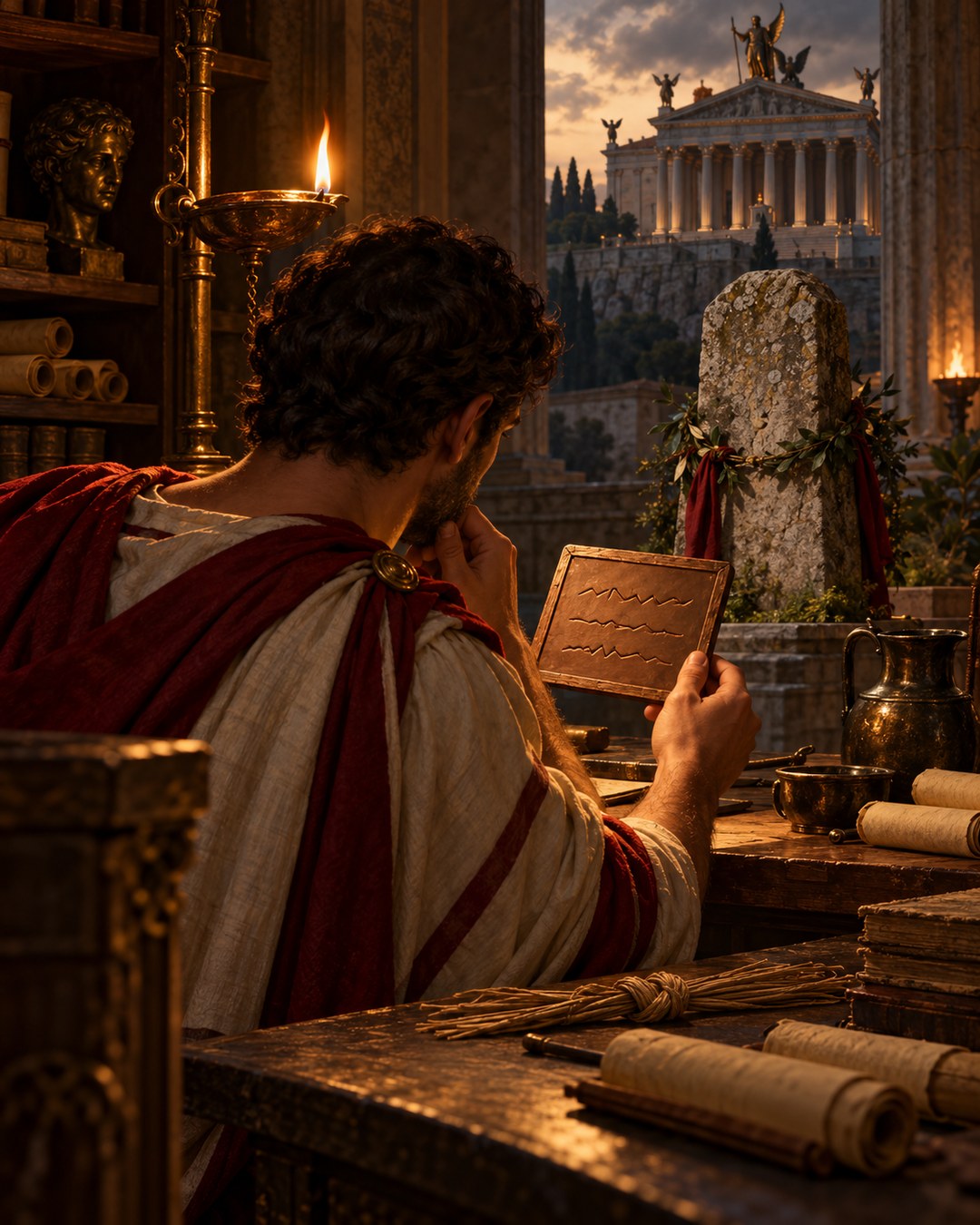
Laberius Gave Democritus’s Blindness to a Miser

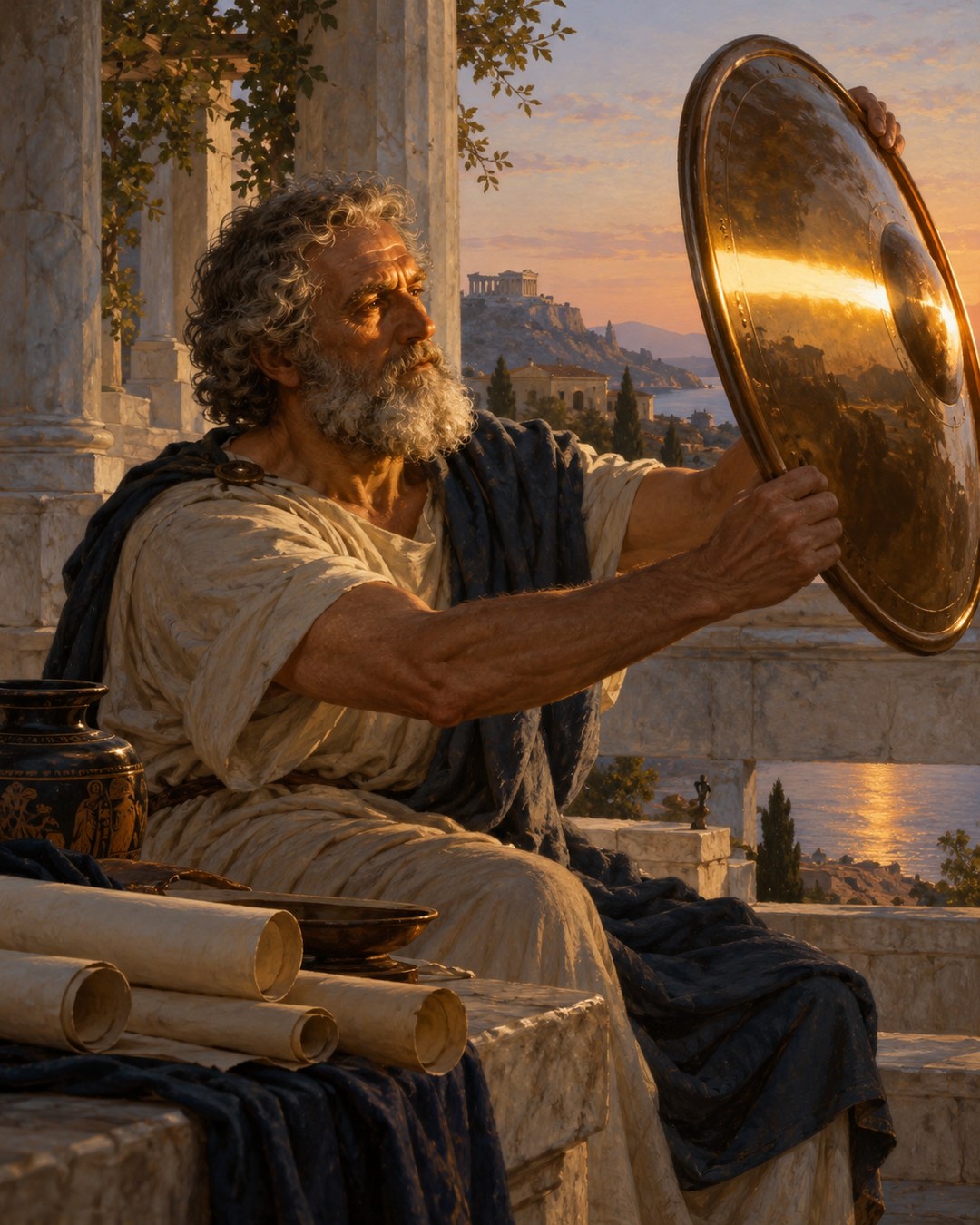
Democritus faced a polished shield toward sunrise. In the story preserved by Aulus Gellius, the blaze reflected from brass destroyed the philosopher’s sight. He wanted fewer distractions while examining nature. Then the Roman playwright Laberius took the device away from philosophy and placed it in the mouth of a rich miser. The miser did not … Read more

Gellius Hid a God inside Three Lines of Wordplay

Aulus Gellius found an old riddle and refused to solve it for his readers. It occupied only three iambic lines. Its speaker seemed to be missing something once, twice, or both ways at once, yet claimed that no one would willingly exchange places with Jupiter. The language looked compact enough to copy in a notebook … Read more

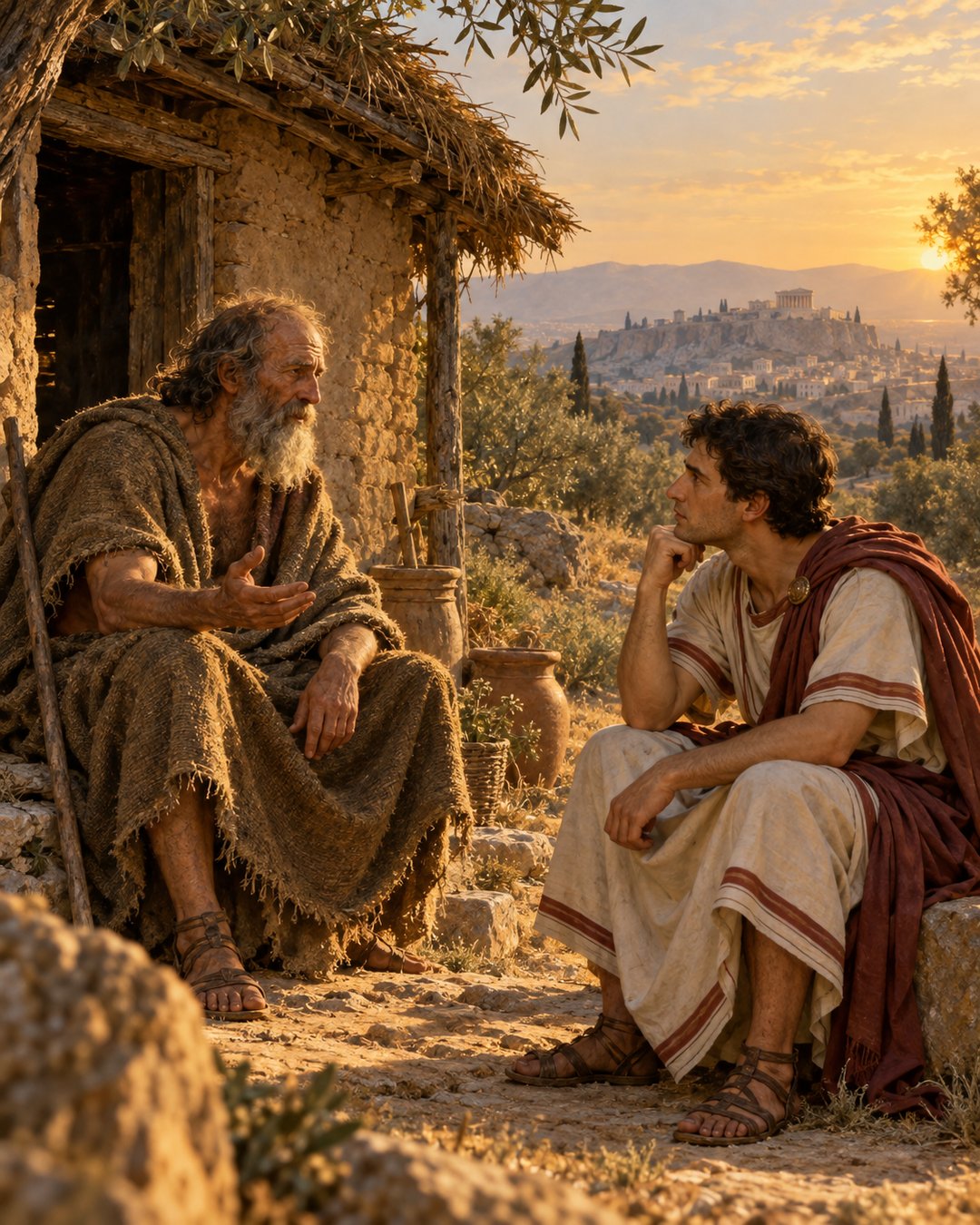
Time Was Peregrinus’s Last Witness

Outside Athens, the philosopher Peregrinus lived in a hut and offered Aulus Gellius a test of conduct with every witness removed. Suppose neither human beings nor gods would ever know what you did. Would wrongdoing become safe? Peregrinus answered that a wise person would still refuse it. Justice, honesty, and duty should govern action before … Read more

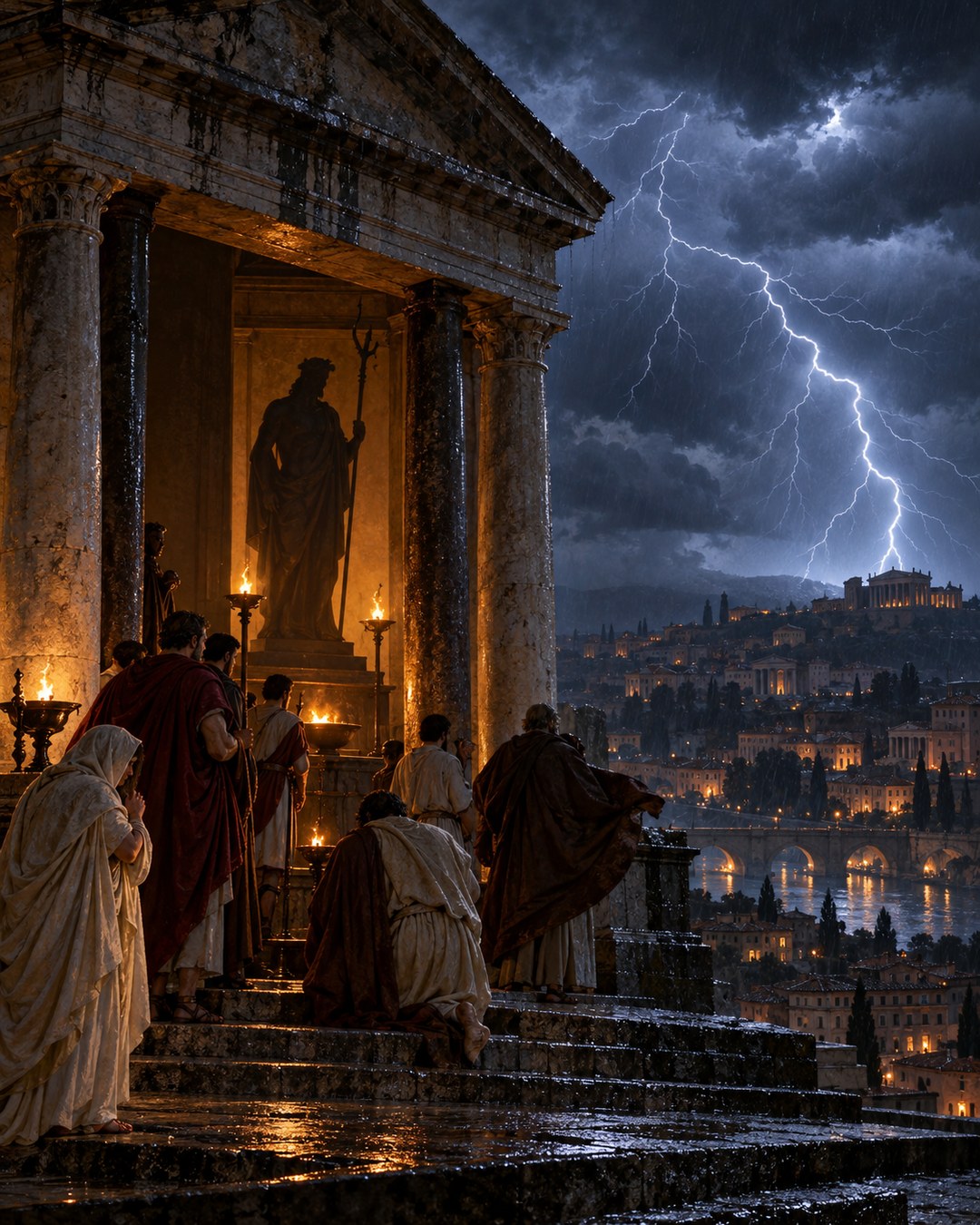
Rome Gave Night Thunder to a God Ovid Barely Knew

Ovid reaches June 20 and pauses over a god he cannot confidently explain. A temple, he says, was believed to have been dedicated to Summanus when Pyrrhus threatened Rome. Then comes the admission: Summanus, whoever he may be. The uncertainty is striking because the god still had a precise responsibility. Pliny the Elder says Romans … Read more