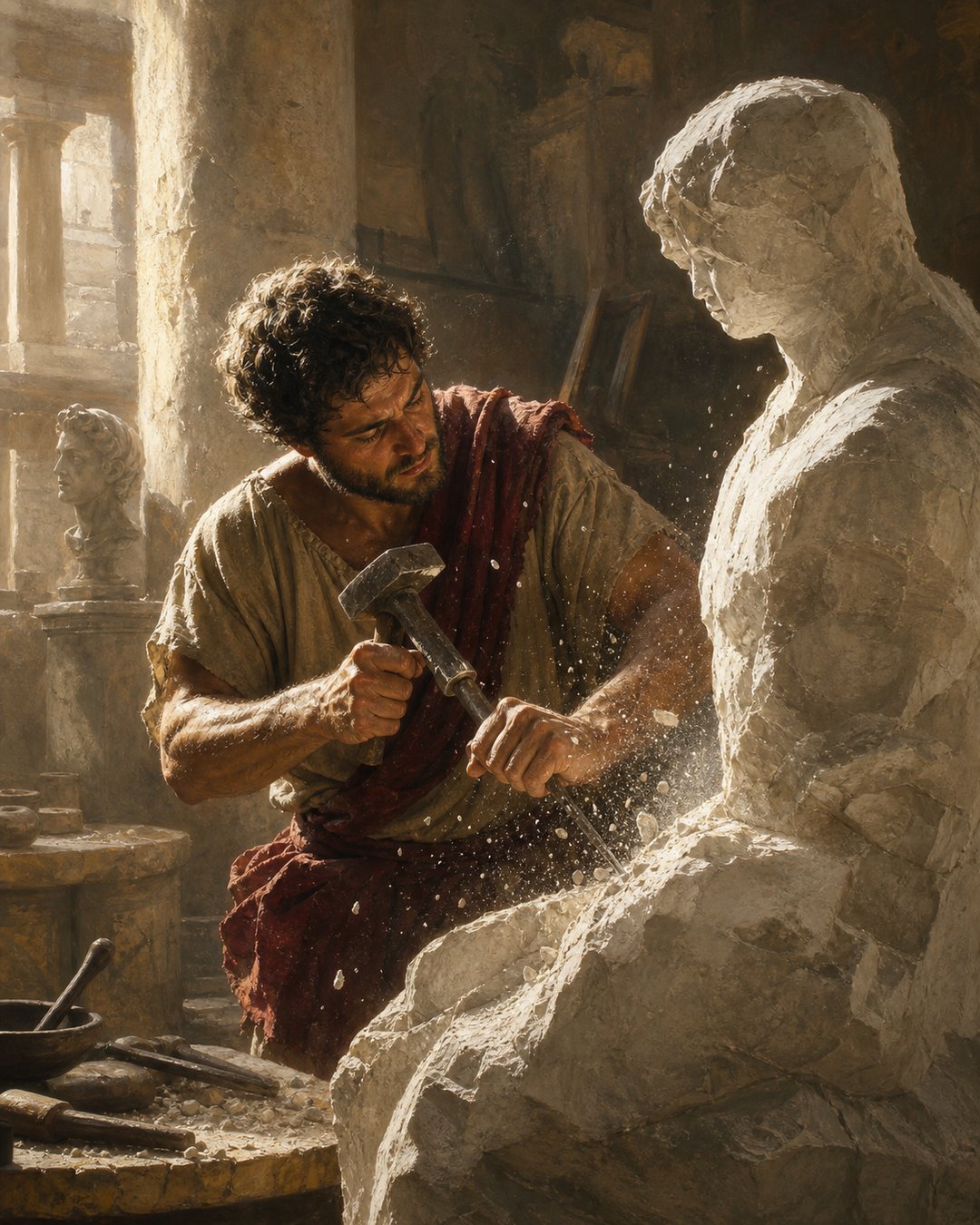
How Roman Quarrymen Moved a Mountain One Block at a Time

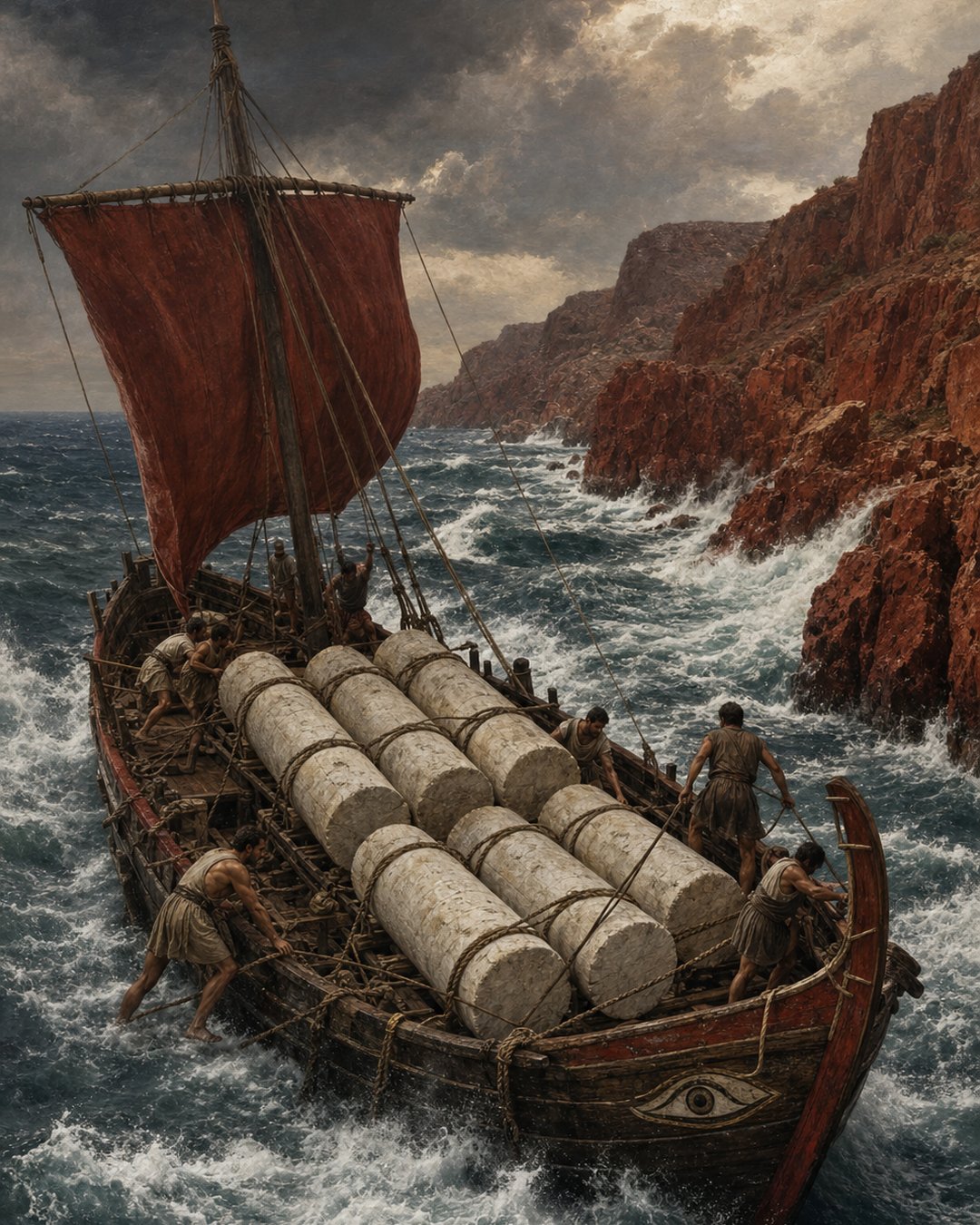
A Roman quarryman faced a problem larger than any finished column. The useful stone was still joined to a hillside, and every cut invested labor in a block that might crack the wrong way. Before carts, cranes, masons or architects could claim it, workers had to persuade a chosen volume of rock to separate along … Read more

Rome’s Sharpest Pair Was One Tool Made from Two Blades

A single blade depends on a backing surface or on the material’s own resistance. Pair two edges and the problem changes: each becomes the other’s support. As a Roman shear closed, its edges passed side by side, trapping fibres along a moving line. Wool, cloth or hair did not have to remain rigid. The tool … Read more

The Roman Ship Pump That Fought Every Leak at Once

A wooden ship can admit water in many places while collecting it in one. Spray comes over the side, rain enters from above and seepage works through seams below sight. Gravity carries those separate arrivals toward the bilge, the lowest internal space of the hull. That concentration creates danger, but it also creates an opportunity. … Read more

The Roman Water Screw Made Uphill Flow a Matter of Rotation

Water naturally finds the lowest available place. Roman builders and farmers often wanted it somewhere else: above a field channel, outside a wet excavation, or beyond a low basin that gravity alone could not empty. A bucket solves the problem one load at a time, but every lift begins again with an empty container and … Read more

The Roman Codex Put Distant Pages Under One Hand

A scroll makes reading a journey along one continuous surface. One hand unwinds what the other gathers, and the visible passage sits between two rolls of material. The codex reorganized that journey. Sheets were folded, gathered and bound along one edge so each leaf could turn without dragging the entire text behind it. A reader … Read more

The Dirty Coastal Work Behind Rome’s Most Powerful Color

A purple border could look effortless when it entered a Roman procession. The cloth lay against white wool, the color seemed deep enough to belong there forever, and the wearer received the attention. Far from the forum, however, that strip began inside a predatory sea snail. Coastal workers gathered baskets of murex, broke or opened … Read more

Roman Hypocausts Put Fire Beneath the Floor

Warmth in a Roman heated room arrived through surfaces that seemed solid. Beneath the floor, however, stood rows of short brick pillars with a low dark void between them. A furnace opened into that space. Hot gases moved under the suspended floor and sometimes climbed through hollow wall channels before leaving the building. The hypocaust … Read more

Roman Roof Tiles Made Rain Follow Rules

Rain did not need to be stopped on a Roman roof. It needed to be persuaded downhill. Flat fired-clay tegulae lay in overlapping rows, each with raised edges. Curved imbrices covered the long joints between them. Water struck thousands of hard surfaces, crossed one tile after another and finally left the building at the eaves. … Read more

Roman Anchors Made Stopping a Ship Active Work

A ship could lower a heavy anchor and still keep moving. Weight carried the device through dark water, but stopping began only when a fluke met the seabed, the stock rolled it into position and the cable pulled at an angle low enough to make it bite. Wind continued pushing every plank above. Roman sailors … Read more