Why the Anvil Matters as Much as the Hammer

A hammer can strike hot iron in open air, but without support much of the blow merely sends the workpiece away. Forging begins when the metal is caught between two forces: the descending hammer and a surface that refuses to follow it. The anvil is that second participant. It has no handle and makes no … Read more

The Tiny Whorl That Kept Roman Thread in Motion

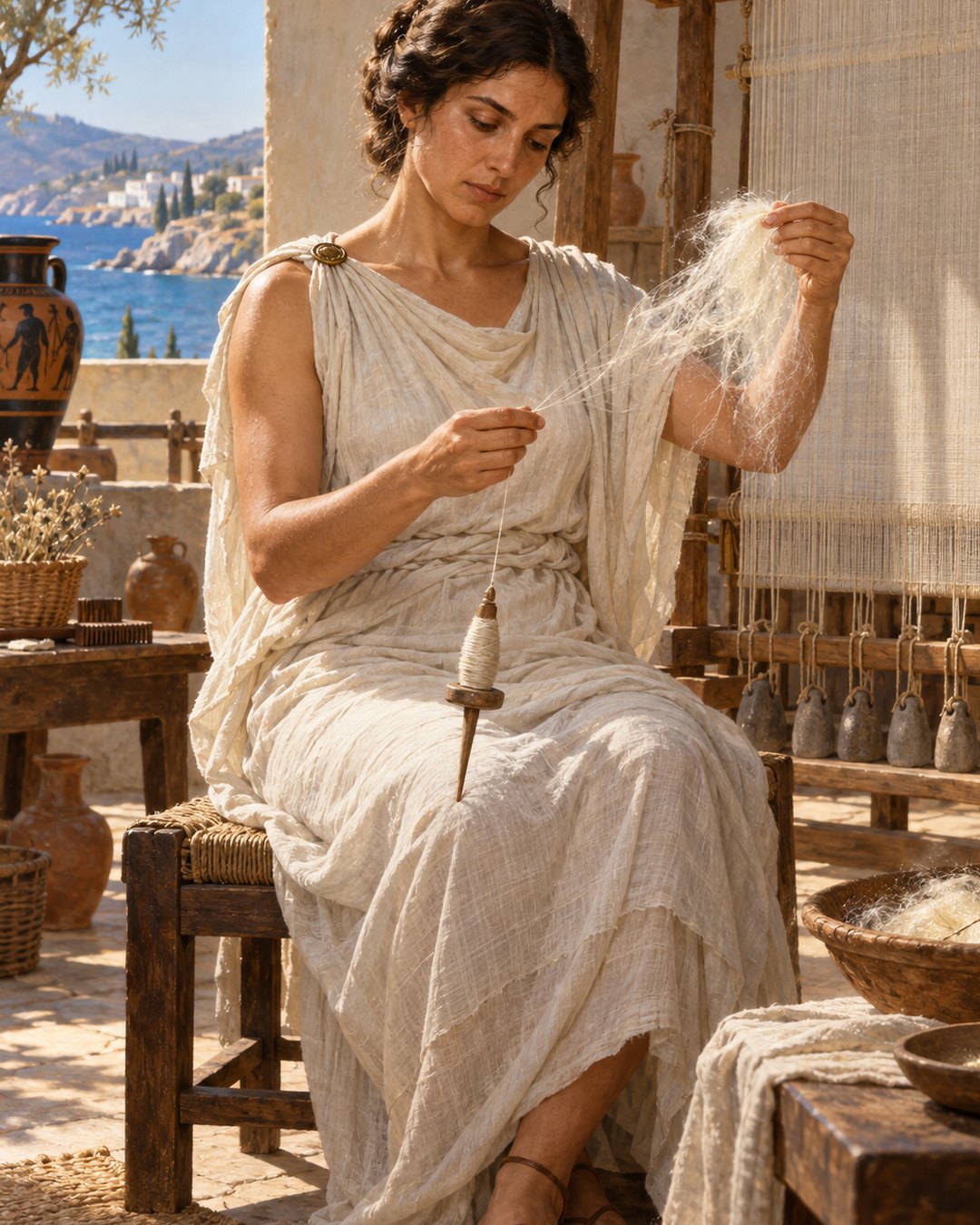
A Roman spinner did not turn a heap of wool into thread by pulling it thinner. Untwisted fibers can slide apart almost as easily as they can be drawn out. The decisive change came when the emerging strand began to rotate. Twist made neighboring fibers press and wind against one another, converting a loose cloud … Read more

Winning by Fractions: How a Roman File Shaped Metal

Forging gets the sparks, but fitting decides whether the object works. A Roman smith could hammer a bar close to shape and still find that a joint bound, an edge stood proud or a pin refused its opening. One more heavy blow might bend the part or undo an hour of work. The remaining error … Read more

How Two Points Preserved a Measurement Across the Workshop

A number is not the only way to remember a distance. A Roman craftsperson could open two pointed arms across the width of a fitting, lift the instrument away and carry that exact span to another piece. Nothing had to be called six fingers or copied from a ruler. The distance survived physically between the … Read more

From Butchered Bone to Sewing Needle

After meat had been removed, an animal bone still contained a workshop problem. Its dense outer wall was hard enough to become a tool, but it curved, narrowed, enclosed a hollow and carried pores, joints and scars from life. A needle could not simply be snapped from it. The maker had to find one straight, … Read more

How Straight Wooden Staves Learned to Hold Roman Wine

A barrel begins with a contradiction. Its wall is made from boards that are mostly straight, yet the finished vessel is curved in two directions and must resist liquid pressing outward at every seam. The cooper cannot hide a broad patch behind plaster or glue. Each narrow stave has to meet its neighbors continuously from … Read more

The Hidden Tension That Kept a Roman Wheel Together

A wheel beside a Roman road looked simple only after the wheelwright had hidden every disagreement inside it. The hub wanted to split around its axle hole. Spokes wanted to loosen when timber dried. Felloe segments wanted to become a polygon instead of a circle. An iron tire had to fit tightly enough to bind … Read more

Why the Fire Never Touched the Pots in a Roman Kiln

A Roman pot could survive shaping, trimming and days of drying, then fail in the last few hours. Trapped moisture burst walls. A vessel placed too near a hot channel warped. Smoke altered a surface. One rushed opening cracked a load that had endured the full fire. The kiln made this risk manageable by separating … Read more

The Long Fight Against Rot in a Roman Tannery

A fresh hide carried the shape of an animal and the certainty of decay. Left wet, it putrefied. Dried too quickly, it hardened into a board. Roman tanners had to keep the useful collagen layer while removing hair, flesh, fat and the conditions that allowed rot to begin. The solution was not one bath. Hides … Read more