A Five-Hundred-Pound Silver Charger Needed Its Own Workshop

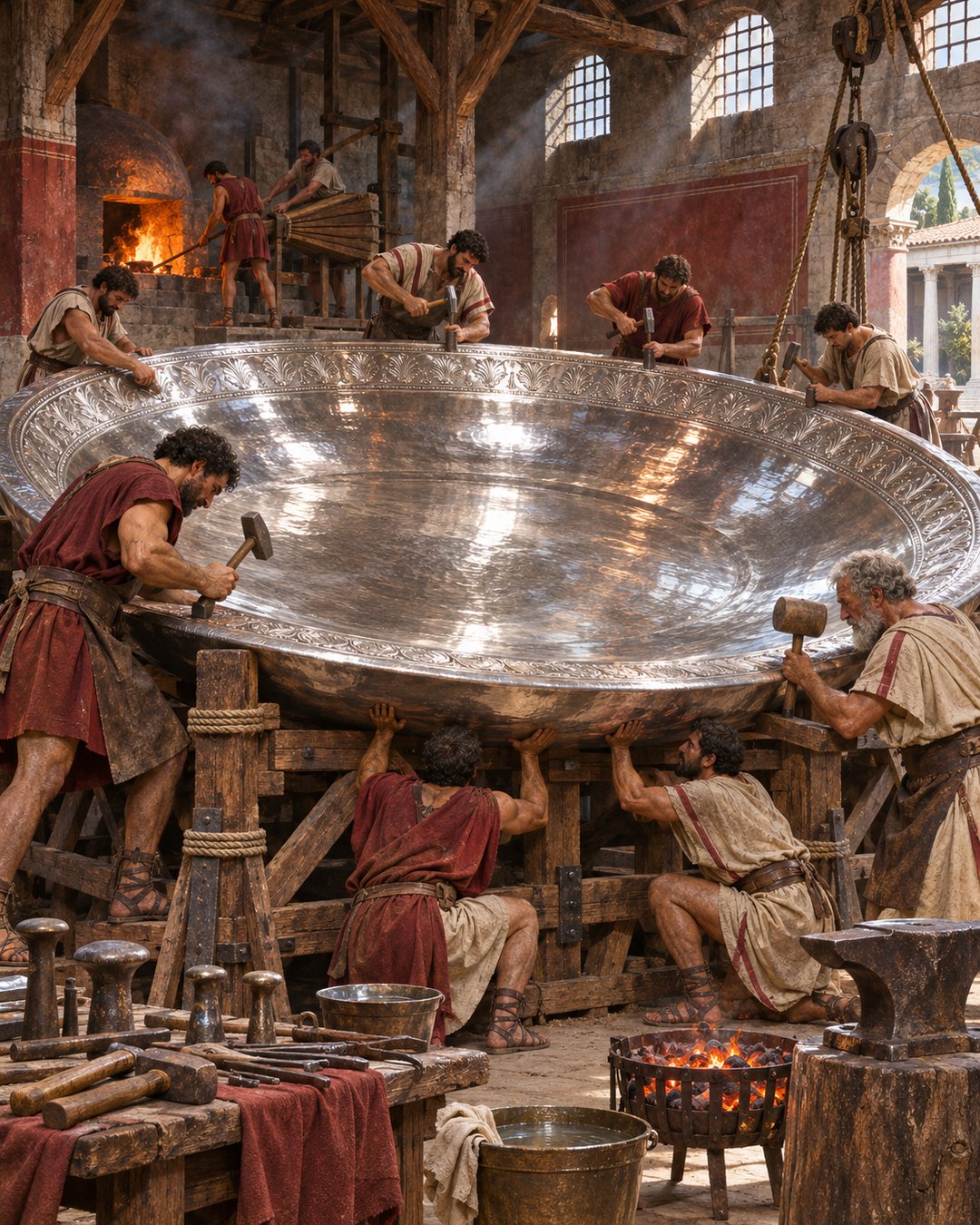
A silver serving charger in the household of Drusillanus Rotundus weighed five hundred Roman pounds. Pliny the Elder says the object was so large that a workshop had to be built specifically to manufacture it. It did not stand alone. Eight companion dishes weighed two hundred and fifty pounds each. Pliny’s first practical question was … Read more

Sand, Not Iron, Cut Roman Marble Slabs

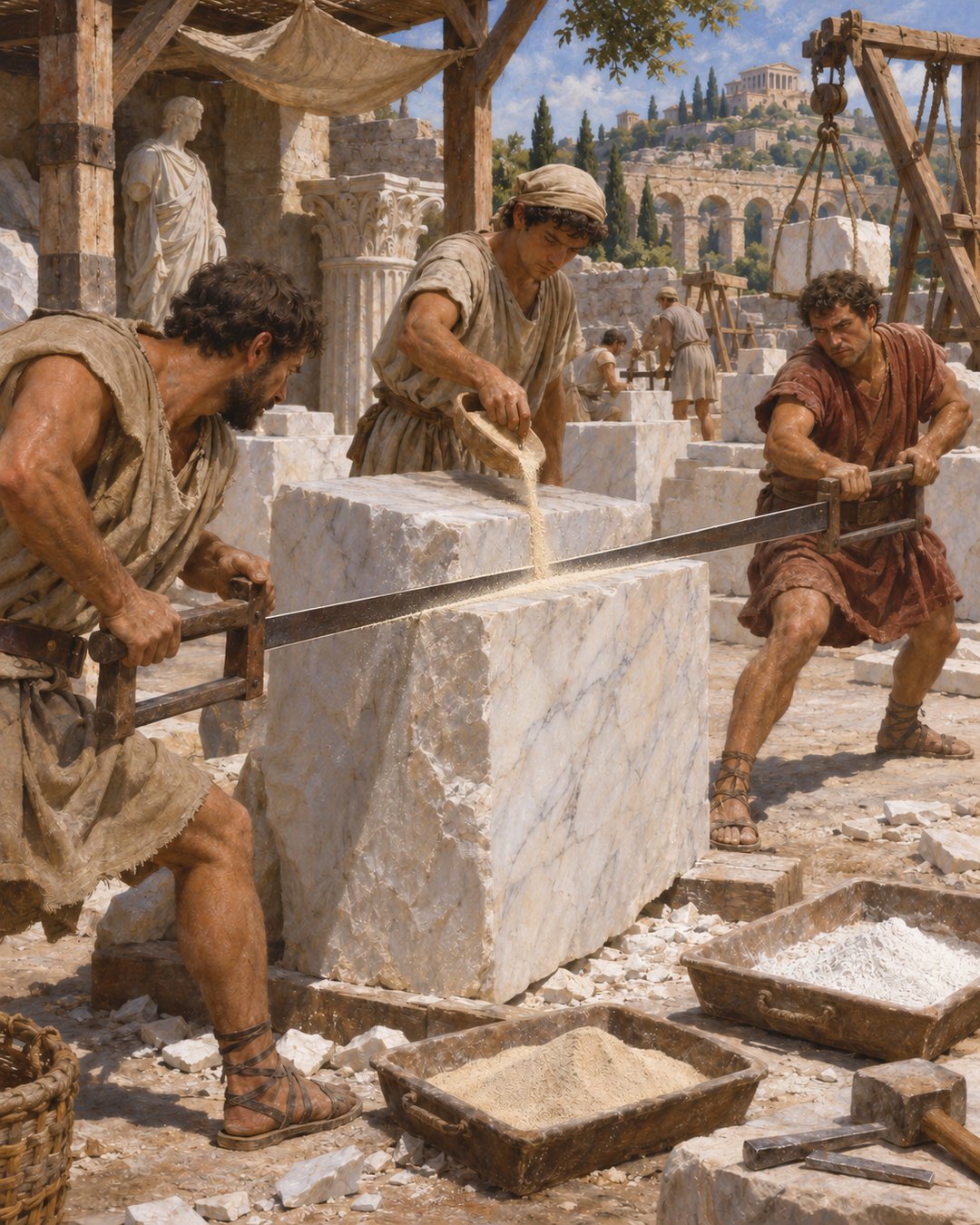
The iron saw in a Roman marble yard was not the part that truly cut the stone. Pliny the Elder says the blade moved back and forth while pressing sand into a fine cleft. The abrasive grains did the work; the iron supplied pressure and motion. That distinction turned an ordinary-looking material into a long-distance … Read more

Lysistratus Took a Plaster Mould Directly from a Living Face

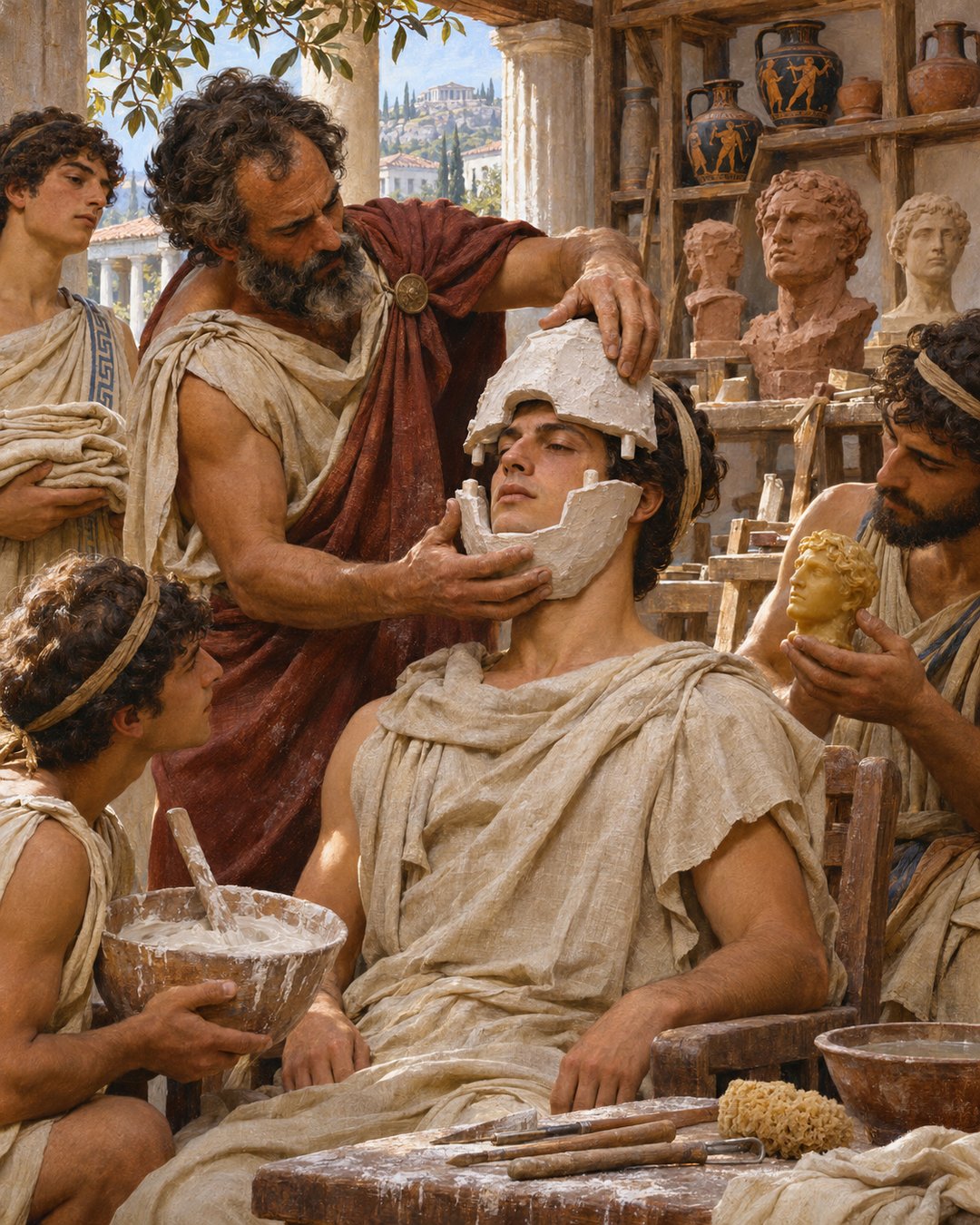
A sculptor searching for an exact likeness could ask the sitter to hold still while wet plaster touched the face. Pliny the Elder credits Lysistratus of Sicyon with this change in portrait making: instead of beginning from an artist’s preferred version of beauty, he took an impression from living features. The mould was not the … Read more

Charcoal Made a Roman Pavement Look Black

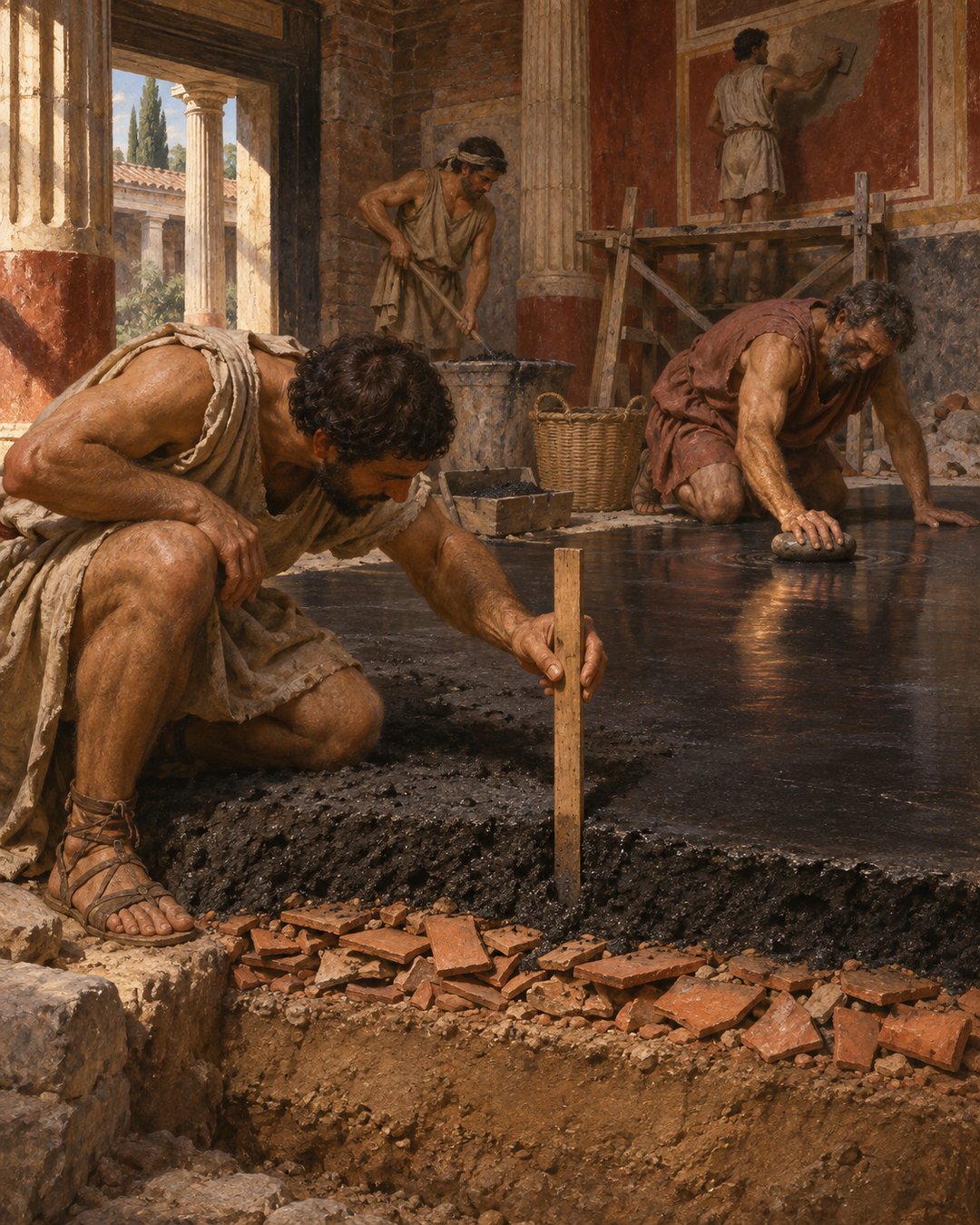
The floor begins with a contradiction. Builders spread charcoal over compacted material, tread it down with sand, lime, and ashes, and make the surface look like ordinary earth. Only after rubbing it with a polishing stone does Pliny say the work takes on the appearance of a black pavement. Nothing in that sequence depends on … Read more

Seven Black Beans Helped Bind Hostile Tongues

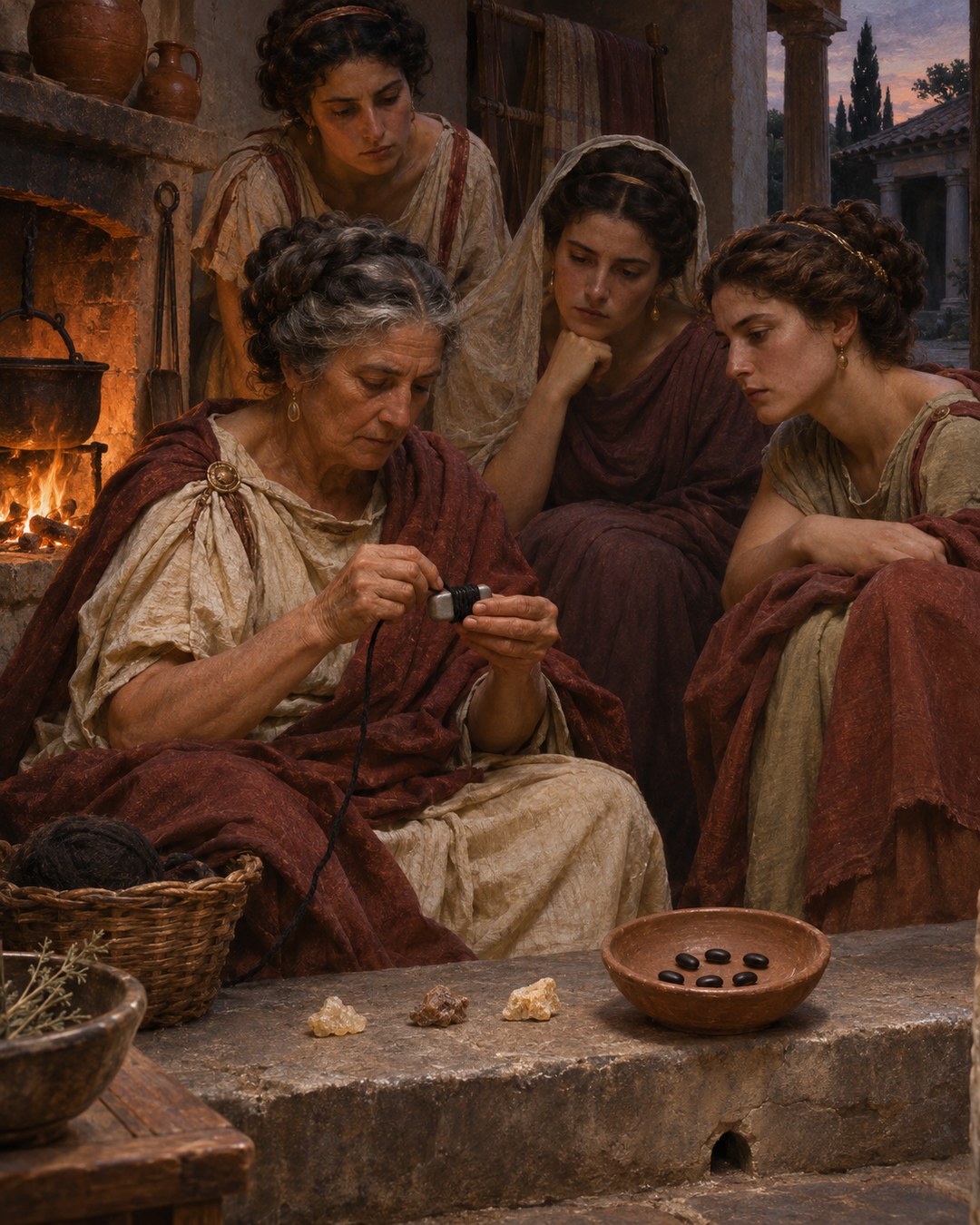
On the last day of Rome’s festival for the dead, Ovid turns away from tombs and public offerings. He leads his reader to a threshold, a mouse hole, and an old woman who cannot stop talking while she serves a goddess defined by silence. Her equipment is small enough to fit around a hearth: three … Read more

Crossed Boards and Chaff Built a Roman Roof Terrace

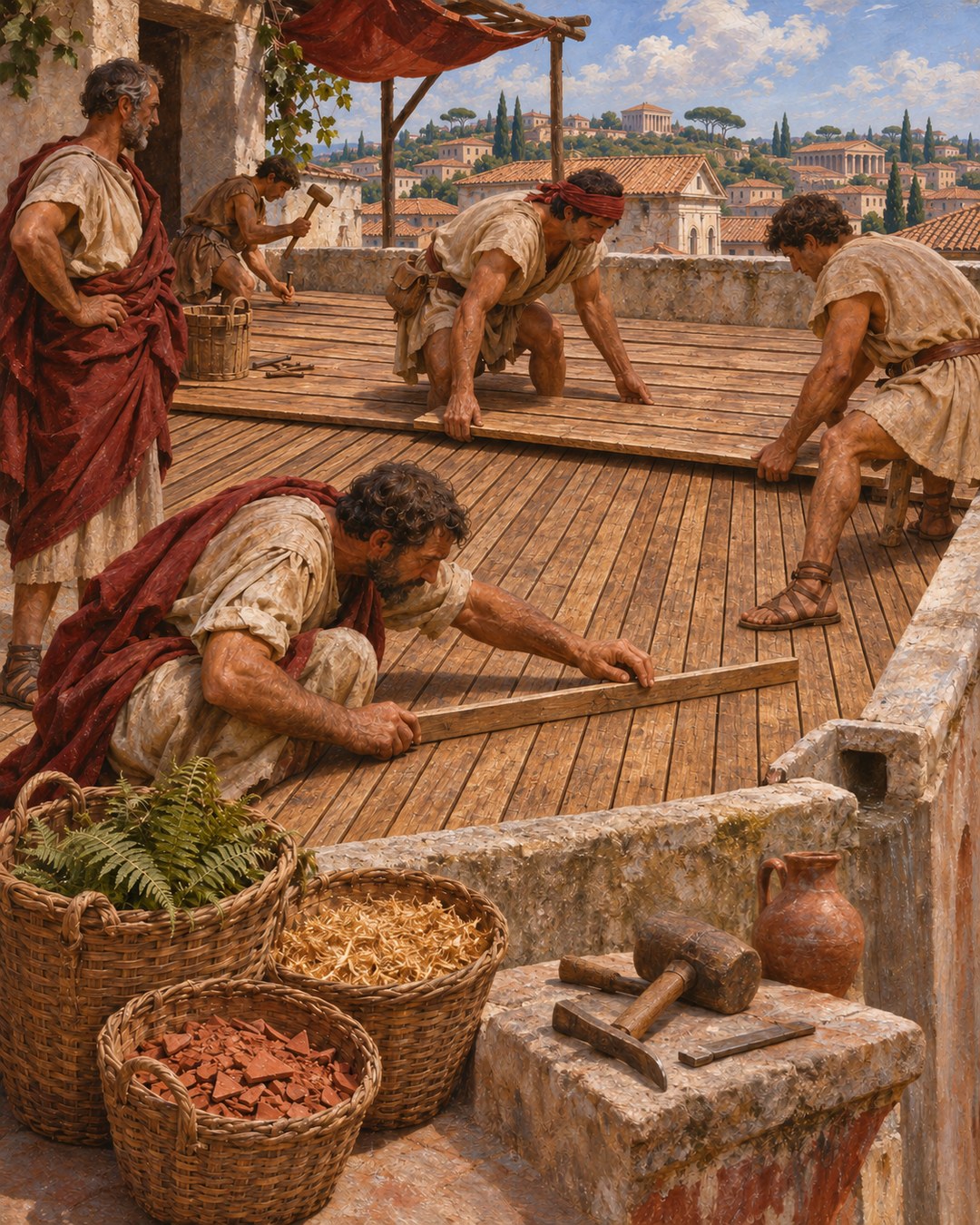
A Roman roof terrace began with an argument against warping. Pliny the Elder describes two courses of boards laid in different directions and nailed at their ends. Before the first mortar bed arrived, carpenters had already made the roof resist its own timber. The finished surface also had to lean. Pliny specifies a fall of … Read more

Sosus Made a Clean Mosaic Look Unswept

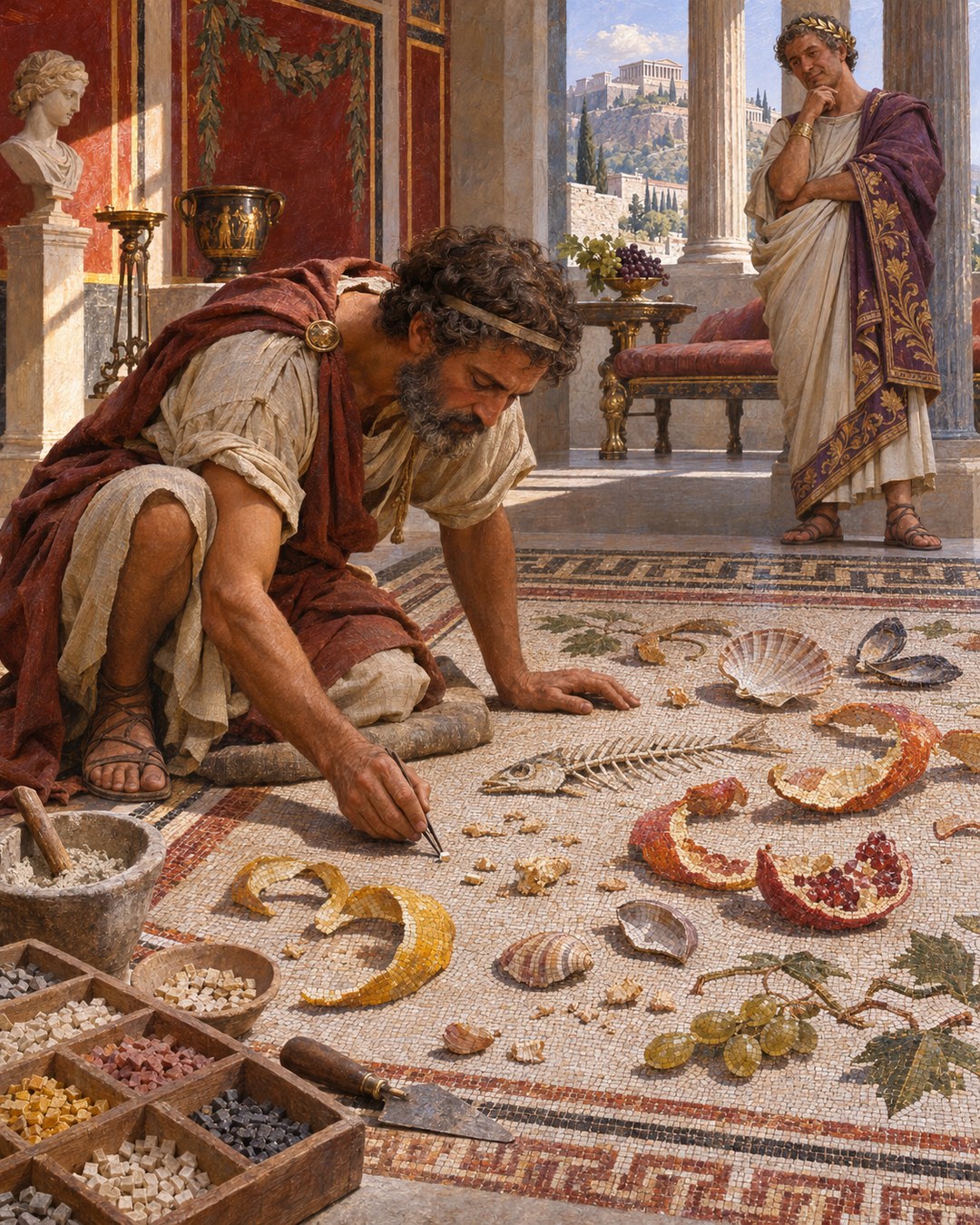
The most famous floor at Pergamum looked as if the servants had stopped sweeping. Pliny the Elder says the mosaic showed remnants of a banquet scattered across the pavement, each scrap assembled from tiny coloured squares but made to appear accidentally abandoned. Its name, the asarotos oikos, means the “unswept room.” The joke depended on … Read more

Cilician Saffron Fell Across Rome’s Theatre Crowds

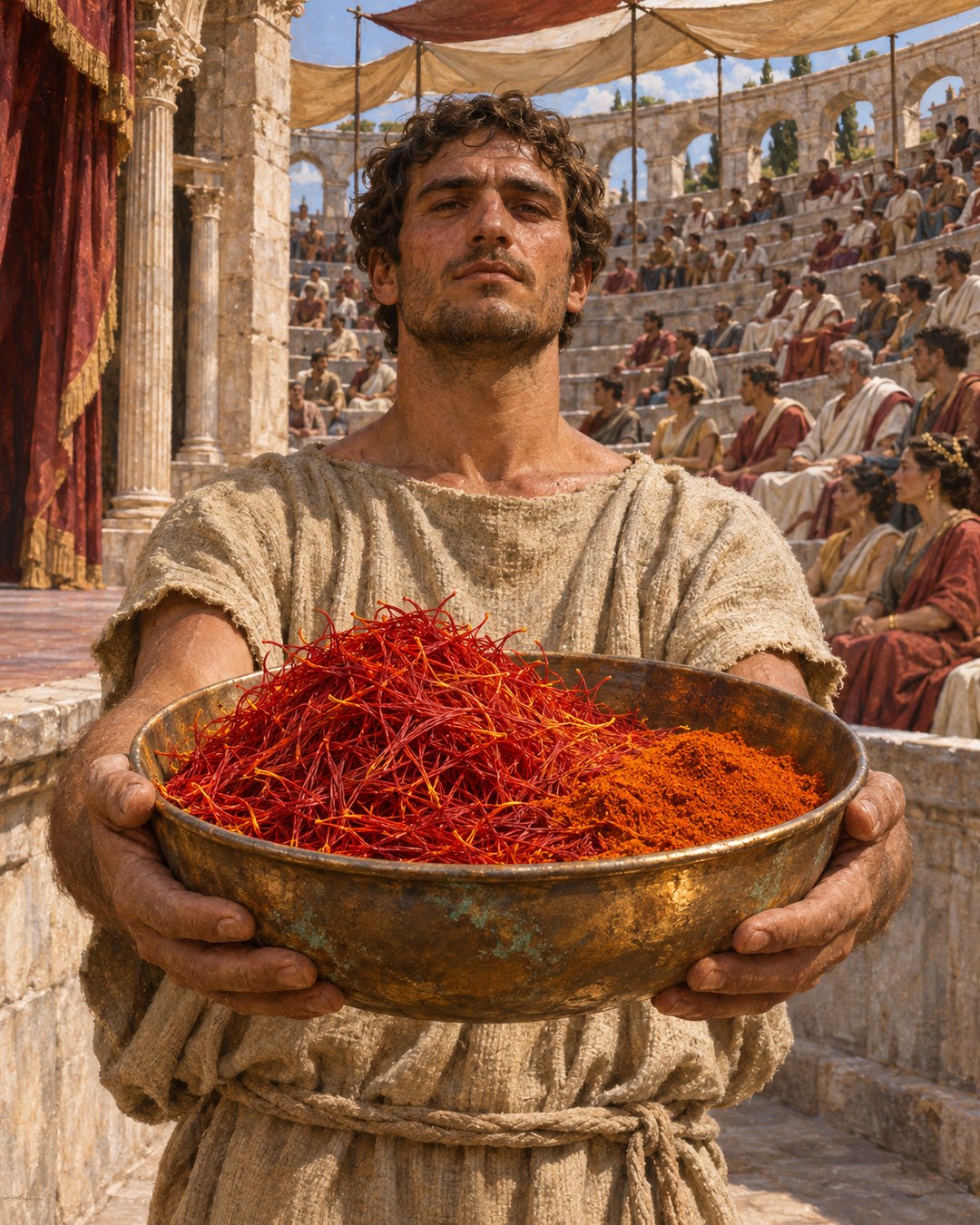
A Roman theatre could work on the nose before an actor delivered a line. Lucretius asks his reader to imagine a stage freshly sprinkled with Cilician saffron, its fragrance rising beside incense from an altar. The image appears in a philosophical argument about the tiny shapes that make sensations pleasant or harsh, but the setting … Read more

Cool Stones Challenged Glass at a Roman Gem Counter

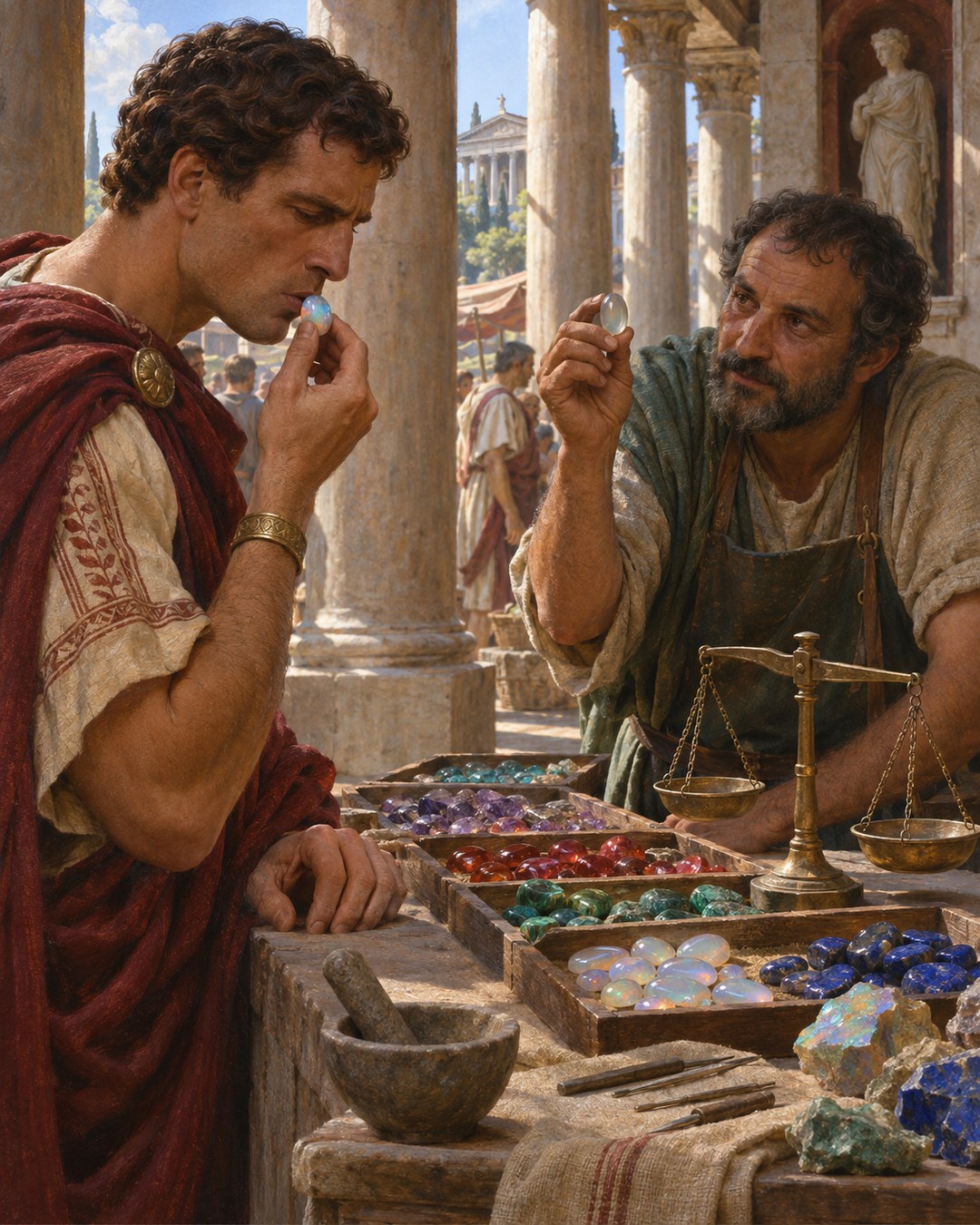
A Roman buyer suspicious of a brilliant stone did not need to begin with a jeweller’s loupe. Pliny the Elder describes a sequence of tests built around ordinary senses: look early, weigh the object, touch it to the mouth, study its interior, and inspect what a harder material did to its surface. The coolest detail … Read more