Sertorius’s White Fawn Made Secret Intelligence Look Divine

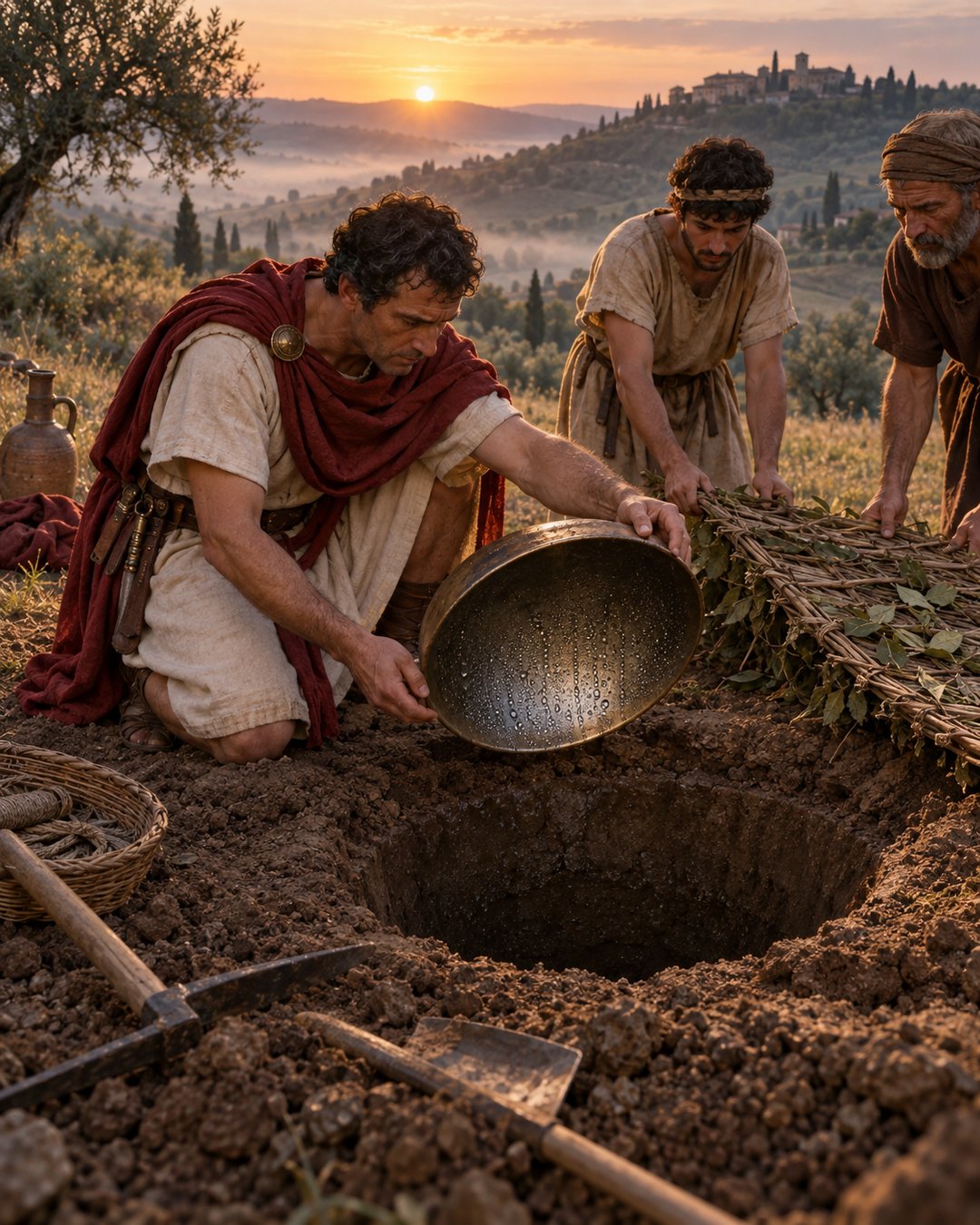
A white fawn walked through Quintus Sertorius’s camp in Hispania as if it belonged beside the commander’s chair. It answered his call, followed him through crowds and appeared at moments when news had turned favorable. Sertorius said the animal came from Diana. His soldiers could watch an ordinary military report become a divine message before … Read more

A Wicker Basket Preserved Rome’s Riskiest Loans

The most revealing Roman bank archive did not survive in a marble office or a state treasury. It survived in a wicker basket. Road workers found it in 1959, in a building south of Pompeii where decorated dining rooms opened onto a small garden. Inside were wooden writing tablets whose wax once carried loans, guarantees, … Read more

Taunts, Stones, Steel: Pompeii’s Arena Riot

The gladiators were not the only armed men at Pompeii’s amphitheatre in AD 59. Visitors from neighboring Nuceria traded taunts with the home crowd. Insults followed. Then stones crossed the seating. By the time blades appeared, a show designed to stage controlled violence had produced uncontrolled violence among its spectators. Tacitus compresses the escalation into … Read more

A Bronze Speech Opened Rome’s Senate to Gaul

In 1528, a vineyard worker on Lyon’s Croix-Rousse hill uncovered the lower part of a bronze inscription. Its columns did not preserve a law, an army list or a dedication to a god. They preserved an emperor speaking through interruptions, digressions and a blunt request that Rome stop treating provincial origin as a permanent barrier … Read more

Regina’s Tombstone Joined Britain to Palmyra in Four Lines

Four lines at the bottom of a sandstone monument carried a longer journey than most Roman roads. Three were cut in Latin. The fourth used Palmyrene Aramaic. Above them sat Regina, not as an emperor, priestess or mythic heroine, but as a richly dressed woman with wool-working tools and an open jewellery casket. The stone … Read more

When Rome Burned, Galen Lost Books No Copy Could Replace

Galen did not need someone to explain what a burned library meant. In 192 CE, fire tore through central Rome and destroyed three imperial libraries near one another on the Palatine. It also reached the rented storerooms where scholars kept personal books, copies and work in progress. Galen lost both the sources he trusted and … Read more

Sixty Tonnes of Marble Sank Fifty Kilometres from a Temple

At Kızılburun—“Crimson Cape”—a ship went down with architecture on its deck. Eight marble drums and a single Doric capital had been assembled as the parts of one monumental column. They were not rubble from a ruined building. They were a building element still in transit, interrupted between quarry and sanctuary. The carrier sank off the … Read more

One Pompeian Cellar Hid a Silver Table Set for Eight

The silver did not glitter when excavators reached it in December 1930. In a cellar of Pompeii’s Casa del Menandro, 118 pieces of plate had been wrapped in textiles and lowered into the bottom of a wooden chest. A second box rested above them. It held gold jewellery, precious stones, wire and coins. The arrangement … Read more