A 122-Millimetre Bell from the Thames Narrowed Before It Flared
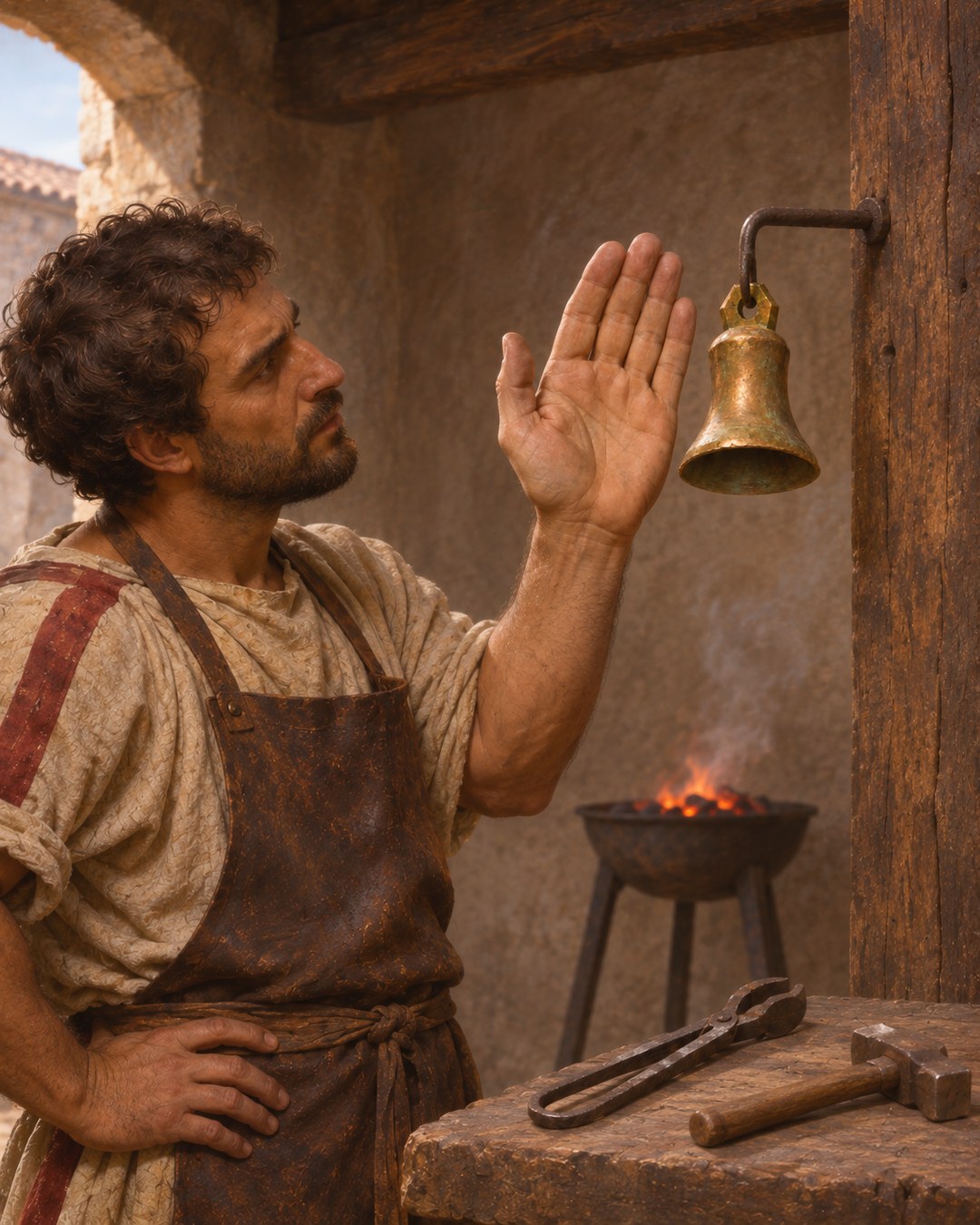
The bell recovered from the Thames does not begin with a sound. Its iron clapper is gone. What remains is a complete copper-alloy body, 122 millimetres high, narrowing through the middle before opening into a mouth 70 by 56 millimetres. London Museum calls the profile tulip-shaped. That description turns a familiar object into a problem … Read more
Rome Answered Apollo with Alcibiades and Pythagoras

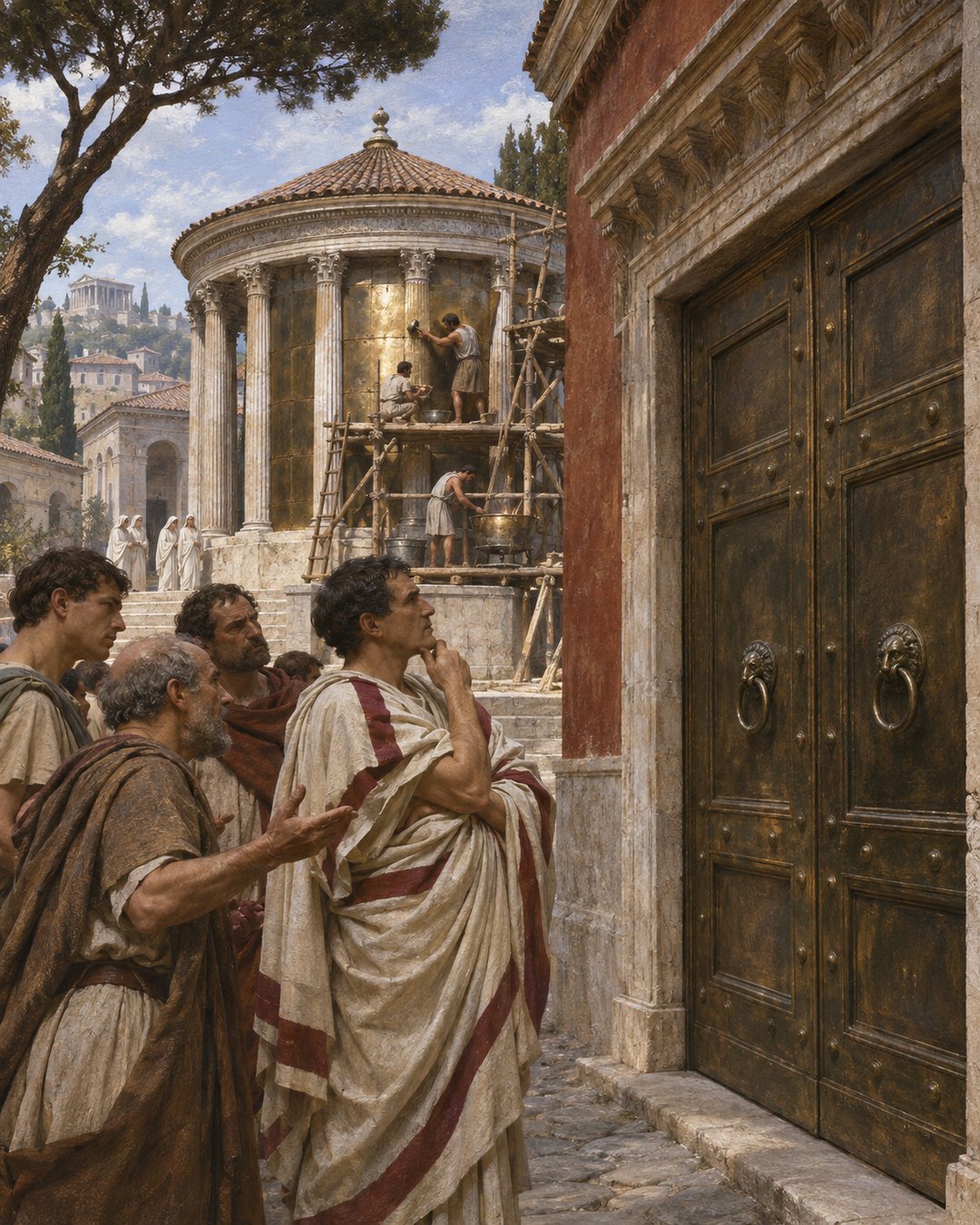
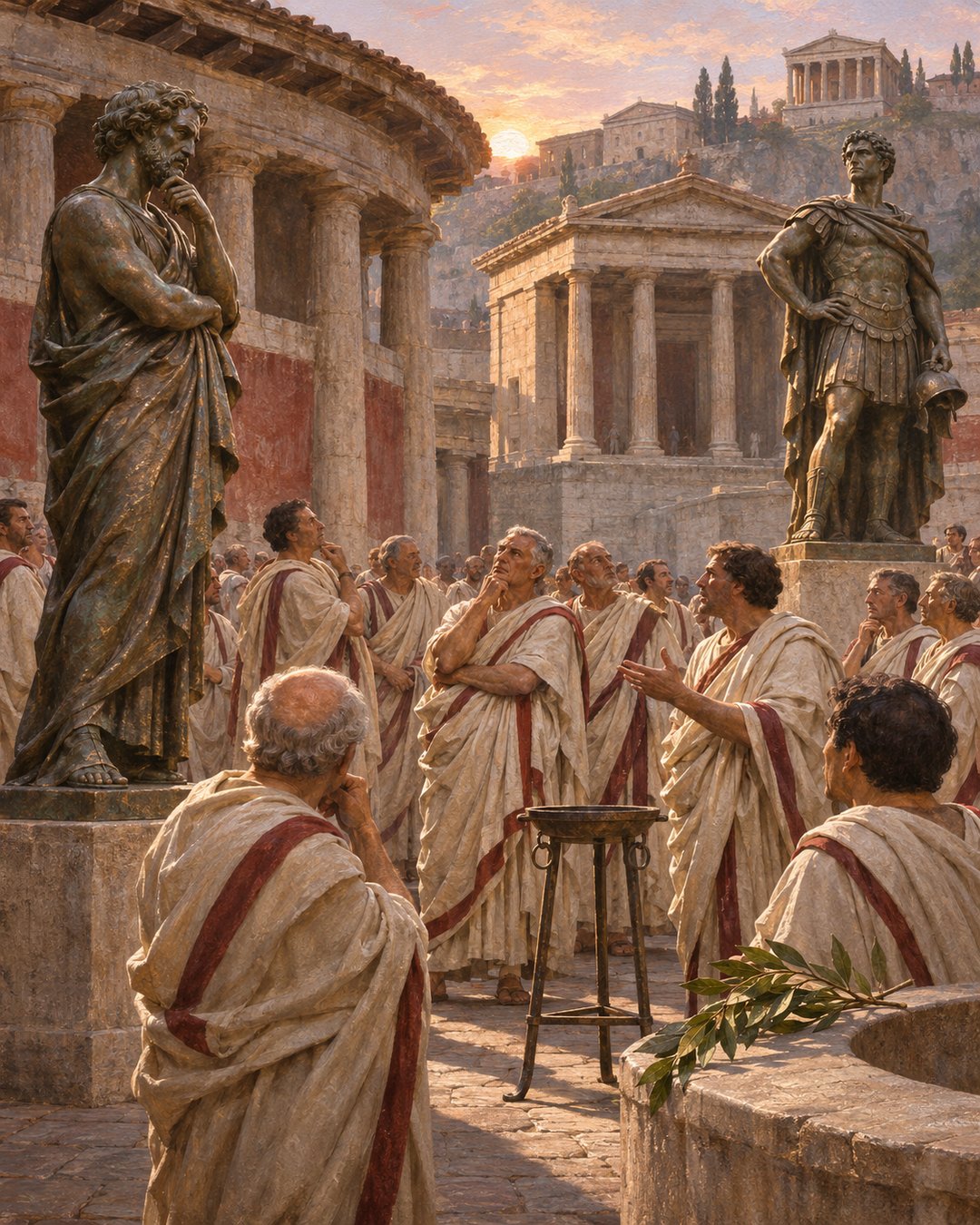
During the Samnite War, Rome received a strangely open instruction. According to Pliny, Pythian Apollo ordered the city to place the bravest and the wisest of the Greeks somewhere conspicuous. The oracle supplied two roles but no names. Rome had to turn divine categories into human choices. The answer was Alcibiades and Pythagoras. Their statues … Read more

Porsena’s Treaty Left Roman Iron Only for the Fields

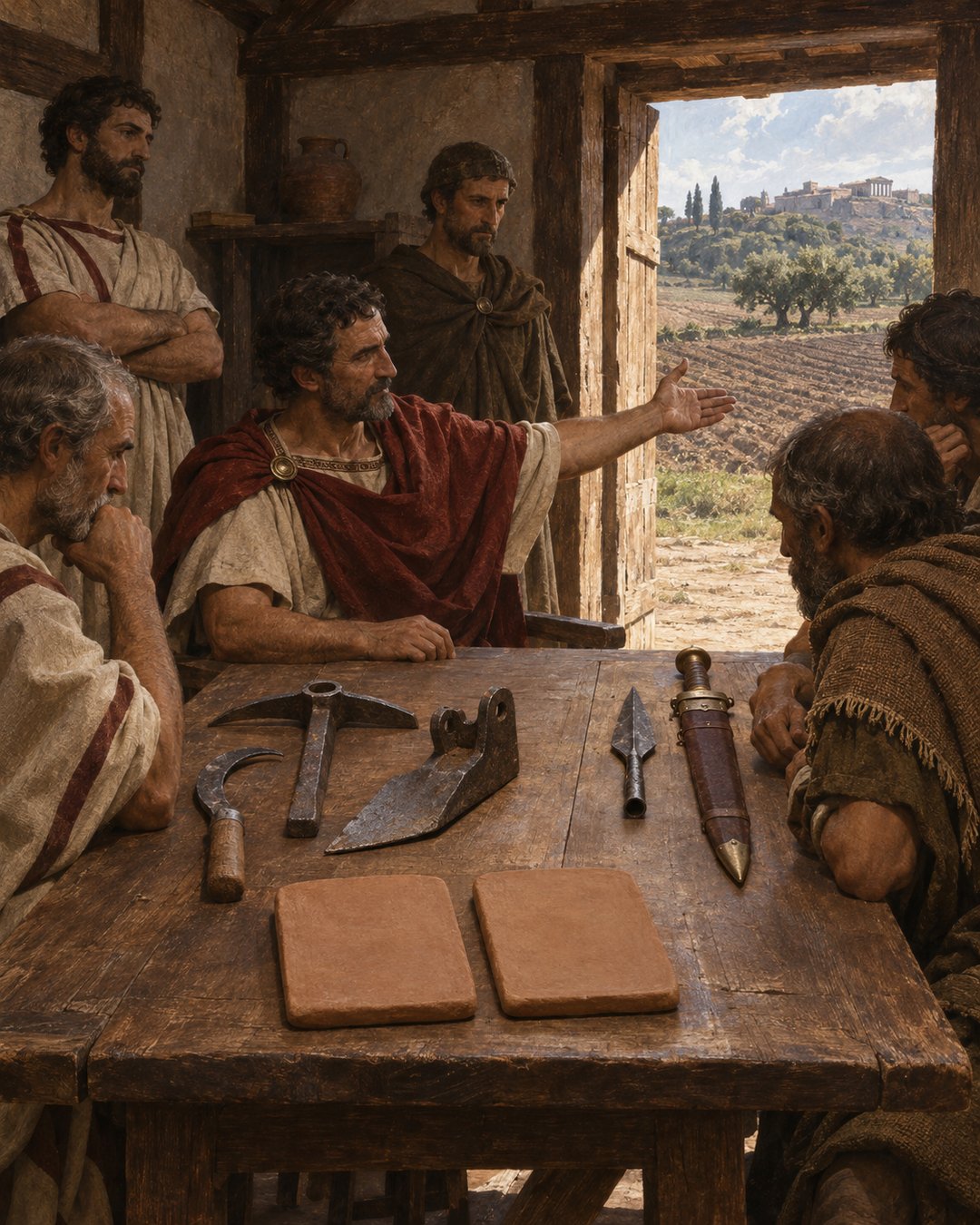
Iron does not arrive in Pliny’s account as a weapon. It arrives in a field. It opens soil, plants trees, cuts away the dead wood of a vine, helps construct a house and cleaves rock. Only after that inventory does the metal turn toward war. The order matters because Pliny is not describing two substances. … Read more

Salt, Vinegar, Alum, and Fire Prepared Copper for Roman Gilding

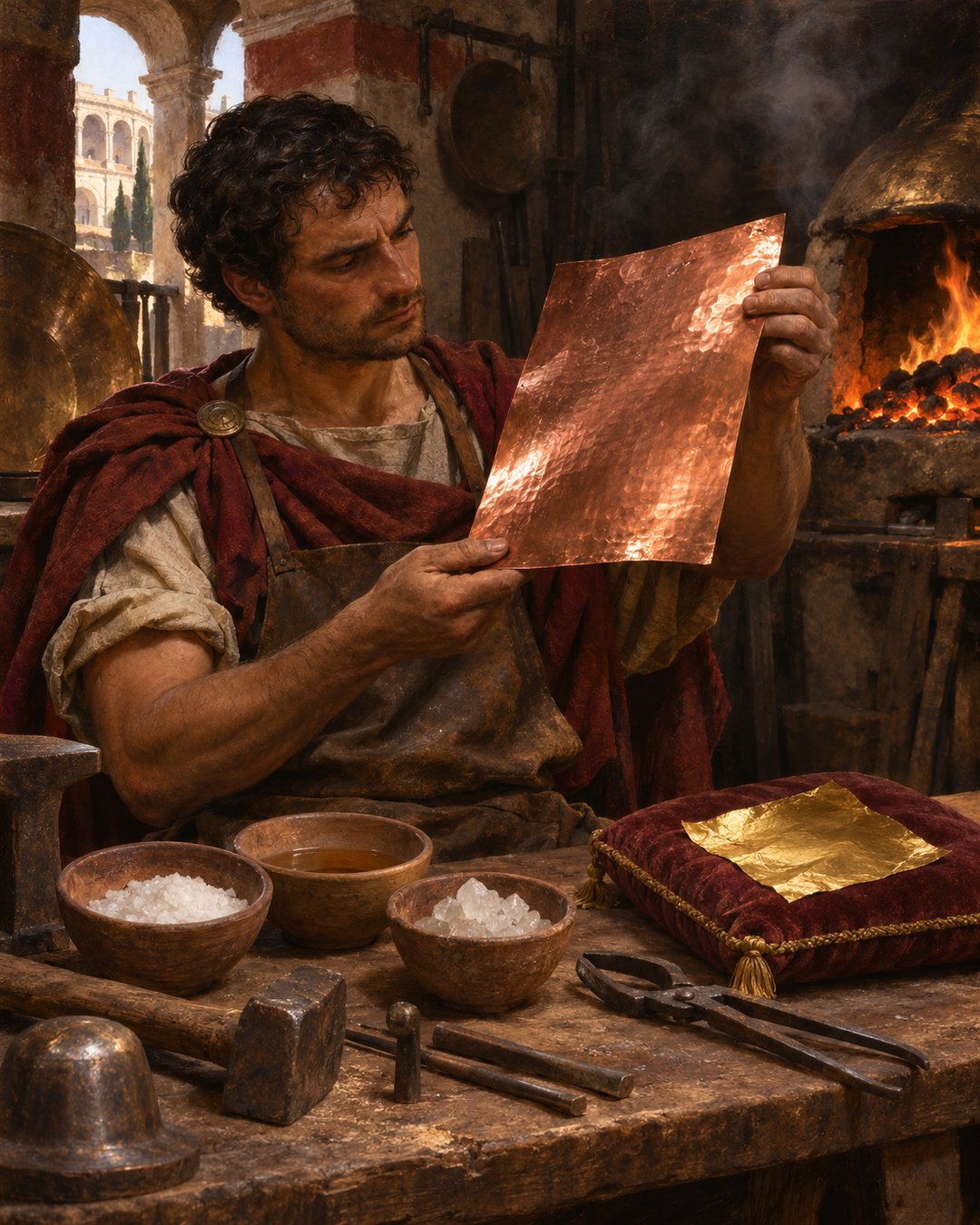
Gold leaf is almost weightless, but the surface beneath it had to survive a demanding sequence. In one compact chapter, Pliny the Elder describes copper being hammered, heated, cooled in salt, vinegar, and alum, cleaned until it shone, heated again, and prepared to receive gold. The leaf was the final visible layer. Most of the … Read more

Cimon Made Painted Bodies Turn and Show Their Veins

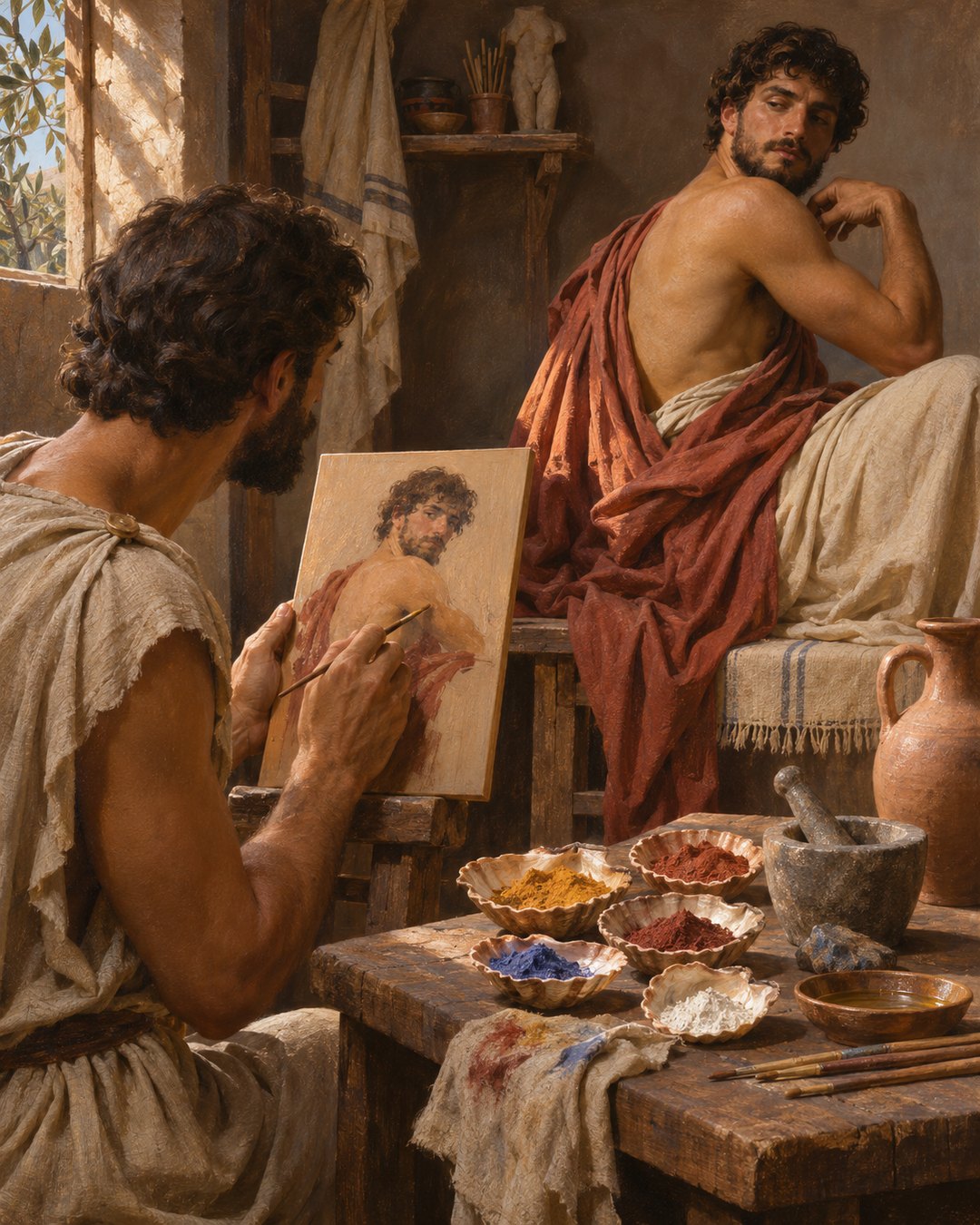
A face turned three-quarters away is easy to overlook. So is a bent elbow, a faint vein, or a fold of cloth that changes direction as the body beneath it moves. Yet Pliny the Elder grouped precisely those details around an early painter named Cimon of Cleonae. In a few compressed lines, his history of … Read more

Piræicus Painted Barbers’ Shops and Outsold Larger Works

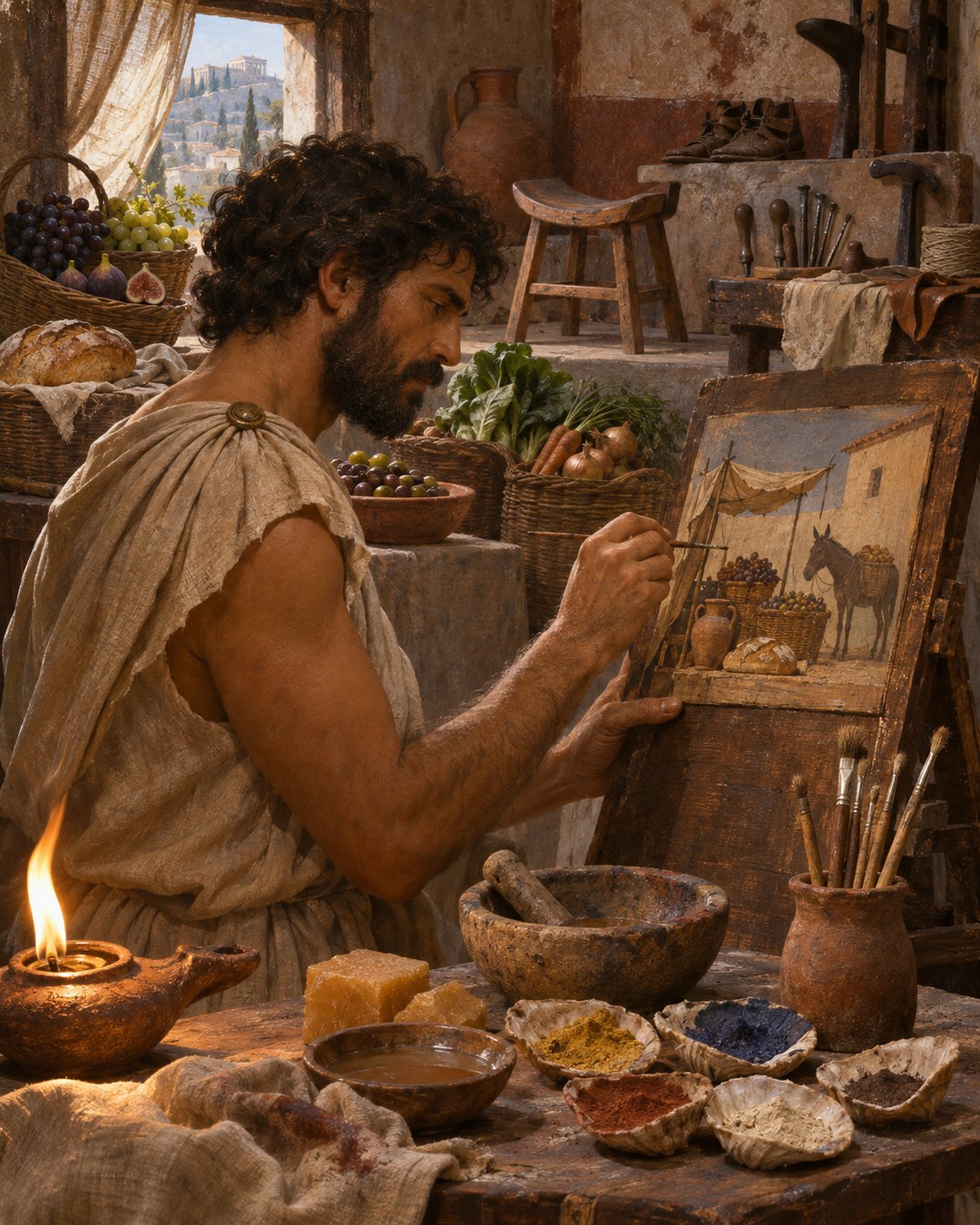
Piræicus painted barbers’ shops, cobblers’ stalls, donkeys, and food. In Pliny the Elder’s history of painting, those subjects belonged to a “humble walk.” The judgment sounds like a dismissal until Pliny reveals the market result: Piræicus’s small, pleasing scenes sold for more than the largest works of many other masters. The contradiction is the point. … Read more

Roman Barbers Used Saliva on Laminium Whetstones

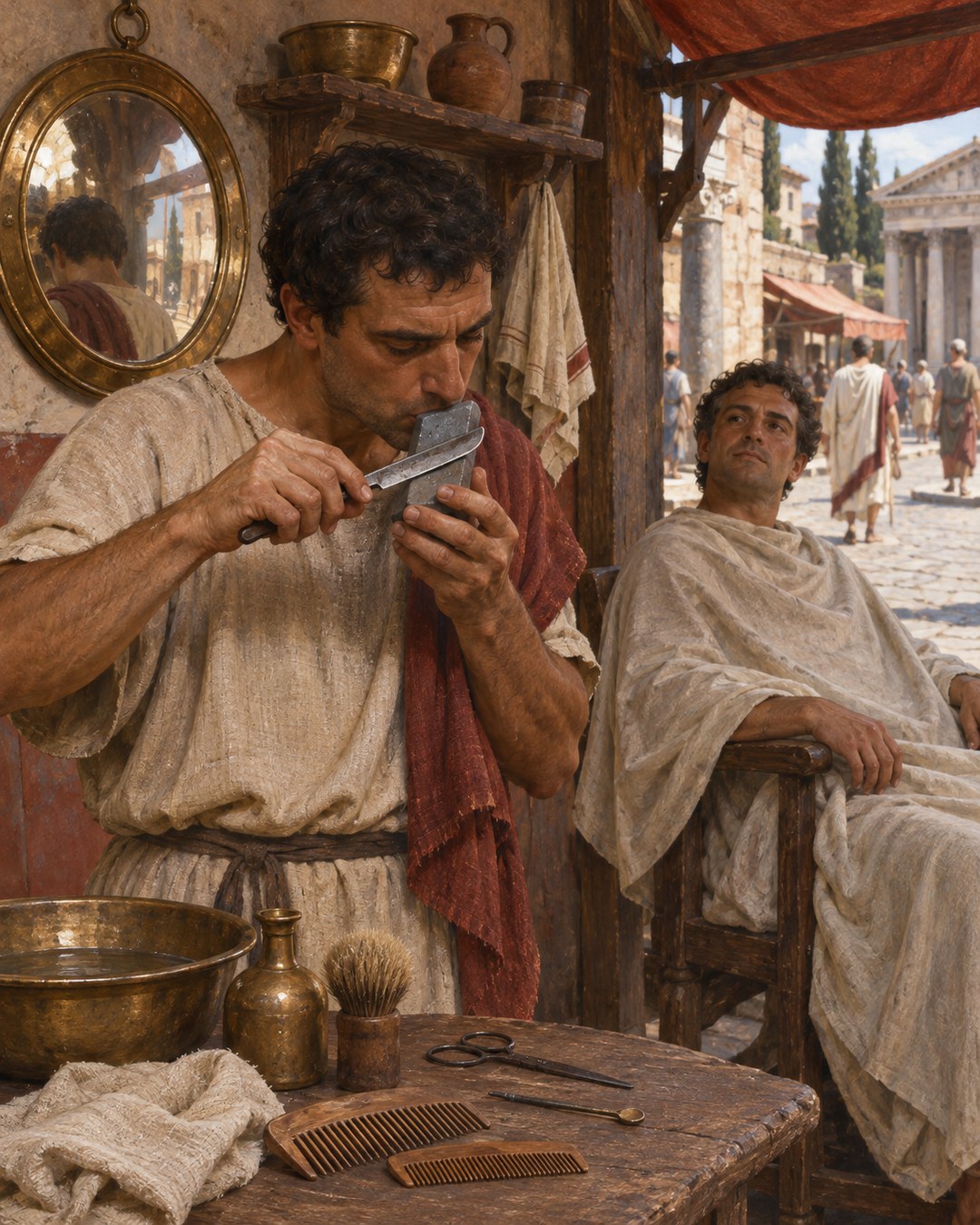
The sharpest object in a Roman barber’s shop depended on something softer than the blade. Pliny the Elder described a class of whetstone that gave iron an edge through human saliva. These stones were common in barbers’ shops, and the best came from the district of Laminium in Nearer Spain. It is an intimate detail, … Read more

Pliny Said Cold Water Had to Enter Glass Before Heat

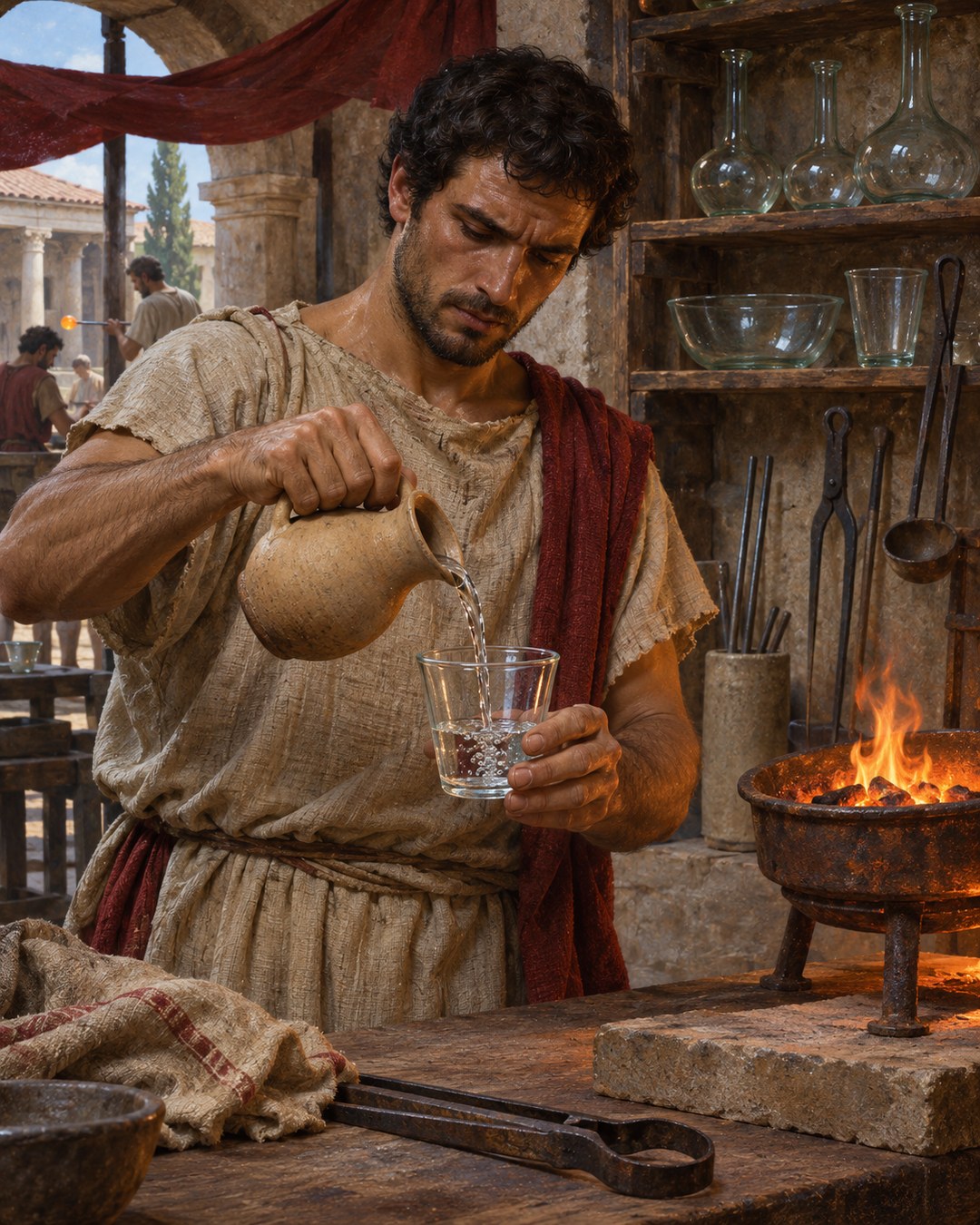
A Roman drinking glass could imitate crystal, replace silver at the table, fail under heat, concentrate sunlight, and return to the furnace only after being broken small. Pliny the Elder placed all of those claims within a few lines. Read together, they are not a smooth account of “Roman glass technology.” They are a set … Read more