A Wooden Toilet Seat Outlasted Vindolanda’s Latrine
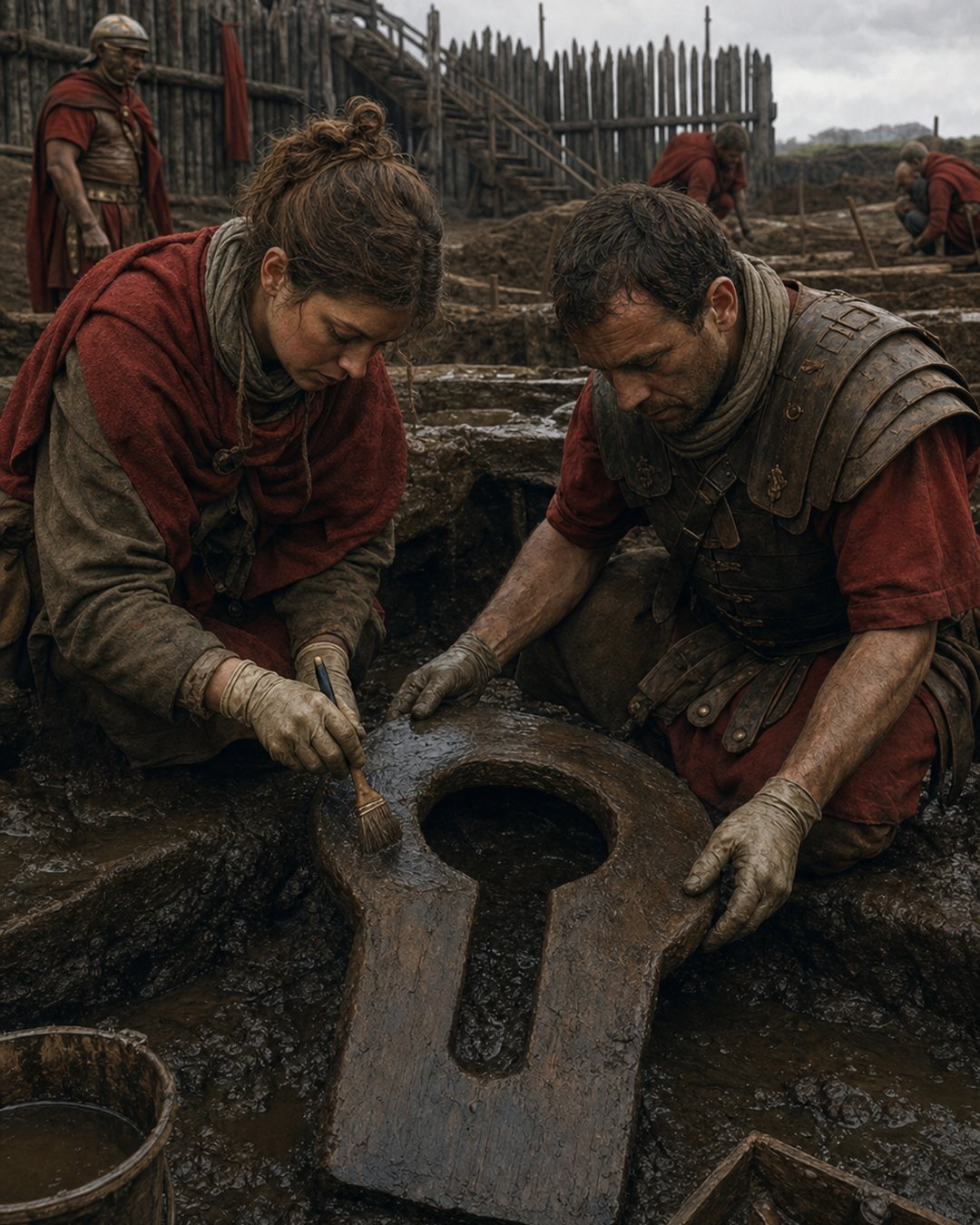
The object looked familiar before the excavators had finished uncovering it. A broad wooden ring surrounded a keyhole-shaped opening, smoothed into a form that could support a human body. It emerged in 2014 from the wet deposits of Vindolanda, the Roman fort and settlement south of Hadrian’s Wall. Stone latrine benches survive across the empire. … Read more

Six Short Poems Kept Sulpicia’s Secret from Staying Secret

“At last love has come.” The surviving sequence attributed to Sulpicia begins not with a description of the beloved but with a decision about disclosure. Hiding her affair, the speaker says, would bring more shame than revealing it. She refuses to entrust the story to sealed tablets for one private reader. Reputation will carry it … Read more

A Fine Needle Moved a Roman Cataract Below the Pupil

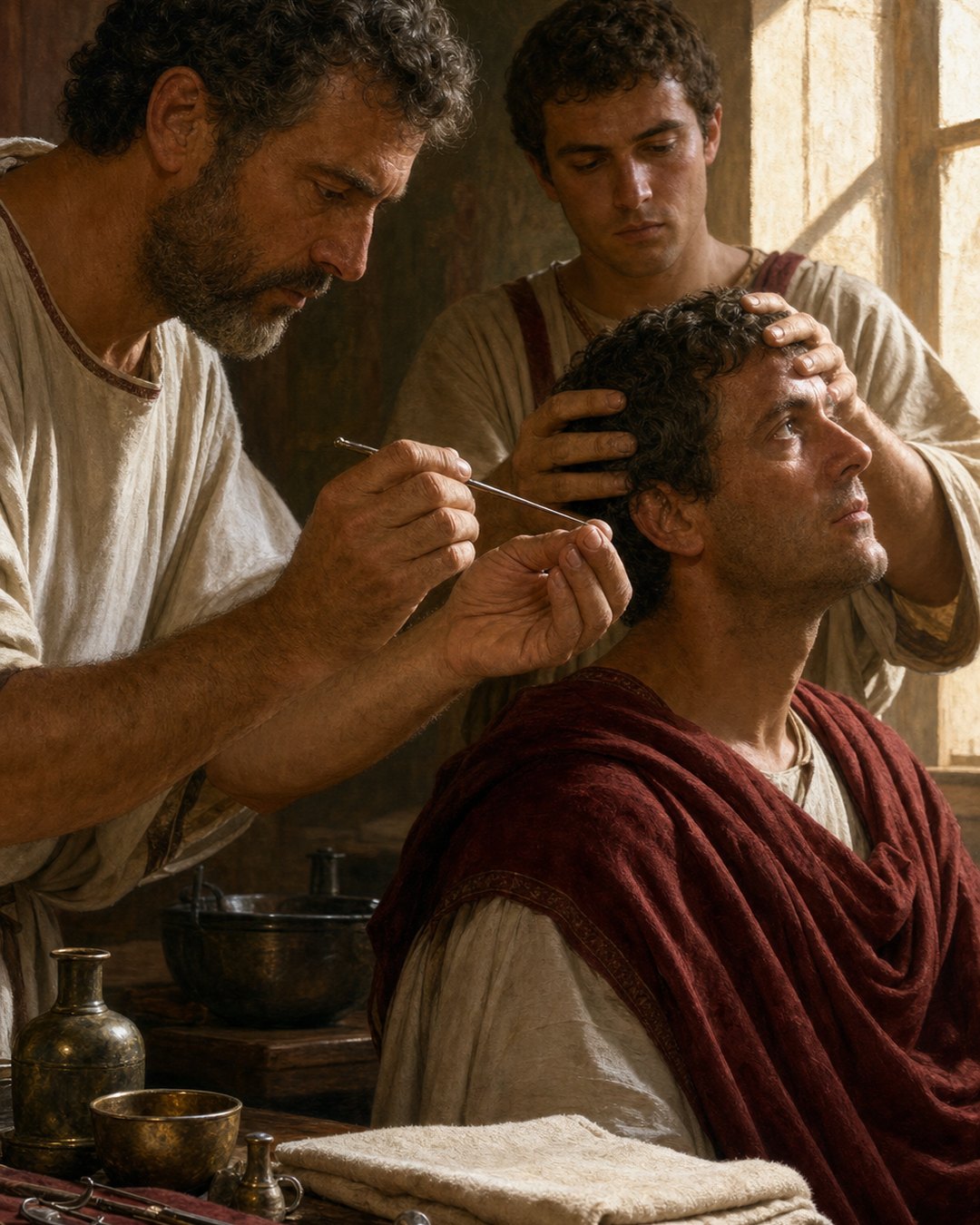
A patient sat facing the light while another person held his head from behind. One eye was covered with wool. The surgeon took a needle fine enough to enter the side of the other eye, but not so fine that it bent away from his hand. A slight movement, the Roman medical writer Celsus warned, … Read more

Two Leather Knuckles Survived Beneath a Cavalry Barrack

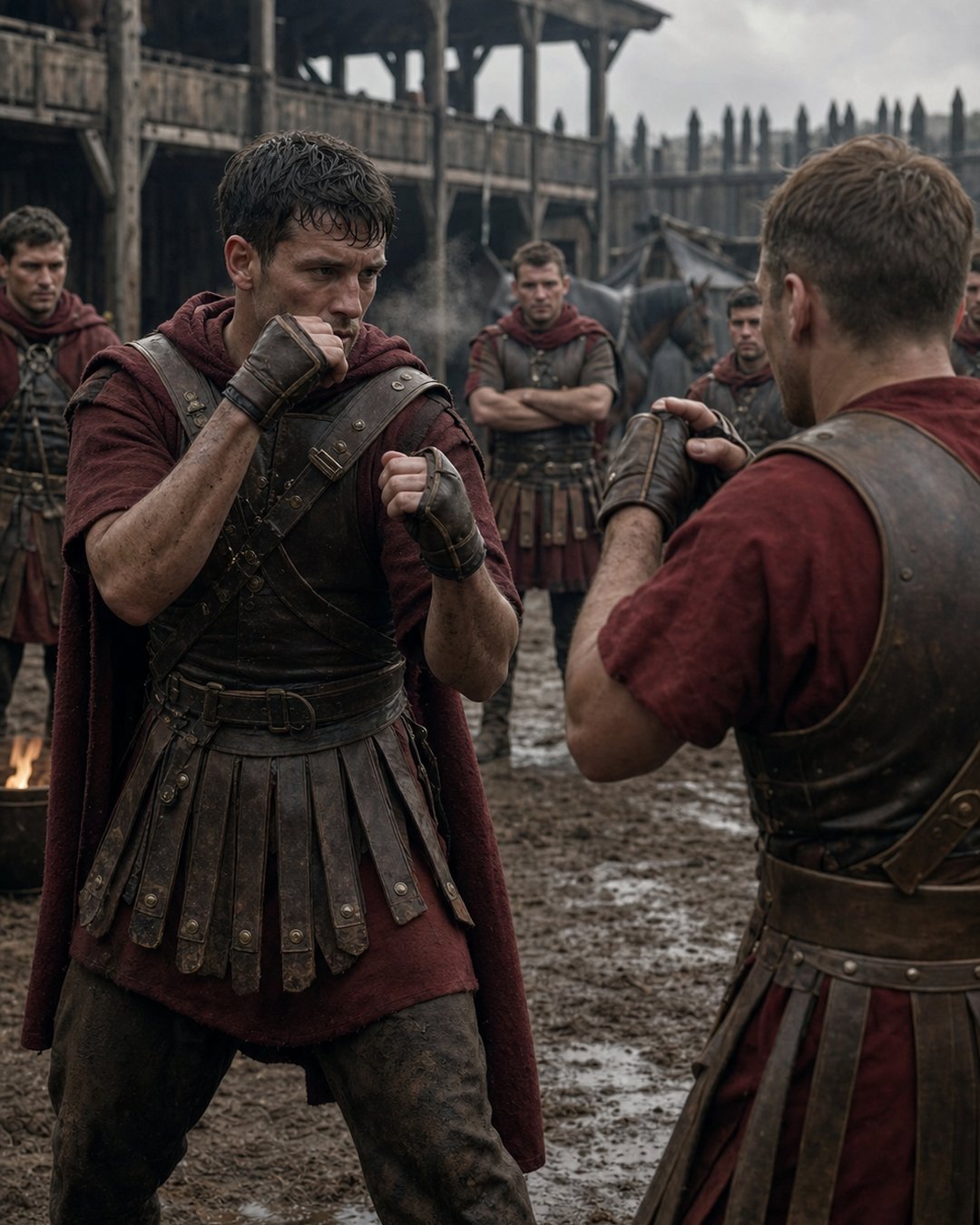
The smaller leather guard still carries the pressure of a vanished fist. Its surface bends where knuckles once pressed from inside, while a coil of twisted hide remains packed beneath the striking face. The larger object is broader, more heavily worn and repaired. They are not a matching pair, and neither resembles the padded glove … Read more

The Net Fighter Entered the Arena Without a Shield

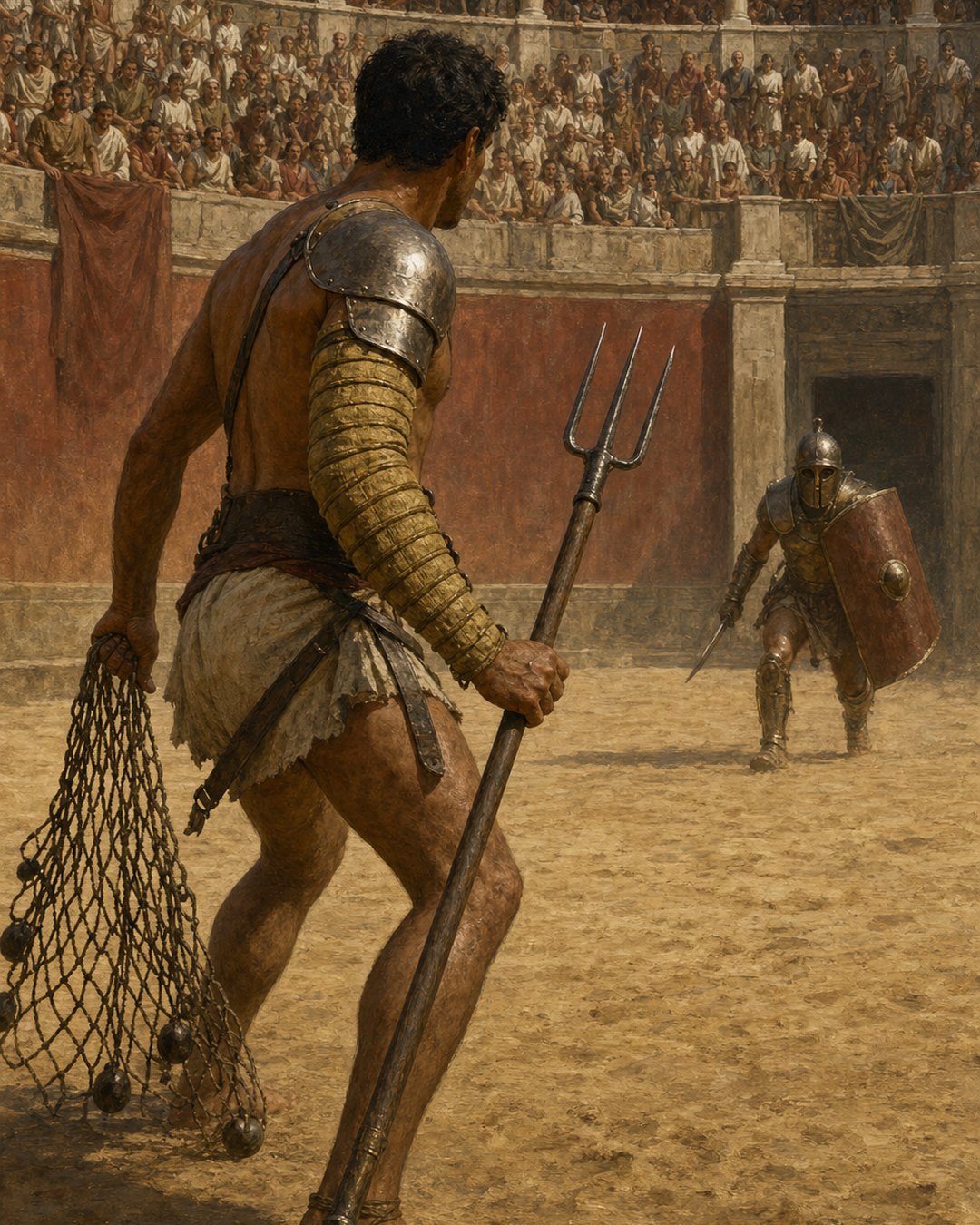
The first surprise was everything he did not carry. No helmet hid the retiarius’s face. No broad shield covered his chest. Heavy greaves did not close around both legs. In an arena where other fighters entered as moving surfaces of bronze, leather and painted wood, the net fighter looked exposed before anyone struck a blow. … Read more

Large Red Letters Put Pompeii’s Baths Up for Rent

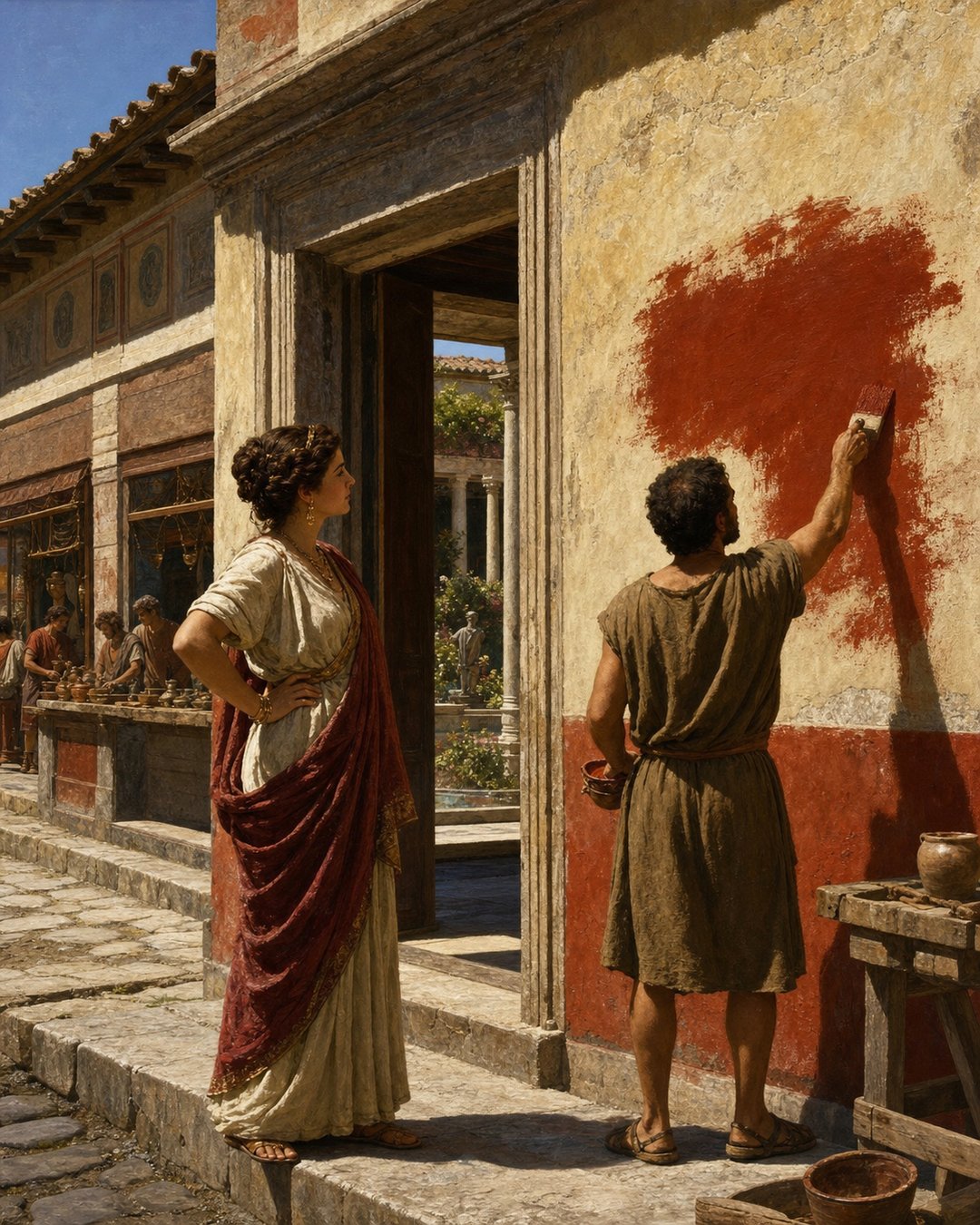
The advertisement did not wait inside an office. It occupied a wall beside an entrance in Pompeii, painted in red letters large enough to catch people moving along the street. Behind it stood a property that could offer much more than one room: baths, commercial spaces and accommodation above ground level. The name attached to … Read more

Four Pepper Pots Waited Beneath a Suffolk Field

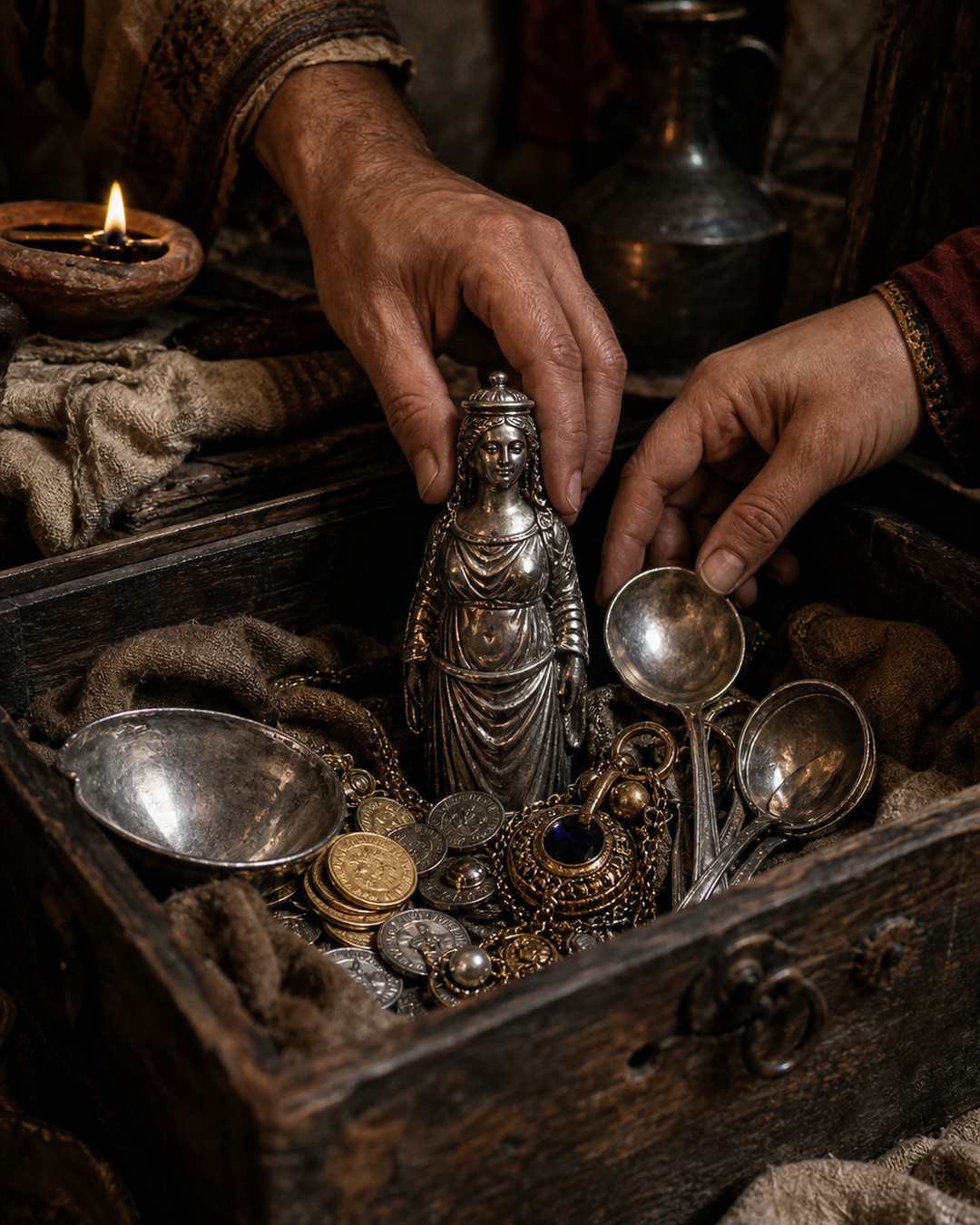
Peter Whatling had lost a hammer in a Suffolk field. On 16 November 1992, his friend Eric Lawes brought a metal detector to help find it. The signal that changed the search did not lead first to the tool. Lawes lifted silver spoons, gold jewellery and Roman coins from the soil—and then did the most … Read more

Clay, Bark and a Knife Joined Roman Fruit Trees

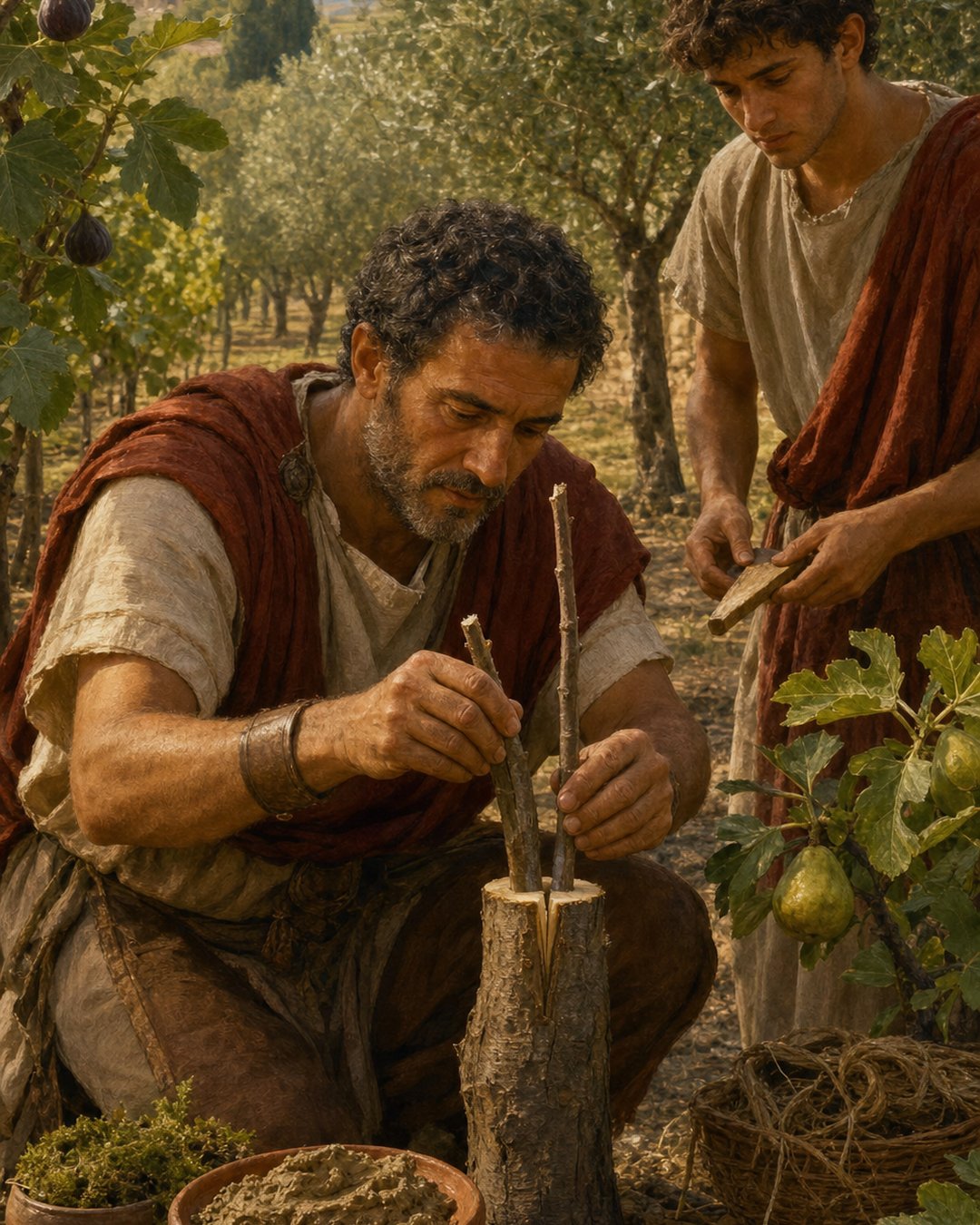
A Roman orchard keeper could change a tree without uprooting it. The operation began with removal: a saw took off the stock, a knife smoothed the wound, and a wedge opened living wood. Then came the more delicate act. A young shoot from another tree had to be pared, fitted and bound so closely that … Read more

A Wicker Basket Preserved Rome’s Riskiest Loans

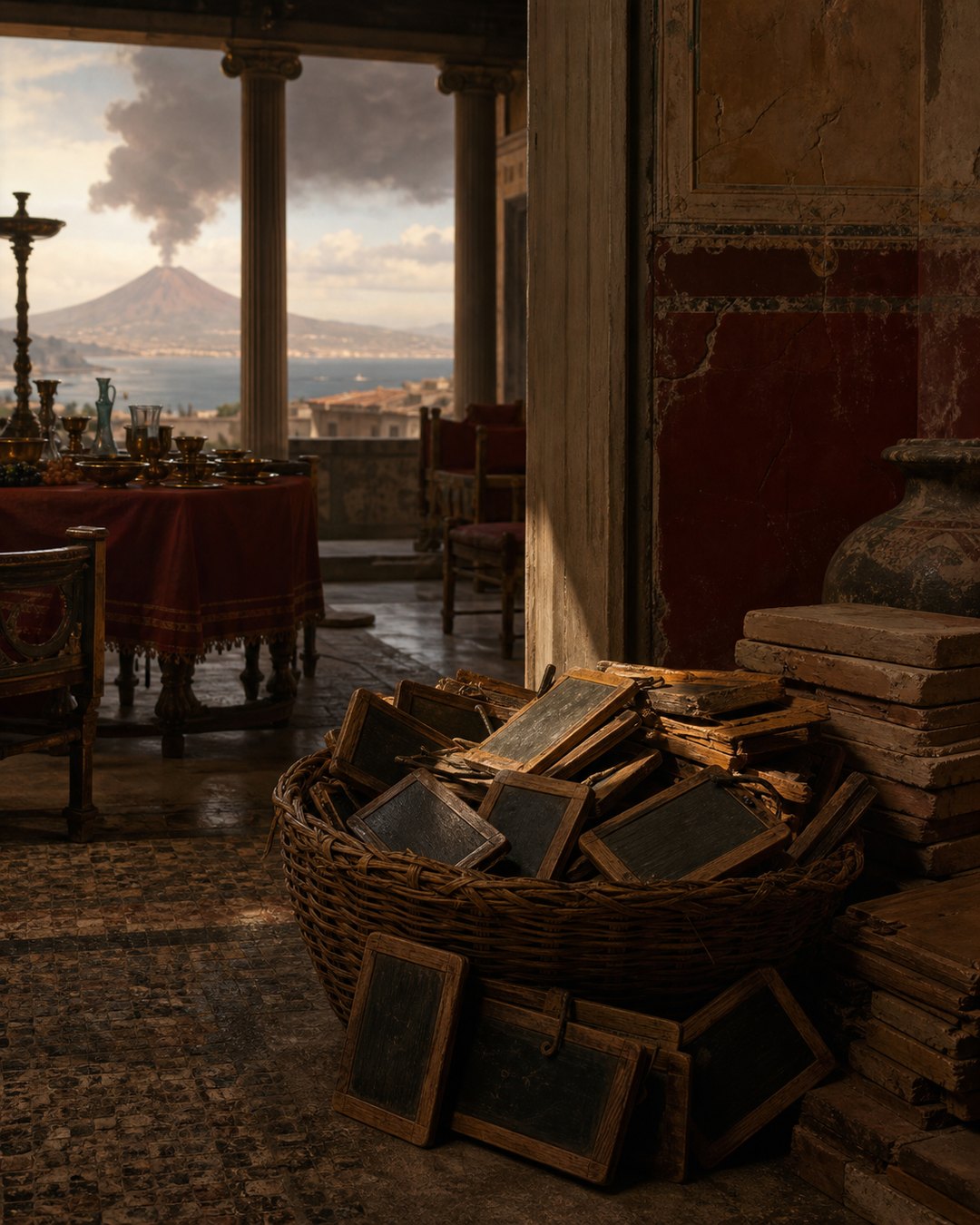
The most revealing Roman bank archive did not survive in a marble office or a state treasury. It survived in a wicker basket. Road workers found it in 1959, in a building south of Pompeii where decorated dining rooms opened onto a small garden. Inside were wooden writing tablets whose wax once carried loans, guarantees, … Read more