Why Trajan’s Column Made War Readable

Trajan’s Column did something a battlefield could not do. It brought a distant war back to Rome and made it stand in public, carved in stone, visible to people who had never crossed the Danube or heard a Dacian horn. The monument did not simply announce that Trajan had won. It offered a way to … Read more

Why the Curia Made Roman Politics Visible

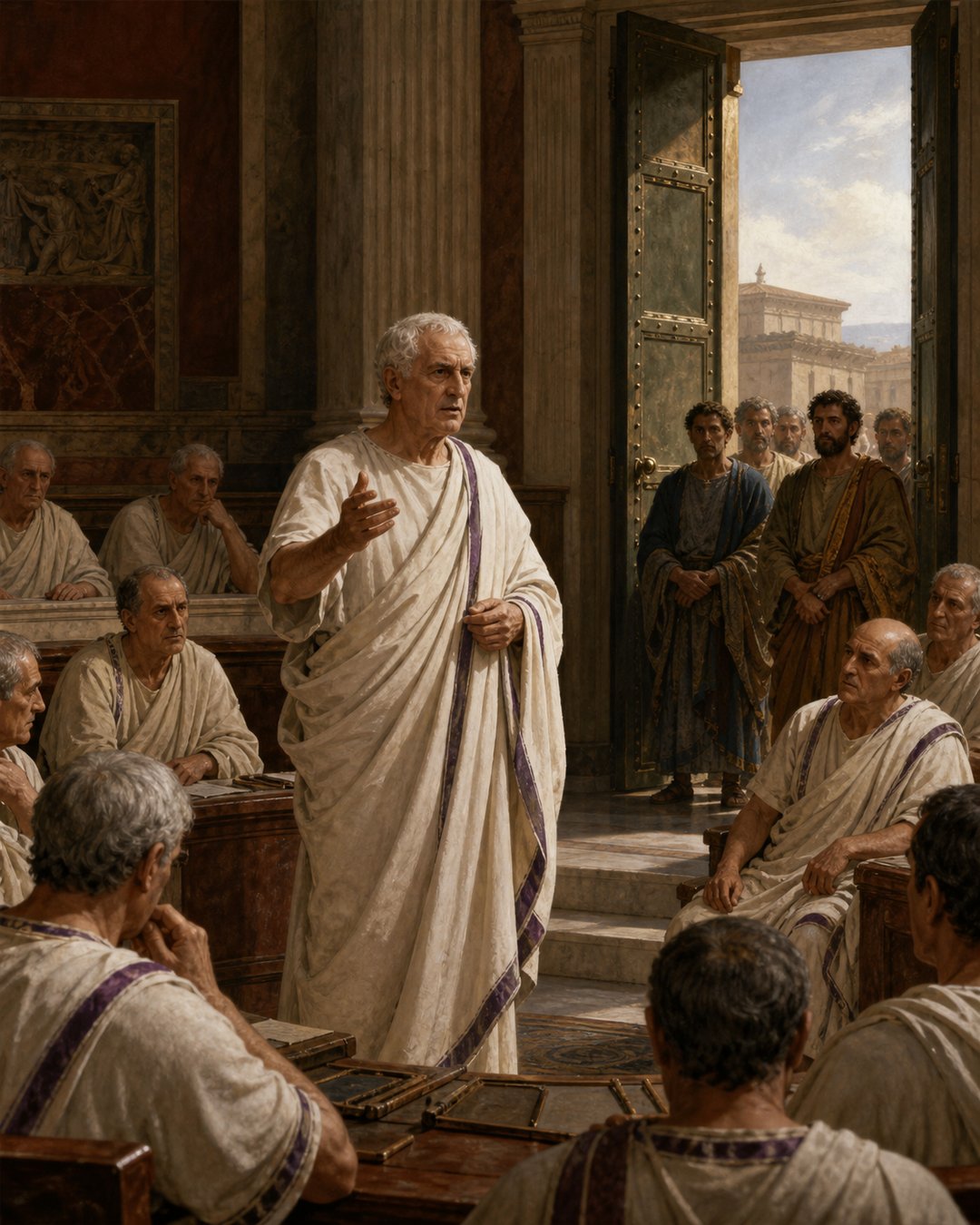
The Roman Senate was not only a constitutional idea. It was also a place people could point to. The Curia gave Roman politics doors, benches, walls, a threshold, and a public setting in the Forum. Before anyone voted, the building had already communicated something important: some men entered, others waited outside, and the city could … Read more

Roman Coins Turned Emperors into Pocket-Sized News

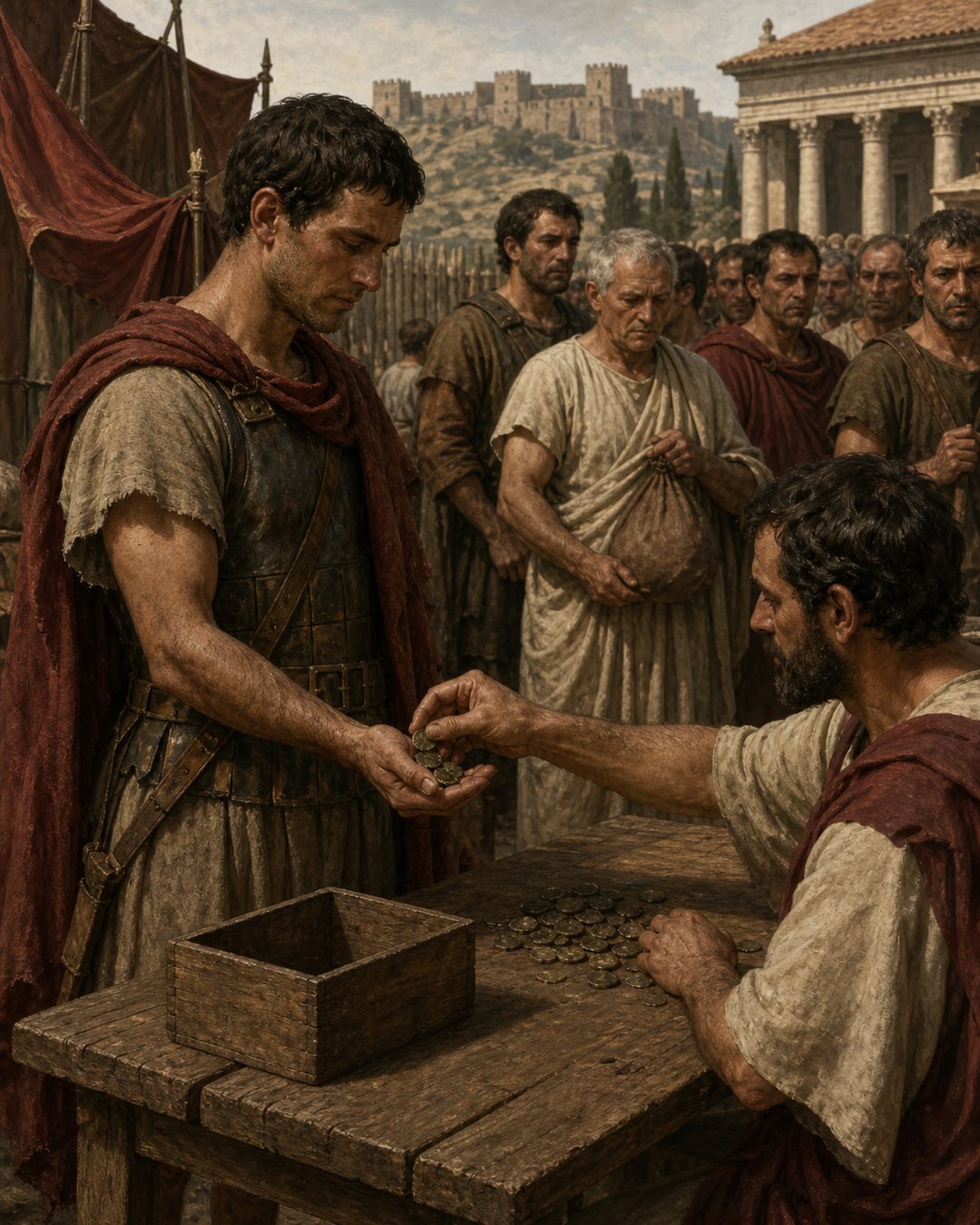
A Roman coin was easy to underestimate. It could disappear inside a purse, lie under a market table, or pass from a soldier to a wine seller without ceremony. Yet that small object carried one of the empire’s most persistent political messages. A face, a title, a victory, a deity, or a promise could travel … Read more

The Day Rome Auctioned the Empire

The most humiliating auction in Roman history did not sell a palace, a villa, or a shipment of grain. It sold the appearance of empire. In AD 193, after the murder of Pertinax, the Praetorian Guard helped make Didius Julianus emperor by turning power into a bargaining contest. The story is scandalous because it makes … Read more

Why Tiberius Ruled Rome From an Island

Tiberius did not stop ruling Rome when he withdrew to Capri. That is what makes the island years so revealing. A weaker system would have required the emperor’s body to be constantly visible in the capital. The early Roman Empire had already become something stranger: a government in which access, letters, fear, precedent, and delegated … Read more

Why the Gracchi Made Rome Afraid of Reform

The frightening part of the Gracchan story is not that a Roman politician proposed a land reform. Rome had argued over land before. The frightening part is that Tiberius Gracchus made an old problem move through the city in a new way: from estates and senatorial conversation into the voting space of the Roman people, … Read more