Amastris Called It a River; Pliny Smelled a Sewer
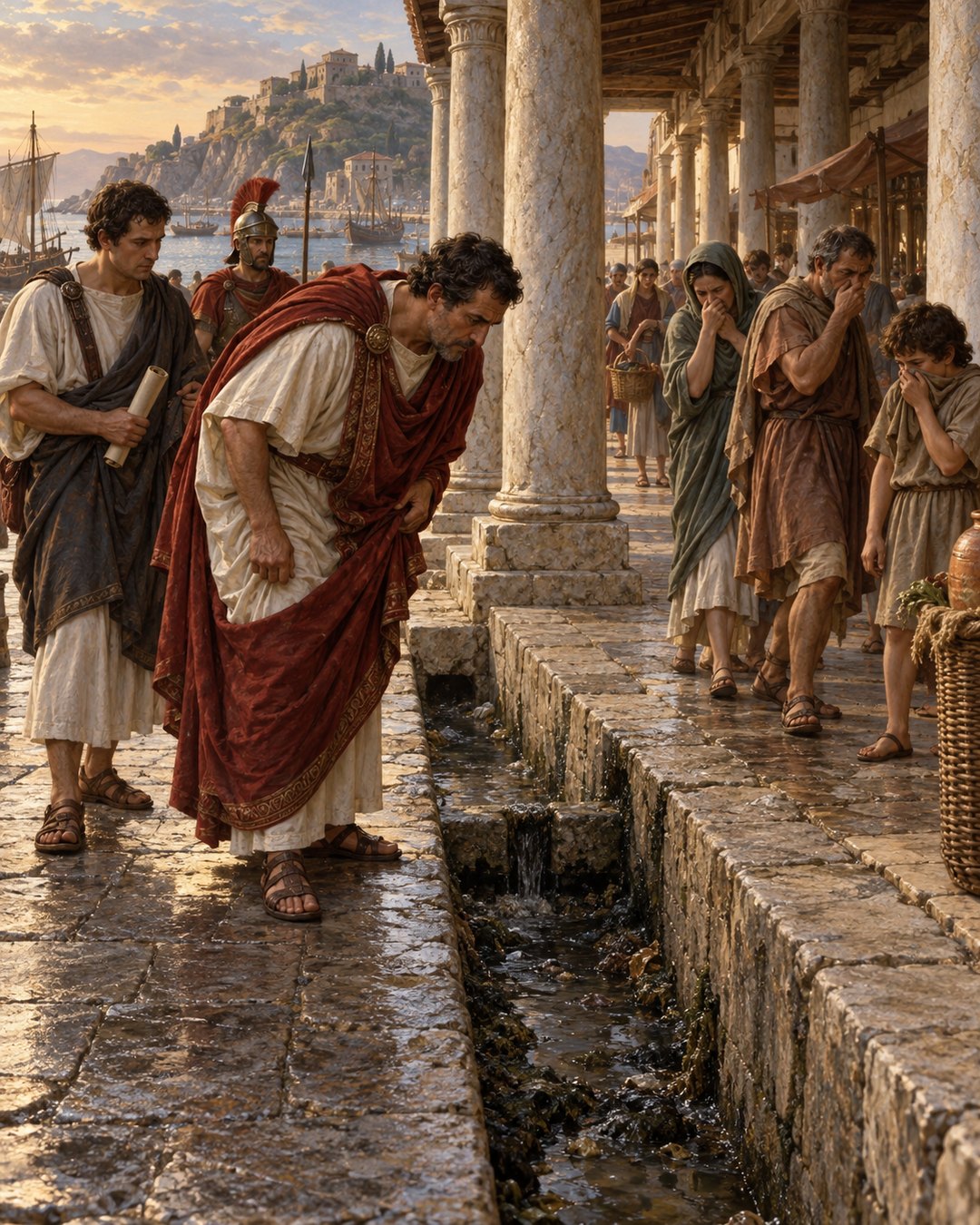
Amastris possessed what Pliny the Younger called a very beautiful and lengthy street. Along one side, for its entire extent, ran a channel that people called a river. Pliny stood the polite name against what eyes and noses reported. It was, he told Trajan, really a sewer of the foulest kind. The short exchange in … Read more
Cornelia Straightened Her Robe Above the Burial Pit

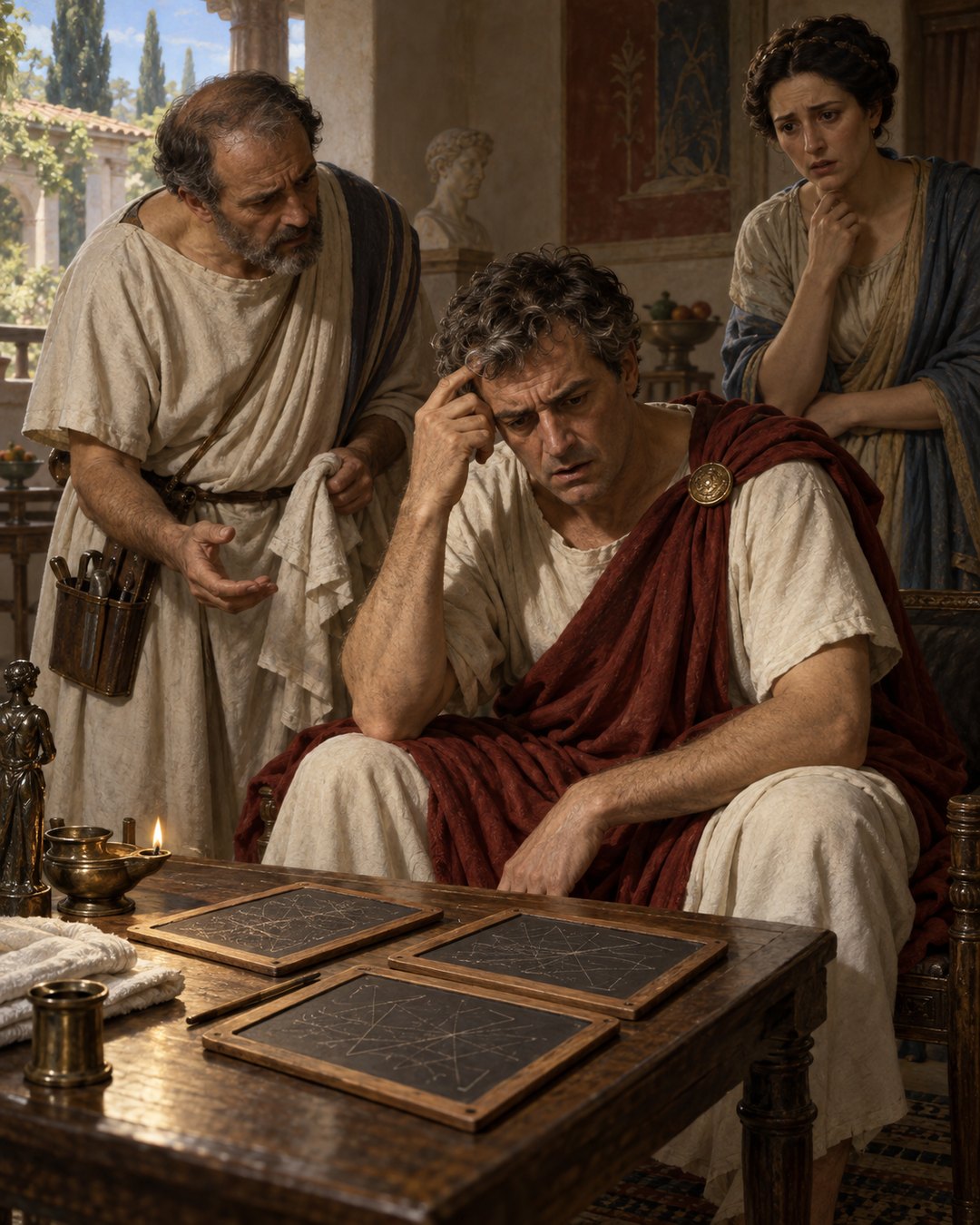
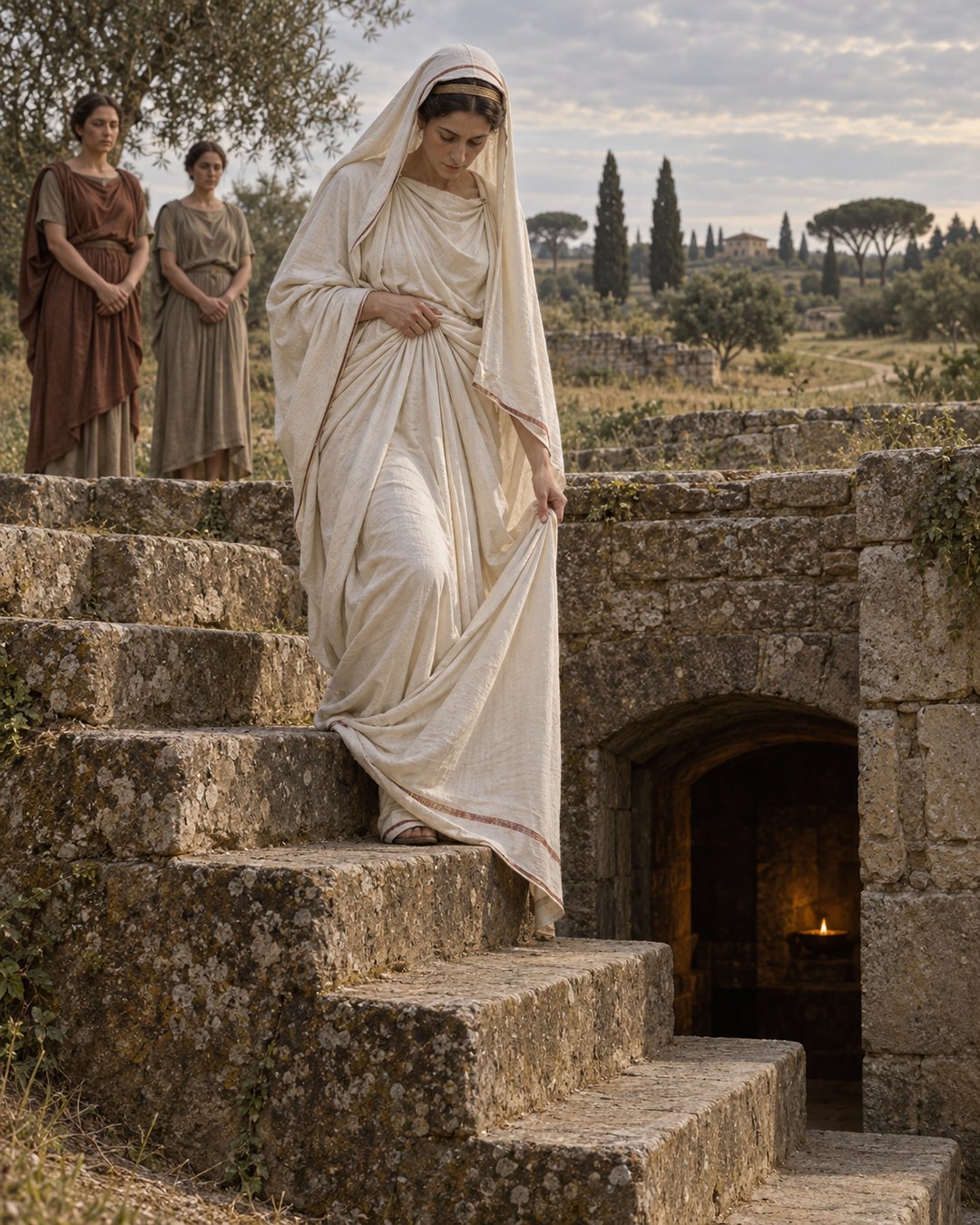
Cornelia’s robe caught as she was being lowered into the underground chamber where Rome buried a condemned Vestal alive. She turned and adjusted it. When the executioner offered a hand, she recoiled rather than accept his touch. Pliny the Younger makes those two controlled movements carry the weight of a defense she had not been … Read more

A Lamp’s Shadow Gave Clay a Face

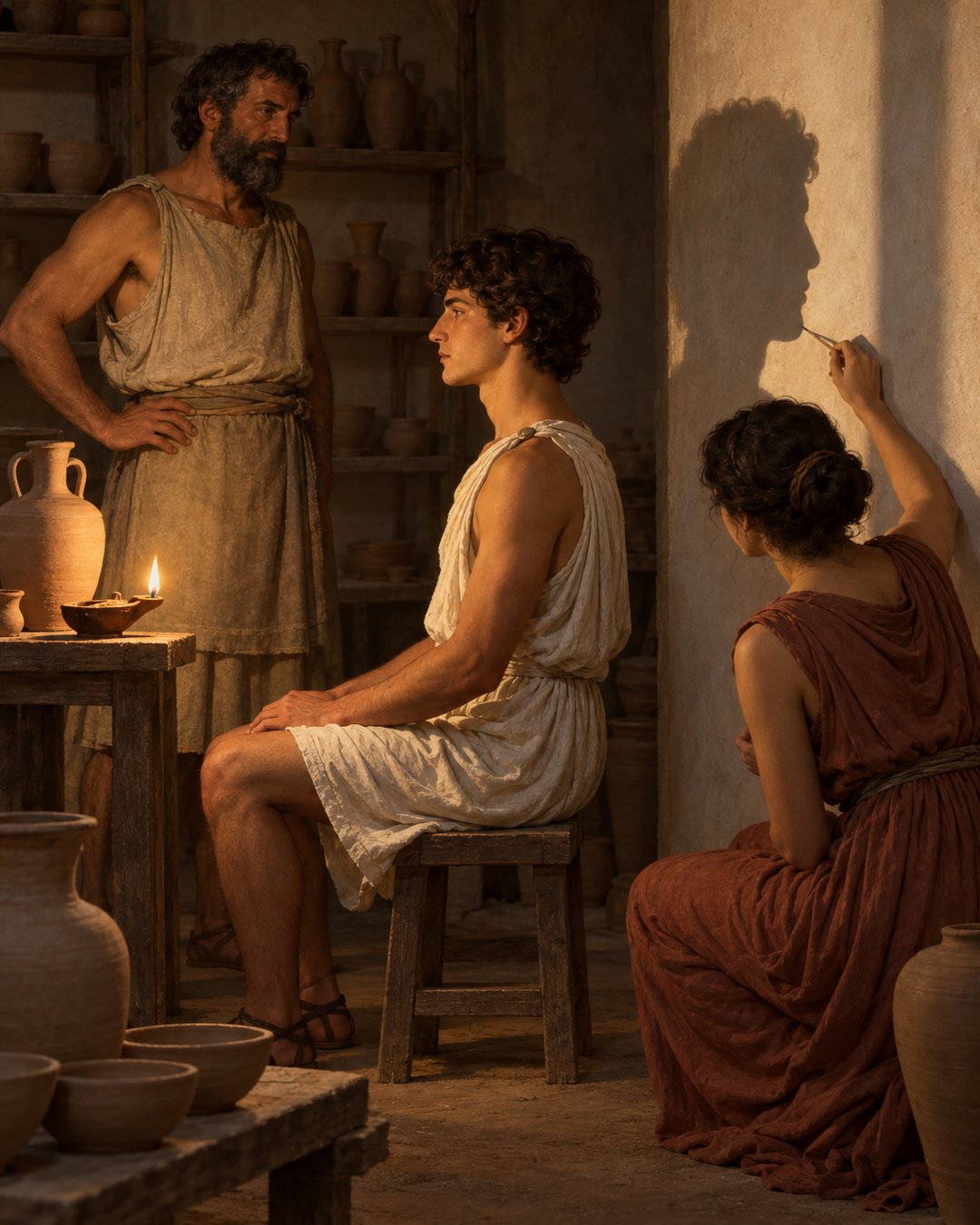
A young man was about to leave Corinth. An oil lamp placed his profile on a wall, and the woman who loved him drew around the edge of the shadow. Her father, the potter Butades, pressed clay over those lines and fired the modeled face with the rest of his pottery. That is Pliny the … Read more

Bees Stayed Owned While They Kept Returning

A Roman beekeeper did not lose a colony each time its workers flew beyond his reach. Gaius placed bees beside pigeons and deer accustomed to leave for the forest and return. Their movement demanded a rule different from the one applied to a fish in a net or a wild animal held after capture. The … Read more

Pliny Built Silence with an Empty Passage

Pliny could close the windows of one bedroom and lose the sound of slaves talking, the murmur of the sea and the violence of a storm. Lightning no longer announced itself. Daylight disappeared. He credited the silence not to a single heavy door but to a passage left empty between the chamber wall and the … Read more

Silius Kept Virgil’s Birthday More Carefully Than His Own

Silius Italicus kept another poet’s birthday more carefully than his own. Near Naples, Pliny says, he approached Virgil’s monument as though it were a temple. The practice belonged to a retirement crowded with books, statues, busts, new villas and learned visitors. Pliny reports these habits after announcing that Silius has starved himself to death at … Read more

Columella Hung Grapes Inside Four-Handled Jars

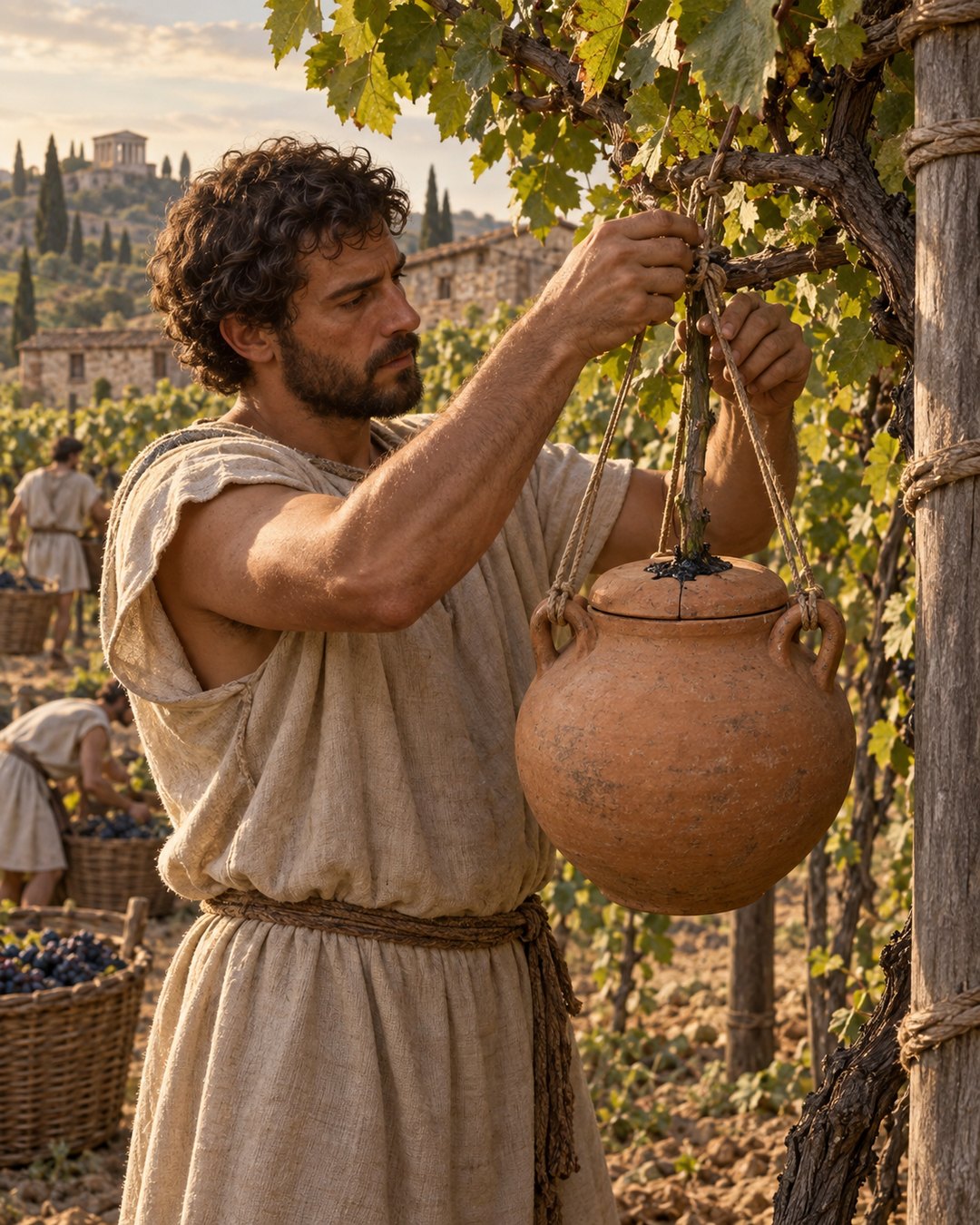
One grape bunch remained attached to its vine while a clay vessel closed around it. The pot had four handles so cords could suspend it from the plant. Its lid came in two pieces, allowing the halves to meet around the living stem. Inside, the fruit hung loosely enough to touch neither wall nor cover. … Read more

One Stone Blow Erased Only the Alphabet from Memory

A stone struck an unnamed man, and one category of knowledge vanished. Pliny the Elder says the victim forgot the names of the letters—only those names. He does not say the man forgot his family, his surroundings or the event itself. The damage appears in the account as a narrow blank cut through an otherwise … Read more

Eight Rows of Lilies Hid Stakes Outside Alesia

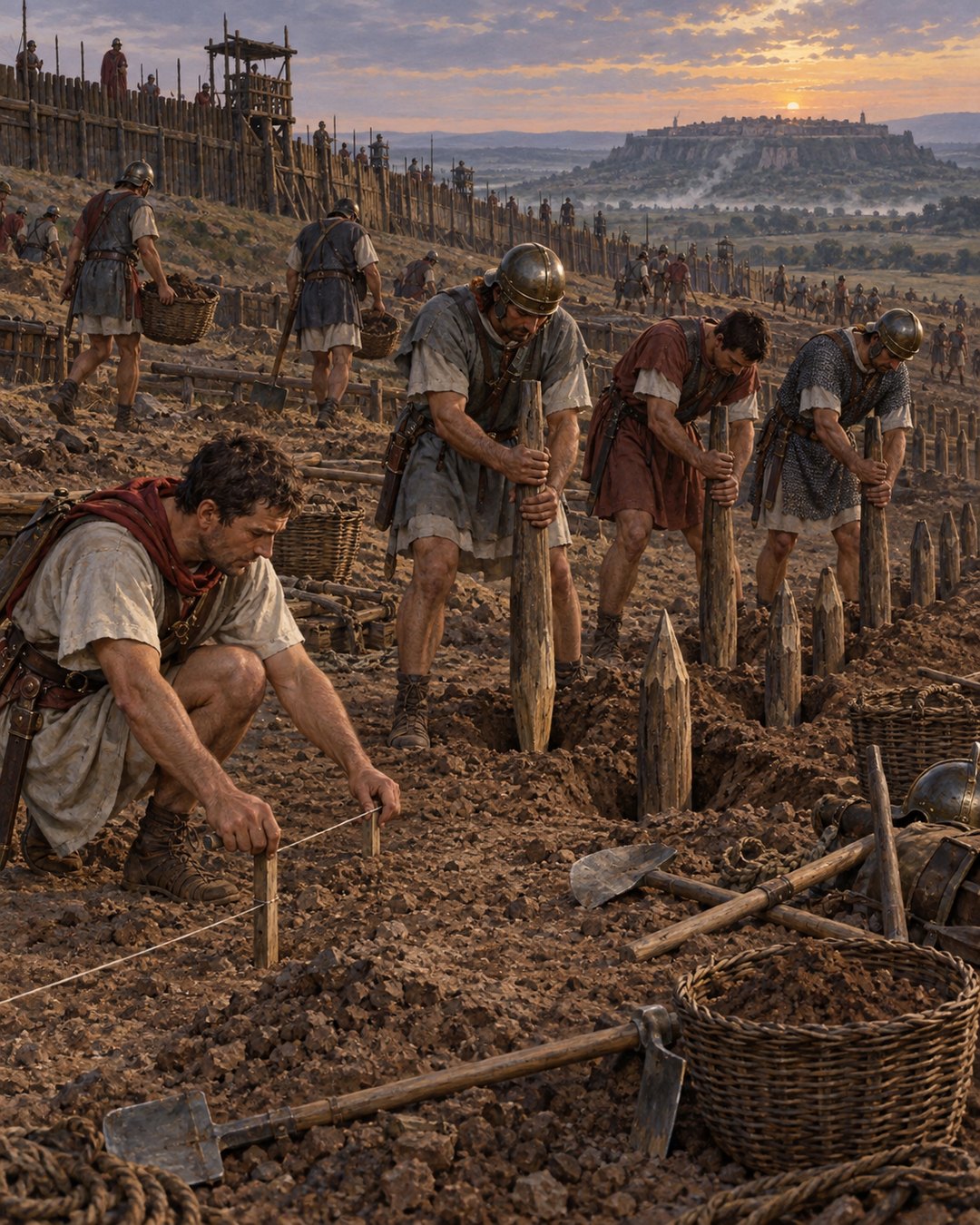
The soldiers outside Alesia planted lilies in eight rows. They were not flowers. Each lilium was a narrow pit three feet deep, tapering toward the bottom around a sharpened stake hardened by fire. Only a short point projected above the ground. Brush hid the opening. Caesar gives the pastoral name without softening the construction. The … Read more