A Roman Face Cream Began to Harden When Its Lid Came Off
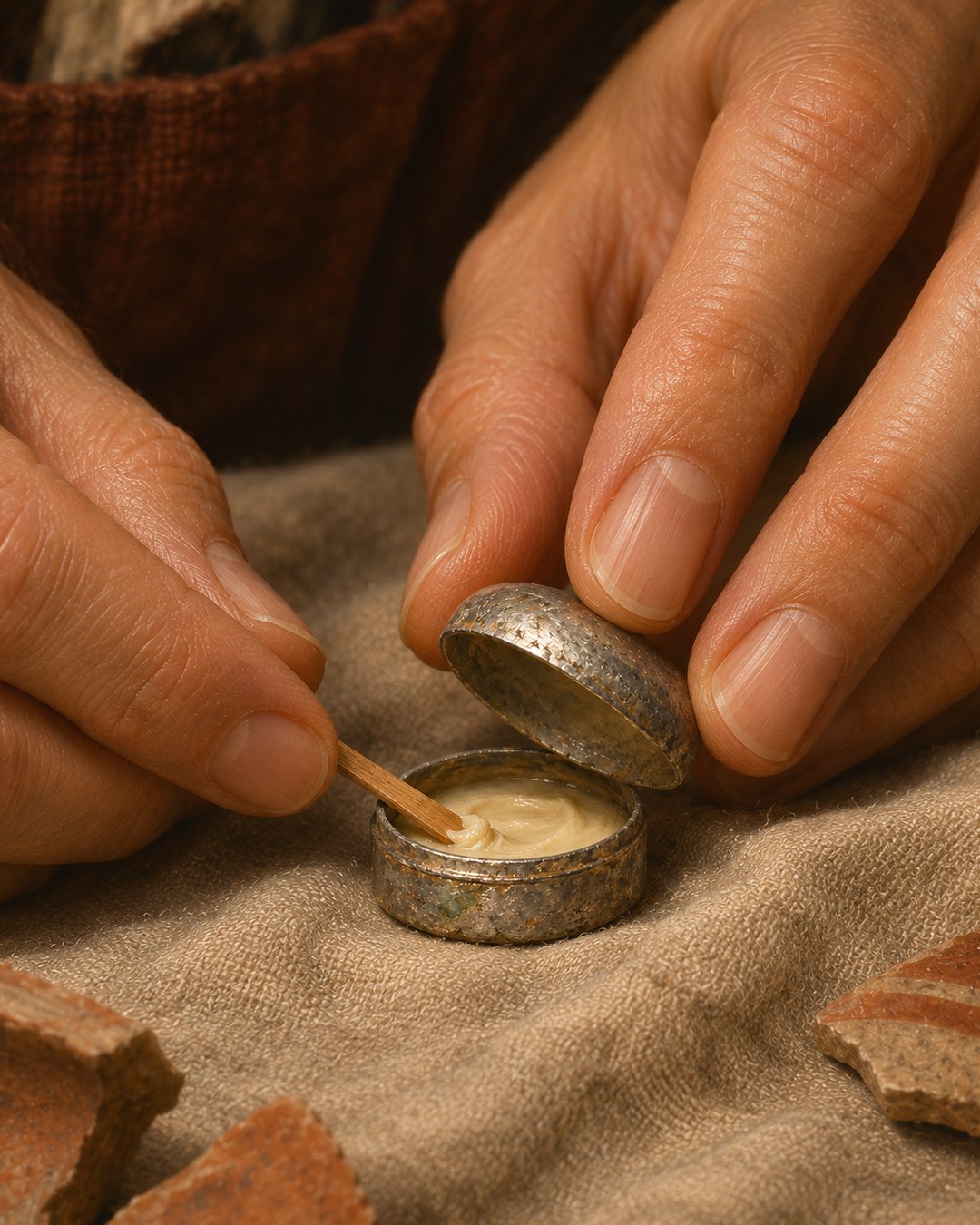
The lid came off a canister that had been closed for roughly eighteen centuries, and the material inside did not look like the dry stain an excavator might expect. It was still a soft cream. Then exposure began to change it: the paste started to solidify almost as soon as the pot was opened. That … Read more
Four Rivets Fixed a Chevroned Plate to a Roman Soldier’s Belt

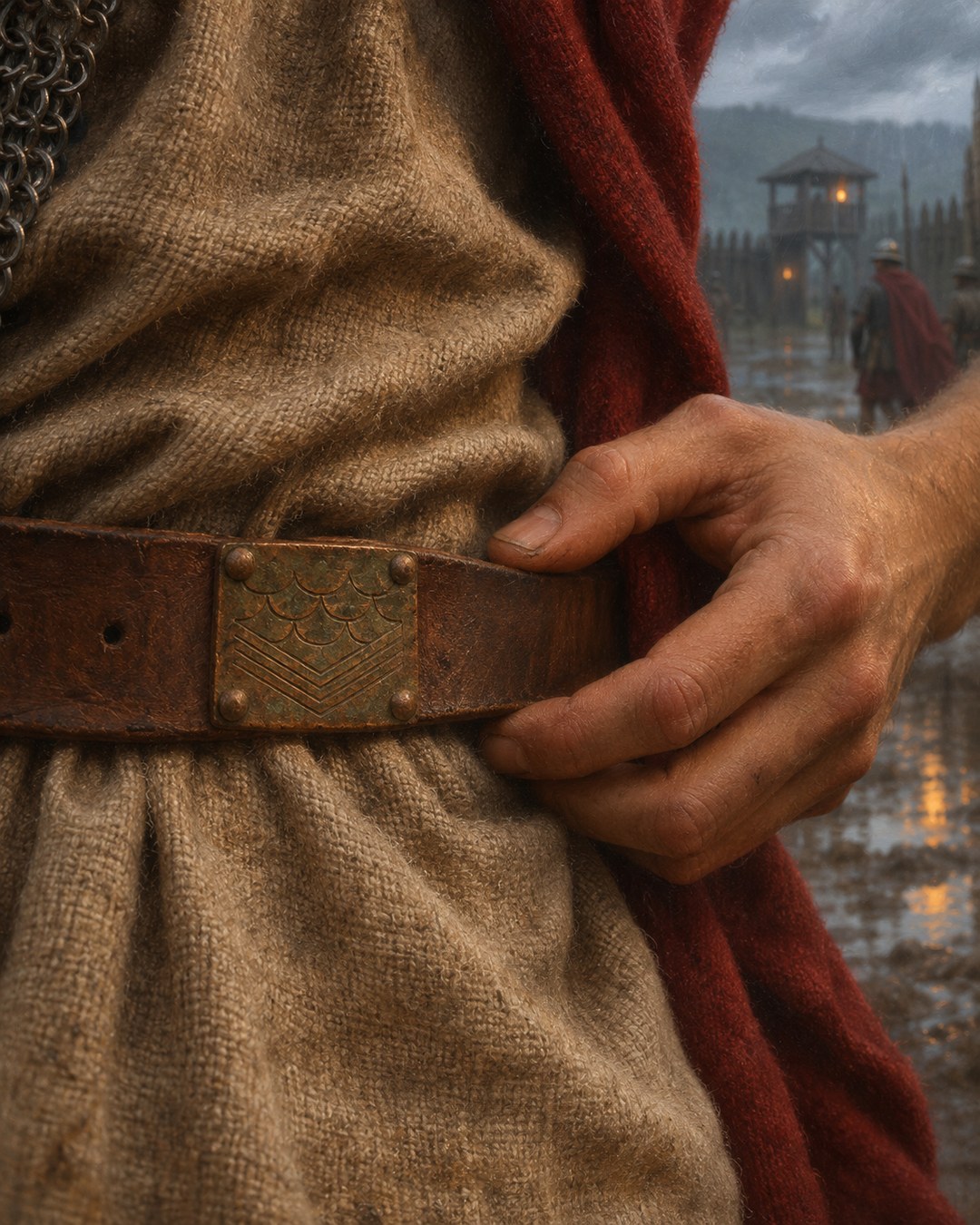
A copper-alloy plate from Roman London is small enough to disappear beneath a modern hand. It measures 47 millimetres long, 33 millimetres wide and 5 millimetres thick with its rivet. Four rivet heads occupy its corners. The London Museum identifies it as a rectangular military belt plate. Its face carries an incised scale-and-chevron design, while … Read more

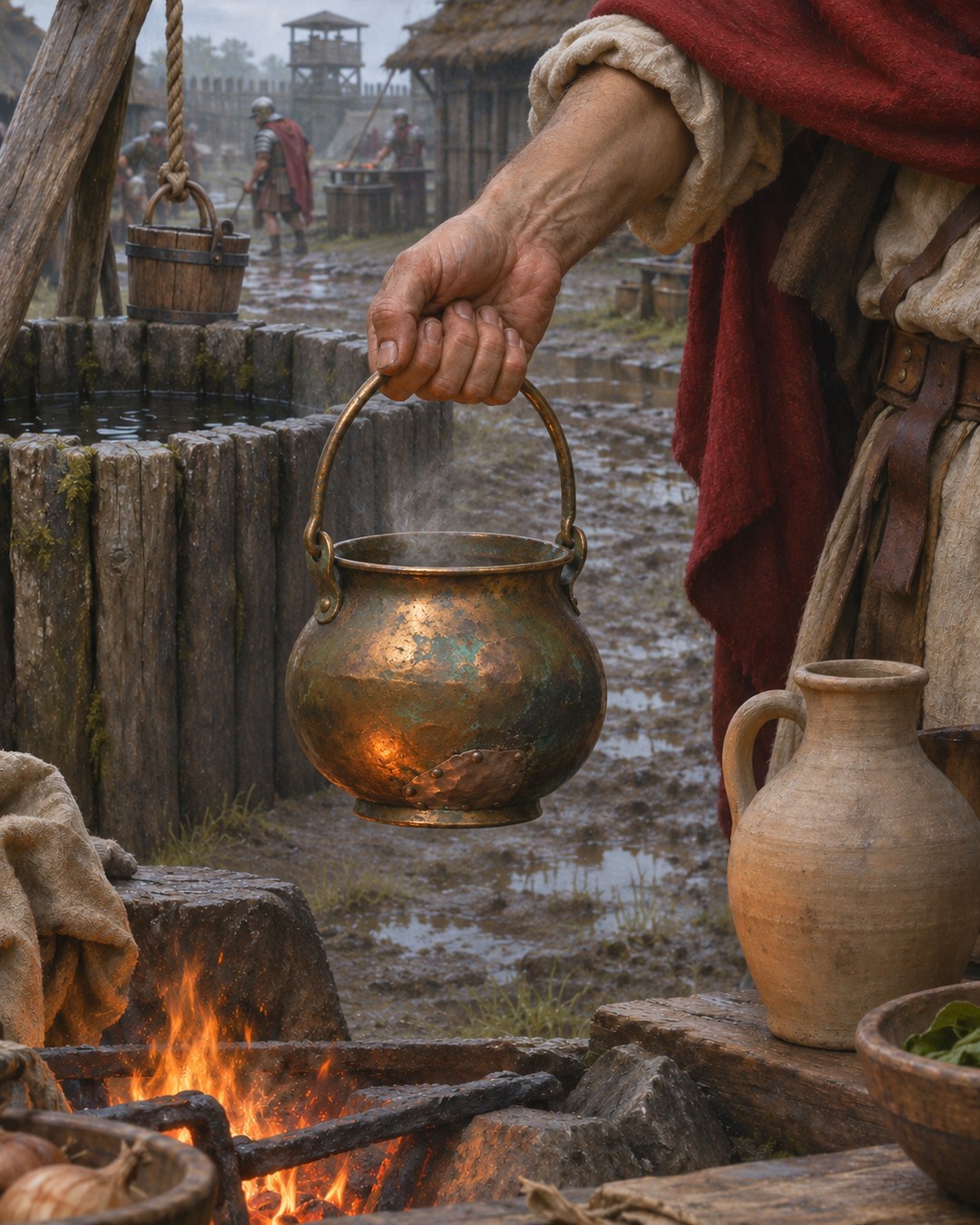
A Repaired Roman Camp Kettle Ended at the Bottom of a Well

A copper-alloy vessel from Roman London carries evidence of two endings. Its base was damaged and repaired, so someone once decided its working life should continue. Later it reached the bottom of a Roman well, where it was found beside a jug. The London Museum describes it as a cauldron, bucket or camp kettle. It … Read more

A 285-Millimetre Iron Skewer Ended in a Nail-Shaped Head

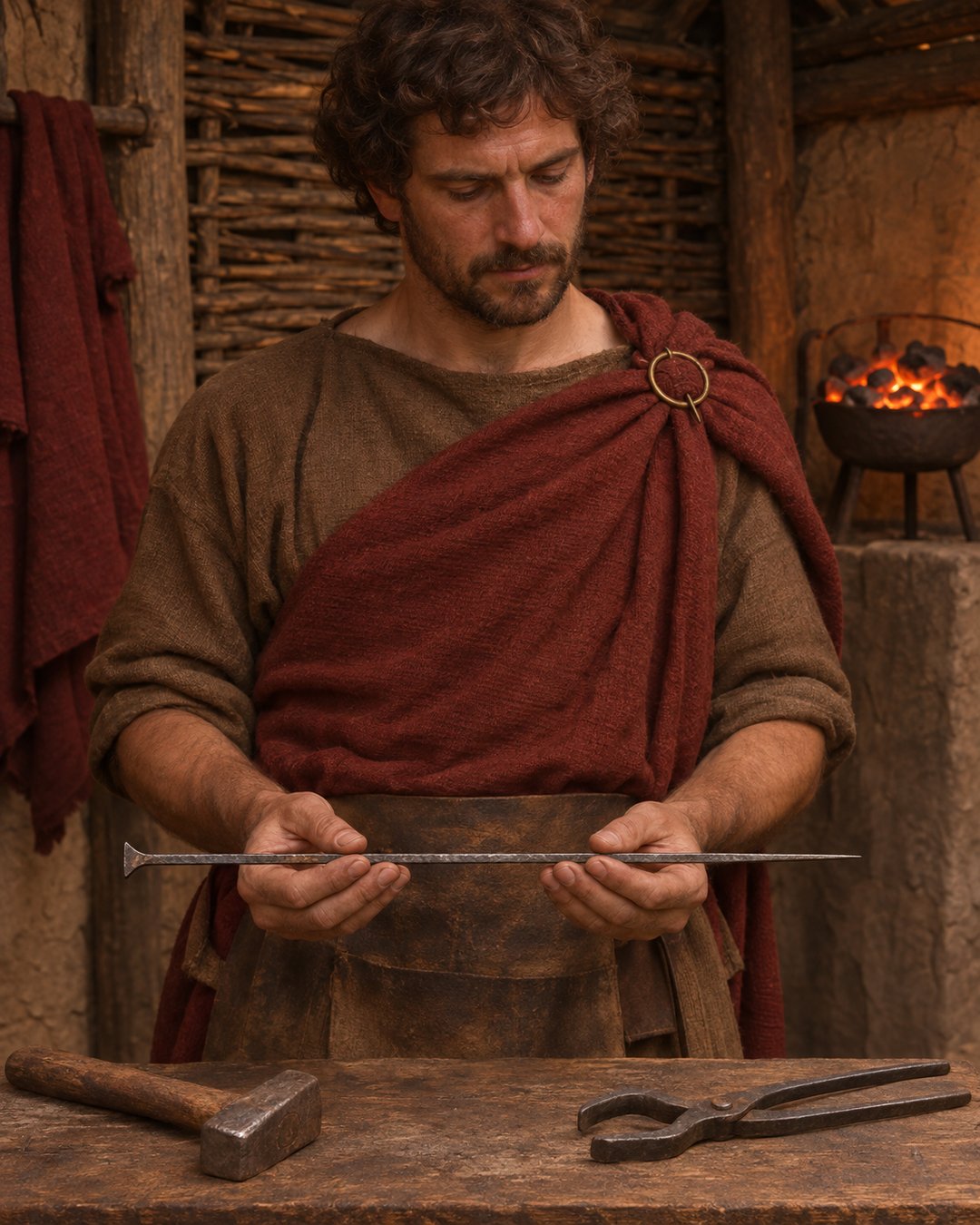
The iron rod is 285 millimetres long. One end narrows to a point. The other spreads into a flat triangular head only 14.5 millimetres wide, with marked shoulders where the head meets the shaft. London Museum catalogues it as a Roman skewer or spit, dated broadly from AD 43 to 410. Yet the head creates … Read more

A 103-Millimetre Roman Tool Joined a Saw-Knife to a Spoon

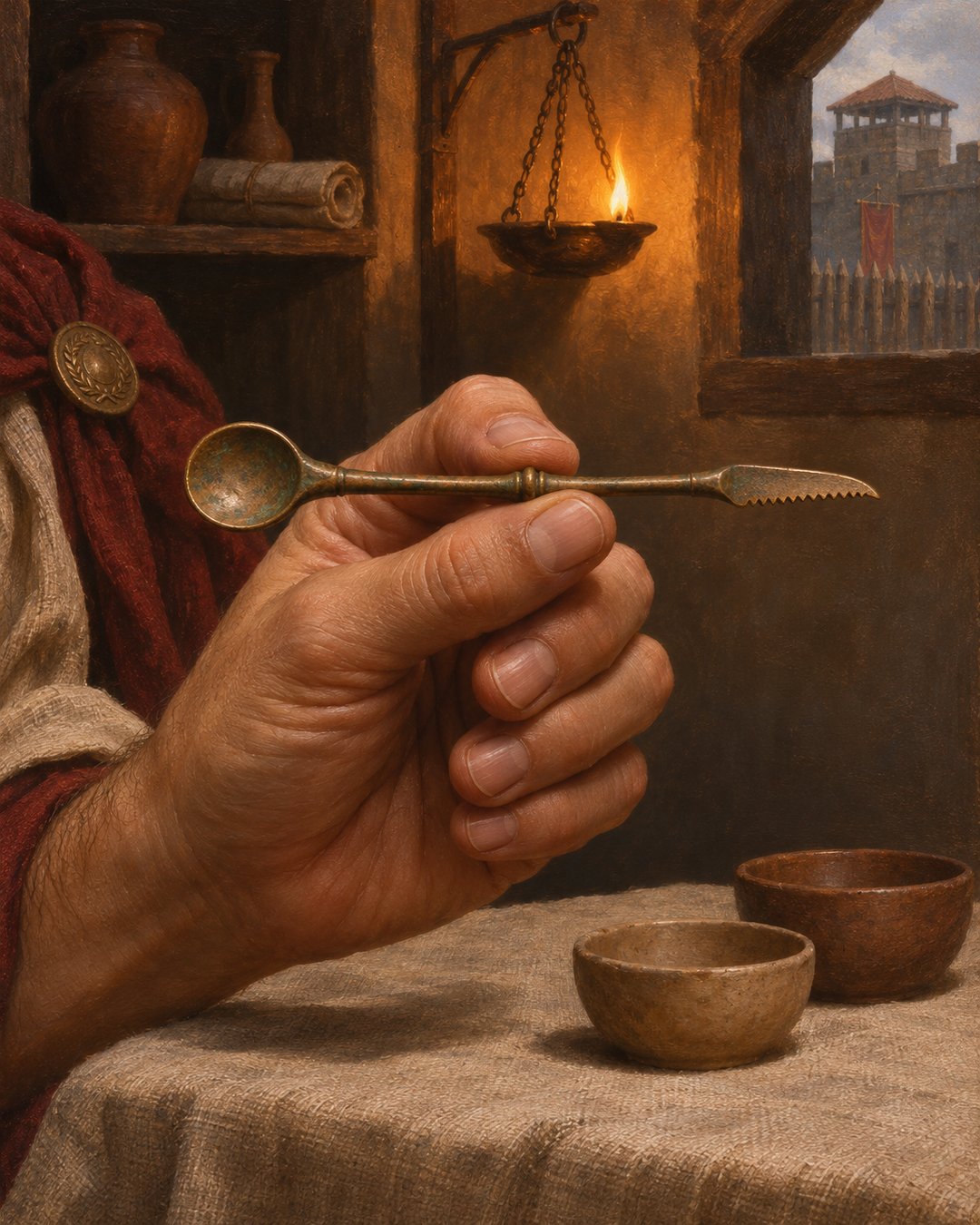
The copper-alloy object is only 103 millimetres long. One end is shaped like a small saw-edged knife. The other opens into a spoon bowl 19 millimetres across. London Museum catalogues it as an implement or tool and says it was likely surgical. Yet the same record preserves a warning from Roman medical specialist Ralph Jackson: … Read more

A Roman Ring Key Put a Lock on the Finger

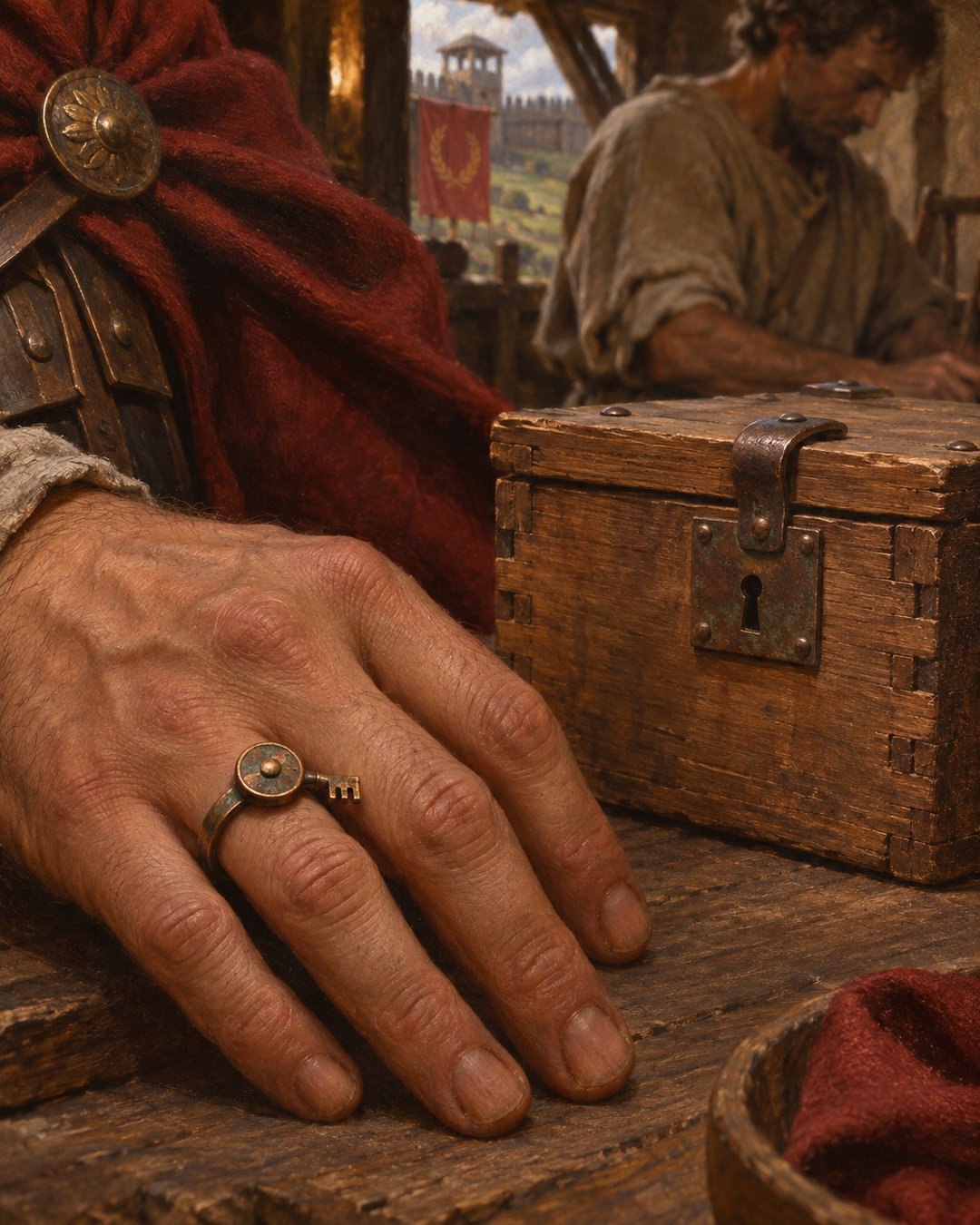
A copper-alloy key in the London Museum is only 24 millimetres long, yet it combines a lock tool with the object that carried it. Its bow forms a ring. Beyond that ring, a short cylindrical shaft bends into an S-shaped bit with four teeth. The museum identifies it as a complete Roman lever-lock rotary ring … Read more

Palm Wine Made Carmanian Wood Smoke Sink from Ceiling to Floor

Before a piece of Carmanian wood could perfume a sickroom, it passed through several transformations. Merchants carried it west. Preparers steeped it in palm wine. Fire turned it into smoke. The room then completed the process: Pliny the Elder says the odour rose to the ceiling before descending in volumes to the floor. The wood … Read more

Romans Poured Water Under the Table When Fire Was Mentioned

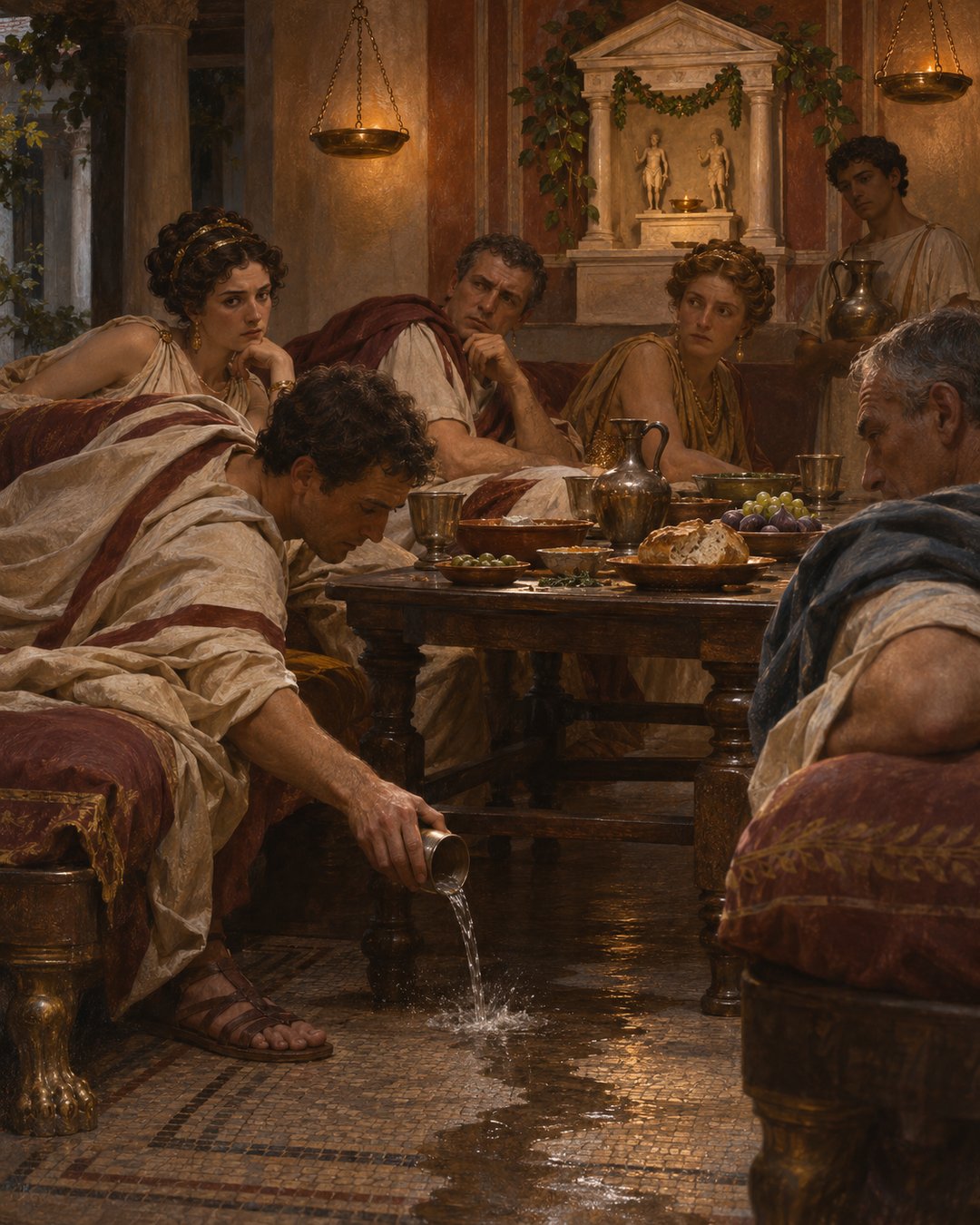
A Roman dinner did not become religious only when someone recited a prayer. In Pliny the Elder’s catalogue of everyday observances, the table was already crowded with invisible consequences. A spoken reference to a fire could make someone pour water beneath the table. A broom moving at the wrong moment could become an omen. A … Read more

Ashes and a Noon Shadow Drew a Roman Field’s Wind Lines

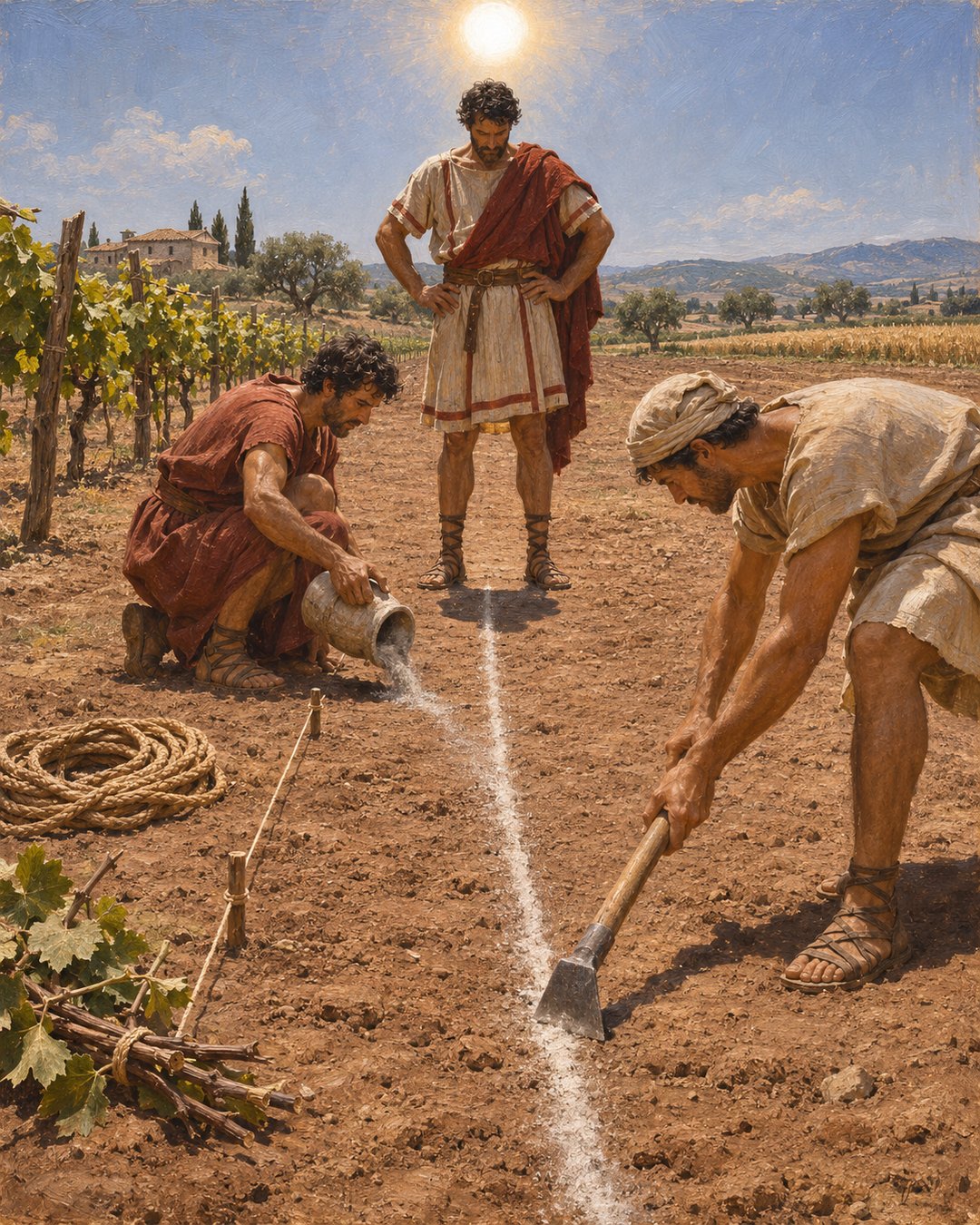
A handful of ash could disappear under one gust, yet Pliny the Elder asked a farmer to trust it with the orientation of an entire field. His method needed no engraved instrument and no permanent survey monument. It began with a person standing in sunlight at the sixth hour, waiting until the shadow in front … Read more