Eighty Million Broken Oil Jars Became a Roman Hill
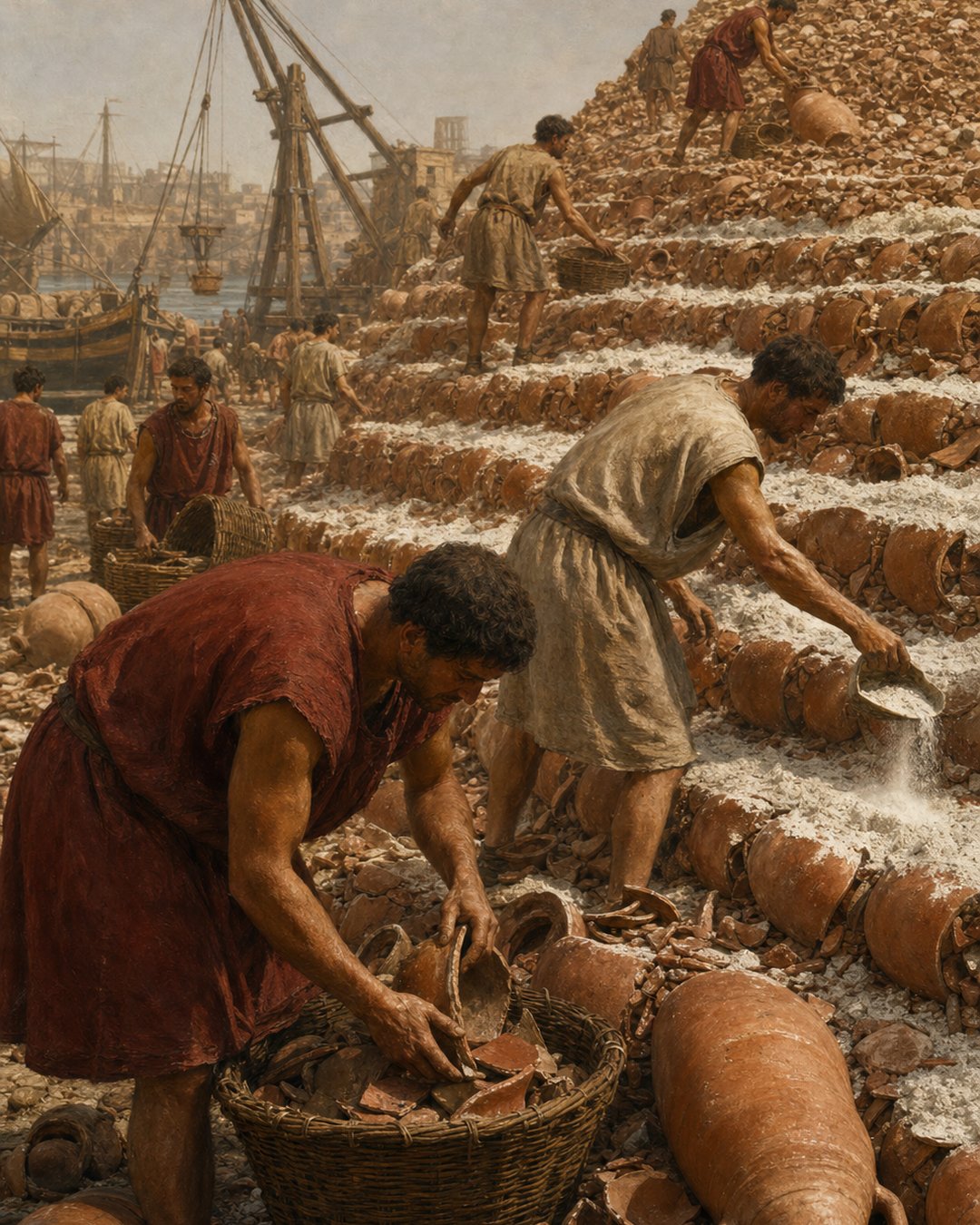
South of ancient Rome’s center stands a hill that the landscape did not make. Monte Testaccio rises from fragments of transport jars, overwhelmingly amphorae that once carried olive oil. Estimates approach eighty million containers. Their handles, rims and walls accumulated into terraces high enough to become urban topography. The hill is often called a rubbish … Read more
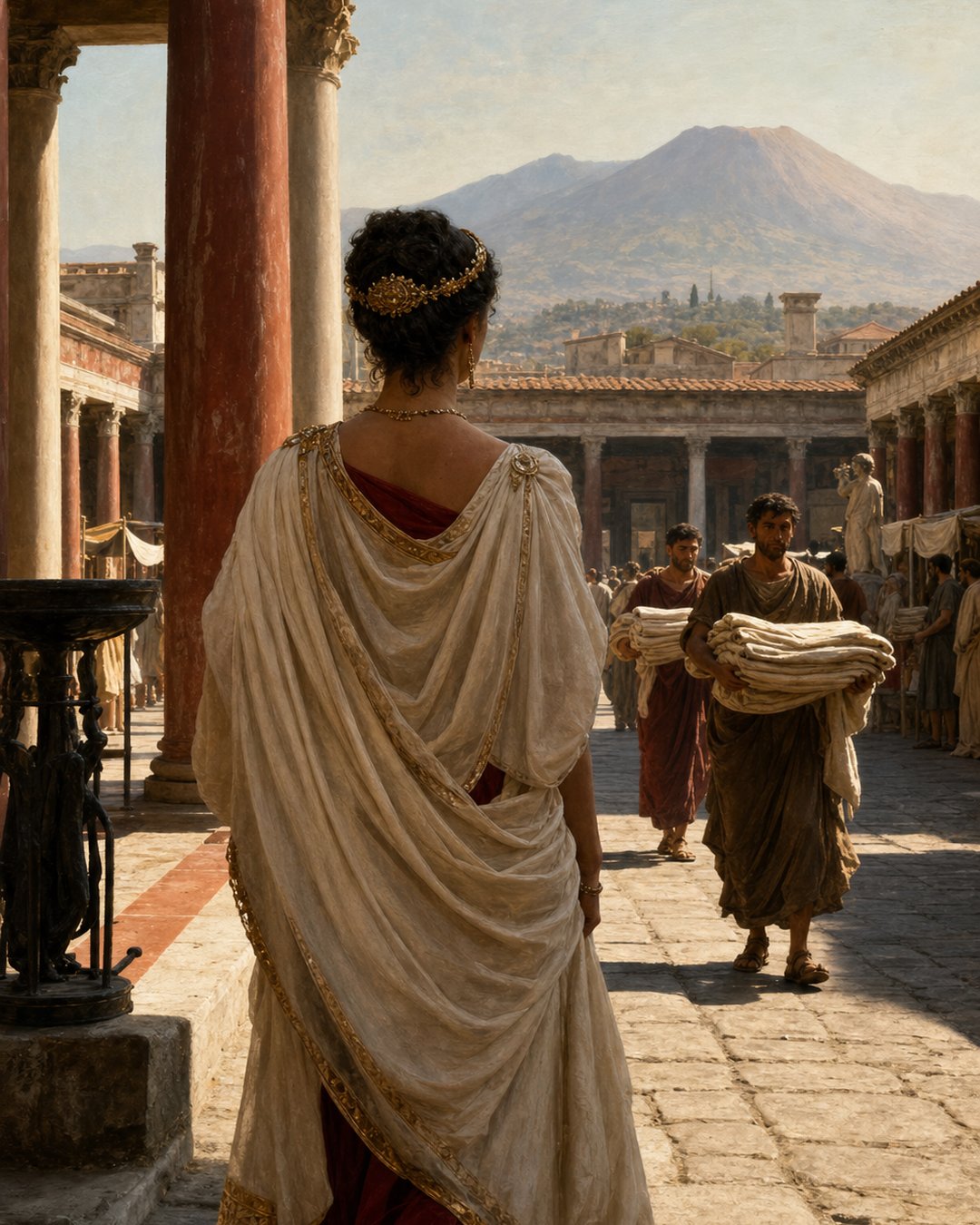
Eumachia Built Her Name into the Heart of Pompeii

Pompeii preserved very few ancient women at monumental scale. Eumachia is the startling exception. Her name ran across the façade of a vast building beside the Forum, appeared again at a side entrance, and stood beneath a marble portrait placed in the rear portico. She did not survive merely as someone’s wife. She survives as … Read more

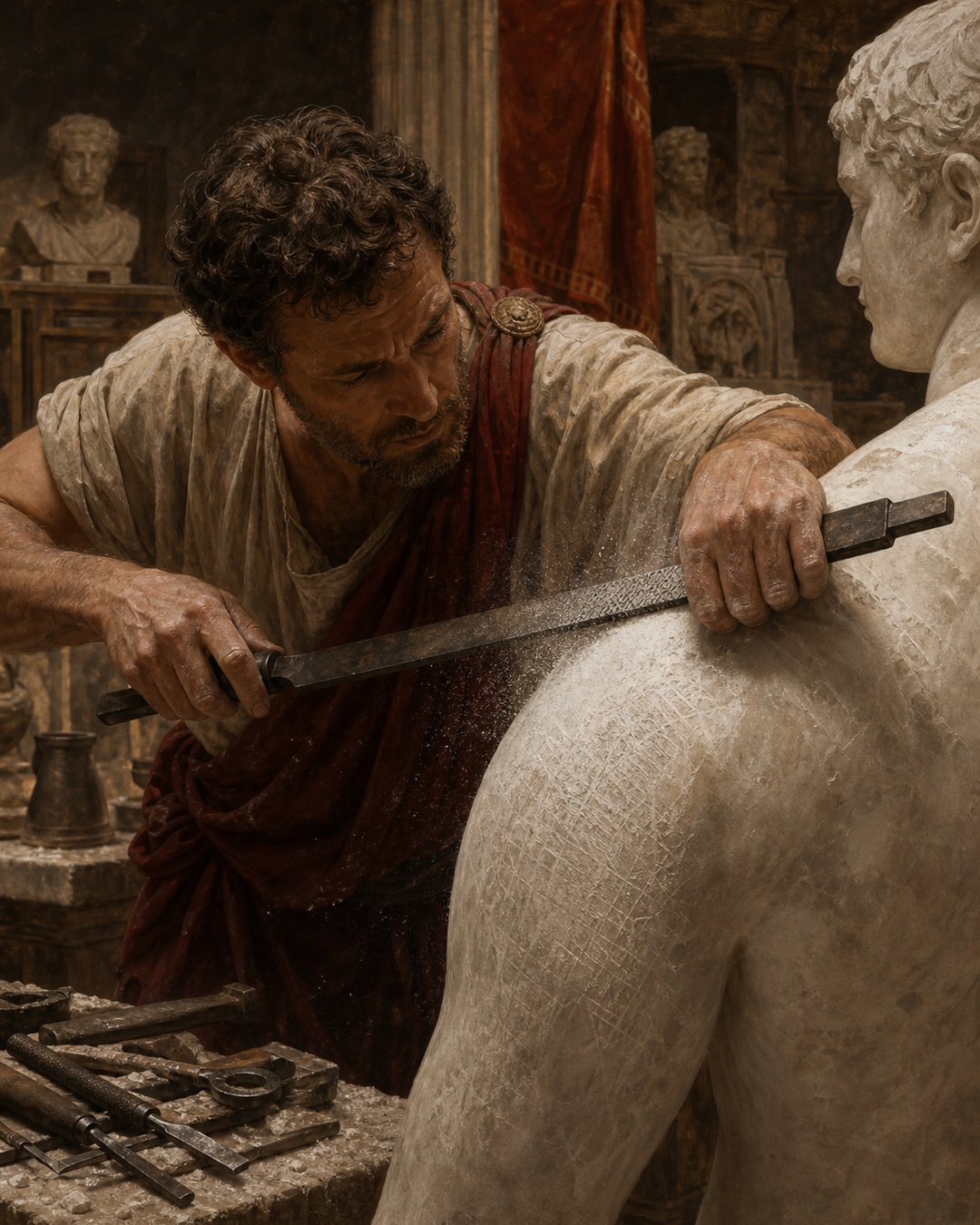
Thousands of Scratches: How a Rasp Finished Roman Marble

A Roman marble carver could make a surface smoother by covering it with more marks. The rasp did not polish by erasing every trace at once. Its flattened ends carried fields of sharp points, and every rubbing stroke laid fine scratches across the stone. Later passes crossed and overlapped them until the rougher evidence of … Read more

Roundels: The Small Tools Made for Deep Stone Hollows

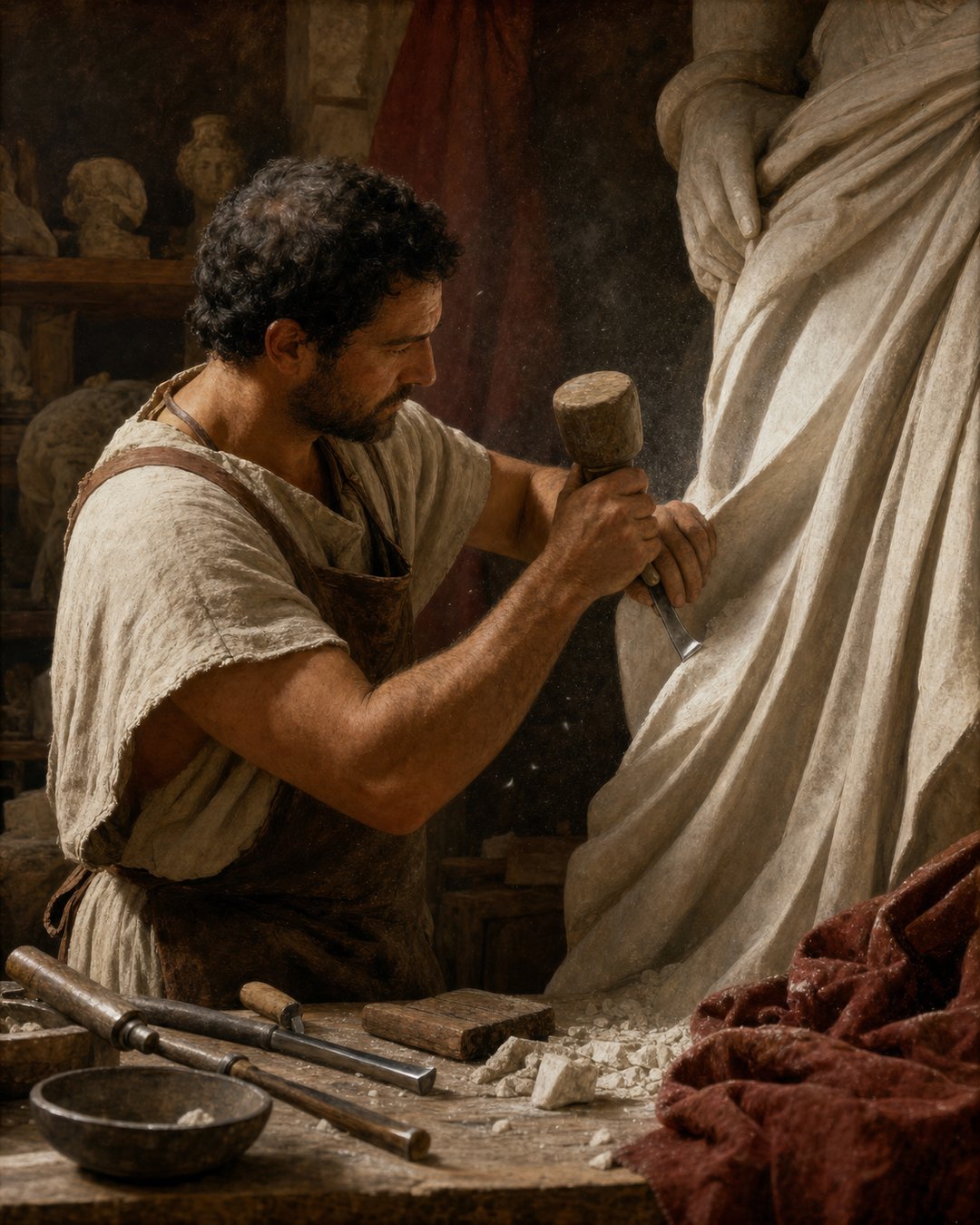
A flat chisel carries two corners into every cut. On an open surface they help define a clean edge; inside a hollow, either corner can bite before the centre arrives. Roman stone carvers had another option. The roundel replaced the straight cutting edge with a curve, from an obvious semicircle to one so slight that … Read more

How Callipers Carried Human Proportions into Stone

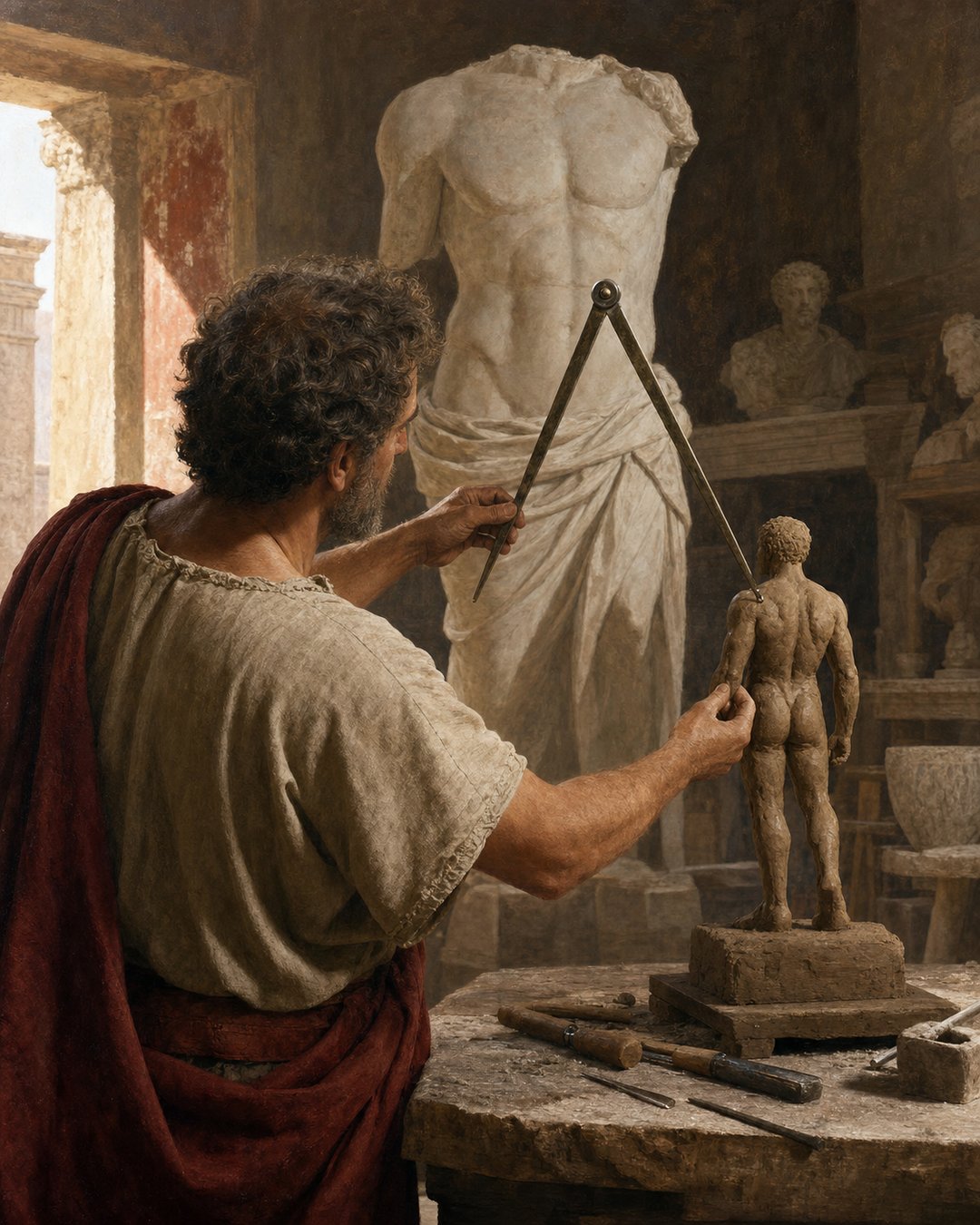
A Roman sculptor could carry a distance without writing it down. Open the callipers across a model’s shoulder, keep the legs fixed, then move the tool to the block: the empty gap between the points had become a portable instruction. Nothing had been marked with a numeral, yet one object could now answer another. The … Read more

From Coarse Sand to Shine: The Stages of a Roman Polish

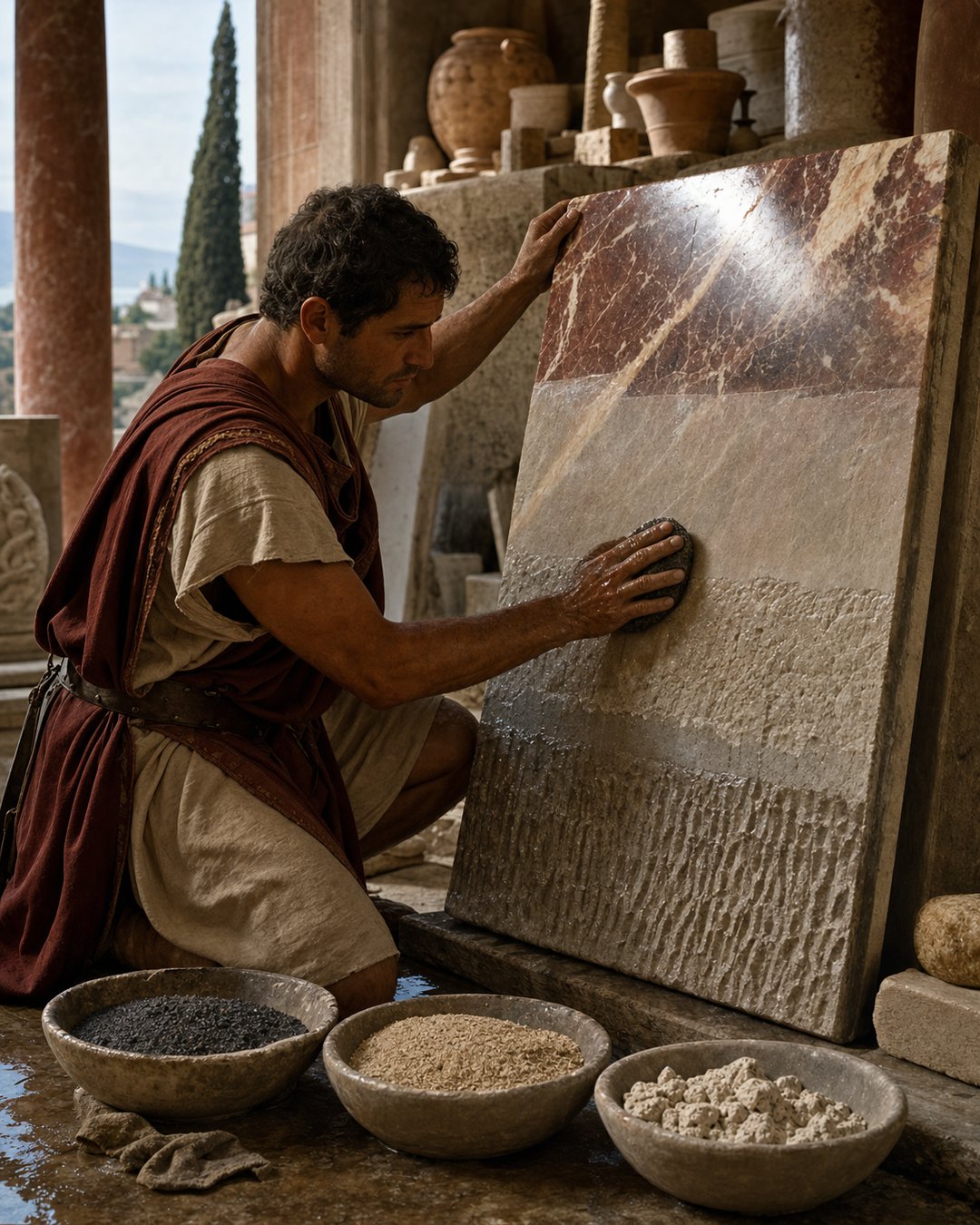
Polish looks like something added to stone. In Roman carving it was often the opposite: a long sequence of removals so small that the final surface returned light instead of obvious tool marks. Emery, sandstone and pumice did not paint marble. They ground away its high points and replaced one scale of scratches with another. … Read more

Grain Between Two Stones: A Morning at the Hand Quern

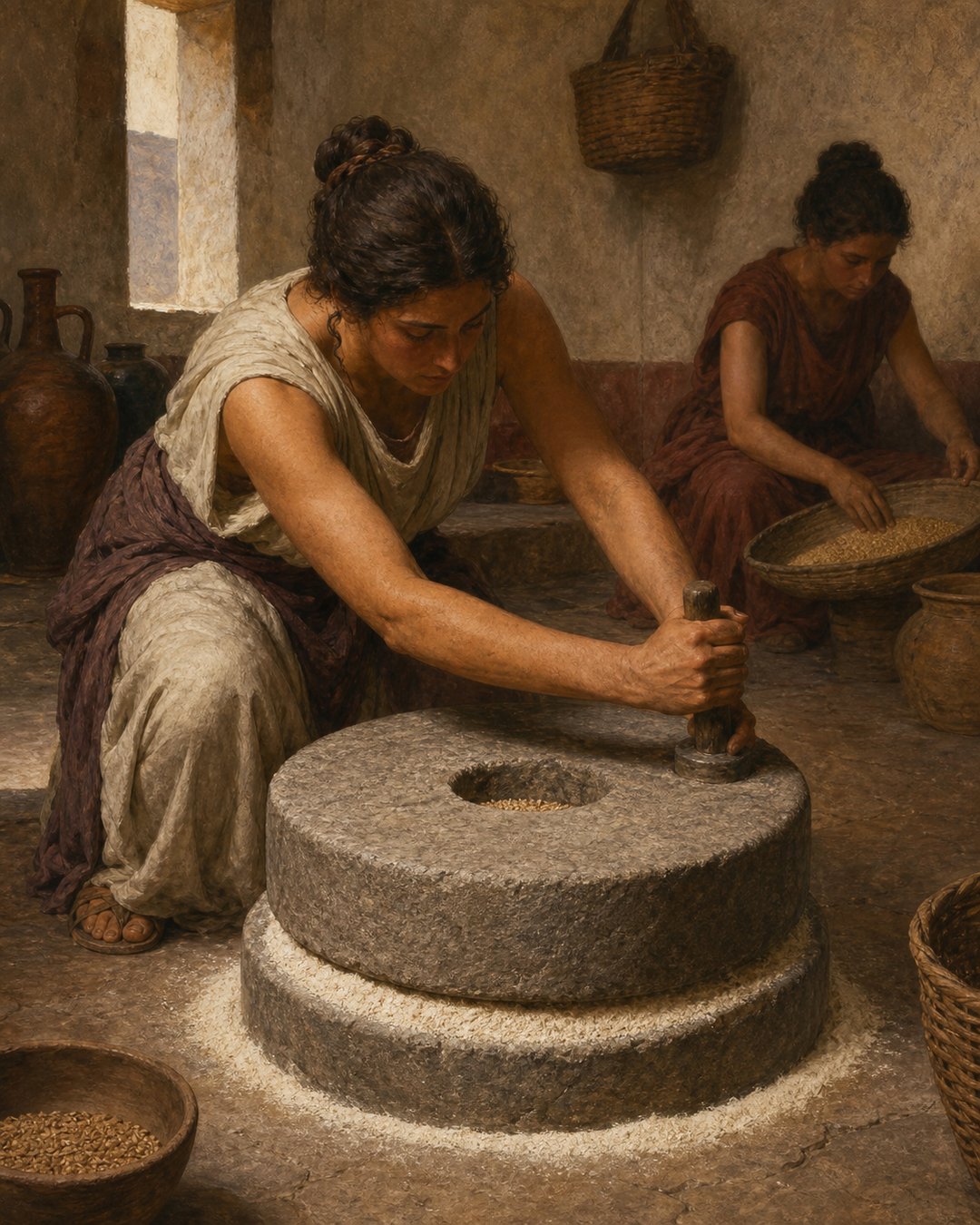
Grain does not become flour because it is pressed once. Its hard kernels must be fractured, rubbed and reduced through repeated contact. A Roman rotary quern arranged that repetition inside two stones. The lower stone stayed still. The upper stone turned. Grain entered near the center and emerged finer at the circumference. Museum Wales preserves … Read more

Tweezers, Thorns and the Precision of a Roman Fingertip

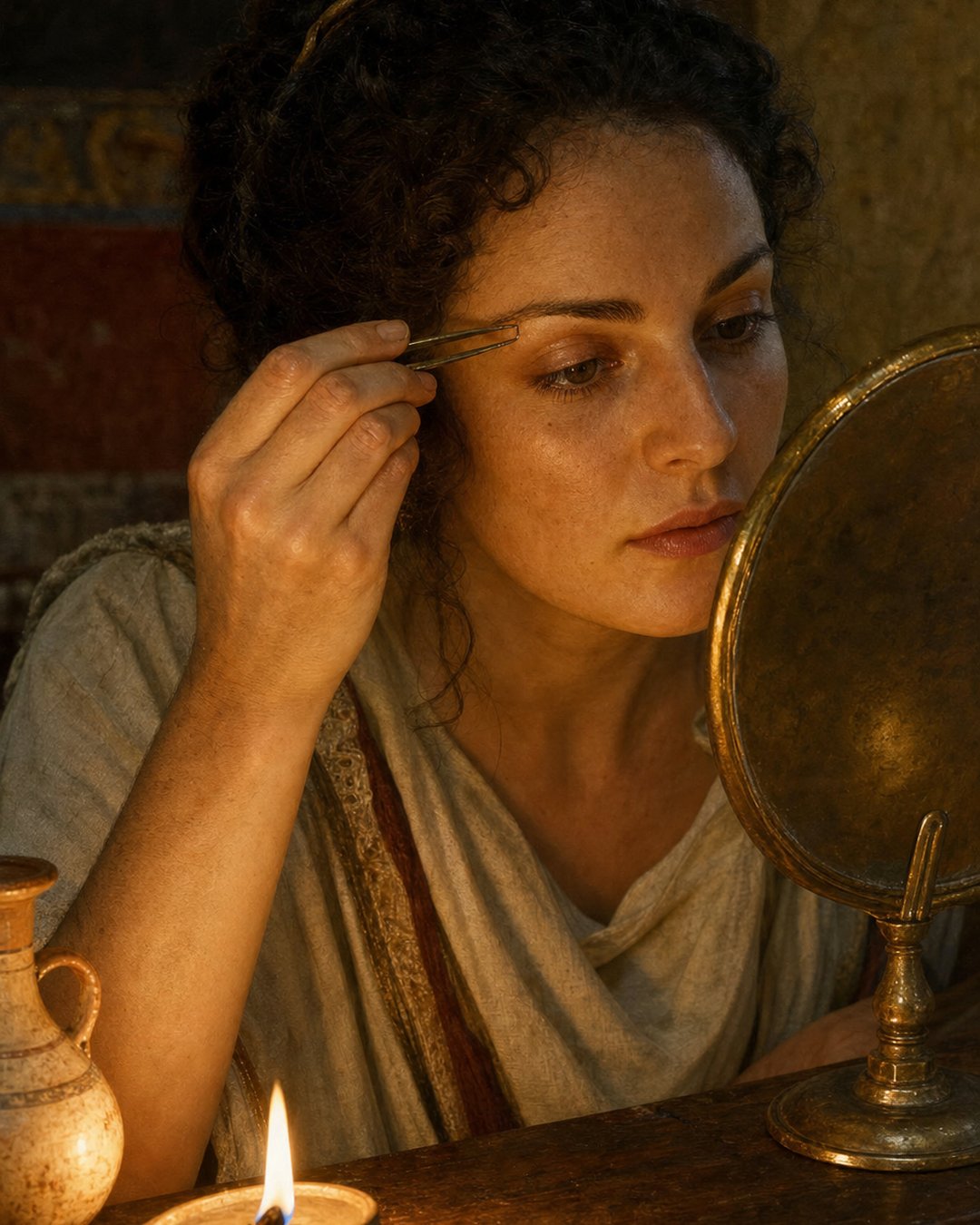
A thumb and forefinger can pinch, but they cannot become arbitrarily small. A splinter ends beneath the skin; one hair stands apart from the rest; a fragment lies in a recess too narrow for a nail. Roman tweezers solved those little failures without adding a hinge. The tool was often only a strip of metal … Read more

The Curved Blade That Gathered a Harvest in One Pull

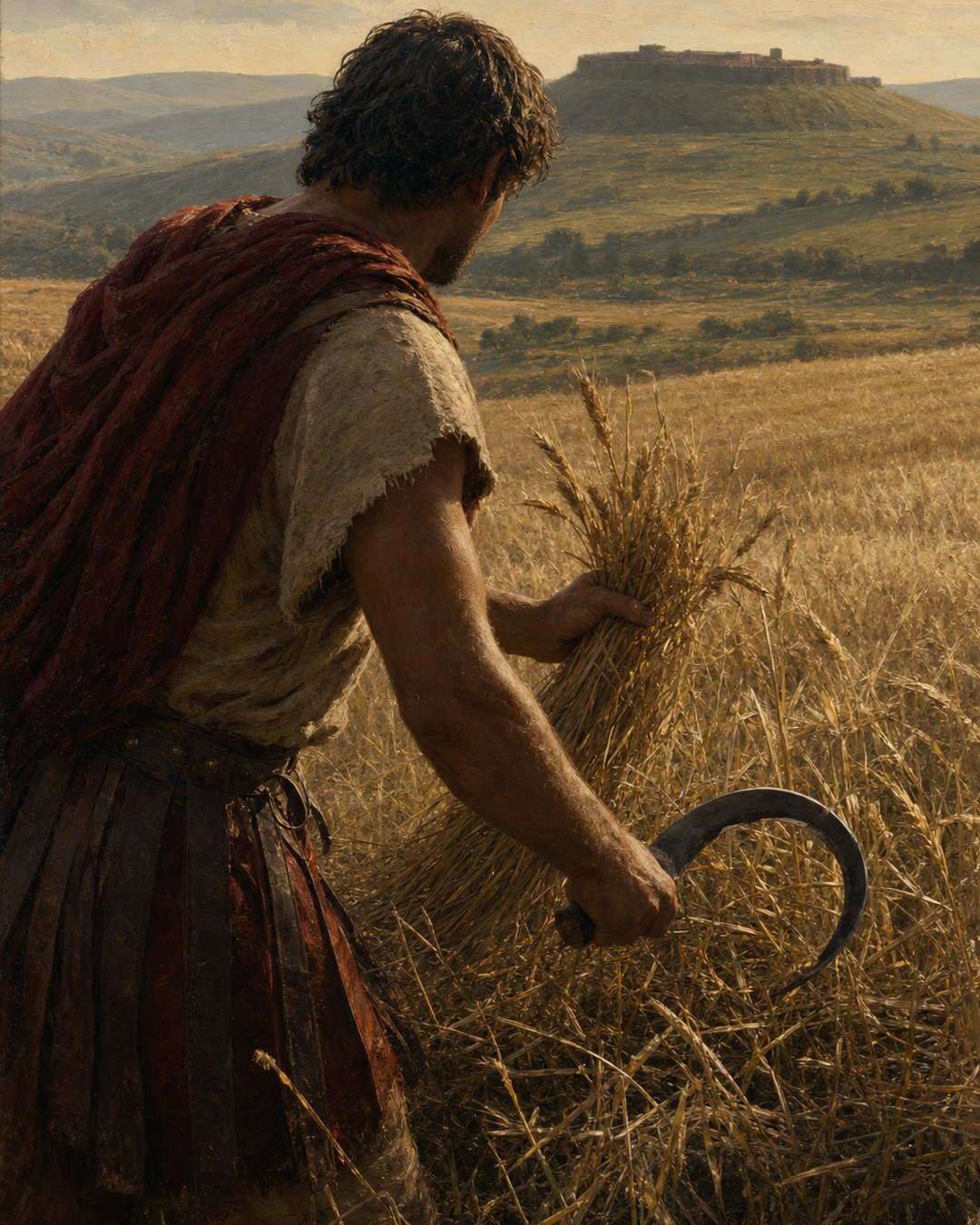
A straight blade pushed through a standing field tends to scatter what it meets. Stems bend away, separate and escape around the edge. A sickle changes that encounter. Its blade curves inward toward the hand, so a pulling stroke gathers stalks into the cutting path. The crop is not merely struck; it is collected against … Read more

The Tiny Whorl That Kept Roman Thread in Motion

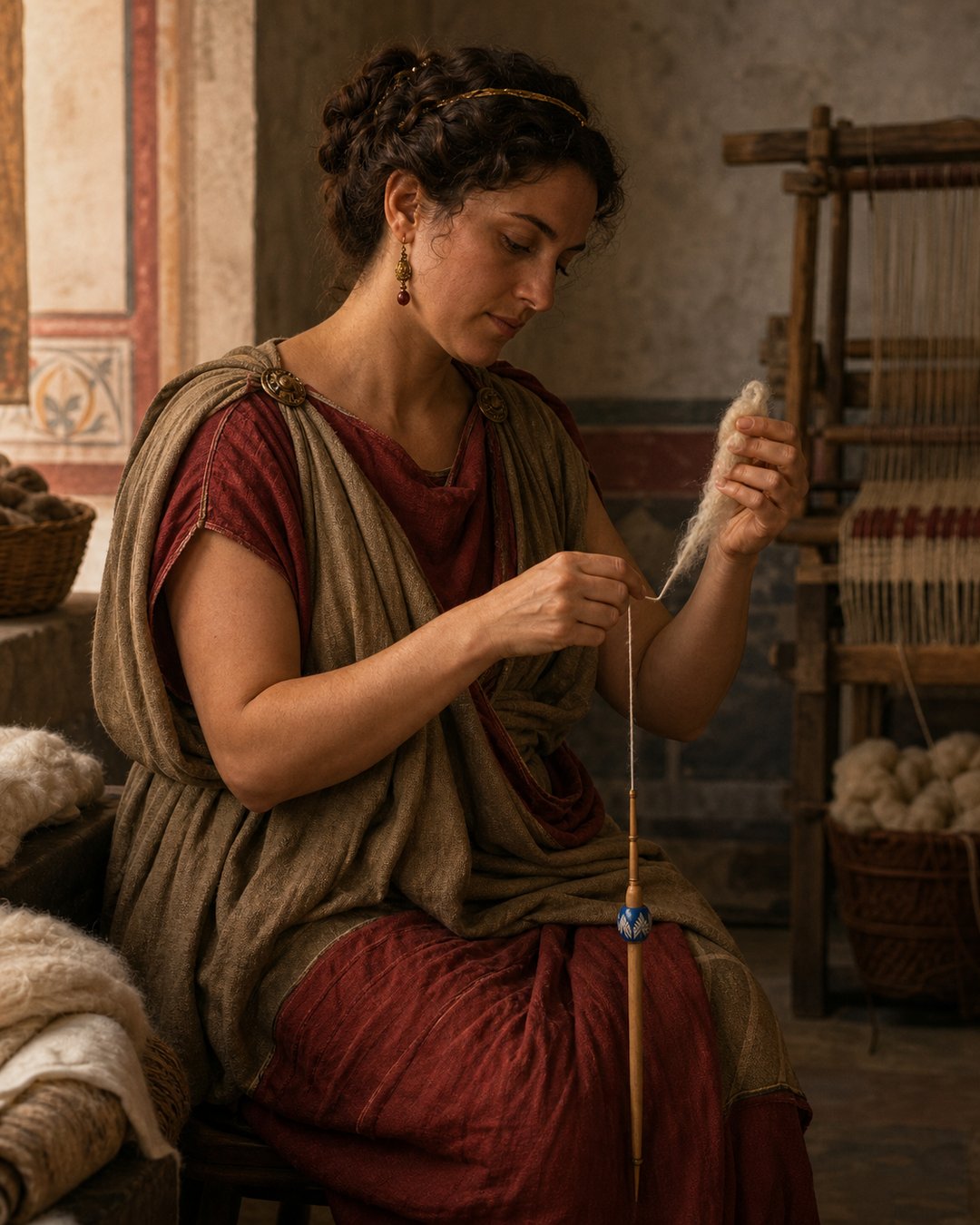
A Roman spinner did not turn a heap of wool into thread by pulling it thinner. Untwisted fibers can slide apart almost as easily as they can be drawn out. The decisive change came when the emerging strand began to rotate. Twist made neighboring fibers press and wind against one another, converting a loose cloud … Read more